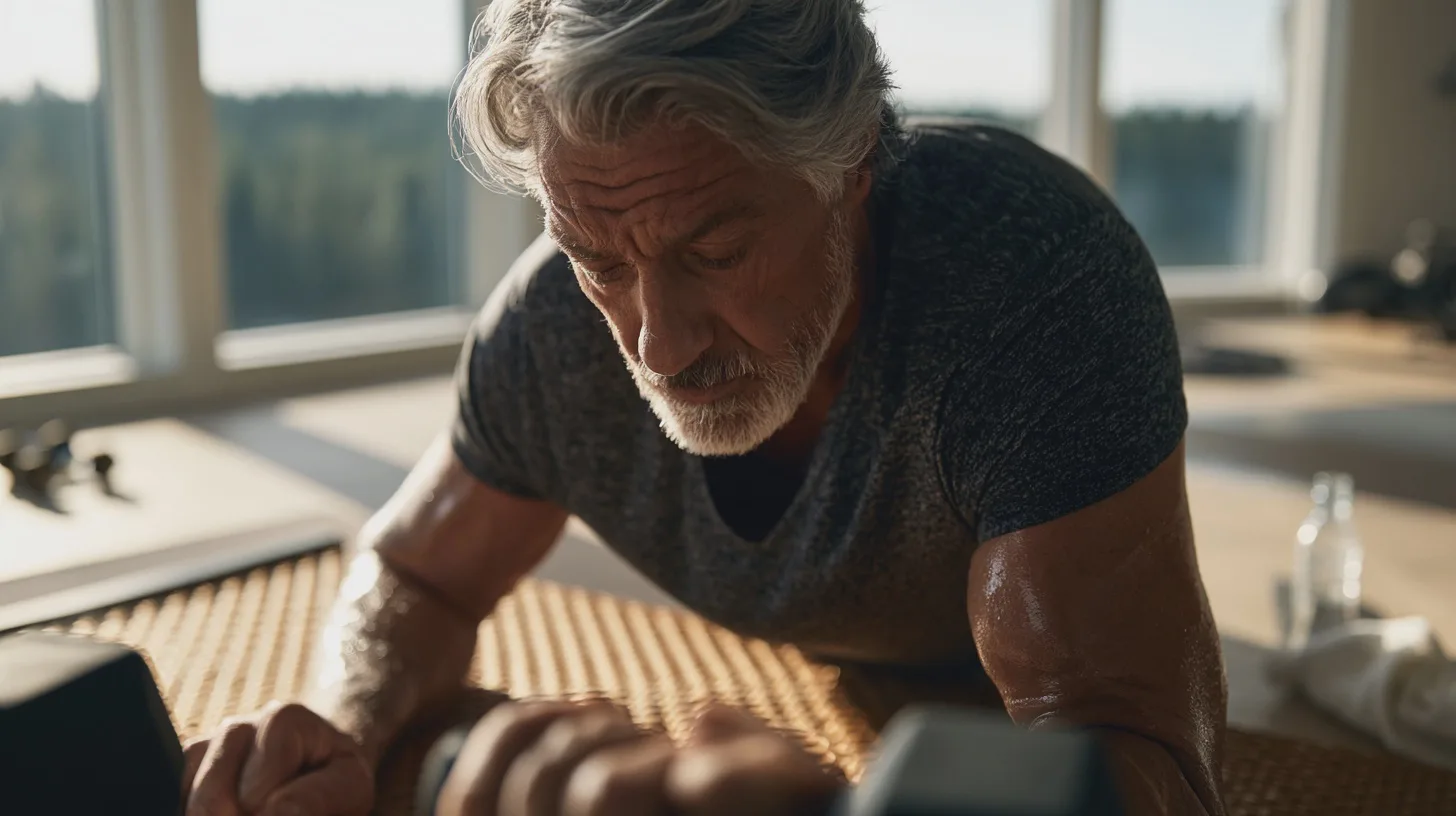
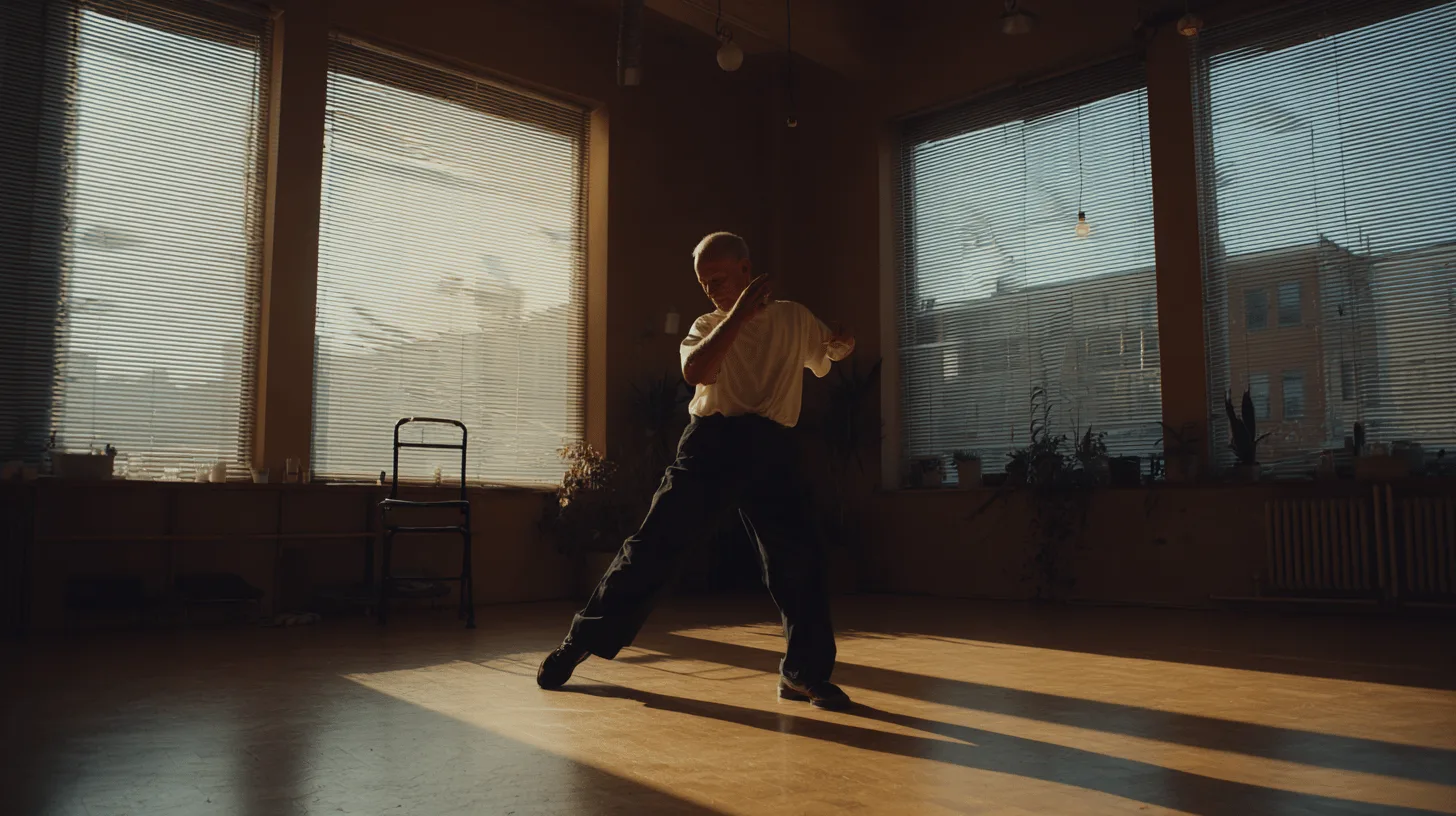
Your reactions slow with age, but they still respond to training. Here are simple drills you can do at home with no kit to sharpen your balance, footwork and reflexes.
Reviewed, edited and approved by Editor-in-chief Daniel Sköld · Updated 2 November 2026
Contents
You know the moment. You miss a kerb, catch your toe on the edge of a rug, or the dog decides to cut across your path. At 25 your feet sorted it out before your brain noticed. At 55 there is a slightly longer pause, a lurch, and a quick look round to see if anyone saw.
That pause is your reaction time, and it’s one of the less glamorous things to slip in midlife. The good news is that you can train it, like most things to do with how you move. It takes no gym membership and no gadgets, just a kitchen worktop and about ten minutes a few times a week.
AD
Why does your reaction time slow down with age?
Staying upright when something goes wrong involves three jobs. Your eyes, inner ear and the sensors in your feet and joints notice that something has changed. Your brain decides what to do. Your muscles carry it out, fast enough to matter.
All three tend to lose a little sharpness over the years. Signals travel and get processed a bit more slowly. Fast-twitch muscle fibres, the ones that produce quick, powerful movements, go first when you lose muscle. And if most of your movement happens in straight lines on flat ground, such as the walk from the car to a desk, your body simply gets less practice at recovering from a wobble.
That last point is the hopeful one. A fair amount of what looks like ageing is really a skill going rusty. Skills can be practised.
Other things play a part too: eyesight, some medicines, alcohol, poor sleep and inner-ear problems can all affect balance. That’s why sudden changes need a GP rather than a workout plan (more on that below).
What the official guidance says about balance
The UK Chief Medical Officers’ physical activity guidelines apply across England, Scotland, Wales and Northern Ireland. Adults aged 19 to 64 should get at least 150 minutes of moderate activity a week, or 75 minutes of vigorous activity, and do muscle-strengthening work on at least two days a week.
For adults aged 65 and over, the guidelines add activities to improve balance and flexibility on at least two days a week. You are probably not there yet, which is exactly why this is the right time to start. Building balance and leg strength in your fifties is far easier than trying to rebuild them after a fall.
The NHS publishes free strength and balance exercises on its website, and many local NHS trusts have their own printable falls-prevention programmes. They are worth a look even if you feel nowhere near frail, because the basics are the same at any age.
Balance isn’t something you either have or don’t. It’s a skill, and like any skill it goes rusty if you never use it.
How can you improve your balance and reactions at home?
Do these next to a kitchen worktop or the back of a sturdy chair, with nothing on the floor to trip over. Wear flat shoes or go barefoot on a non-slip surface. Start holding on with both hands, then one hand, then just your fingertips, and only let go once you’re steady.
Sit-to-stand. Sit on a firm chair and stand up without using your hands, then sit down slowly. This builds the thigh and hip strength that catches you when you stumble. Aim for ten controlled repetitions, and once that’s easy, speed up the standing part.
Heel raises. Stand tall and rise up on to your toes, hold for a moment and lower slowly. Strong calves and ankles do most of the small corrections that keep you upright.
One-leg stand. Hold your support and lift one foot just off the floor. Build up to around 30 seconds on each leg. Once that’s comfortable, turn your head slowly from side to side, or briefly close your eyes while still holding on, which makes your feet and inner ear do the work your eyes usually do.
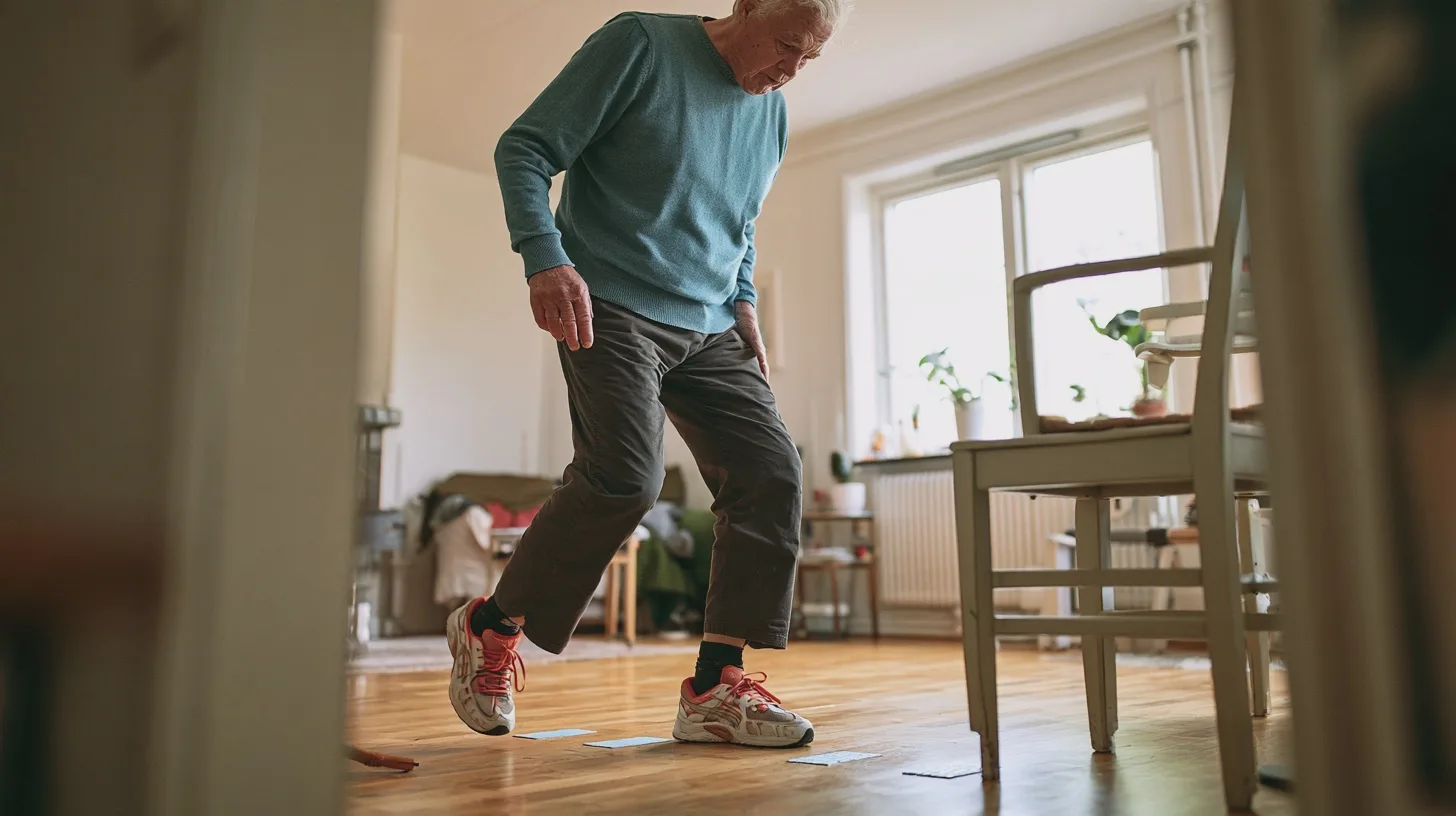
Heel-to-toe walk. Walk along a hallway placing the heel of one foot directly in front of the toes of the other, as if on a tightrope. Keep a hand near the wall.
Side leg lift. Holding your support, lift one leg out to the side with your toes facing forwards and your body upright, then lower it slowly. Weak hip muscles are a common reason people sway sideways.
AD
Drills that train speed as well as steadiness
Strength and balance give you a stable base. To train reactions, you have to add the element of surprise.
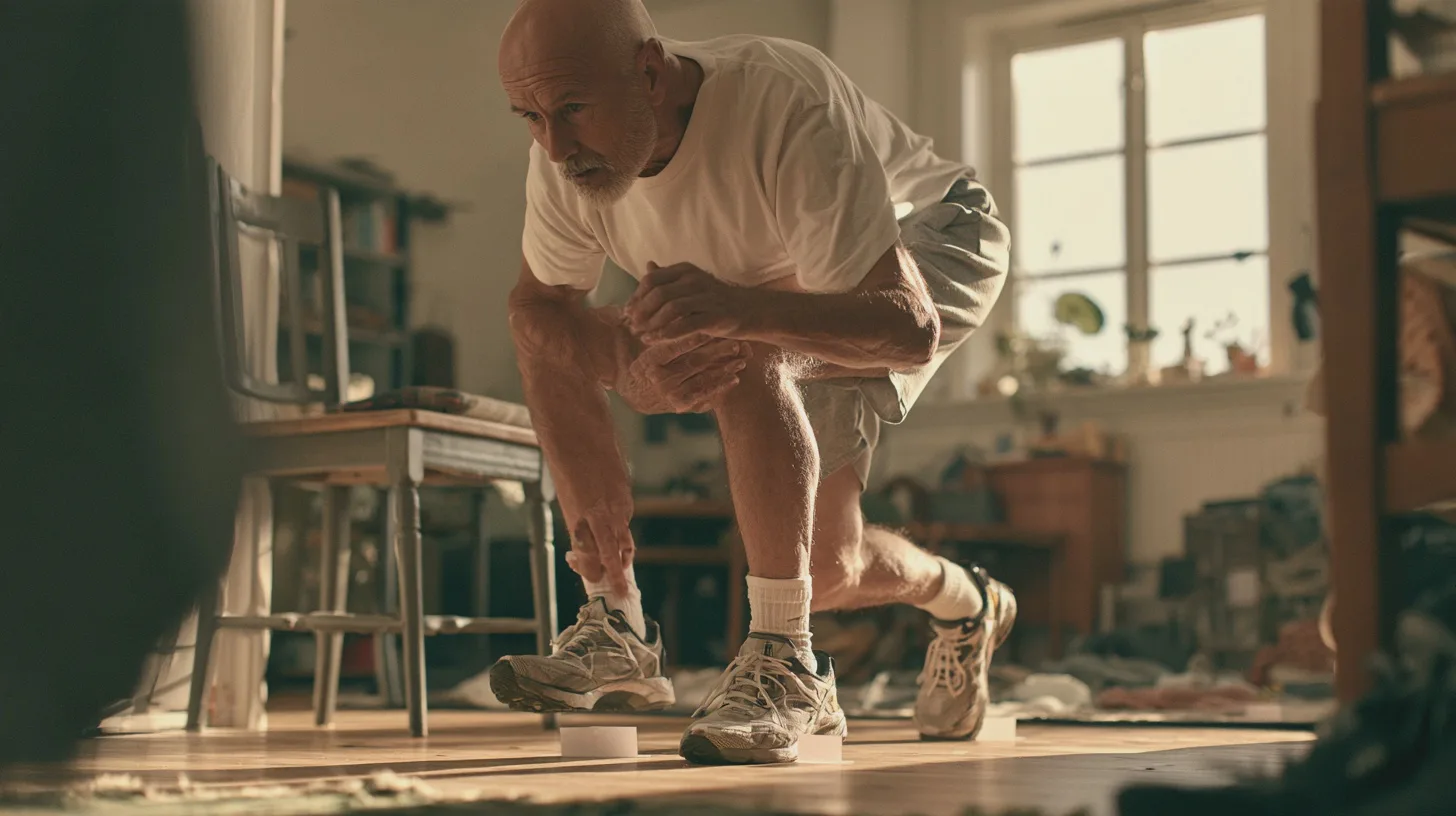
Clock stepping. Imagine you’re standing in the middle of a clock face. Have someone call out a number, or set a timer on your phone and pick one at random, then step quickly towards that number and back to the middle. Mix forwards, sideways and backwards steps. Backwards steps feel the oddest, which is the point.
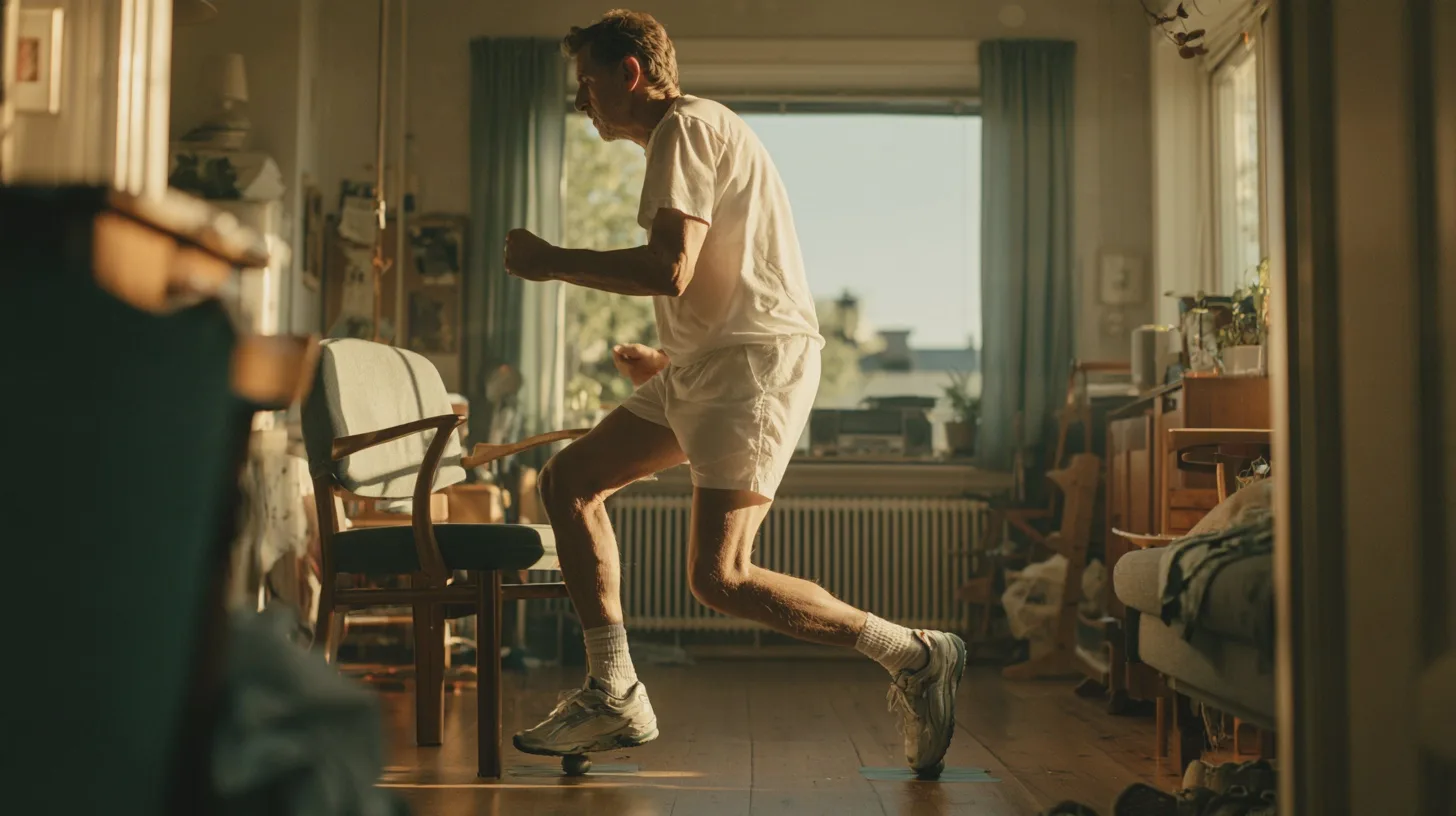
Clap and go. Ask a partner to clap at random moments while you march on the spot. On each clap, take a quick step in a direction they shout out. It looks daft and works well, because real-life slips don’t come with a warning.
Walk and talk. Walk around the garden or park while counting backwards in threes, or naming a football team for every letter of the alphabet. Doing two things at once is what everyday life demands, from crossing a busy road while reading a sign to carrying shopping on the stairs, and it’s harder than it sounds.
Quick feet. Holding your support, tap your toes rapidly on the floor, then step quickly from side to side. Short bursts of 10 to 20 seconds are plenty.
Racket sports, dancing, tai chi and five-a-side all train the same skills in a more sociable way. The evidence for tai chi and structured strength-and-balance classes in preventing falls is reasonably solid. The evidence for apps, reaction-light gadgets and brain-training games is much thinner, so treat them as a bit of fun rather than a fix.
When should you see a GP about balance problems?
Feeling a bit wobbly on one leg after years behind a desk is normal. Some things are not. Speak to your GP if you’ve had a fall or several near-misses, if you often feel dizzy or lightheaded, if the room spins, if you’ve blacked out, or if your balance has got worse without an obvious reason. A pharmacist can tell you whether any of your medicines could be affecting your balance. Don’t stop taking anything without advice.
Call 999 for sudden weakness on one side, a drooping face, slurred speech or a sudden loss of balance, as these can be signs of a stroke. For urgent advice that isn’t an emergency, use NHS 111 (NHS 24 on 111 in Scotland).
If you’re in England and aged 40 to 74, the free NHS Health Check is a good chance to raise any concerns. Scotland, Wales and Northern Ireland run their own versions of health checks, so ask your GP practice what’s available. GPs can also refer people to local falls-prevention or strength-and-balance classes, which are often run by NHS physiotherapists or councils. Age UK lists exercise classes for older adults, and many local Age UK branches run their own. If you’re buying a ticket for an elderly parent, you could join them. You might be surprised which of you wobbles more.
In short
Your reactions and balance do slow in midlife, but much of that loss comes from lack of practice and weaker leg muscles rather than age alone. A few short sessions a week of sit-to-stands, heel raises, one-leg stands and quick stepping drills, done next to something sturdy, can make you noticeably steadier. See your GP about falls, dizziness or balance that gets worse without a clear reason, and call 999 if balance problems come on suddenly.
Adrian Irving writes about health for men 45 and over who would rather do something than worry. Training, weight loss, sleep, cholesterol and blood tests, heart health, testosterone, the prostate, mental health and your sex life – what the evidence says, what's worth trying, and when it's time to see your GP.
One of Midcent's writers. Spotted something? Write to adrian@midcent.uk.
Dieting and cardio alone can strip away muscle as well as fat. Here is why lifting weights is the underrated part of losing weight in midlife, and how to start.
Muscle doesn’t stay put in midlife. If you don’t use it, you lose it. Here’s how much strength training you actually need after 45, and how to start safely.
Muscle loss in midlife is not a sentence to spend your sixties avoiding stairs. Here’s how to train, eat and spot changes worth discussing with your GP.