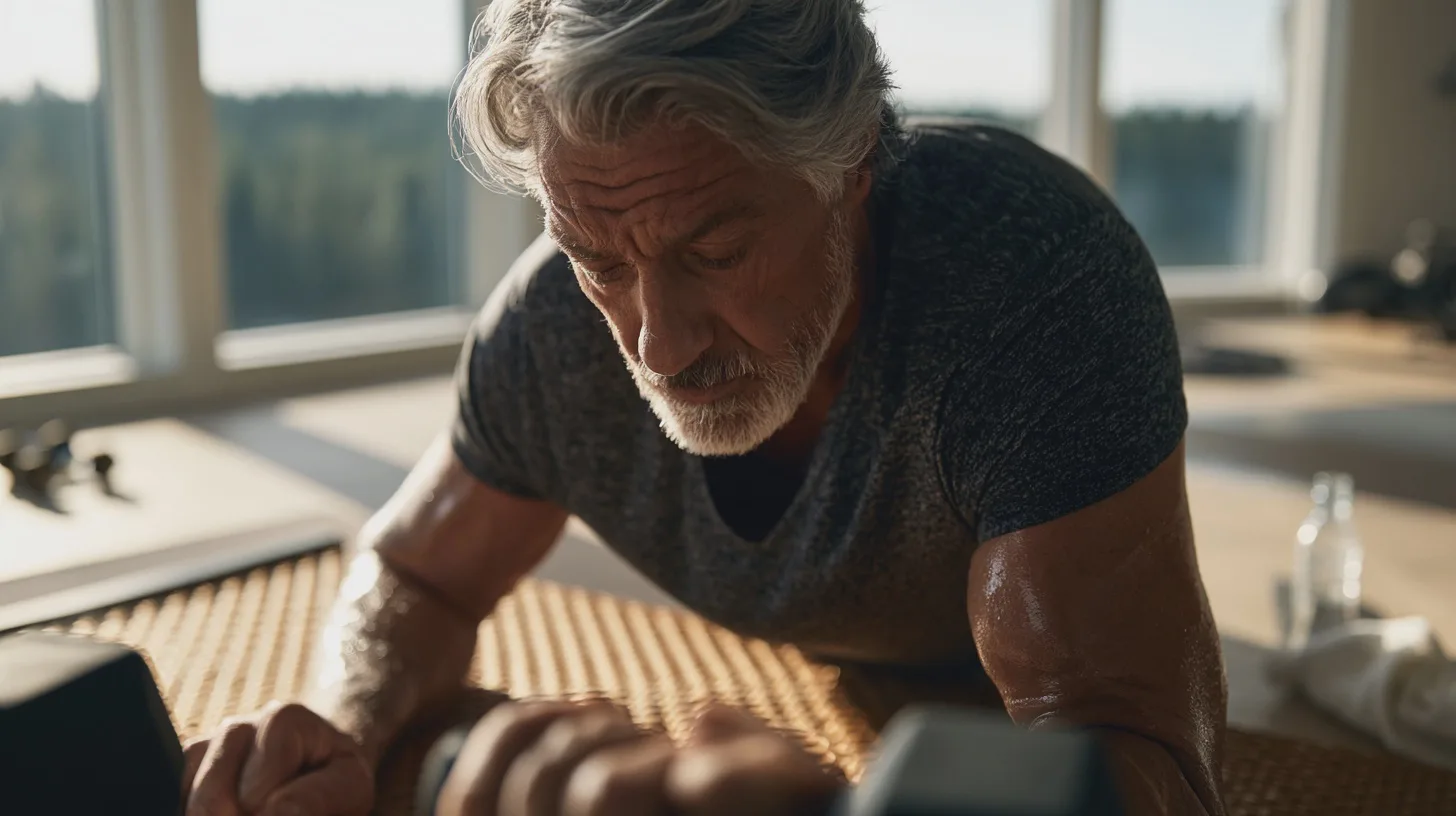
Dieting and cardio alone can strip away muscle as well as fat. Here is why lifting weights is the underrated part of losing weight in midlife, and how to start.
Reviewed, edited and approved by Editor-in-chief Daniel Sköld · Updated 24 October 2026
Contents
You know the routine. You cut out the biscuits, dig out the trainers, get the scales to budge by half a stone (about 3kg), and somehow still look like a slightly smaller version of the same soft bloke. The belt goes in a notch, but your shirts still don’t hang right.
Part of the answer is something most men over 50 skip completely: lifting heavy things on purpose. It won’t melt fat overnight and nobody honest will tell you it does. What it changes is what you lose, what you keep and how you look and feel at the end of it.
AD
Why does it get harder to lose weight after 50?
Blaming your metabolism is a bit of a cliché, but one part of it holds up. From around your 30s, your body slowly loses muscle unless you give it a reason to keep it. Estimates often quoted put the loss at roughly 3 to 5 per cent of muscle mass per decade, and it tends to become more noticeable by your 60s. The less active you are, the faster it goes.
When it gets severe, doctors call it sarcopenia: loss of muscle mass, strength and function that can end in frailty and losing your independence. Researchers at University Hospital Southampton have warned that more people are at risk as the population ages, and that the people most likely to get it should be spotted early.
You’re probably decades away from that. The trouble is that the slide starts quietly. Less muscle means a body that burns a bit less energy, finds stairs a bit harder and makes you a bit less inclined to move. Add a desk job, a sofa and a few decent bottles of red, and the waistline does the rest.
The diet trap nobody warns you about
Here’s the bit that catches people out. When you cut calories, the weight you lose isn’t all fat. Some of it is muscle, and the older and less active you are, the more of it is likely to go.
So you can diet your way down by a stone (6.4kg) and end up with a lower number on the scales, less strength and the same proportion of fat. The newer weight-loss injections make the same point: weight comes off fast, and some of it is muscle you’d rather keep. If you’re using one of them, ask the clinician prescribing it what exercise they recommend alongside it.
Strength training is what tells your body that muscle is still needed. Combine it with a sensible calorie deficit and more of what you lose tends to be fat, and more of what you keep is the stuff that holds you upright.
The scales measure weight. Your aim is to lose fat while keeping the muscle you’ll need for the next 30 years.
Does strength training actually burn fat?
Straight answer: not much on its own, in the short term. A strength session usually burns fewer calories than an equally long run or bike ride, and muscle burns only a little more energy at rest than fat does. Anyone promising that a few dumbbells will turn you into a furnace is selling something.
What the evidence does support is quieter but more useful. Strength training helps you keep muscle while you lose weight. It improves how your body handles blood sugar. It keeps you strong enough to stay active, which matters more than any single workout. And it changes your shape, so you can drop a dress size, or the male equivalent, before the scales show much at all.
The best results come from doing three things together: eating a bit less, moving more every day, and lifting something heavy a couple of times a week. Treat strength training as one leg of the stool. Taking it away makes the stool wobble.
AD
How much strength training do you need over 50?
Less than you might fear. The UK Chief Medical Officers’ physical activity guidelines say adults should do activities that build strength in the major muscle groups on at least two days a week. That sits alongside the familiar target of 150 minutes of moderate activity, such as brisk walking or cycling, or 75 minutes of vigorous activity across the week.
The guidelines also make a point worth repeating to anyone who thinks he’s left it too late: you can still gain health benefits whenever you start. Even small increases in activity count.
Muscle-strengthening doesn’t have to mean a gym full of mirrors and grunting. It covers anything that makes your muscles work hard against resistance: weights, resistance bands, bodyweight exercises such as press-ups and squats, heavy gardening, carrying shopping. Two sessions of 20 to 30 minutes is a reasonable place to start.
How to start without hurting yourself
Begin with movements that match real life. Squats, or simply sitting down and standing up from a chair without using your hands. Press-ups against a kitchen worktop. Rows with a resistance band tied to a door handle. Lunges, or step-ups on the bottom stair. Carrying a heavy bag in each hand down the garden and back.
Aim for a weight or version of each exercise that leaves you with about two good repetitions left in the tank by the end of a set. When it gets easy, make it harder by adding weight, adding reps or slowing the movement down. That steady increase is the whole trick. Doing the same three sets with the same 5kg dumbbells for a decade is a hobby, not training.
If gyms leave you cold, look at your local leisure centre. Many run introductory sessions or strength classes aimed at older adults, and a good instructor will sort your technique quickly. Rates vary by council and provider, so check what’s on offer near you.
Eat properly, too. Muscle needs protein to rebuild, so include a decent source at each meal: eggs, fish, chicken, beans, lentils, yoghurt or tofu. Expensive tubs of powder are optional and not a substitute for real food.
A few sensible precautions. If you have a heart condition, chest pain, high blood pressure that isn’t under control, joint problems or you’ve recently had surgery, talk to your GP before starting anything strenuous. If you’re in England and aged 40 to 74, the free NHS Health Check every five years is a useful MOT that covers blood pressure, cholesterol and weight. Elsewhere in the UK, health checks are organised differently, so ask your GP practice what’s available. If you get chest pain, dizziness or unusual breathlessness while exercising, stop. Call 999 if it’s severe or doesn’t settle, or NHS 111 for urgent advice.
In short
Strength training won’t burn fat fast on its own, but it is the best tool you have for making sure that the weight you lose after 50 is fat rather than muscle. Combine a modest calorie cut and daily activity with muscle-strengthening work on at least two days a week, as UK guidelines recommend. Start light, make it gradually harder, eat enough protein and talk to your GP first if you have any health conditions.
Adrian Irving writes about health for men 45 and over who would rather do something than worry. Training, weight loss, sleep, cholesterol and blood tests, heart health, testosterone, the prostate, mental health and your sex life – what the evidence says, what's worth trying, and when it's time to see your GP.
One of Midcent's writers. Spotted something? Write to adrian@midcent.uk.
Muscle doesn’t stay put in midlife. If you don’t use it, you lose it. Here’s how much strength training you actually need after 45, and how to start safely.
You lose muscle with age, but you can still build it at 50 and beyond. Here is what strength training does for you, how much you need and how to start.
Muscle loss in midlife is not a sentence to spend your sixties avoiding stairs. Here’s how to train, eat and spot changes worth discussing with your GP.
Vitamin D in winter and creatine for your muscles have decent evidence behind them. Plenty of what’s on the pharmacy shelf doesn’t. Here’s how to spend your money sensibly.