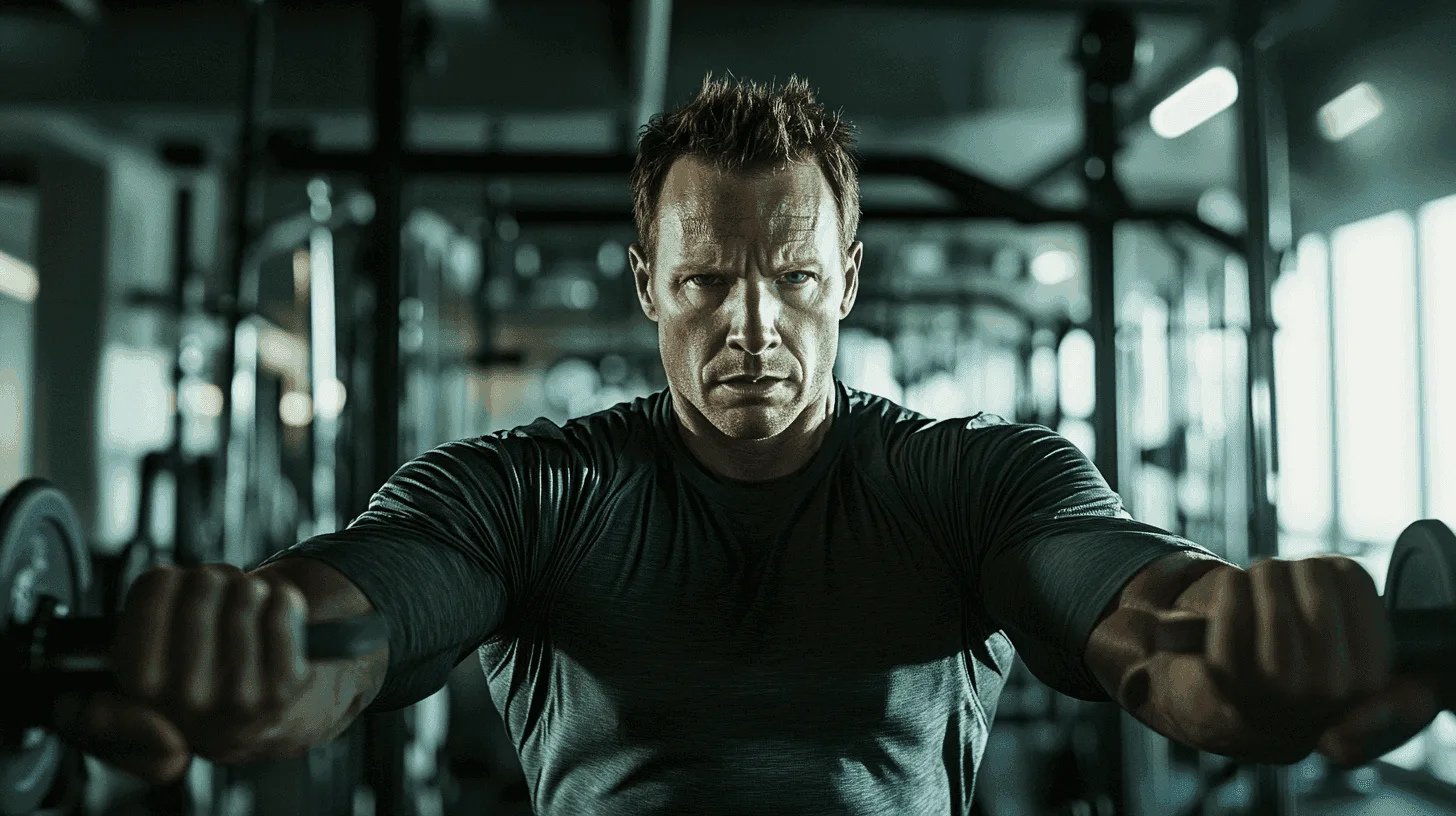
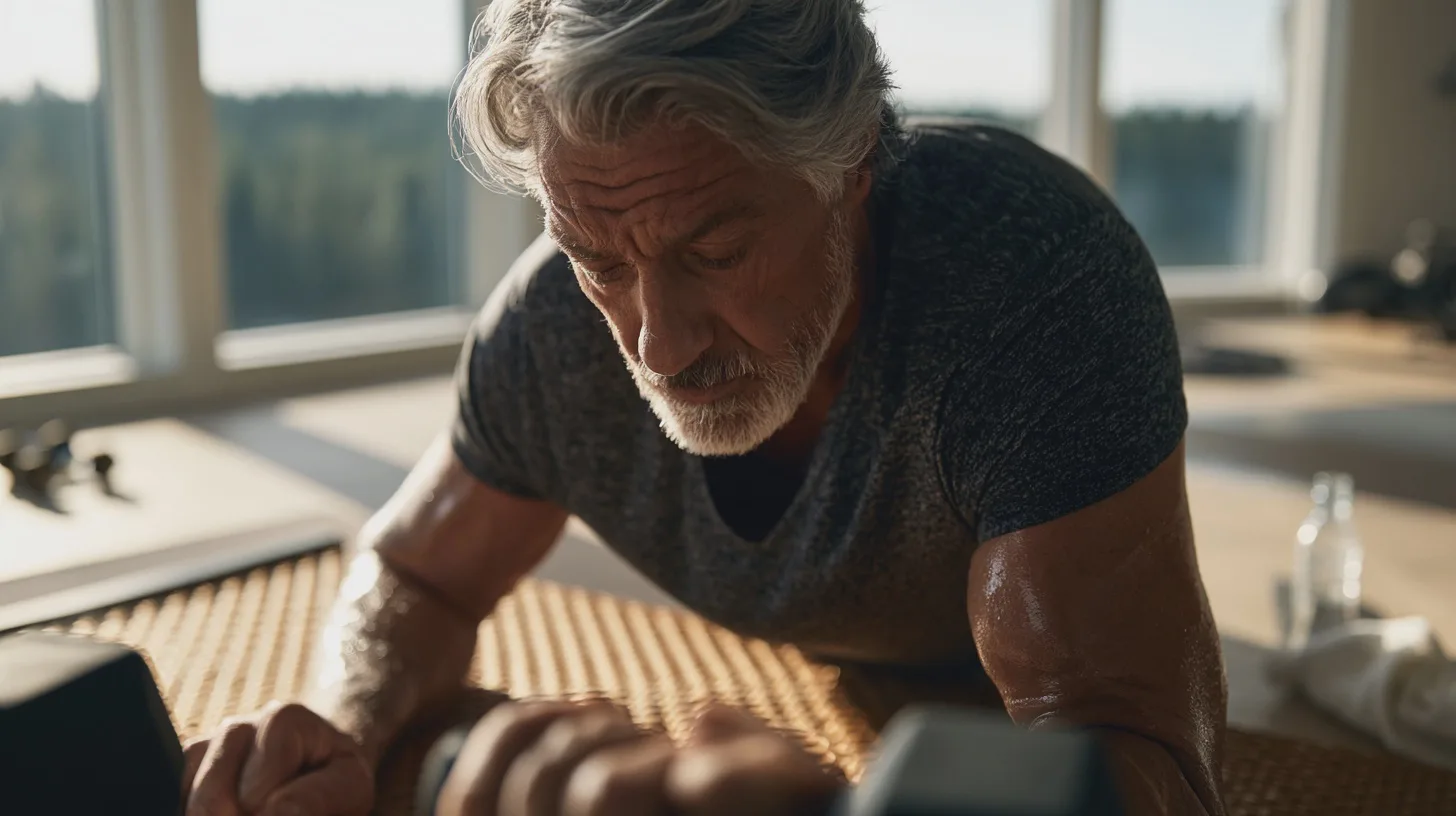
At some point in your forties, the jar lids got tighter. The suitcase got heavier. Getting up off the floor after a go on the Lego with a small relative started to need a hand on the sofa and a small grunt you’d rather nobody heard.
That isn’t all in your head. Muscle is use-it-or-lose-it tissue, and in midlife the losing gets easier. The good news is that it responds to training at almost any age, and the dose that makes a difference is smaller than you probably think.

What actually happens to your muscles after 45?
From middle age, muscle mass and strength start to slip, usually so slowly you don’t notice from one year to the next. It speeds up as you get older. When the loss gets serious enough to affect how well you get about, doctors call it sarcopenia.
You’ll see plenty of precise percentages online for how much muscle you lose each decade. Treat them with some caution. The figures vary a lot between studies and between people, and they depend heavily on how active you are. The direction of travel isn’t in doubt, though. Sit still and the line goes down.
And it isn’t only about biceps. Muscle helps manage your blood sugar, it pulls on your bones and keeps them strong, and it is what catches you when you trip on a kerb. The strength you build at 50 is the strength you’ve got in reserve at 75.
Bluntly, it’s a pension. You pay in now so there’s something left to draw on later.
How much strength training do you actually need?
The UK Chief Medical Officers’ physical activity guidelines apply in England, Scotland, Wales and Northern Ireland alike. For adults aged 19 to 64, they say to do activities that build or maintain strength in the major muscle groups on at least two days a week. That sits on top of the familiar aim of around 150 minutes of moderate activity, such as brisk walking or cycling, spread across the week.
Major muscle groups means legs, hips, back, chest, shoulders, arms and core. The guidelines also make a point worth hearing: any strengthening activity is better than none. Two sessions is the target, not the entry fee.
Most of us aren’t hitting it. A large study of more than 250,000 adults in England, published in PLOS ONE in 2022, found that only 29% of men met the strength guideline under the broad definition used by the Health Survey for England. That definition counts sports such as golf and cricket. When the researchers counted only activities with real evidence of building muscle and bone, the figure for men fell to 16%.
So your round of golf is lovely, but it probably isn’t doing the job.
You don’t need to look like you lift. You need to be able to lift: the shopping, the suitcase, the grandchild, and yourself off the floor.
Do you need a gym, or will the garden do?
You don’t need a gym membership, a protein tub the size of a paint pot or a mirror selfie. The official guidance lists heavy gardening and carrying heavy shopping alongside resistance exercise. Muscle responds to effort, not to where you happen to be.
What matters is that the work feels hard by the last few repetitions. That’s the signal that tells your body to hold on to its muscle and build more. Gentle pottering won’t do it.
A simple home routine could look like this:
Sit-to-stands from a dining chair, slowly, without using your hands. Press-ups against a wall or kitchen worktop, working down towards the floor over the weeks. Lunges or step-ups on the bottom stair. Rows with a resistance band looped around a sturdy door handle, or with a full shopping bag in each hand. A plank, held for as long as you can keep good form.
Two or three sets of 8 to 12 of each, twice a week, covers the basics. As it gets easier, make it harder: slower reps, more reps, a heavier bag. A pair of adjustable dumbbells or a kettlebell will last you years, and a 10kg (about a stone and a half) kettlebell is plenty for most beginners.
If you prefer company or a bit of coaching, council-run leisure centres often have off-peak rates, and many run beginners’ sessions. A qualified instructor teaching you to squat and deadlift properly is money well spent.
Is it safe to start lifting weights in your 50s?
For most people, yes, and the risks of doing nothing are generally bigger than the risks of starting sensibly. But sensible is the key word.
Start lighter than your ego wants. Learn the movement first, then add load. Breathe out as you push or lift rather than holding your breath and going purple. Expect some muscle soreness a day or two after your first sessions. That’s normal. Sharp pain in a joint isn’t, and it’s a reason to stop that exercise.
If you have a heart condition, high blood pressure, diabetes, joint problems or a recent injury, or you’ve been inactive for a long time, have a word with your GP or practice nurse before you start. Don’t change any medicines on your own initiative because you’ve started training. In England, the free NHS Health Check for adults aged 40 to 74 is a good moment to raise it, and it will check your blood pressure and cholesterol while you’re there. Arrangements differ in Scotland, Wales and Northern Ireland, so ask your GP practice what’s offered where you live.
If you get chest pain, unusual breathlessness or feel faint while exercising, stop. For urgent advice call NHS 111. If the chest pain is severe or doesn’t go away, call 999.
How to make it stick past February
Most strength regimes don’t fail because they’re too hard. They fail because they’re too ambitious. Five sessions a week fizzle out in a fortnight. Two short ones last.
Pin your sessions to things you already do. Squats while the kettle boils. A band workout before Sunday’s football. Write down what you lifted, because seeing the numbers creep up is surprisingly motivating, and it tells you when it’s time to go heavier.
Give it eight to twelve weeks before you judge it. Stairs, lifting and getting out of low chairs tend to feel easier before anything shows in the mirror. That’s the bit that counts.

In short
Muscle and strength decline from midlife, and the decline speeds up with age unless you push back. UK guidelines say to work all the major muscle groups on at least two days a week, and that can mean bodyweight exercises, resistance bands, heavy gardening or the gym, as long as it feels hard by the end. Start light, build gradually and check with your GP first if you have a health condition. It’s one of the best investments you can make in staying independent later on.
Sources

Midcent Health
Adrian Irving writes about health for men 45 and over who would rather do something than worry. Training, weight loss, sleep, cholesterol and blood tests, heart health, testosterone, the prostate, mental health and your sex life – what the evidence says, what's worth trying, and when it's time to see your GP.
One of Midcent's writers. Spotted something? Write to adrian@midcent.uk.