Knee arthritis: when to train and when to see a surgeon
A creaky knee doesn’t put you straight on a waiting list. Here’s what NHS guidance says actually helps knee osteoarthritis, and when it’s time to talk about surgery.
Reviewed, edited and approved by Editor-in-chief Daniel Sköld · Updated 30 October 2026
Contents
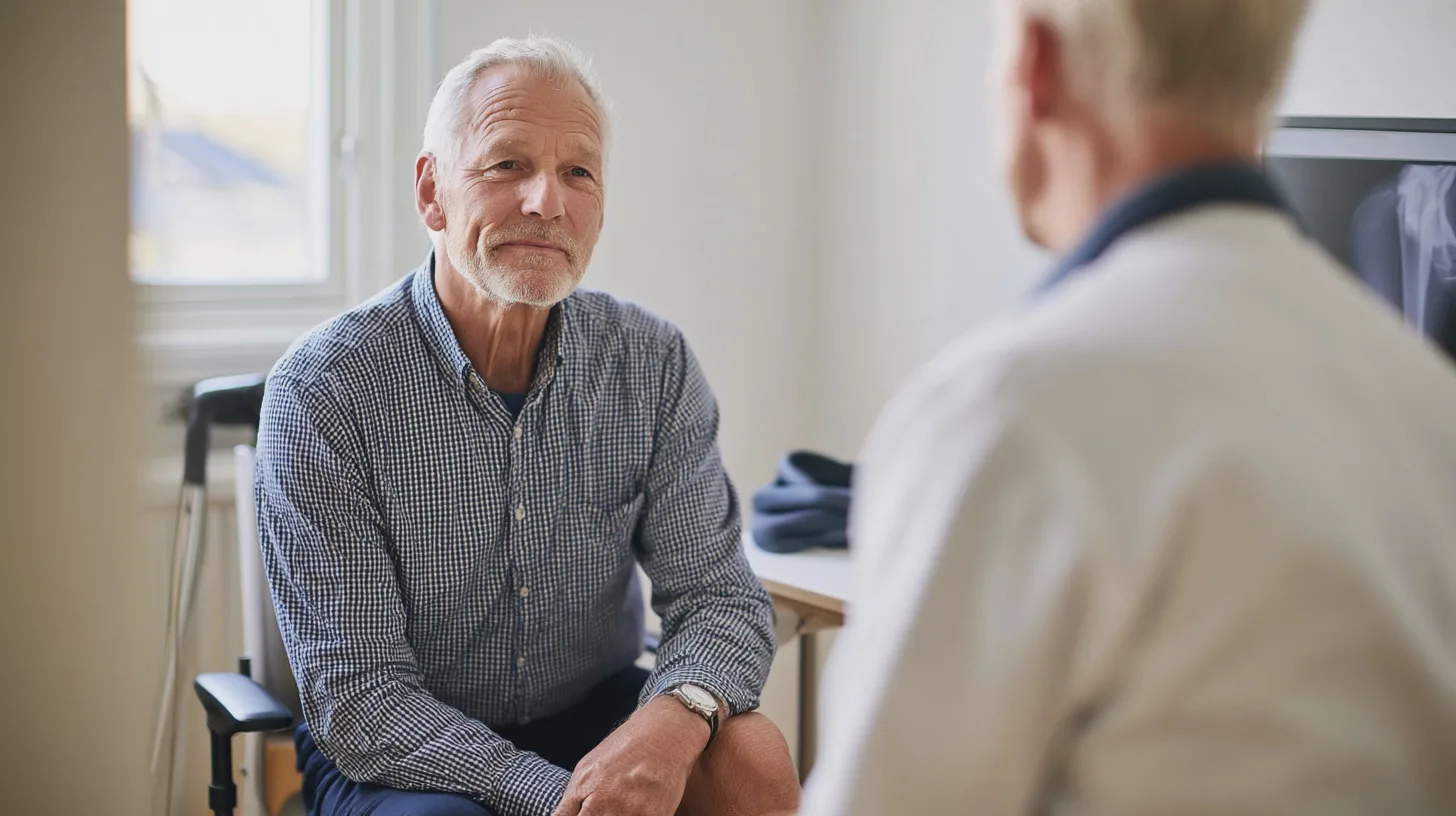
It starts with the stairs. Then the walk back from the pub takes longer, and getting up off the sofa comes with a noise you used to associate with your dad. Somebody says the word arthritis and you picture a new knee and six weeks on crutches.
Slow down. For most men with knee osteoarthritis, the most effective treatment doesn’t involve an operating theatre. It involves your thighs. Surgery has its place, though, and knowing when you’ve got there matters just as much.
AD
What is actually happening in your knee?
Osteoarthritis is the most common kind of arthritis. The cartilage that cushions the ends of your bones thins and roughens, the joint tries to repair itself and you get pain, stiffness and sometimes swelling. It’s often called wear and tear, which makes it sound as if your knees have a mileage limit. They don’t, quite.
NHS 111 Wales points out that there’s no cure, but the condition doesn’t necessarily get worse over time. NHS inform in Scotland adds something that surprises plenty of people: X-rays and symptoms often don’t match. Some people’s scans look terrible and they barely notice. Others are in real pain while their X-ray looks fairly tidy.
That’s one reason NICE, which sets the treatment guidance doctors in England follow (Wales and Northern Ireland generally follow it too), says a GP can usually diagnose osteoarthritis without a scan. If you’re 45 or over, your knee hurts when you use it, and any morning stiffness wears off within about half an hour, that’s usually enough to go on. Don’t be put out if you leave without an X-ray. It isn’t the GP fobbing you off. It’s the guidance working as intended.
Does exercise really help knee osteoarthritis?
Yes, and that isn’t a consolation prize. In NICE’s osteoarthritis guideline, NG226, therapeutic exercise is one of the two core treatments, and it’s recommended for everyone with the condition, whatever their age or how bad their symptoms are. Painkillers come second and surgery later still.
The idea is simple. Stronger muscles around the knee, especially the quadriceps along the front of your thigh, take load off the joint and make it more stable. Aerobic exercise helps with pain, mood and weight. NICE suggests strengthening work plus general fitness, ideally tailored to you, and says supervised sessions are worth considering because people stick with them for longer.
What does that look like in practice? Arthritis UK (the charity formerly called Versus Arthritis) and NHS physiotherapy leaflets suggest the same kind of thing: sit-to-stands from a chair, straight-leg raises, step-ups on the bottom stair, and pressing the back of your knee down onto a rolled-up towel. For cardio, cycling and swimming are easy on the joint, and walking is fine too. A static bike set up so your knee is almost straight at the bottom of the pedal stroke is a sound investment.
A word on pain. Some discomfort while exercising is normal and isn’t a sign you’re doing damage. Arthritis UK talks about finding the balance between rest and activity. If your knee is noticeably worse the next day, ease off a little. Don’t stop altogether, because doing less tends to make things worse over time.
Your thigh muscles are the cheapest knee brace you’ll ever own, and the only one that gets better the more you use it.
Will losing weight make my knees hurt less?
Probably, if you’re carrying extra. Weight management is the other core treatment in NG226. NICE tells clinicians to explain that any weight loss is likely to help, but that losing 10% of your body weight is likely to be better than losing 5%. NICE also admits the evidence has limitations, which is refreshingly honest. Even so, the direction is clear, particularly for knees.
To put that in numbers: if you weigh 16 stone (about 102kg), 10% is roughly a stone and a half, or about 10kg. That’s a sizeable target but a realistic one, and you don’t have to hit it before you feel a difference.
If you’re 40 to 74 and live in England, the free NHS Health Check every five years is a good chance to talk about weight with a professional. Scotland, Wales and Northern Ireland don’t offer the same scheme, so ask your GP practice about weight support. Before you spend money on supplements, note that GPs no longer prescribe glucosamine or chondroitin on the NHS, because there’s no strong evidence they work.
AD
Physio, painkillers and the rest of the toolkit
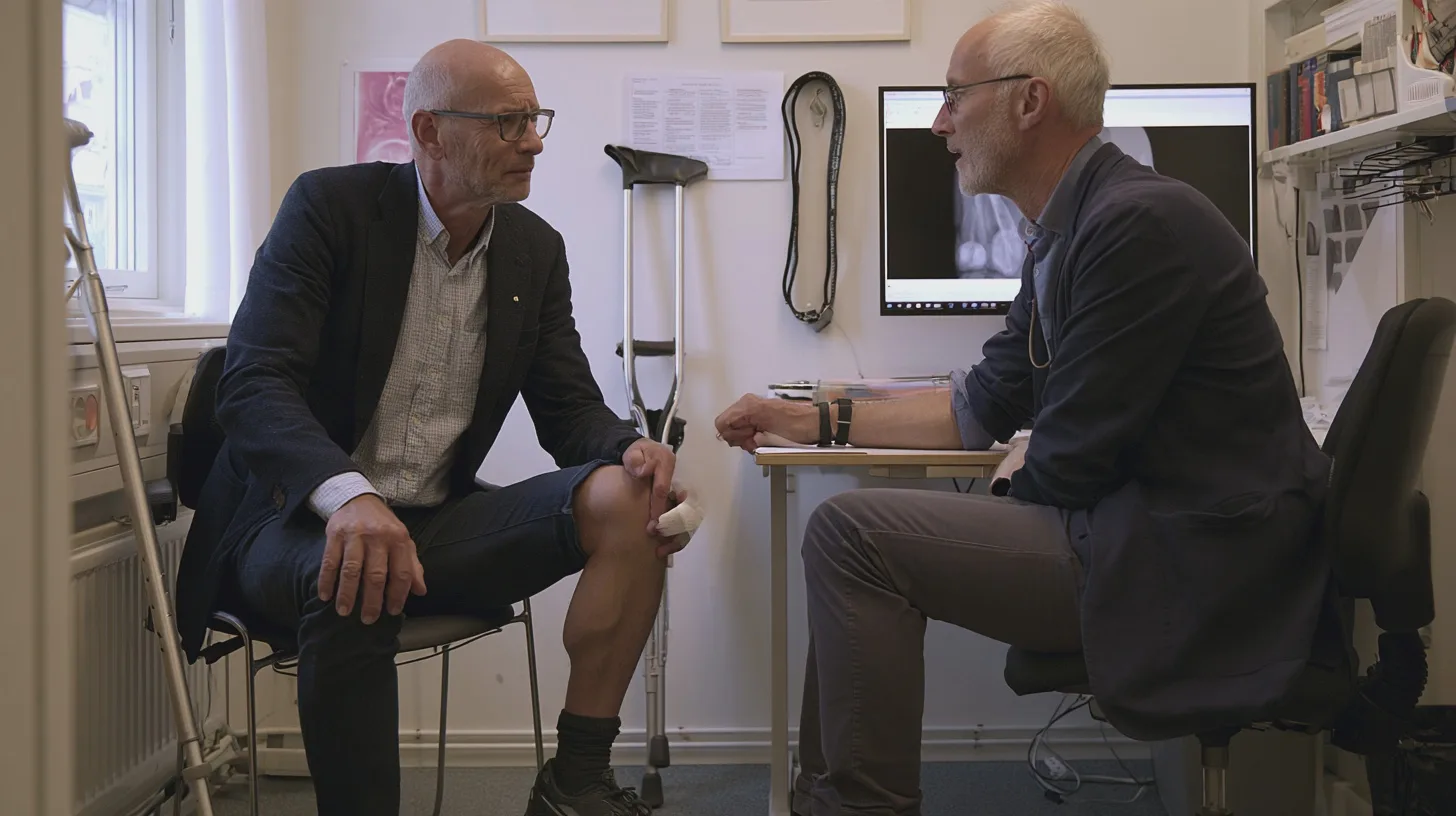
Your GP is the usual first stop. In many parts of the UK you can also refer yourself to NHS physiotherapy, though how that works varies by area, so check your practice or local health board’s website. A physio can set you a programme, show you how to load the knee sensibly and, according to NICE, may add hands-on manual therapy alongside the exercise. NICE doesn’t recommend manual therapy on its own.
NICE is cautious about medicines. Pain relief is meant to support exercise, not replace it. For knees, a topical anti-inflammatory gel is usually tried before tablets. Steroid injections may be offered when other treatments haven’t worked, but the relief is short-term. Your GP or pharmacist can tell you what’s suitable for you, especially if you take other medicines or have stomach, kidney or heart problems.
The everyday things help too. NHS inform suggests cushioned, supportive shoes, pacing your activities through the day and not sitting in one position for too long. If you use a walking stick, hold it on the opposite side to the bad knee. On the stairs: up with the good leg, down with the bad.
When should I ask about knee surgery?
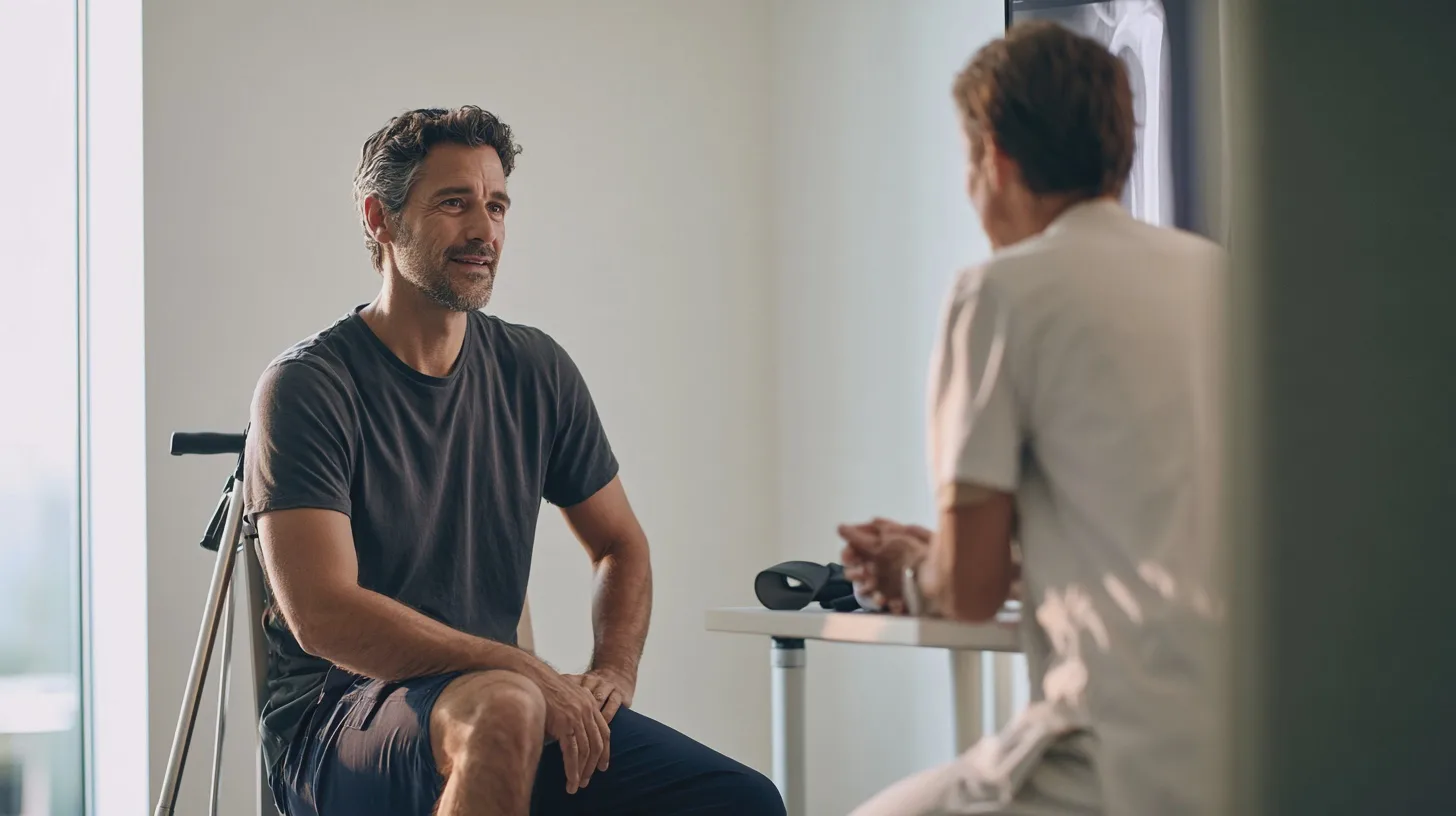
NICE says to consider referral for joint replacement when your symptoms are having a substantial impact on your quality of life and non-surgical treatment hasn’t worked or isn’t suitable. In plain English: you’ve done the exercise and the weight work properly, and your world is still shrinking. You’re turning down walks, you’re struggling to sleep for pain, or you’re planning your day around your knee.
NICE also says referral shouldn’t be refused just because of your age, your weight, whether you smoke or other health conditions, although those factors may be discussed. You don’t need to be at the end of your tether, and you don’t need to have reached a certain age.
Not every operation means a whole new knee. Partial knee replacement treats only the worn part of the joint, and an osteotomy realigns the bone to take load off the damaged area. One operation NICE generally advises against for osteoarthritis is a keyhole washout of the joint, unless your knee is genuinely locking. If it’s offered to you, ask why.
Go in with your eyes open. The Royal Orthopaedic Hospital in Birmingham says the full benefit of a knee replacement can take six to 12 months, and doing your rehab exercises is a big part of how well you recover. That’s why getting stronger now pays off twice: it may keep you away from surgery, and if not, it helps you recover faster afterwards.
Finally, don’t put up with certain symptoms. A knee that is suddenly hot, red and swollen, especially if you also feel feverish, needs urgent advice from your GP or NHS 111 the same day. If you’ve injured your knee and can’t put any weight on it, get it checked promptly.
In short
For most men, knee osteoarthritis starts with exercise, not surgery. NICE puts tailored strengthening and general exercise, plus weight loss if you need it, at the heart of treatment, with physio and painkillers in a supporting role. If you’ve given those a proper go and your knee is still limiting your life, ask your GP about an orthopaedic referral, because age and weight alone shouldn’t rule you out.
Adrian Irving writes about health for men 45 and over who would rather do something than worry. Training, weight loss, sleep, cholesterol and blood tests, heart health, testosterone, the prostate, mental health and your sex life – what the evidence says, what's worth trying, and when it's time to see your GP.
One of Midcent's writers. Spotted something? Write to adrian@midcent.uk.
Twisted it at five-a-side, and it still grumbles years later? Here’s what’s really going on in a midlife knee, why keyhole surgery is out of favour, and what works.
Dieting and cardio alone can strip away muscle as well as fat. Here is why lifting weights is the underrated part of losing weight in midlife, and how to start.
Muscle doesn’t stay put in midlife. If you don’t use it, you lose it. Here’s how much strength training you actually need after 45, and how to start safely.
No gym, no Lycra, no motivational shouting. Here’s a short, evidence-based plan for men in midlife who hate exercise but would quite like to keep living well.