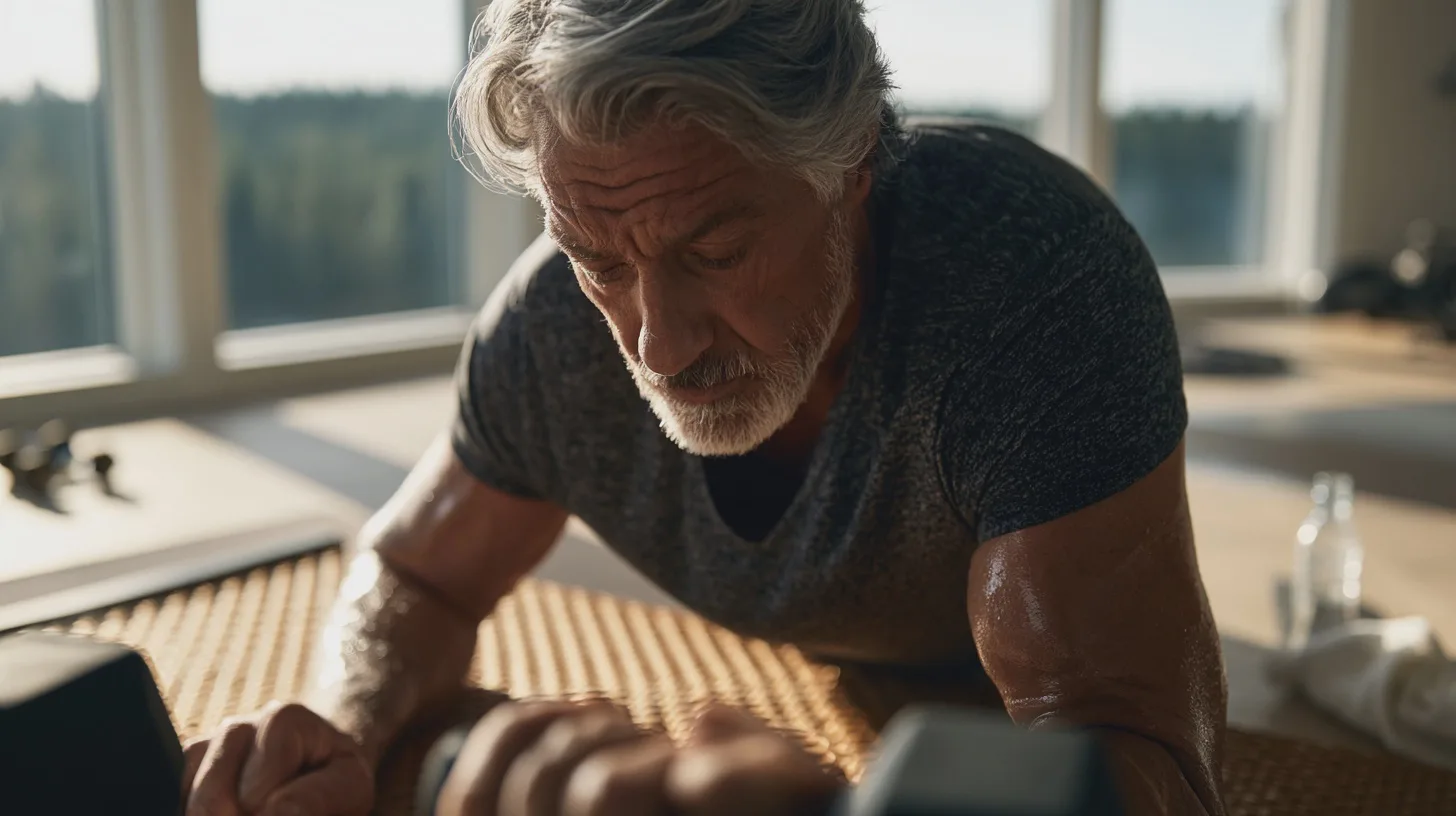
Somewhere around your mid-forties, the shopping bags start to feel heavier. Getting up off the sofa comes with a noise you never used to make, and the loft ladder has become a negotiation.
Most men put this down to age and leave it there. They shouldn’t. Muscle does drift away as the years pass if you do nothing about it, but it still responds to training at 50, 60 and well beyond. Plenty of men who start lifting in midlife end up stronger than they were at 30, mainly because at 30 they weren’t trying.
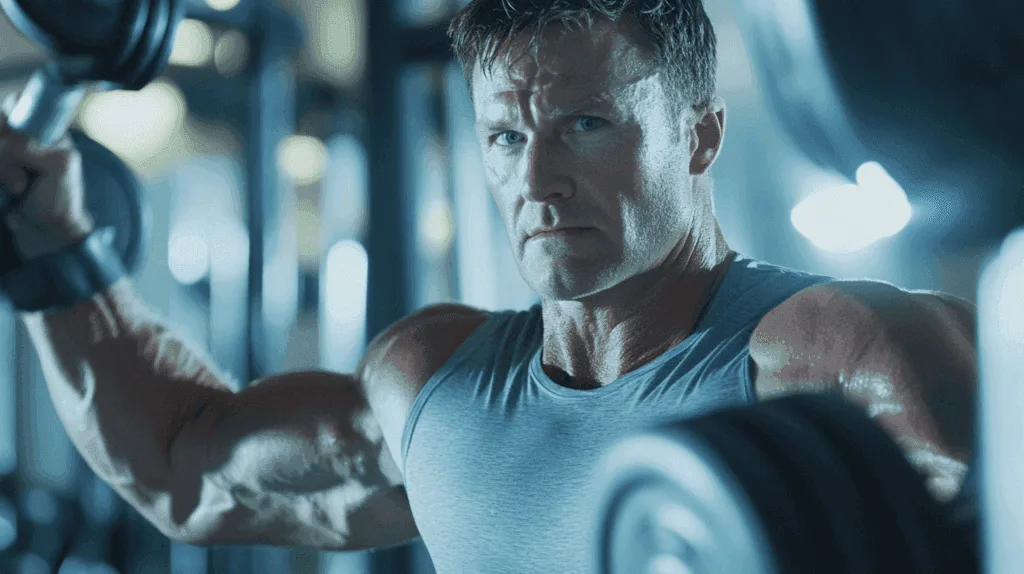
Why does muscle disappear as you get older?
Muscle runs on a simple rule: use it or lose it. From middle age onwards, your body gets slower at building and repairing muscle tissue. Add a desk job, a car and an evening routine that centres on the sofa, and the slide speeds up.
Doctors call the advanced version of this age-related muscle loss sarcopenia. You don’t have to be frail to be on that road. The early signs are ordinary ones: you’re slower on the stairs, you need your hands to get out of a low chair, and you have to put the bags down halfway up the hill.
Muscle isn’t only for show, either. It helps your body handle blood sugar, it protects your joints, it keeps you steady on your feet and it burns more energy at rest than fat does. Losing it quietly makes almost everything else harder.
How much strength training do you actually need?
Less than you’d fear. The UK physical activity guidelines for adults, as NHS inform sets them out, include two parts. One is moderate or vigorous activity, such as brisk walking or cycling, aiming for at least 150 minutes of moderate activity a week. The other is muscle-strengthening activity on at least two days a week, working the major muscle groups: legs, hips, back, abdomen, chest, shoulders and arms.
Most men cover the walking part, at least on a good week. The strength part is the one that gets skipped. Plenty of keen runners and cyclists in their fifties have excellent hearts and the upper-body strength of a wet lettuce.
Strength training doesn’t have to mean a gym. The guidelines count weights, resistance bands, bodyweight exercises, heavy gardening and carrying loads. Activities like yoga, which test balance as well as strength, count too.
You can’t stop the years adding up, but you can make sure your muscles keep up with them.
What does it do for your heart?
A lot of men still think of weights as vanity and cardio as the thing that keeps you alive. The British Heart Foundation sees it differently: it says keeping your muscles strong can help reduce your risk of heart and circulatory diseases. It now publishes its own short home strength routines alongside its walking advice.
The BHF has also run a Heart MOT Challenge aimed at men aged 45 and over. It’s a month of guided 10-minute daily sessions covering movement, strength and mobility. Check its website for when the next one runs. The point is that the heart charity treats strength work as part of looking after your heart, not something extra for when you have spare time.
Strength training also helps on other fronts. It supports bone strength, helps you manage your weight and keeps your balance in shape, which matters more each decade. None of it is a miracle cure. Over the years, though, it adds up.
How do you start strength training after 50?
Start small and stay consistent. Ten minutes done twice a week for a year beats an hour-long session that leaves you unable to sit on the loo for three days and puts you off for good.
A sensible beginner’s routine could look like this:
Squats to a chair. Sit down slowly and stand back up without using your hands. It’s dull, but it’s the most useful exercise you’ll ever do, because it’s how you’ll get off the toilet at 85.
Wall or worktop press-ups. Lean against a wall or the kitchen worktop and lower your chest towards it. As you get stronger, use something lower, and eventually the floor.
Rows with a resistance band. Bands are cheap, light and gentle on the joints. The BHF has a free routine using them.
Carries. Pick up two heavy shopping bags or dumbbells and walk. A pair of 10 kg (about 1st 8lb) weights is a decent target for many men. Start lighter if you need to.
Aim for a weight or version of each exercise that makes the last couple of repetitions feel genuinely hard. You can still do them with good form, but you’d rather stop. When that gets easy, make it harder: more repetitions, a heavier weight, a slower lowering phase or a stiffer band. This is called progressive overload, and the evidence behind it is solid. It’s the bit most people leave out.
If you’d prefer a gym, many council leisure centres offer inductions, and some run sessions aimed at older or returning exercisers. A few sessions with a qualified instructor to check your form are money well spent.
What about protein, supplements and gadgets?
Your muscles need raw material, so it’s worth making sure each meal includes a decent source of protein: eggs, fish, chicken, beans, lentils, Greek yoghurt or tofu. Most men eating a varied diet don’t need protein shakes. They’re a convenience, not a requirement.
Creatine is one of the better-researched supplements for strength training, but it isn’t essential, and it’s worth asking a pharmacist or your GP first if you have kidney problems or take regular medicines. Be more sceptical of anything that promises to boost testosterone or build muscle without effort. The evidence for most of these ranges from thin to nothing.
Fitness trackers and apps can help you keep count, but a notebook recording what you lifted last week does the same job for nothing.
When should you check with your GP first?
For most men, starting gently is safe, and doing nothing carries far more risk. But speak to your GP before you start if you have a heart condition, chest pain, dizziness or breathlessness when you exert yourself, uncontrolled high blood pressure, or a joint or back problem that’s being treated. If you’ve had a heart event, ask about cardiac rehabilitation. The BHF and the We Are Undefeatable campaign both have advice on easing back into exercise.
In England, adults aged 40 to 74 can get a free NHS Health Check every five years, which checks your blood pressure, cholesterol and more. It’s a useful starting point. Scotland, Wales and Northern Ireland don’t offer the same scheme, so ask your GP practice what checks are available. If you get chest pain while exercising, stop. Call 999 if it’s severe or doesn’t go away, and use NHS 111 if you’re unsure what to do.

In short
Yes, you can get stronger after 50, often more than you’d expect, because muscle keeps responding to training at any age. UK guidelines recommend muscle-strengthening activity on at least two days a week alongside regular walking or other aerobic exercise. Start with simple exercises at home, make them gradually harder and eat enough protein. Talk to your GP first if you have a heart condition or worrying symptoms.
Sources

Midcent Health
Adrian Irving writes about health for men 45 and over who would rather do something than worry. Training, weight loss, sleep, cholesterol and blood tests, heart health, testosterone, the prostate, mental health and your sex life – what the evidence says, what's worth trying, and when it's time to see your GP.
One of Midcent's writers. Spotted something? Write to adrian@midcent.uk.