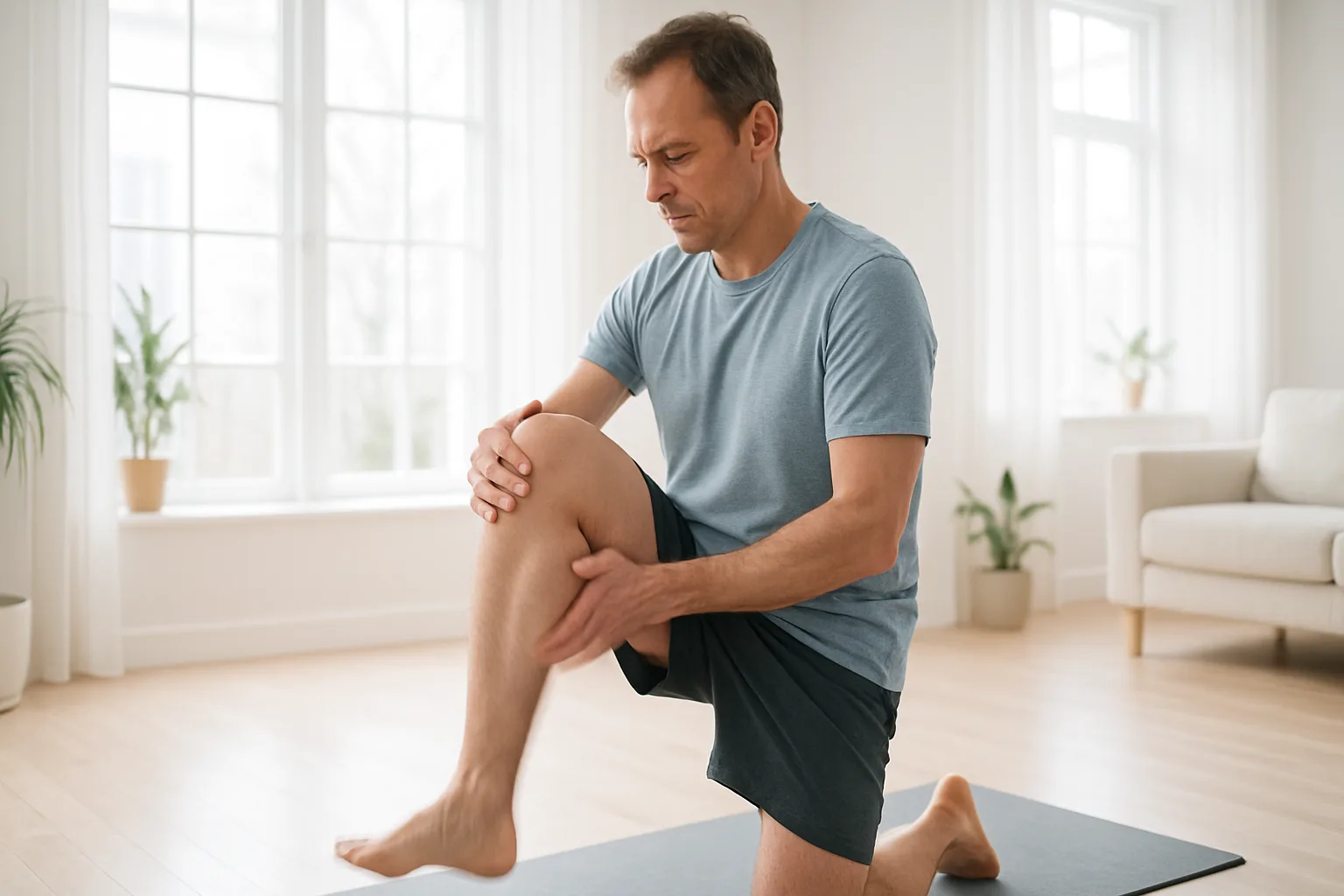
It started with a twist. Maybe a sliding tackle at five-a-side, a missed kerb or an overambitious leap at a wedding disco. The swelling went down, you limped for a fortnight and then got on with your life. Except the knee never quite forgot. It aches on stairs, clicks when you crouch and has opinions about long car journeys.
Welcome to the midlife knee. The good news is that the most effective treatment costs very little and doesn’t involve an operating theatre. The less good news is that it involves effort.
Why does my knee still hurt years after an injury?
Your knee is a hinge that carries several times your body weight every time you take the stairs. By your late forties, the cartilage that cushions it and the two crescent-shaped pads of gristle inside it, the menisci, have done a lot of miles. An old twist that damaged a ligament or meniscus can speed that wear up, because the joint no longer moves quite as it was designed to.
Doctors often lump the result together as degenerative knee disease: osteoarthritis, frayed or torn menisci, stiffness, the odd bout of swelling. It sounds grim. It isn’t a sentence. Symptoms tend to come and go, and the amount of pain you feel often has surprisingly little to do with what shows up on a scan.
That last point matters. Plenty of men in their fifties have meniscal tears on an MRI and no pain at all. Seeing damage on a picture doesn’t automatically mean the damage is the problem, or that cutting it out will fix it.
Is keyhole knee surgery worth it?
For a long time, the answer to a grumbling middle-aged knee was arthroscopy: keyhole surgery to wash out the joint and tidy up ragged cartilage. It felt logical. It turned out not to work very well.
A panel of international experts writing in The BMJ in 2017 strongly recommended against arthroscopy for almost everyone with degenerative knee disease. Their reasoning was that it doesn’t, on average, give a lasting improvement in pain or function, and it carries real risks, including blood clots and infection. Trials comparing surgery with physiotherapy for wear-and-tear meniscal tears found the operation did no better.
NICE agrees. Its 2022 osteoarthritis guideline tells doctors not to offer arthroscopic procedures for osteoarthritis, and NHS commissioners in many areas don’t routinely fund keyhole surgery just to investigate knee pain or clean up a worn joint. Where an MRI is needed, it should come first.
There are exceptions. A knee that genuinely locks, meaning it gets stuck and you physically can’t straighten it, is a different matter from one that feels stiff in the morning or occasionally gives way. A fresh, significant injury in an otherwise healthy knee may also need a surgeon’s opinion. That’s a conversation for your GP or a specialist, not a decision to make on your own.
The best treatment for a worn knee isn’t rest or surgery. It’s making the muscles around it strong enough to do the job.

What actually helps a bad knee?
The thing NICE puts at the top of its list for knee osteoarthritis is unglamorous: therapeutic exercise. Not one-off heroics, but a structured, gradually progressed programme you stick at. Strong thigh and hip muscles take load off the joint, steady it and, for many people, reduce pain as effectively as tablets.
Start with the quadriceps, the big muscles at the front of your thigh. Sit-to-stands from a dining chair, straight-leg raises and shallow squats holding a worktop are a sensible place to begin. Add some hip and buttock work, such as side-lying leg lifts or glute bridges. Then add something aerobic that’s kind to knees: cycling, swimming, brisk walking or a cross-trainer.
Some discomfort while you exercise is normal and isn’t a sign you’re doing harm. A rough rule many physios use is that mild pain that settles within a day or so is fine; pain that’s much worse the next morning means you’ve overdone it, so ease back rather than stop altogether.
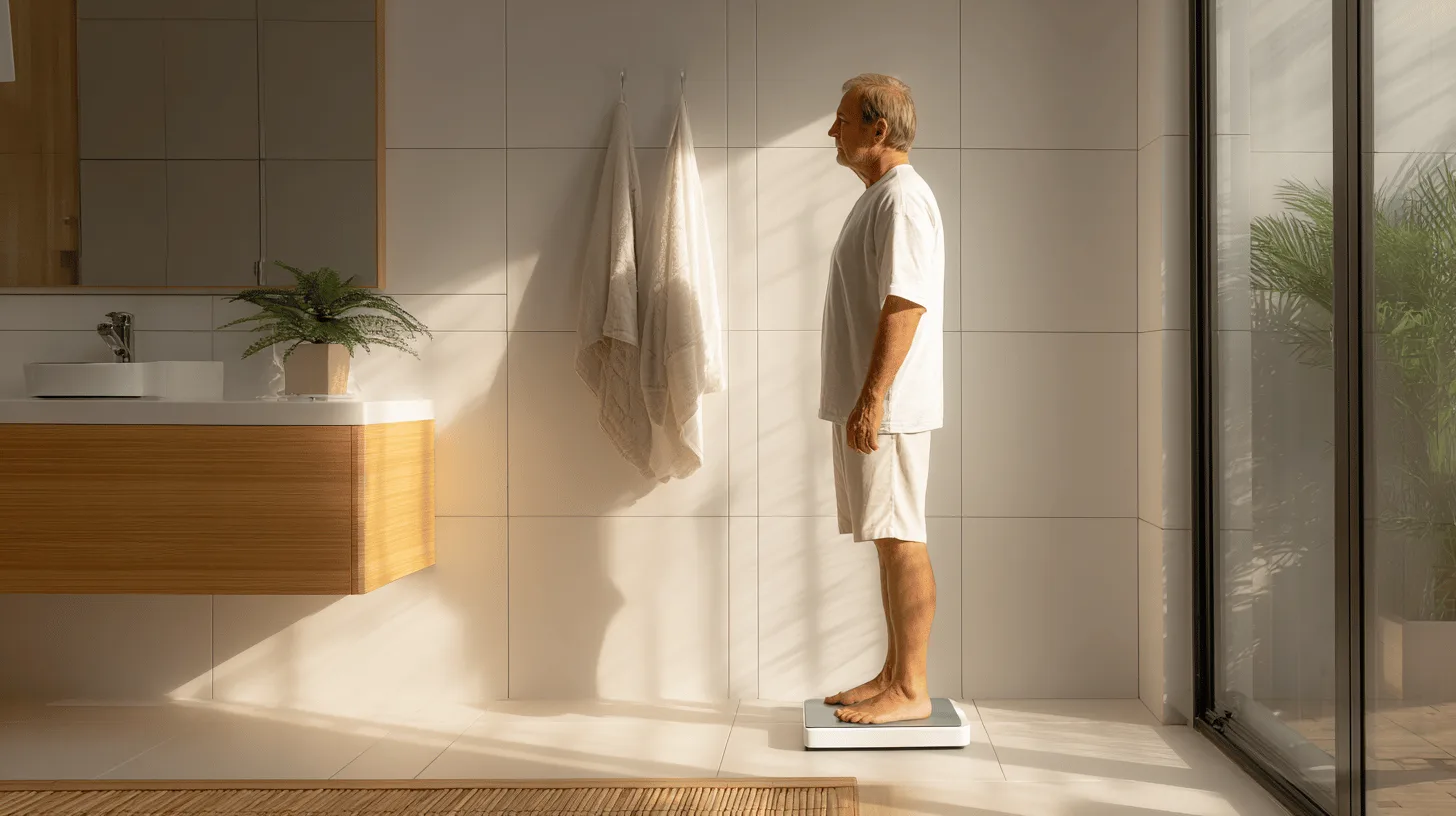
Weight is the other big lever, and nobody enjoys hearing it. NICE advises that any weight loss is likely to help a sore knee, and that losing 10% of your body weight is likely to help more than 5%. If you weigh 16 stone (about 102kg), 5% is roughly 11lb (5kg). That’s not a crash diet; it’s fewer pints and takeaways over a few months. If you’re in England and aged 40 to 74, the free NHS Health Check is a good, no-cost nudge to look at weight, blood pressure and the rest.
Painkillers, supplements and gadgets: what’s worth your money?
For pain relief, NICE suggests trying an anti-inflammatory gel rubbed on the knee before tablets. Because less of the drug reaches the rest of your body, it’s generally gentler. NICE also says paracetamol and weak opioids shouldn’t routinely be used for osteoarthritis, except occasionally and for short periods. A pharmacist can talk you through the options, especially if you take other medicines or have stomach, kidney or heart problems.
As for supplements, NICE doesn’t recommend glucosamine for osteoarthritis because the evidence of benefit is weak. If you’ve been buying tubs of it for years and feel better, there’s no harm in asking yourself whether the exercise you started at the same time might deserve the credit.
Knee supports and braces can make you feel more confident on a bad day, and good, cushioned shoes help. Treat them as add-ons, not as a substitute for strengthening work. Nothing you strap on will do the job your quads should be doing.
When to get help, and where
Most knee pain can be managed at home at first. NHS guidance suggests that if a fortnight of self-care hasn’t helped, or the pain is getting worse, it’s time to get it looked at. Your GP is one route. In many parts of the UK you can also refer yourself straight to an NHS physiotherapist or musculoskeletal service without seeing a GP first. How you do this varies between England, Scotland, Wales and Northern Ireland, and between local areas, so check your GP practice website or local NHS services.
Don’t sit on it, and get urgent advice from NHS 111, if your knee is hot, red and swollen and you feel feverish or unwell, if it swells up badly with no obvious cause, or if it locks and won’t straighten. Go to A&E or call 999 after a serious injury, if the knee looks out of shape, or if you can’t put any weight on it.
And if the knee is a few years down the line and still wrecking your sleep and your walks despite a proper go at exercise and weight loss, talk to your GP about whether a referral to discuss joint replacement makes sense. That’s a decision for much later, not a starting point.
In short
A knee that never fully recovered from an old twist is usually a sign of wear-and-tear damage, and for most men in midlife keyhole surgery won’t fix it. The approach backed by the evidence is a steady programme of strengthening and low-impact exercise, losing weight if you need to and trying an anti-inflammatory gel for flare-ups. See your GP or refer yourself to NHS physio if two weeks of self-care hasn’t helped, and get urgent help for a hot, locked or badly injured knee.
Sources

Midcent Health
Adrian Irving writes about health for men 45 and over who would rather do something than worry. Training, weight loss, sleep, cholesterol and blood tests, heart health, testosterone, the prostate, mental health and your sex life – what the evidence says, what's worth trying, and when it's time to see your GP.
One of Midcent's writers. Spotted something? Write to adrian@midcent.uk.