When the fun drains away: early signs of depression
Tiredness, a short fuse and a flat feeling that won’t lift can be more than a bad patch. How to spot early depression in midlife, and where to get help.
Reviewed, edited and approved by Editor-in-chief Daniel Sköld · Updated 27 October 2026
Contents
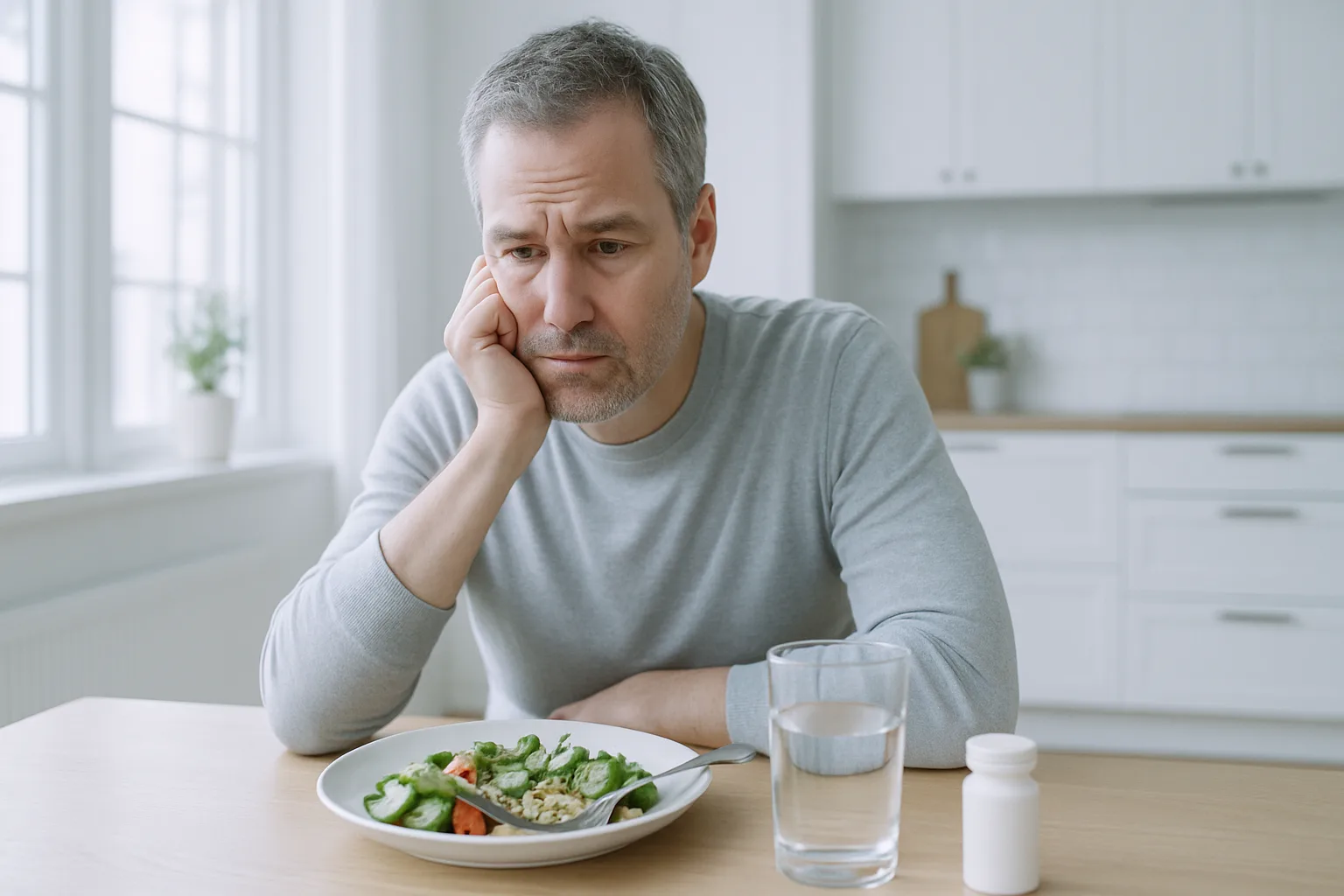
Nobody tells you depression might turn up looking like a bad mood. You’d expect tears and dark thoughts. What you actually get is snapping at the kids, a fourth pint where there used to be one, and a Saturday on the sofa because golf, the allotment and your mates all feel like hard work.
For a lot of men in midlife, that’s how it starts. It’s easy to put it down to stress, age or too much work, and easy to ignore. Here’s how to tell an ordinary rough patch from something that needs attention, and what you can do about it in the UK without waiting for things to fall apart.
AD
What are the first signs of depression in men?
The NHS lists the classic symptoms as low mood that lasts most of the day, losing interest or enjoyment in things you used to like, feeling hopeless, and low self-esteem. Most people know about those.
The physical and behavioural signs are easier to miss, and in men they often come first:
Tiredness that sleep doesn’t fix. You’re in bed for eight hours and still wake up feeling flattened.
Sleep going wrong in either direction. You wake at 4am with your mind going round in circles, or you could sleep all weekend.
Changes in appetite or weight, usually comfort eating, sometimes simply forgetting to eat.
A short fuse. Irritability is one of the most commonly overlooked signs in men. If everyone around you seems to have become unbearable all at once, it may be worth asking whether the change is in you.
Aches and pains, poor concentration and a low sex drive also show up a lot. So does pulling back from people: you stop replying to the group chat and turn down invitations you’d once have jumped at.
Bad week or something more?
Everyone has stretches where life feels grey. A bereavement, redundancy, divorce or a run of bad news will knock most people down for a while, and that’s a normal reaction.
The NHS draws the line at duration. If you’ve felt low, or got little pleasure out of anything, for most of the day nearly every day for at least two weeks, that’s no longer just a bad week.
GPs often start with two quick screening questions, and you can ask yourself the same ones. Over the last two weeks, how often have you felt down, depressed or hopeless? And how often have you had little interest or pleasure in doing things? If the honest answer to either is “more often than not”, book an appointment.
Depression in men rarely looks like sadness. More often it looks like being tired, short-tempered and quietly cut off.
Also watch for what you’re using to cope. Drinking more, spending longer at work, gambling or hours of scrolling can all be ways of numbing feelings you haven’t named. They help for a while and then make things worse. Alcohol in particular is a depressant, and it wrecks the sleep you need to recover.
Why midlife can be a hard stretch
There’s no single reason, but the years between 45 and 64 tend to pile things up. You may be caring for elderly parents while the children are still at home or have just left. Your career may have stalled, or you may be dreading redundancy. Relationships change, and friendships often thin out without anyone deciding they should.
Health plays a part too. Long-term conditions such as heart disease, diabetes and chronic pain are linked to higher rates of depression. Some physical problems can also look like it, an underactive thyroid or low testosterone among them. That’s one reason it’s worth seeing your GP rather than assuming you know what’s going on: they can check whether something physical is involved.
Plenty of men your age also grew up with the idea that you keep your head down and get on with it. That approach works well for a flat tyre. It doesn’t work for depression, which tends to get worse the longer it’s left alone.
AD
How do I get help for depression on the NHS?
Start with your GP. You don’t have to arrive with a diagnosis or the right words. “I’ve not felt like myself for a few weeks” is enough. Your GP can rule out physical causes and talk you through the options. NICE guidance recommends treatment based on how severe your symptoms are and what you’d prefer. That might be guided self-help, a talking therapy, exercise, medication or a combination.
In England you can also go straight to NHS Talking Therapies without seeing a GP. Search “NHS Talking Therapies” on the NHS website, enter your postcode and refer yourself online to your local service. It’s free and offers approaches such as cognitive behavioural therapy (CBT) and counselling, delivered face to face, by phone, by video or online. Waiting times depend on where you live.
Things work differently elsewhere in the UK. In Scotland, start with your GP, and NHS inform has self-help guides you can use straight away. In Wales, NHS Wales offers free online CBT courses you can sign up for yourself, and your GP can refer you to local psychological therapy. In Northern Ireland, your GP is the usual way in to talking therapies through your local health and social care trust.
Self-help does have some evidence behind it, so it isn’t just a consolation prize. Regular physical activity, even brisk walks, can lift mild to moderate symptoms. Keeping to a regular sleep pattern, cutting back on alcohol and staying in contact with people all help too, even when they’re the last things you feel like doing. Apps and supplements promising to cure low mood are a different matter: most have little good evidence, so check with your GP or pharmacist before relying on one. Don’t start or stop any prescribed medicine without talking to your GP first.
If things feel darker
Sometimes the low mood comes with thoughts that people would be better off without you, or that you’d rather not be here. If that’s you, please tell someone today.
Samaritans are available any time, day or night, on 116 123. The call is free and you don’t have to be suicidal to ring. If you’d rather not talk, you can text SHOUT to 85258. In England, call NHS 111 and choose the mental health option. In Wales, call 111 and press 2. In Scotland, Breathing Space is available on 0800 83 85 87, and in Northern Ireland, Lifeline is available on 0808 808 8000.
If you feel you might act on those thoughts, or you’re worried about someone else’s immediate safety, call 999 or go to A&E.
In short
Early depression in men often shows up as tiredness, irritability, poor sleep, drinking more and pulling away from people, rather than obvious sadness. If you’ve felt low or lost interest in things for most days over two weeks or more, speak to your GP or, in England, refer yourself to NHS Talking Therapies. If you’re struggling right now, Samaritans are available any time on 116 123, and in an emergency call 999.
Adrian Irving writes about health for men 45 and over who would rather do something than worry. Training, weight loss, sleep, cholesterol and blood tests, heart health, testosterone, the prostate, mental health and your sex life – what the evidence says, what's worth trying, and when it's time to see your GP.
One of Midcent's writers. Spotted something? Write to adrian@midcent.uk.
Depression in men often looks more like anger, long hours or a bottle of wine a night than sadness. Here’s how to spot it in yourself or a mate, and where to get help.
The sports car is a cliché. The restlessness, flat mood and 3am questions often aren’t. How to tell a midlife wobble from depression, and what actually helps you through it.
Weight-loss jabs can take away more than your appetite. Here’s what they do to mood, pleasure, muscle and your social life, what the evidence says, and when to get help.
You might not feel stressed, but your body may disagree. How to spot the quiet signs of chronic stress in midlife, what it does to your heart, and how to fight back.