Most cities would build a monument to the river that nearly destroyed them. Valencia did something odder. After the Turia burst its banks in October 1957 and flooded the city, killing scores of people, the river was diverted south. Then came the question of what to do with the empty riverbed that ran through the middle of town. The planners wanted a motorway. The locals objected and got a park instead.
That nine-kilometre strip of green sums up why Spain’s third city works so well for a long weekend. Valencia rarely feels like it is performing for visitors. It has a Gothic old town, a proper sandy beach that you can reach by tram, and a lagoon full of rice fields where paella was born. Barcelona gets the crowds and Madrid gets the galleries. Valencia gets on with lunch.
Is Valencia worth visiting for a city break?
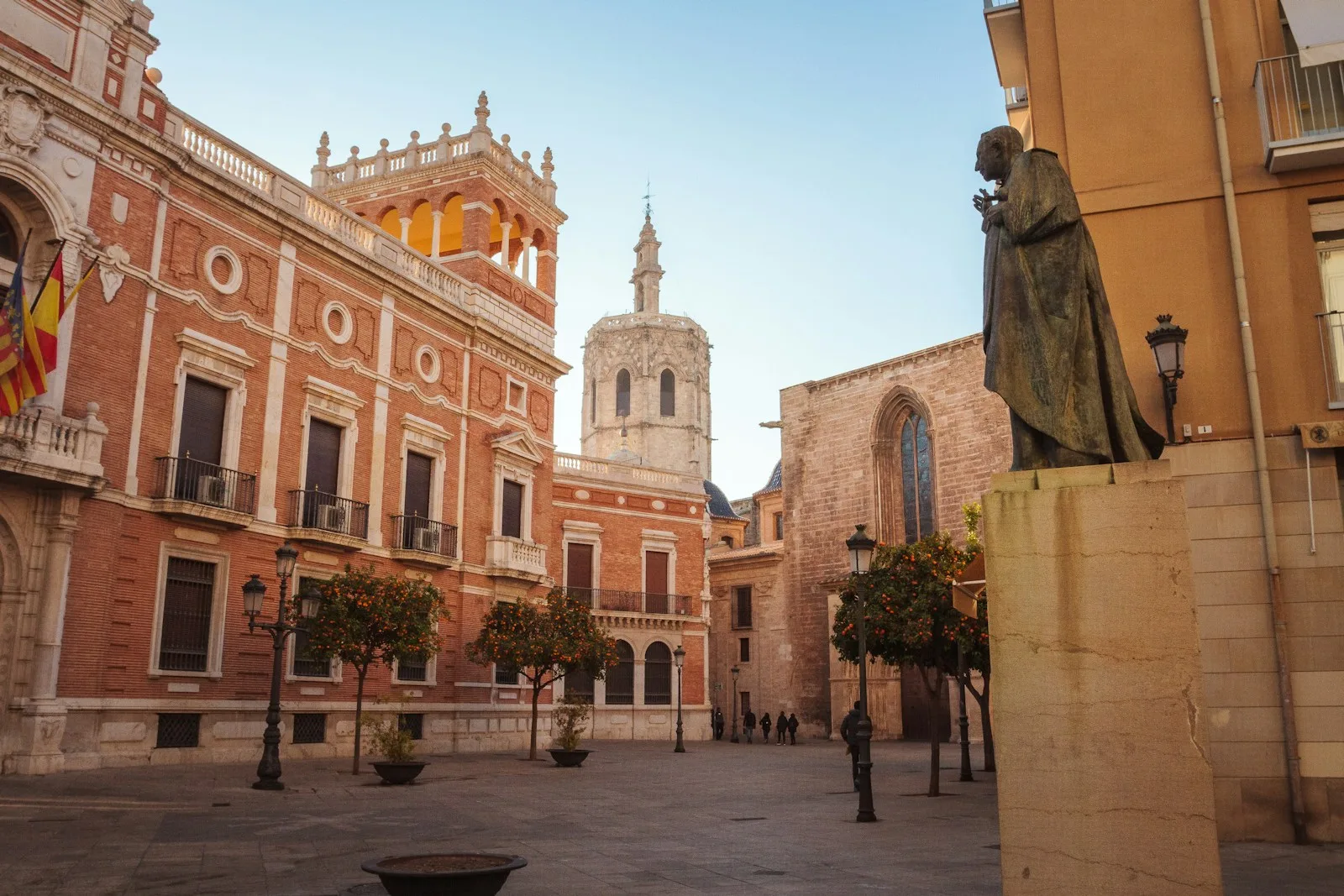
In a word, yes, and it suits a reader who has already done Barcelona and doesn’t fancy queuing behind a cruise ship’s worth of selfie sticks. The historic centre is compact and easy to walk. The Serranos Towers are one of the old gates in the medieval city wall, and you can climb them for a view over the old riverbed and the rooftops. The cathedral claims to hold the Holy Grail. Whether you believe that is between you and your conscience, but the chapel is worth a look either way. Nearby is the Silk Exchange, La Lonja, a late-Gothic trading hall with twisted stone columns. It is a reminder that Valencia was once very rich indeed.
The Central Market is next door. It is a modernist cathedral to ham, citrus and dried peppers, and best visited in the morning before the stallholders start packing up. Get there early, buy oranges, and don’t lose the afternoon to sangria in the square outside. Locals don’t drink it, and the prices assume you won’t notice.
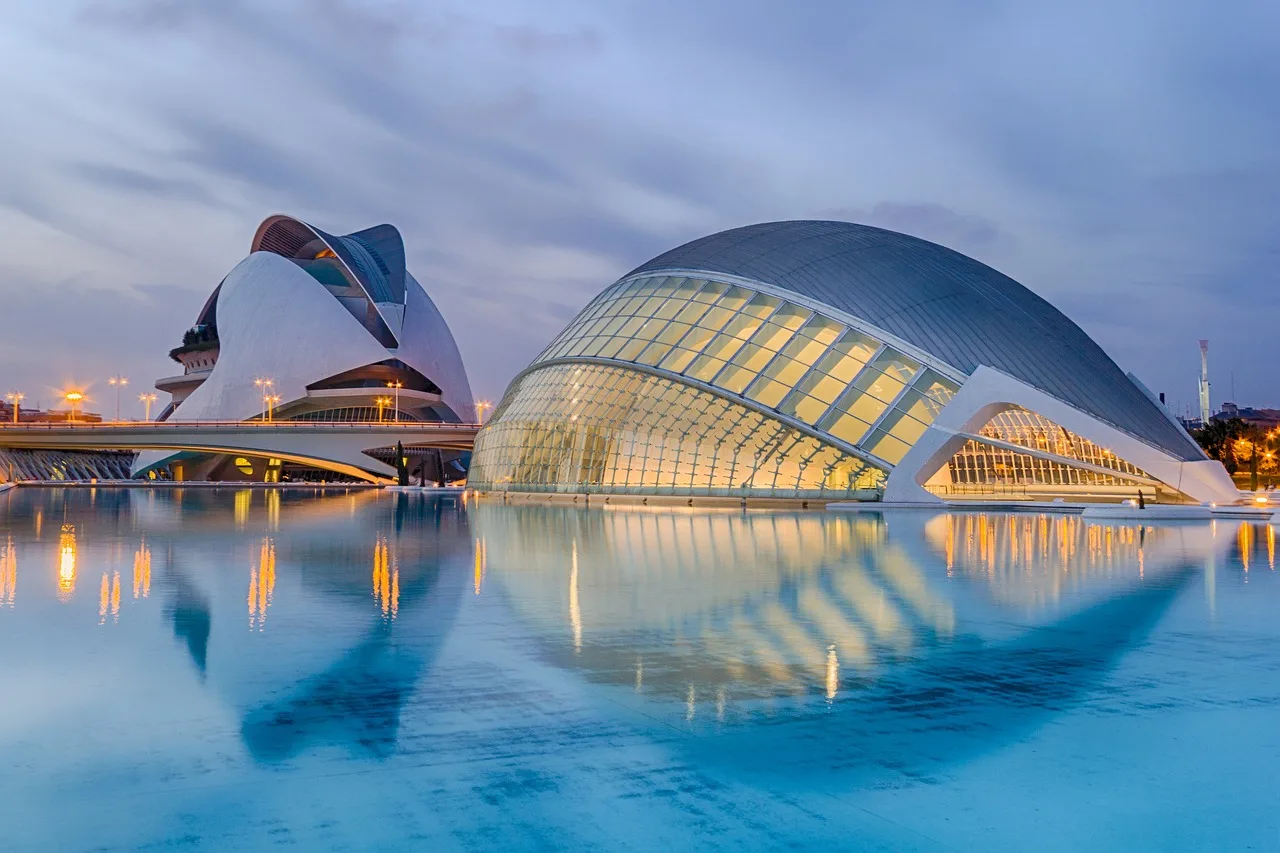
Then there is the Turia Garden itself. Visit València reckons you can ride its full length by bike in about half an hour, or spend half a day on foot. At the western end is the Parque de Cabecera. At the eastern end is the City of Arts and Sciences, a cluster of white Santiago Calatrava buildings that look like a whale skeleton that has been to architecture school. You may love it or find it faintly ridiculous, and plenty of people manage both. The science museum, aquarium and opera house are all there. On the way you’ll pass the Museum of Fine Arts, which the tourist board says is the second-largest art gallery in Spain. It is free, and it is criminally under-visited.
Valencia is the rare Spanish city where you can do the cathedral in the morning, swim in the afternoon and still not be late for dinner, because dinner doesn’t start until ten.
How far is the beach from Valencia city centre?
It’s close enough that you don’t need to plan around it. The trams run out to Las Arenas and Malvarrosa, the long city beaches. A taxi from the old town takes around 15 to 20 minutes, depending on traffic. These are wide, sandy, urban beaches with a promenade, and nobody would call them a secret cove. But a swim before lunch in October is a perfectly reasonable thing to do here, and that tends to impress people back home more than it should.
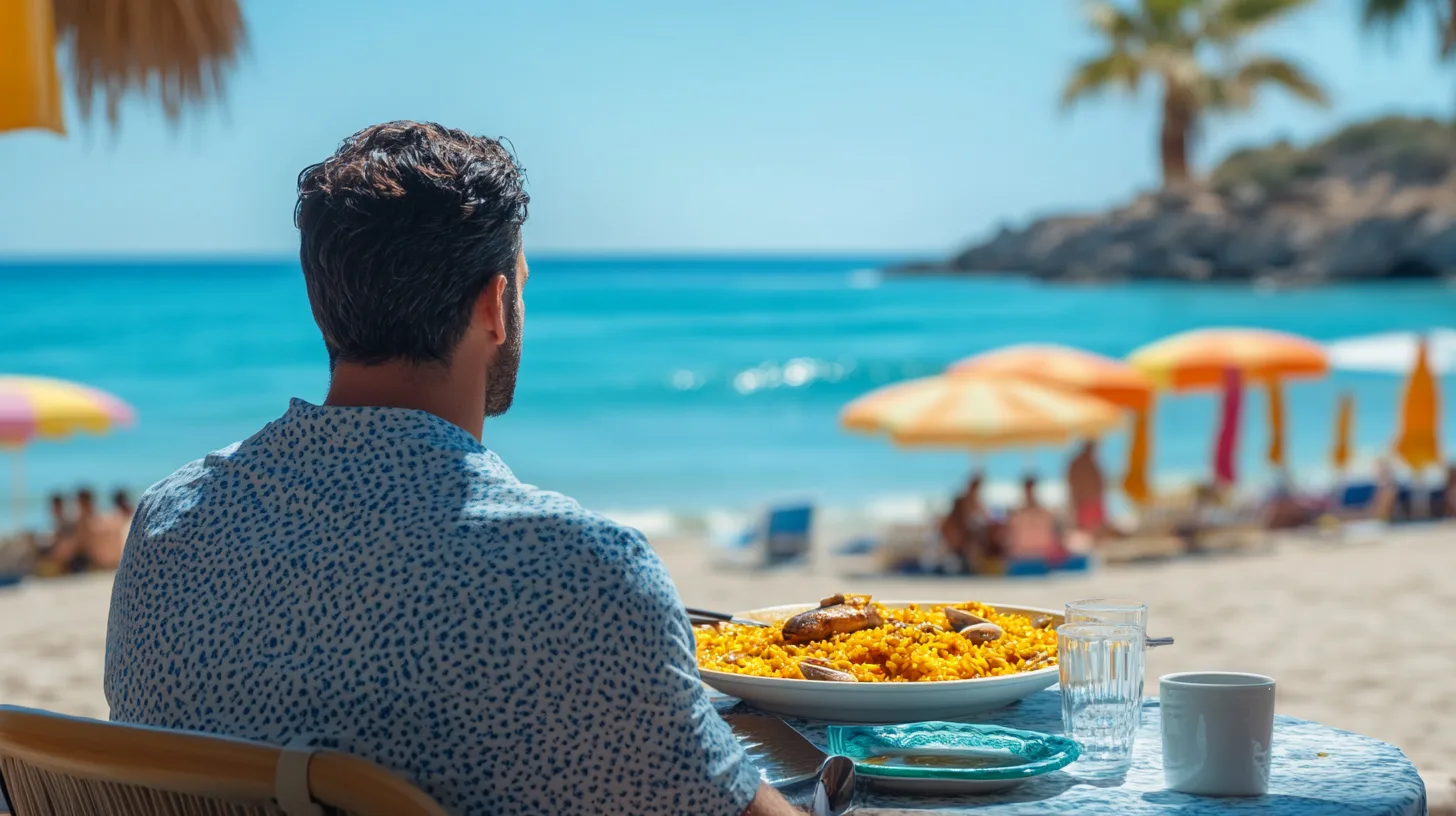
The beachfront restaurants along the promenade are where many visitors eat their first paella. Some are excellent and some are coasting on the view. A good rule is that a place cooking paella to order will make you wait 20 minutes or more. If it turns up in five, it was waiting for you.
Where is the best place to eat paella in Valencia?
The honest answer is about ten miles south of the city, in the Albufera Natural Park. This freshwater lagoon is ringed by rice paddies, and it is where the dish comes from. El Palmar, a small village of canals and restaurants, is the place most people head for. Visit València sells a combined ticket that includes the tourist bus, a short trip on a traditional flat-bottomed boat called an albuferenc, and a paella lunch. Its listings warn that the boatmen don’t speak English, and you’ll find that rather charming. Go towards sunset if you can, when the light on the water is very fine and the herons come out.
A few ground rules will spare you a scolding from a Valencian. The proper paella valenciana is made with chicken and rabbit, green beans and the local butter beans called garrofó, and it contains no seafood at all. Rice with seafood is a different dish, and very good in its own right. Paella is a lunchtime meal, so anyone serving it to you at 9pm has worked out that you’re foreign. Then there’s the socarrat, the caramelised crust on the bottom of the pan. It isn’t burnt, it’s the best bit, and fighting over it is traditional. If you have room afterwards, try horchata. It’s a cold, sweet drink made from tiger nuts, and it goes with fartons, long sugary buns made for dunking. Yes, those really are called fartons. Please try to keep a straight face.
When to go and how to get there from the UK
Spring and autumn are the sweet spot. You get warm days without the sticky heat of July and August, when locals sensibly leave town. The big exception is Las Fallas, every March. Giant satirical papier-mâché sculptures go up all over the city and are then set on fire, and there is enough daytime gunpowder to make a Bonfire Night organiser weep. It is extraordinary, loud and sleepless, and hotel prices go up to match. Go for the spectacle, not the peace and quiet.
Getting there is easy. Ryanair, easyJet, Jet2 and British Airways are among the airlines flying direct from the UK. London has the most routes, and there are seasonal services from regional airports too. The flight takes around two and a half hours. Valencia’s airport is on the city’s metro network, so there’s no need for an expensive taxi into town. Routes and schedules change with the seasons, so check with the airlines directly before you plan around a particular airport.
Before you go, read the latest FCDO travel advice for Spain on GOV.UK. Check your passport meets the EU’s validity rules for issue date and expiry. Take your GHIC for state healthcare, but buy proper travel insurance as well, because the GHIC won’t cover everything. Border procedures for British visitors to the Schengen area have been changing, so check the current entry requirements rather than relying on what you did last time.
What does it cost?
Valencia is noticeably cheaper than Barcelona or Madrid, though the gap narrows near the beach and around the main tourist squares. Expect to pay roughly the following. These figures are approximate and prices vary by area.
A small draught beer (a caña): about €2.50–€3.50 (£2–£3). A pint-sized glass costs closer to €5 (about £4.30).
Dinner per person at a decent mid-range restaurant, with a glass of wine: about €25–€35 (£21–£30). The fixed-price lunch menu, the menú del día, is often the best value in town.
A taxi ride of around 5 km: about €9–€12 (£8–£10).
In short
Valencia is one of the best-value city breaks in Spain. It’s around two and a half hours from the UK on direct flights, and it has a walkable Gothic centre, a nine-kilometre riverbed park and city beaches you can reach by tram. Go in spring or autumn, eat paella at lunchtime, ideally out at El Palmar in the Albufera, and leave your evenings free for long, late dinners in town.
Sources

Midcent Travel
Archie Inglis writes about travel for men 45 and over: city breaks, winter sun, road trips, rail journeys, walking holidays and the longer trips you've been putting off. Where's worth going, how to get there without the hassle, and how to make the money go further.
One of Midcent's writers. Spotted something? Write to archie@midcent.uk.