Bath, Colmar or Würzburg: which autumn vice is yours?
Hot springs in Bath, Riesling in Colmar or Silvaner on a Würzburg bridge: three small cities that look their best in autumn, and how to reach each by train from London.
Reviewed, edited and approved by Editor-in-chief Daniel Sköld · Updated 28 October 2026
Contents
Autumn is when Europe’s smaller cities get their character back. The coach parties have gone, the light goes golden by mid-afternoon, and the locals stop putting up with you and start talking to you again. Each of the three cities here is built around one grand pleasure: warm water in Bath, white wine in Colmar, and a slightly over-the-top baroque palace in Würzburg, with more white wine to follow.
All three are small enough to walk around, old enough to be interesting and close enough to London to reach by train. The only real decision is which vice you fancy. One of them is just over an hour from Paddington.
AD
Is Bath worth visiting in autumn?
Yes, and autumn may be its best season. In summer Bath’s Georgian terraces are lovely to look at but hard to see past the crowds and the selfie sticks on Pulteney Bridge. By October the honey-coloured stone glows in the low sun, the crowd at the Roman Baths thins out, and walking up to the Royal Crescent feels like a stroll rather than a queue.
The big attraction is still the water. Britain’s only natural hot springs have drawn visitors since the Romans, and the Roman Baths museum shows how they did it. You can’t swim in that water, but you can at Thermae Bath Spa round the corner, where sessions start from about £42.50. Go at dusk for the rooftop pool. Sitting in warm mineral water while the steam rises and the Abbey tower lights up is the sort of thing that sounds smug until you try it.
To work up an appetite first, take the Bath Skyline walk on the hills above the city, or follow the Kennet and Avon Canal towpath east towards Bathampton for a pub lunch. From late November the Christmas market arrives, and with it the crowds. If you want the city at its calmest, October and early November are the time to go.
Getting there is easy. GWR trains from London Paddington take roughly an hour and a half, and booking ahead brings the fares down a long way. Choose an off-peak weekday and Bath makes a tidy two-night break with no passport needed.
Bath sells the oldest pleasure in Britain: sitting in hot water and not doing very much, which the Romans clearly considered an achievement.
How do you get to Colmar by train from London?
Take the Eurostar from St Pancras to Paris Gare du Nord, walk the ten minutes to Gare de l’Est, then catch a TGV east to Colmar. The TGV takes around two and a half hours, so the whole trip usually comes in at six to seven hours door to door. Book a few months ahead and a return often costs somewhere around £150 to £250. Leave it until the week before and you’ll pay a lot more. You can also change in Strasbourg, which is worth a night of its own.
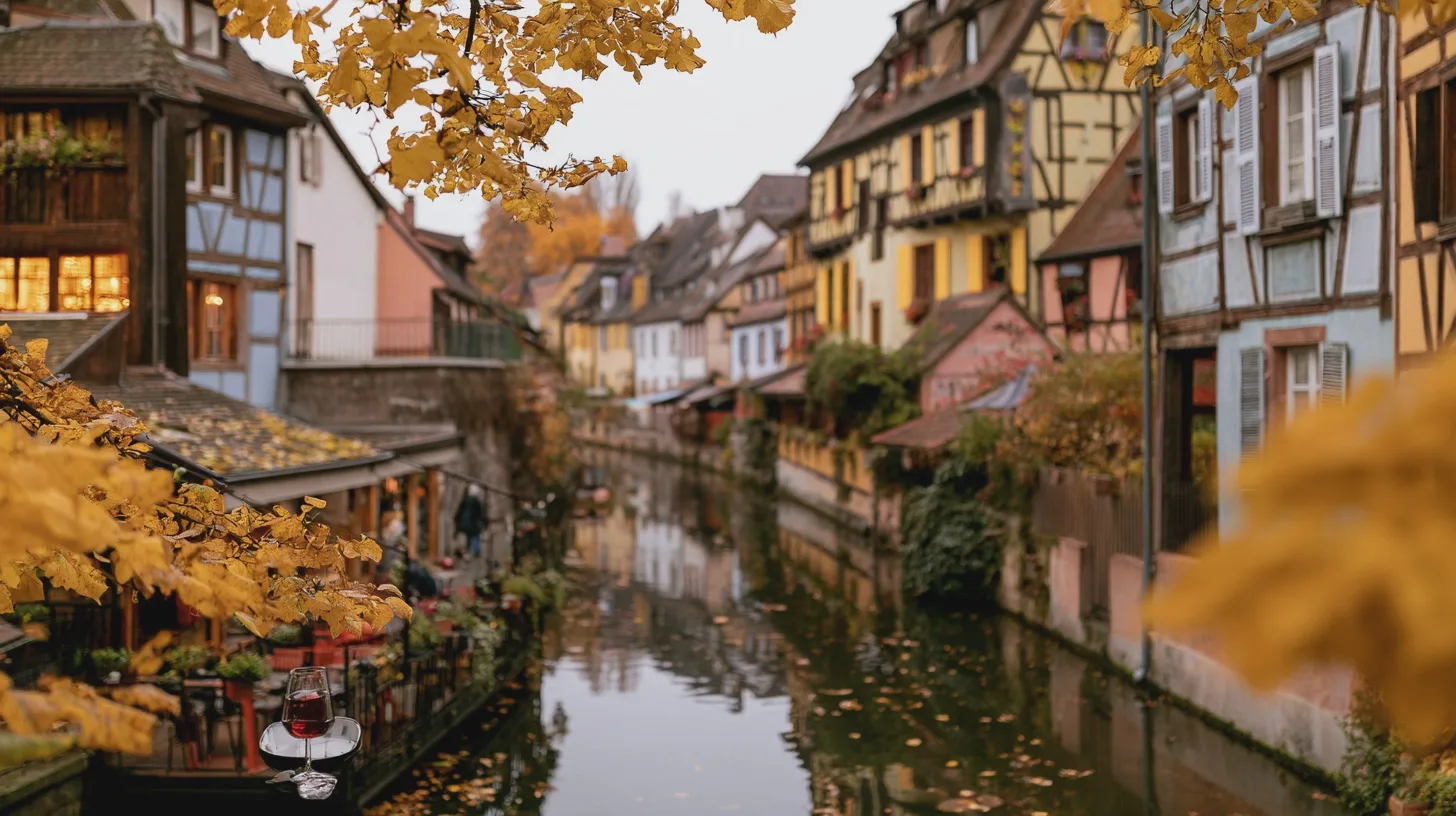
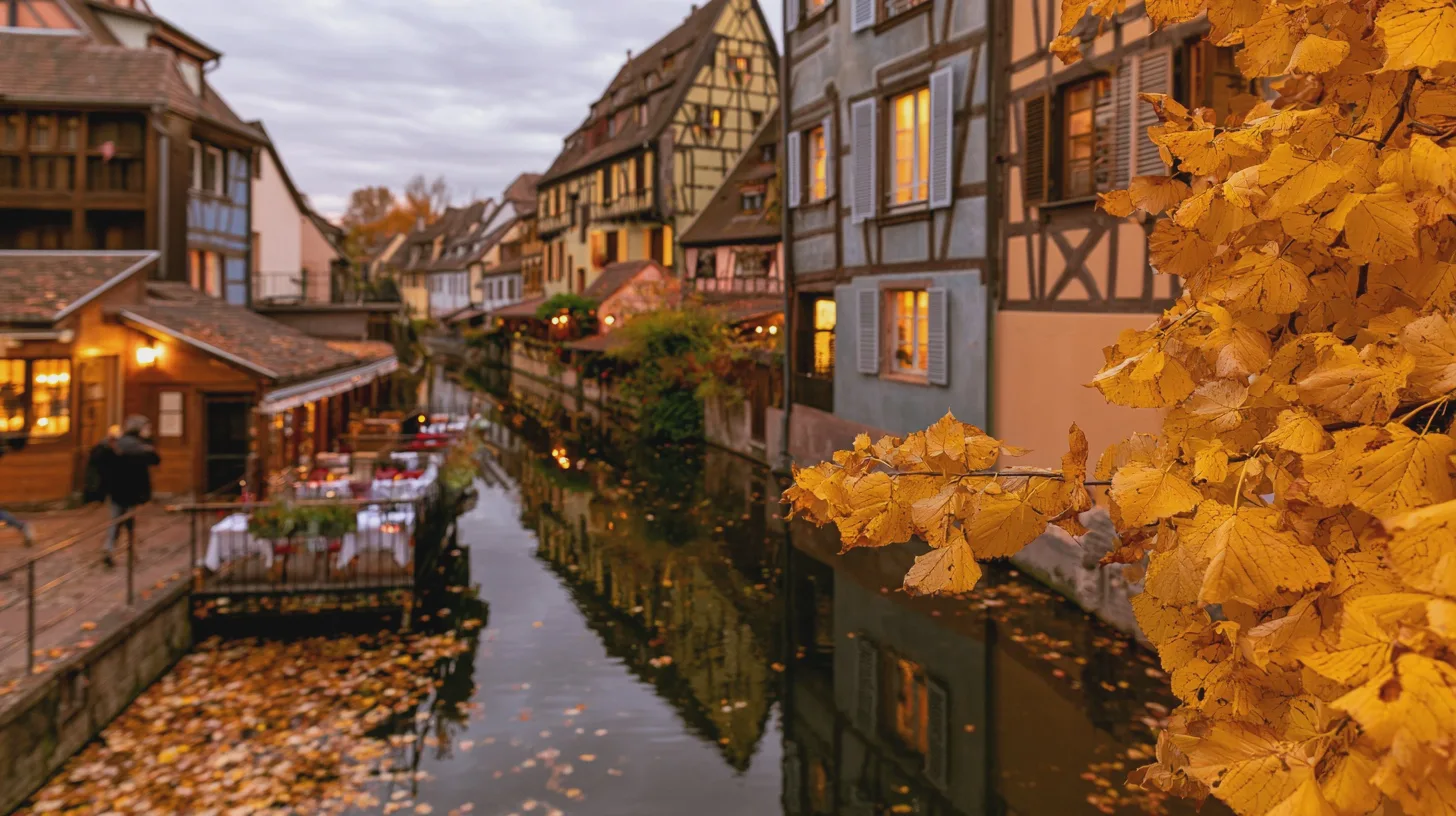
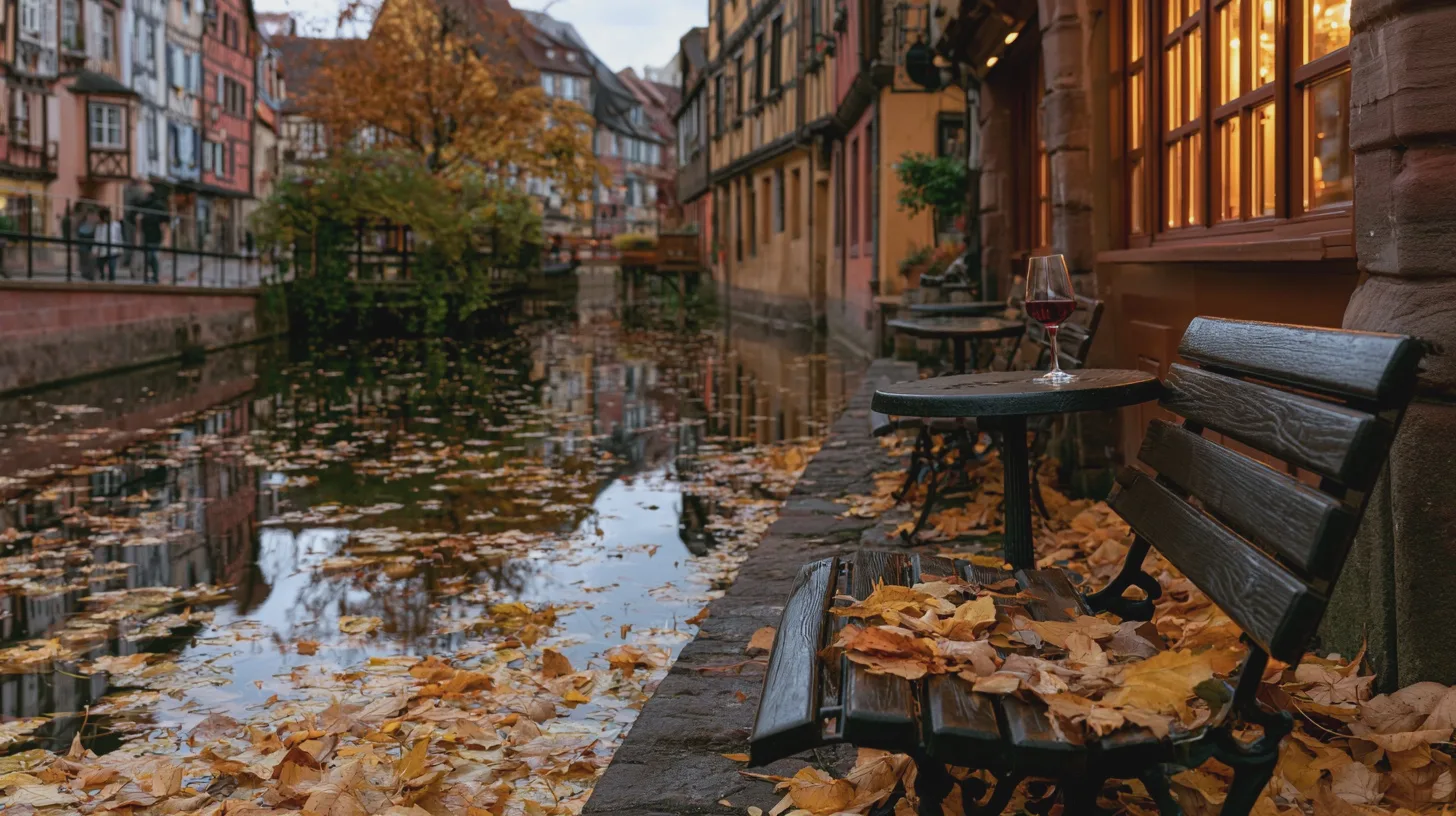
Colmar is the kind of town people assume is a film set. The half-timbered houses are painted in shades of mustard, raspberry and duck-egg blue, and in the quarter called Little Venice the canal reflects window boxes that are still in flower in October. That’s when the Alsace grape harvest is finishing, and the town smells faintly of fermenting fruit.
Don’t skip the Unterlinden Museum. It holds Matthias Grünewald’s Isenheim Altarpiece, one of the most powerful and unsettling paintings in Europe, and it is never as crowded as it ought to be. Colmar was also the birthplace of Frédéric Auguste Bartholdi, the sculptor of the Statue of Liberty, and his house is now a small museum.
The Alsace Wine Route runs right past the town. Local buses or a hired bike will take you to Eguisheim, Kaysersberg and Riquewihr, where family producers pour dry Riesling, Pinot Gris and the lychee-scented Gewurztraminer. The tourist trap is any restaurant in the centre with a laminated photo menu. Walk a couple of streets away for a winstub, where you’ll get tarte flambée, choucroute and a carafe of the house white at honest prices.
AD
Why go to Würzburg rather than somewhere better known?
Because few Britons have heard of it, and it has one of the finest palaces in Europe. The Würzburg Residenz is a UNESCO World Heritage Site. Its main staircase, designed by Balthasar Neumann, rises beneath a vast ceiling fresco by Giovanni Battista Tiepolo. Allied bombing in 1945 destroyed much of the city, but the staircase vault survived, and it’s the reason to come.
The rest of the city runs on Franconian wine. The local Silvaner is dry, mineral and very easy to drink, and it comes in the Bocksbeutel, a squat, round-bellied bottle you won’t mistake for anything else. Two historic charitable foundations, the Bürgerspital and the Juliusspital, have been making wine for centuries and run old-fashioned wine taverns. On a mild evening, locals buy a glass from the stalls by the Alte Mainbrücke and drink it on the bridge, looking up at the Marienberg Fortress. In autumn, look out for Federweisser, the cloudy, half-fermented new wine, served with a slice of onion tart. It’s a very local pleasure that rarely makes the guidebooks.
Würzburg is also where the Romantic Road starts, so it works well as the first stop on a longer rail or road trip through Bavaria.
By rail it takes the best part of a day. Eurostar gets you to Brussels in about two hours, then a German ICE runs to Frankfurt, and from there another ICE reaches Würzburg in about an hour. Allow seven to eight hours and book Eurostar and Deutsche Bahn early for the best fares. The quicker option is to fly to Frankfurt and take the ICE straight from the airport station.
What will it cost?
All prices are rough guides for autumn. In Bath, a pint costs around £5.50 to £6.50, a decent restaurant dinner around £30 to £45 a head, and a 5km taxi about £12 to £15. In Colmar, a pint is about €7 to €8 (£6 to £7), dinner in a winstub €30 to €40 (£26 to £35), and a 5km taxi €15 to €20 (£13 to £17). In Würzburg, half a litre of beer is about €4 to €5 (£3.50 to £4.30), a tavern dinner with wine €25 to €35 (£22 to £30), and a 5km taxi roughly €14 to €18 (£12 to £16). Of the three, Würzburg gives you the most for your money.
Before you book the continental options
For France and Germany, check the latest FCDO travel advice and entry requirements on GOV.UK before you go, including passport validity rules and any changes to border checks. Take your GHIC for state healthcare in the EU, and buy proper travel insurance as well, because the GHIC doesn’t replace it.
In short
If you want an easy autumn break with no passport, go to Bath for the thermal water, the Georgian streets and the quieter October crowds, all about 90 minutes from Paddington. If you want wine with your history, Colmar is a day’s train ride away via Eurostar and Paris, with the Isenheim Altarpiece and the Alsace Wine Route on the doorstep. Würzburg takes longer to reach via Brussels, but Tiepolo’s ceiling and a glass of Silvaner on the old bridge make it the best-value find of the three.
Archie Inglis writes about travel for men 45 and over: city breaks, winter sun, road trips, rail journeys, walking holidays and the longer trips you've been putting off. Where's worth going, how to get there without the hassle, and how to make the money go further.
One of Midcent's writers. Spotted something? Write to archie@midcent.uk.
Fjords, Bach, dark skies, Flemish masterpieces, Lyon’s bouchons and Valletta’s knights: six European breaks you can reach by Eurostar or a short flight, with honest costs in pounds.
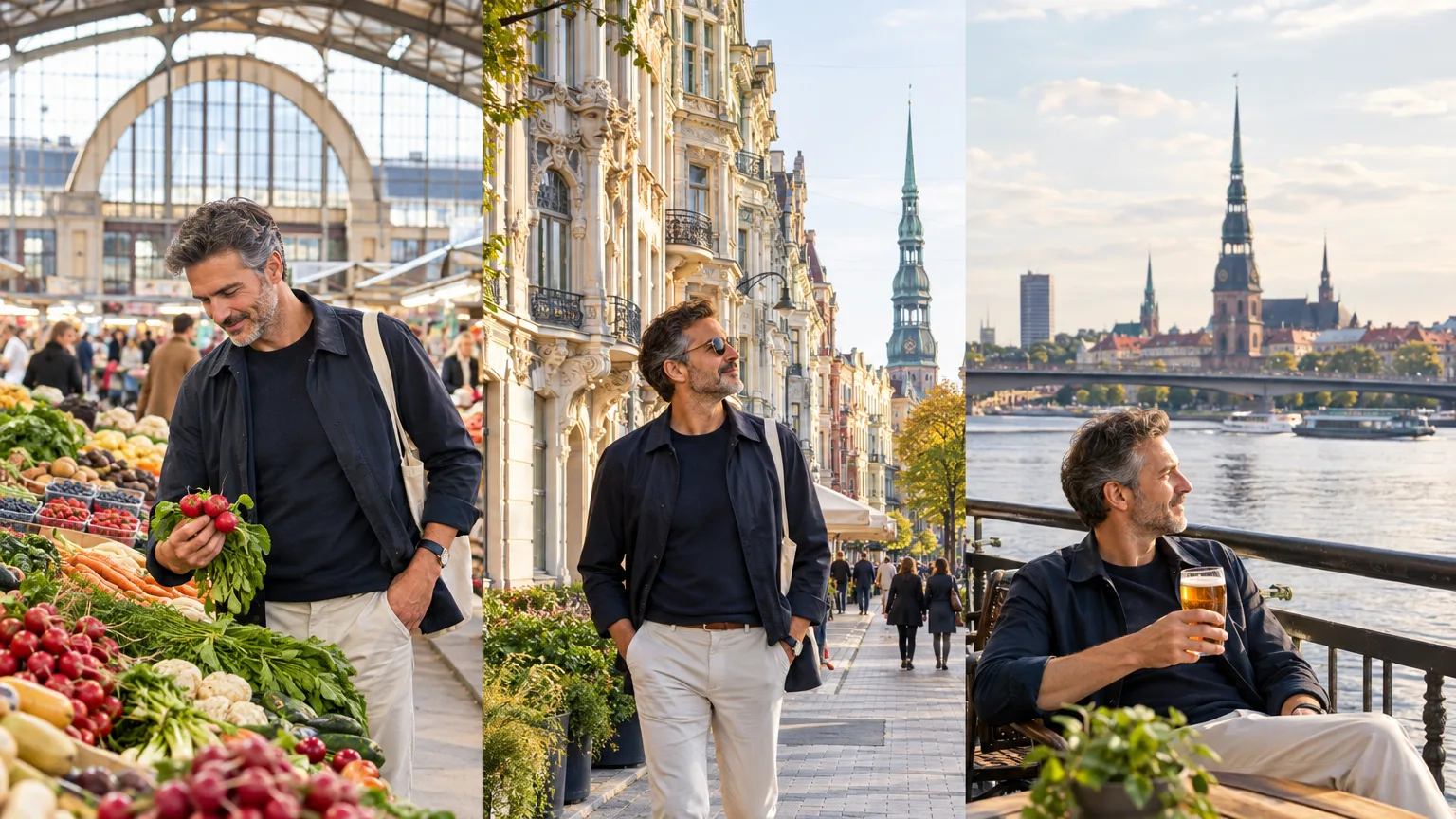
A long weekend in Riga that starts in a food market built from zeppelin hangars, wanders through Europe’s finest Art Nouveau streets and ends with beer by the river.