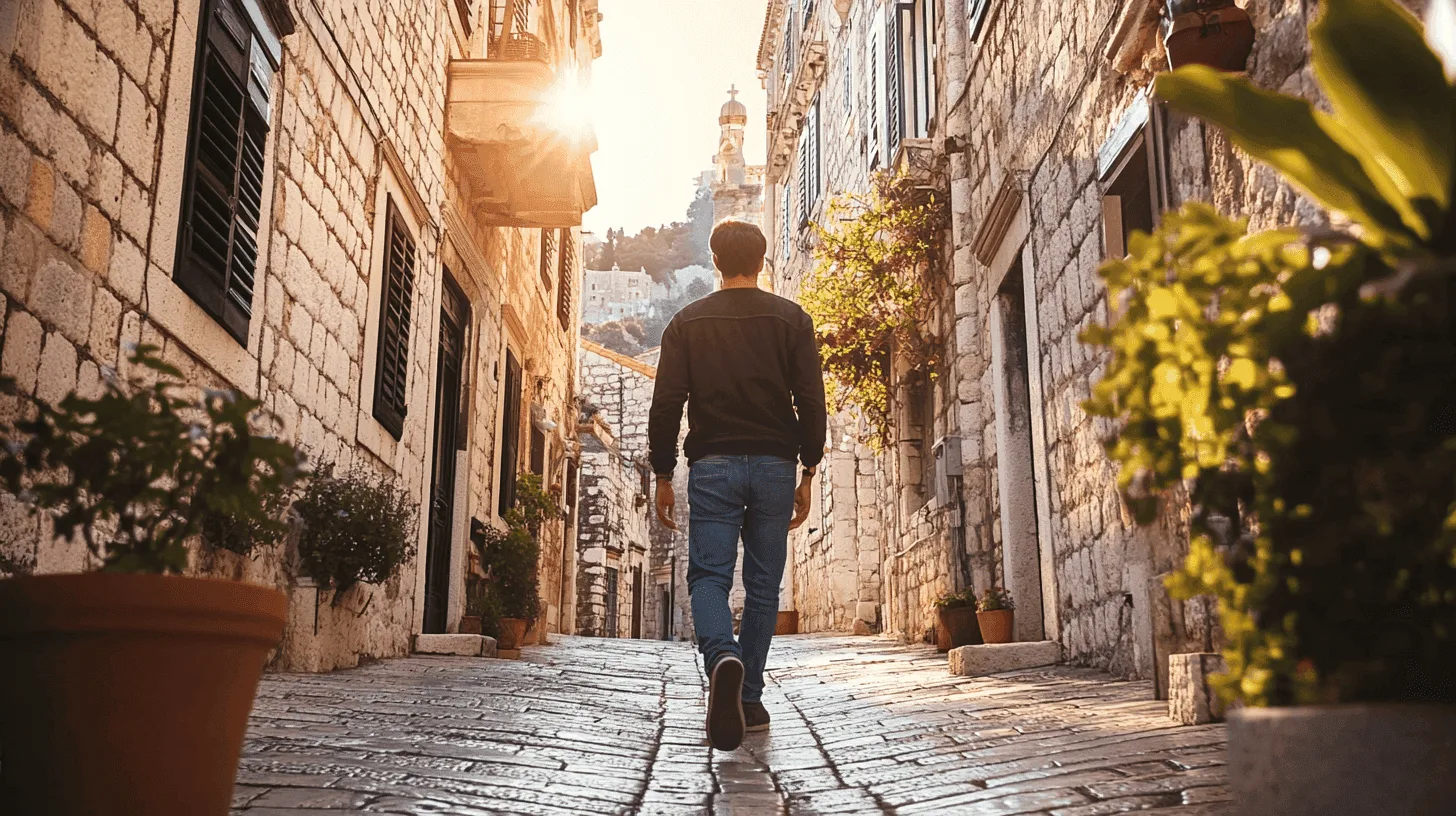
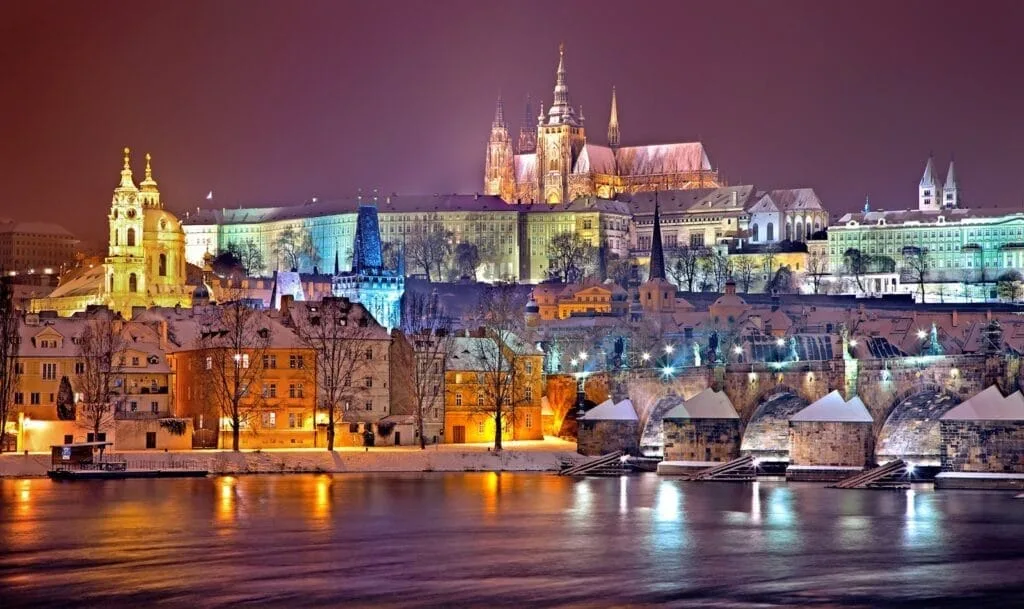
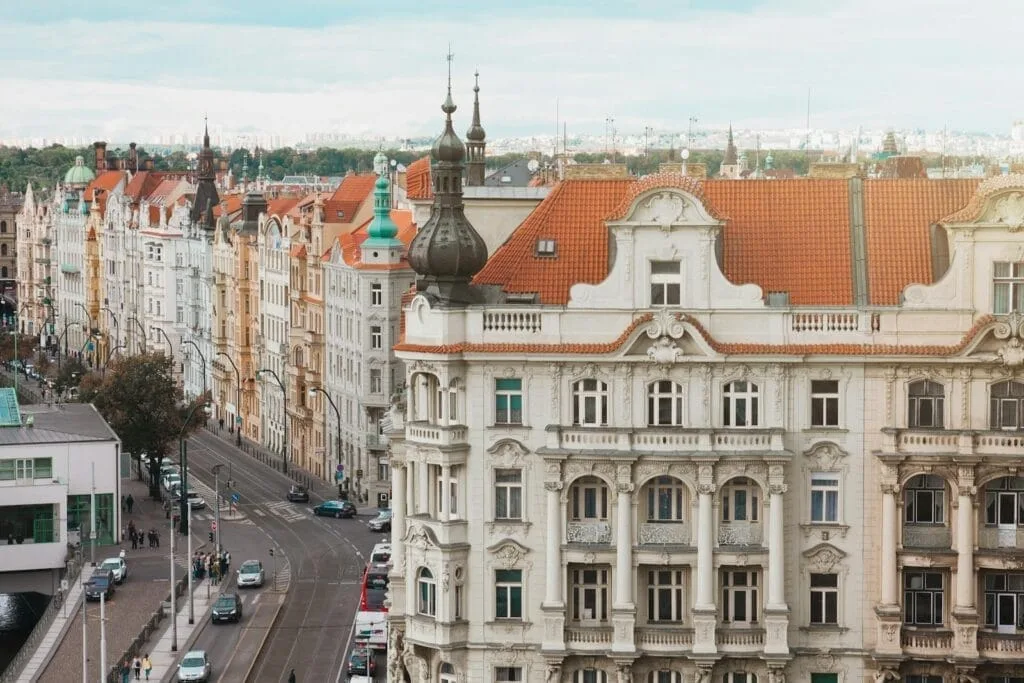
Most of Prague’s visitors come for the buildings, which is fair enough. Very few European capitals got through the twentieth century with their medieval and baroque centre so intact. But the city has a second skyline that the stag parties never notice: hills, orchards, terraced gardens and riverside parks that turn white and pink in April, just as the beer gardens set their benches out again.
Spring is the season when Prague stops being a museum and goes back to being a place where people live. The castle gardens reopen, the orchards on Petřín flower above the rooftops, and on 12 May the city starts one of Europe’s oldest classical music festivals with a concert for its own composer. Flights from the UK take about two hours. A half-litre of very good lager still costs less than a coffee at a London station. There are worse ways to spend a long weekend.
When is the best time to visit Prague in spring?
Aim for mid-April to the end of May. The cherry, apple and pear trees on Petřín hill usually flower from mid to late April, although the date shifts by a week or two depending on the winter. The terraced palace gardens below the castle open for the season in April, and by May the city is fully green without the coach-party crush of July and August. Daytime temperatures are typically pleasant walking weather. It can also turn cold and wet without much warning, so pack a proper jacket.
There are two things to plan around. Easter brings markets to Old Town Square and Wenceslas Square, which are charming in small doses and very crowded at weekends. The Czech Republic also has public holidays on 1 and 8 May, so expect locals out in force in the parks. On 1 May couples traditionally kiss under a blossoming cherry tree on Petřín, near the statue of the Romantic poet Karel Hynek Mácha. You don’t have to join in, but it does explain the queue beside the tree.
Gardens the stag parties never find
Start in Malá Strana with the Wallenstein Garden, a formal baroque garden attached to the palace that now houses the Czech Senate. It is free and usually open from spring to autumn. It has peacocks, bronze statues and a strange artificial dripstone wall that looks as if a cave has been turned inside out. Higher up, the Royal Garden and the South Gardens of Prague Castle reopen in April. They offer some of the best views over the red roofs, and you don’t need a castle ticket for them.
Petřín is the big one. It’s a wooded hill with orchards draped down its slopes, a scaled-down copy of the Eiffel Tower on top and a rose garden that comes into its own later in the season. Walking up from Malá Strana takes 30 to 40 minutes on winding paths, and it is the best way to see the blossom anyway. For a quieter afternoon, take the tram or metro to Vyšehrad, the old fortress on a crag above the Vltava. Dvořák and Smetana are buried in its cemetery, the ramparts look straight down the river towards the castle, and on a weekday in April you may well have them to yourself.
Further out, Stromovka is the former royal hunting park, now a large, loose and very local stretch of meadows and old trees. A walk through it brings you across the river to Troja, where a baroque chateau and the botanical garden’s vineyard sit on the slope. It makes a proper half-day out, and it’s a long way from the souvenir shops in every sense except the actual distance.
Prague’s finest view is not from Charles Bridge but from a beer garden bench on Letná, with a half-litre that cost less than your bus fare home.
Concerts, beer gardens and a proper pub lunch
The Prague Spring International Music Festival traditionally opens on 12 May, the anniversary of Smetana’s death, with a performance of his cycle of symphonic poems, Má vlast. It then runs into early June with orchestral, chamber and recital programmes in the Rudolfinum, the Municipal House and other venues. Tickets for the opening night go quickly. Many of the other concerts cost far less than the London equivalent, so check the programme when you book your flights rather than when you land.
Once the weather turns, Prague moves outdoors. The beer garden at Letná park overlooks the river and the bridges, with simple benches and plastic cups. Riegrovy sady in Vinohrady has a sloping lawn where the whole neighbourhood seems to watch the sunset. For lunch, find a traditional pub serving svíčková (braised beef with cream sauce and dumplings) or goulash. Look for a sign advertising tankové pivo: unpasteurised Pilsner Urquell delivered fresh by tanker, which local drinkers take very seriously.
How do you get to Prague cheaply from the UK?
Václav Havel Airport is served by budget and full-service airlines from London and a good spread of regional UK airports, and the flight takes around two hours. Off-peak midweek fares in April and early May are often very low if you book ahead and travel with hand luggage only. Fares climb sharply around Easter and the late May bank holiday, so be flexible with dates. There is no rail link from the airport yet. The Airport Express bus runs to the main railway station, and the ordinary city bus to Nádraží Veleslavín connects with the metro for the price of a standard public transport ticket.
Once you’re there, trams, metro and your own legs will cover everything. A 24-hour or 72-hour public transport pass is good value if you plan to use Vyšehrad, Stromovka and Troja as well as the centre.
Before you go, check the latest FCDO travel advice and entry requirements for the Czech Republic on GOV.UK, including the passport validity rules for travel to the Schengen area and any changes to border checks. Carry a valid GHIC for state healthcare and buy travel insurance as well.
What does a weekend in Prague actually cost?
The Czech Republic uses the koruna (CZK), not the euro. Prices change, and they rise sharply within sight of the astronomical clock, but these are realistic guides away from the main tourist streets:
Beer: roughly 60–80 CZK (about £2–£2.80) for a half-litre in an ordinary pub, which is a little less than a pint. Expect to pay noticeably more in the Old Town.
Dinner: about 450–700 CZK (roughly £16–£25) per person for a main course and a drink in a decent local restaurant.
Taxi: about 200–300 CZK (£7–£11) for a 5 km trip if you book through a ride-hailing app. Avoid cabs hailed on the street near the main sights.
Some traps are worth avoiding. Restaurants on Old Town Square charge Mayfair prices for canteen food. Exchange booths that promise zero commission often give a dreadful rate, so use a cash machine attached to a bank, or simply pay by card. When a card machine offers to charge you in pounds, always choose koruna. Trdelník, the chimney cake sold on every corner, is marketed as an ancient Czech tradition, which is generous. Cross Charles Bridge at 7am rather than midday and you will see why people come in the first place.
In short
Visit Prague between mid-April and late May for orchard blossom on Petřín, the castle and Wallenstein gardens back open, and the Prague Spring music festival from 12 May. Cheap off-peak flights from across the UK take about two hours, and beer, food and taxis are still good value away from the Old Town. Avoid Easter weekend if you dislike crowds, and check FCDO advice before you travel.
Sources

Midcent Travel
Archie Inglis writes about travel for men 45 and over: city breaks, winter sun, road trips, rail journeys, walking holidays and the longer trips you've been putting off. Where's worth going, how to get there without the hassle, and how to make the money go further.
One of Midcent's writers. Spotted something? Write to archie@midcent.uk.