Most of us have bought a packet of supermarket ravioli, boiled it, and felt faintly let down. A bit rubbery, and the filling tastes of the factory. The good news is that the proper version needs flour, eggs and a couple of hours of pottering, and nothing in it is hard.
Fresh ravioli is a very good Sunday project. It looks like real effort when it lands on the table, but most of the time goes on things you can do with a radio on and a glass in your hand. Here’s how to do it.
What flour and eggs do you need for fresh pasta dough?
The classic ratio is about as simple as cooking gets: 100g of flour to one large egg. For four people having ravioli as a main course, use 400g of flour and 4 large eggs. If you want a richer, more golden dough, swap one whole egg for two yolks.
Use tipo 00 flour, which is milled very fine and gives you a silky, elastic dough. Waitrose, Sainsbury’s, Tesco and Ocado all stock it, usually next to the plain flour or in the Italian aisle. Pick up a bag of semola (durum wheat semolina) while you’re there. A scattering on the worktop and the finished ravioli stops them sticking far better than more flour does. If you can only get plain flour, it works. The pasta will just be a touch less silky.
Tip the flour onto a clean worktop, make a well, crack in the eggs and beat them with a fork, pulling in flour from the sides bit by bit. When it turns into a shaggy mess, switch to your hands. Then knead. Push away with the heel of your hand, fold back, turn, and keep going for 8 to 10 minutes until the dough is smooth and springs back when you prod it. If it’s crumbly, wet your hands. If it’s tacky, dust on a little flour.
Wrap it in cling film or a beeswax wrap and leave it at room temperature for at least 30 minutes. Don’t skip this step. Resting relaxes the gluten, and a rested dough rolls out without fighting you.
Rolling pin or pasta machine: does the kit matter?
You can roll ravioli with a long rolling pin, and Italian grandmothers have done it for centuries. It just takes practice and strong shoulders. A hand-cranked pasta machine is much easier, and if you’re likely to make fresh pasta more than once, it’s the one gadget worth buying. The Italian-made Marcato Atlas 150 has been the standard for decades and lasts well. Cheaper clamp-on machines from the big retailers do the job too, as long as the rollers are smooth and the clamp holds firm.
Cut the rested dough into four and keep the pieces you’re not using covered. Flatten one piece with your palm, feed it through the widest setting, fold it in three like a letter and feed it through again. Do that two or three times, then work down the settings one notch at a time. For ravioli you want the sheet thin enough to see the shadow of your hand through it. On most machines that’s the second or third thinnest setting. Any thicker and the folded edges turn out stodgy.
The other useful kit is cheap: a fluted pastry wheel or a ravioli stamp, a pastry brush, and a clean tea towel dusted with semola to lay the finished pasta on.
Which fillings work best in homemade ravioli?
The rule is simple. Keep fillings thick, well seasoned and fairly dry. A wet filling makes soggy pasta and burst parcels. Here are three that never let you down.
Ricotta, spinach and nutmeg. Wilt 200g of spinach, squeeze out every drop of water in a clean tea towel, chop it finely and mix with 250g of ricotta, 50g of finely grated parmesan, a grating of nutmeg, lemon zest, salt and pepper. If your ricotta looks wet, drain it in a sieve for half an hour first.
Roast butternut squash. Halve a small squash, scoop out the seeds and roast at 200°C (180°C fan, gas mark 6) for 45 minutes to an hour until completely soft. Scoop out the flesh, mash it with 40g of parmesan, a few crushed amaretti biscuits if you like a hint of sweetness, plus salt and plenty of black pepper. Let it cool before you use it.
Courgette, lemon and mint. Coarsely grate two courgettes, salt them in a colander for 20 minutes and squeeze them hard. Fry briefly with a crushed garlic clove, cool, then stir through 200g of ricotta, a small handful of chopped mint, lemon zest and parmesan. It’s lovely in summer.
Make your filling before the dough, or even the day before, and keep it in the fridge. Cold filling is far easier to spoon.
A thin sheet, a thick filling and no trapped air: get those three right and your ravioli will hold together.
How do you stop ravioli bursting when you cook them?
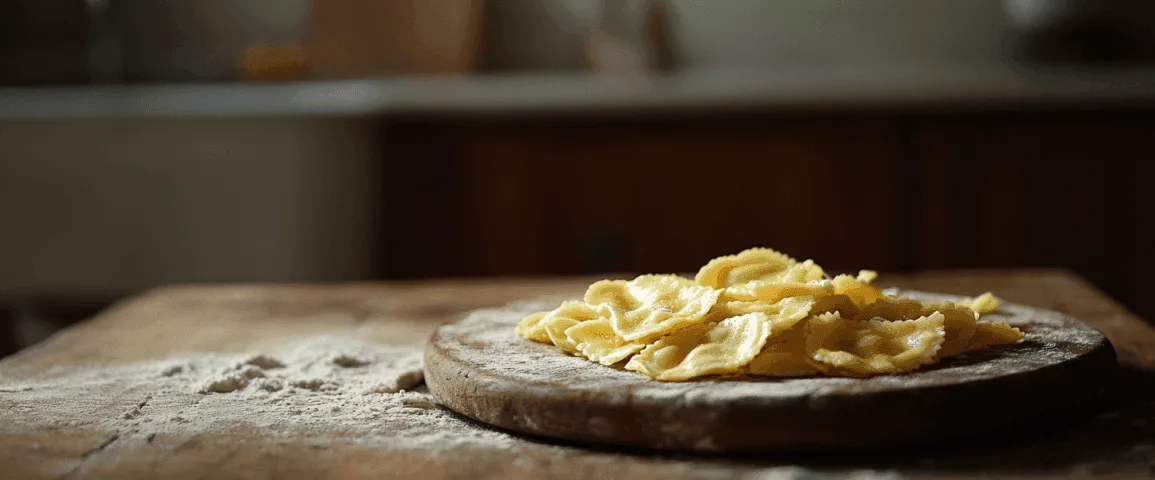
Lay a pasta sheet on your semola-dusted worktop. Dot teaspoons of filling along it, about 4cm apart. Don’t overfill, because greed is the main reason ravioli burst. Brush lightly around each mound with water, lay a second sheet over the top, then press down around each one with your fingertips, working outwards to push out the air. Trapped air expands in boiling water, and that’s how ravioli split open. Cut them out with the wheel or stamp and pinch the edges again for luck.
Put them on the dusted tea towel without letting them touch. Cook them within an hour, or freeze them. Spread them on a tray, freeze until solid, then tip them into a bag. They’ll keep for a couple of months and you can cook them straight from frozen.
To cook, bring your biggest pan of water to a rolling boil and salt it well. Slide the ravioli in and keep the water at a gentle boil rather than a violent one. Fresh ravioli take 3 to 4 minutes, or a minute or two longer from frozen. They’re ready when they’ve floated for a minute and the pasta at the edges is tender. Lift them out with a slotted spoon. Tipping them into a colander invites disaster.
The sauce, and what to pour with it
With good ravioli, less sauce is better. Brown butter and sage is the classic for good reason. Melt 75g of unsalted butter in a wide pan, add a dozen sage leaves and cook until the butter smells nutty and turns hazelnut brown and the leaves crisp. Toss the ravioli through with a splash of the cooking water and finish with parmesan. It suits the squash filling especially well. For the spinach or courgette versions, a light tomato sauce or simply good olive oil, lemon and black pepper works nicely.
As for wine, northern Italian whites are the natural match: a Soave, a Gavi or a decent Pinot Grigio from Alto Adige, all easy to find in UK supermarkets. With brown butter and squash, a lightly oaked Chardonnay is very good indeed. Enjoy a glass or two, but keep in mind the UK Chief Medical Officers’ guidance of no more than 14 units a week, spread over several days. If you’re having a night off, a chilled alcohol-free Italian-style spritz or sparkling water with lemon goes nicely with the butter.
Your first batch might come out a bit uneven. It doesn’t matter. Homemade ravioli that look a bit rough still taste better than anything you’ll buy in a packet.
In short
For homemade ravioli, mix 100g of tipo 00 flour per large egg, knead for 8 to 10 minutes, rest the dough for 30 minutes and roll it thin enough to see your hand through. Use a thick, dry, well-seasoned filling, press out all the air as you seal each one, and simmer for 3 to 4 minutes. Serve with brown butter and sage and a crisp northern Italian white, or freeze a batch for later.
Sources

Midcent Food & Drink
Angus Irvine writes about food and drink for men 45 and over who like to eat well but don't want a performance. Recipes that work on a weeknight, dinners worth the effort at the weekend, what to pour with them – wine, beer and the good alternatives – and the restaurants and pubs worth the trip. Without the fuss.
One of Midcent's writers. Spotted something? Write to angus@midcent.uk.