Most British visitors to Tallinn do the same thing. They land, walk up into the Old Town, take a photo of the Town Hall spire and drink a beer in a cellar where the waiter is dressed as a Hanseatic merchant. Then they fly home thinking they’ve seen Estonia. What they’ve actually seen is about 5 per cent of it, and the most crowded 5 per cent at that.
The Old Town really is one of the best-preserved medieval centres in northern Europe, and it has earned its UNESCO listing. But it isn’t really where the city spends its evenings. Tallinn is a port, it gets its fun from the harbourside, and when an Estonian wants to switch off he is as likely to head for a hot wooden room as a bar. You get three days. Here’s how to spend them.
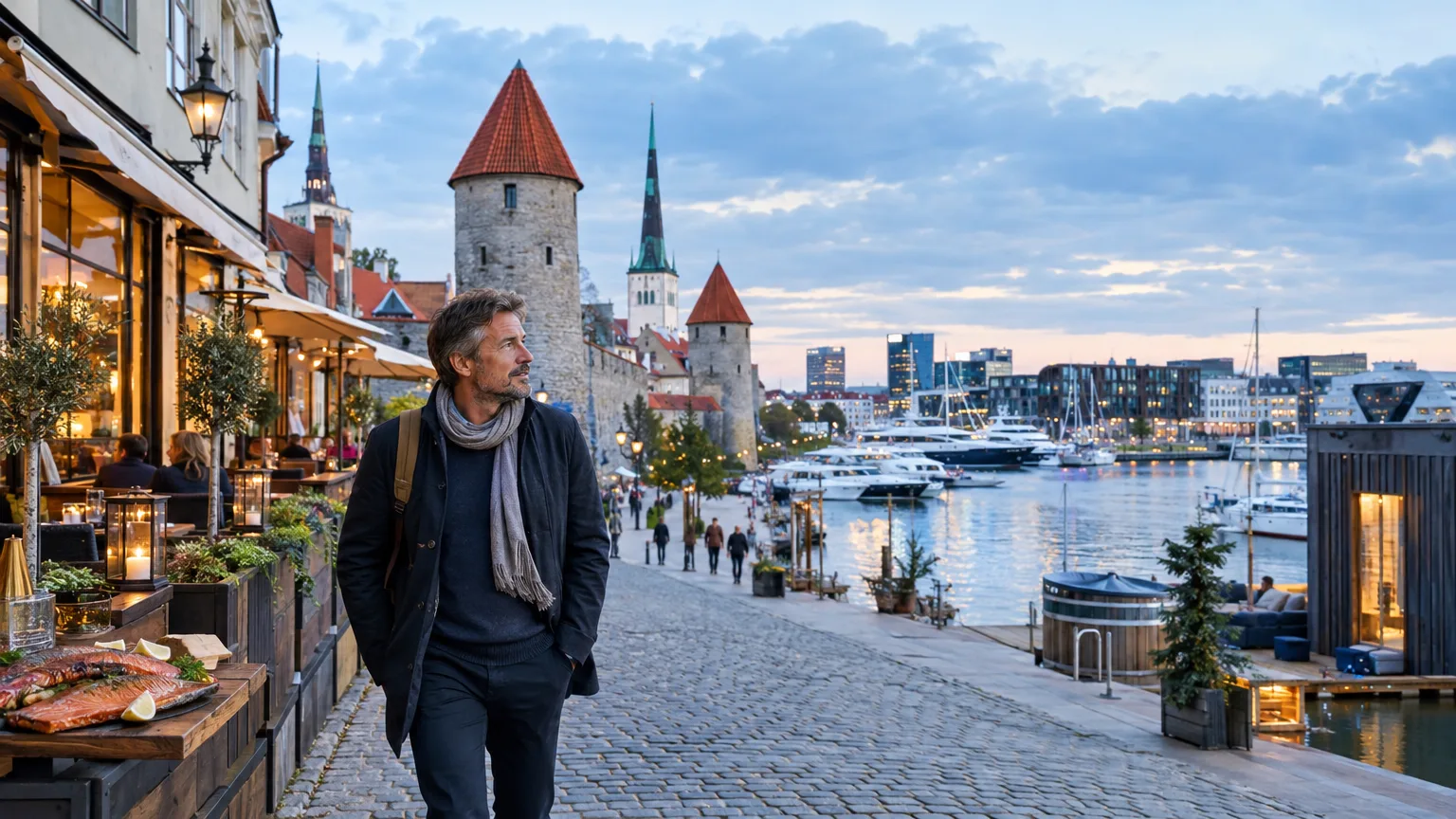
Is three days in Tallinn enough?
It’s plenty, as long as you don’t give the Old Town all three. Give it the first morning, when the cobbles are quiet and the cruise passengers haven’t arrived yet. There are two parts to it. The lower town is the merchants’ quarter, all gabled houses, guild halls and the Town Hall Square. Toompea, the hill above, is where the nobility and the bishops lived. Walk up to the viewing platforms at Kohtuotsa and Patkuli and the city sorts itself out below you: red roofs and church spires in front, then cranes, ferries and the Gulf of Finland behind. It’s the best free orientation in the Baltic.
Spend the afternoon on the side streets rather than the main drag. The town walls and towers are the real thing, and so are the alleys and courtyards behind them. The costumed medieval restaurants around the square are fine for a look, but you’ll eat better and pay less a few streets away. Here’s a good rule: if the menu has pictures and comes in six languages, keep walking.
Day two: the side of town the cruise ships miss
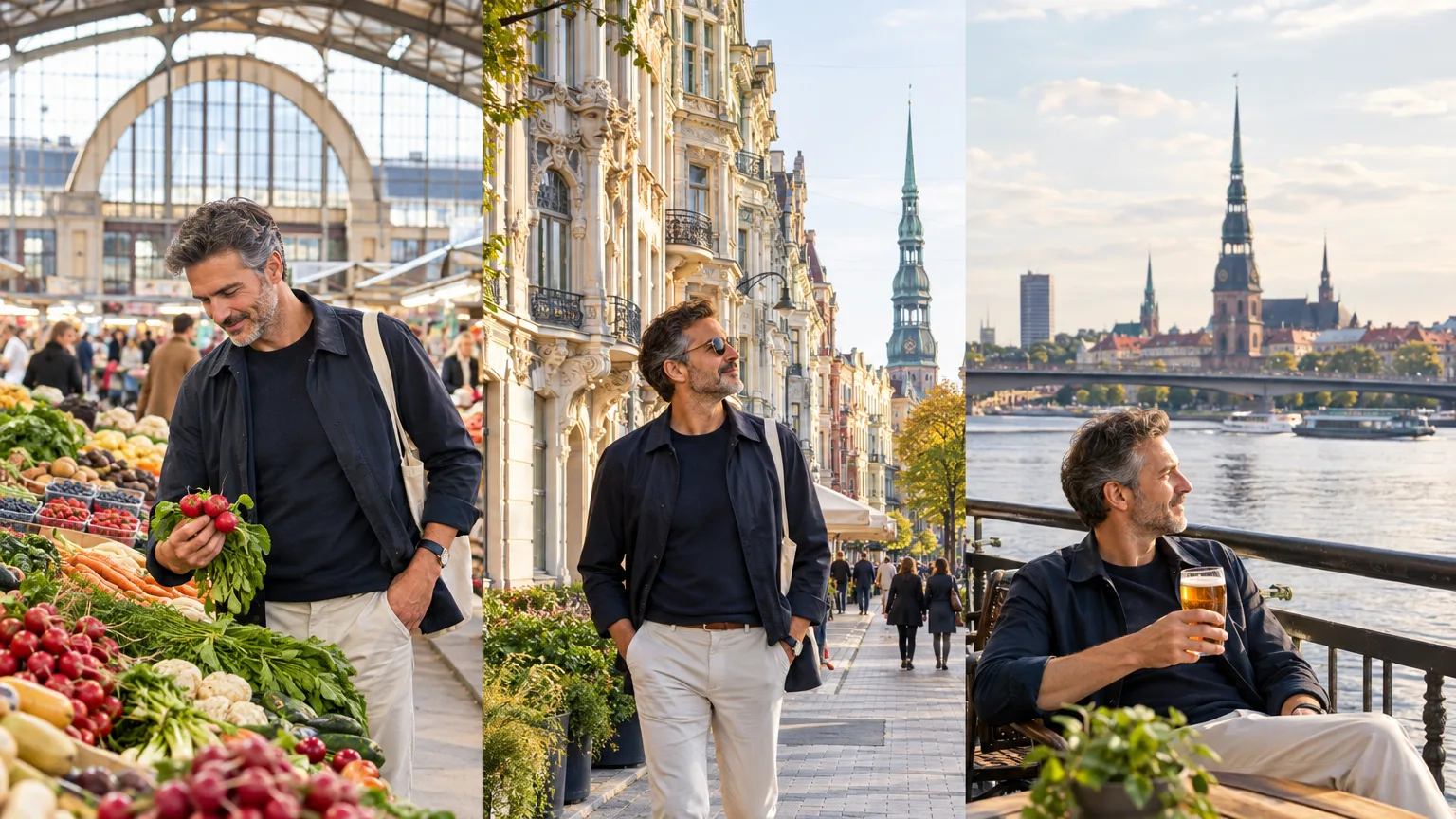
Kalamaja is a five-minute walk north-west of the Old Town walls. It started out as a fishermen’s district and is now Tallinn’s most likeable neighbourhood, full of old painted wooden houses, independent cafés and people who look like they work in tech start-ups, because many of them do. On its edge is Telliskivi Creative City, a former industrial site turned into a jumble of galleries, bars, shops and street food. Nearby is the Balti Jaam market by the main railway station, good for a cheap lunch and a nose around stalls that sell everything from smoked fish to Soviet-era cameras.
Then walk down to the Seaplane Harbour, the city’s maritime museum. It fills a vast concrete hangar built for seaplanes before the First World War, and the star exhibit is the Lembit, a 1930s submarine you can climb inside. It’s one of those museums that men of a certain age go into for an hour and come out of three hours later.
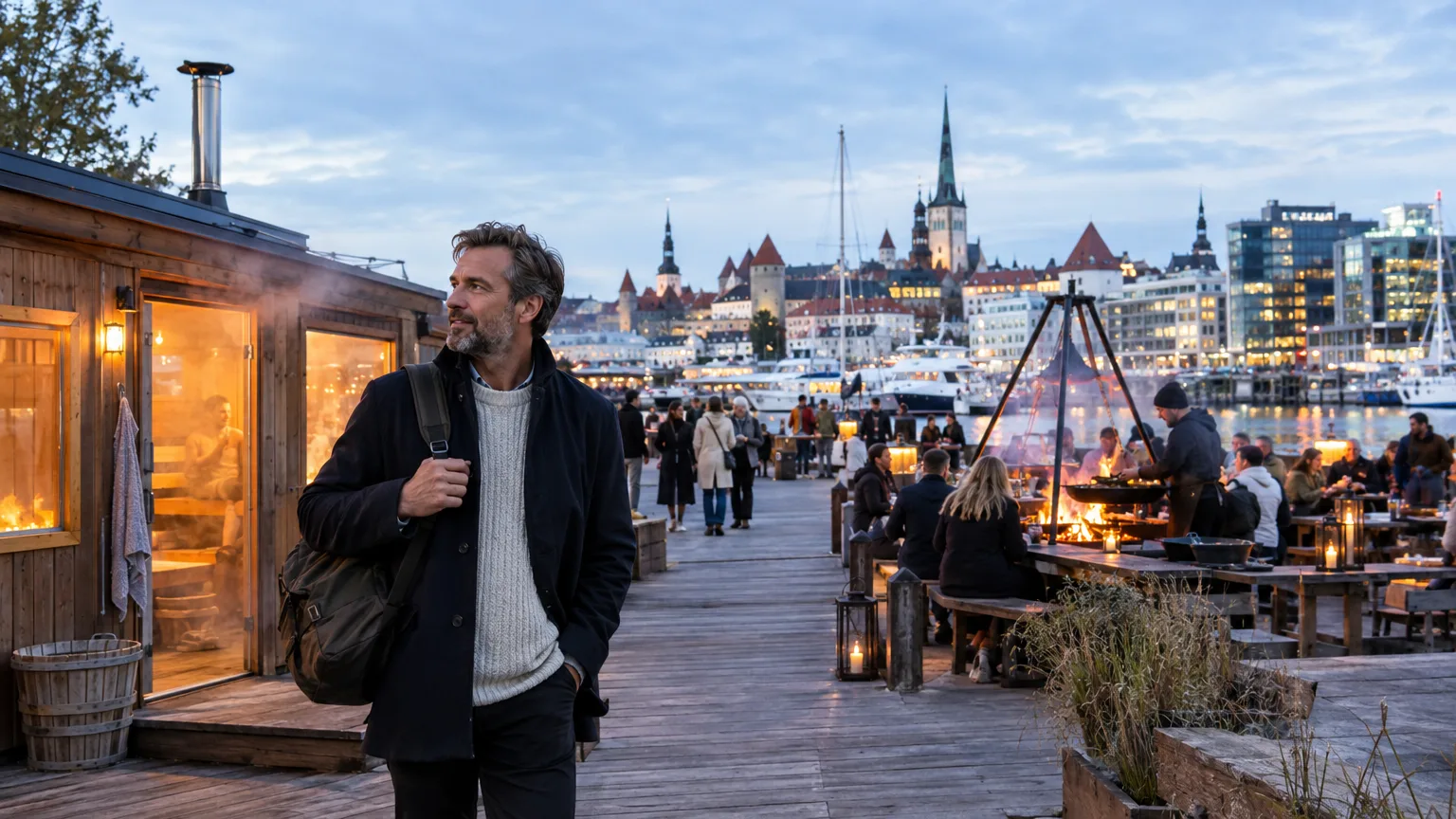
Finish the day at Kalma Sauna on Vana-Kalamaja. It’s a stately Art Deco bathhouse that dates from 1928 and is among Tallinn’s oldest public saunas. The name looks ominous (kalma means grave in Estonian) but it’s simply short for Kalamaja Sauna. The men’s side has a wood-fired sauna and a steam room, there’s a small pool for cold dips, and entry costs roughly what you’d pay for two pints in London. There’s no need to book for the public sections.
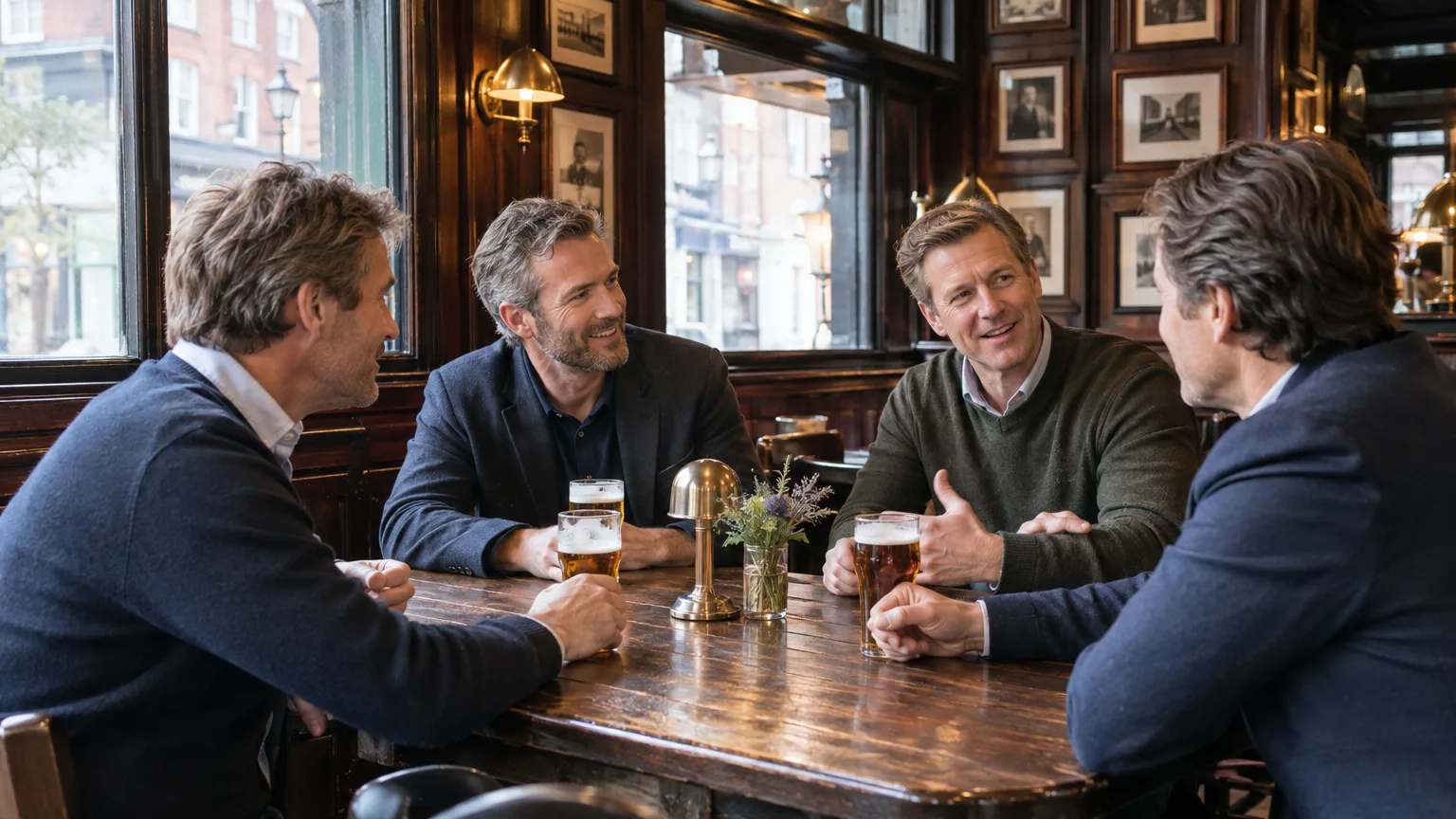
In Britain we unwind by sitting in a warm room with a drink. Estonians do much the same, only the room is hotter and you’re expected to leave your trousers at the door.
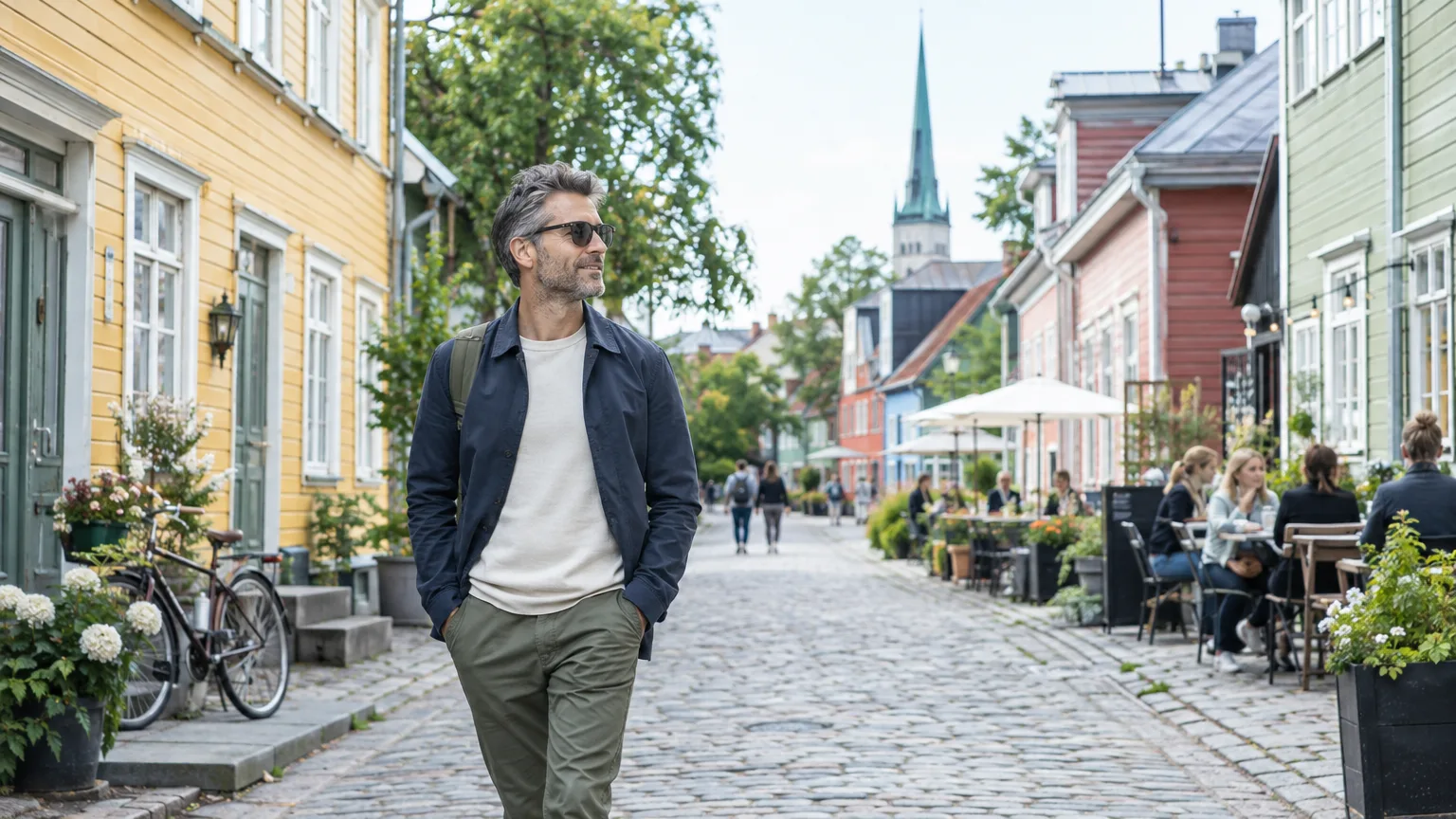
Why do Estonians prefer a sauna to a pub?
For many Estonians the sauna does the job the British pub does. It’s where friends catch up and families mark occasions, and where an awkward conversation becomes easier because nobody can see very well through the steam. The tradition goes deep: the smoke sauna culture of Võromaa in the south-east is on UNESCO’s list of intangible cultural heritage. In the public saunas, men’s and women’s sections are separate and nude. You’ll see regulars in felt hats, which keep your head from overheating, and you can buy a viht, a bundle of birch twigs you soak and then whisk yourself with. It does the circulation good, apparently. Ask the regulars and they’ll tell you it’s not optional.
The two traditions are starting to merge, too. Põhjala, one of Estonia’s best-known craft breweries, has a sauna at its tap room in the old Noblessner shipyard. At Iglupark, igloo-shaped saunas sit right by the sea. It’s an obvious idea and nobody in Britain seems to have thought of it: a hot room, a cold sea and a decent beer, all within 20 metres of each other.
Day three: harbourside dining and a palace for afters
Spend your last morning at Kadriorg, a couple of kilometres east of the centre. Peter the Great built the baroque palace and park after Russia took Estonia from Sweden in the early 18th century. In the same park is KUMU, the national art museum, a striking modern building with the best collection of Estonian art anywhere. It’s also the one place in town that really explains the Soviet years.
In the evening, go to Noblessner. This was a submarine shipyard in tsarist times and is now a waterfront quarter of restaurants, bars and flats looking out over the marina. On a summer night the sun hardly sets, and locals stay out on the terraces late into the evening. Look out for the dishes Estonia does best: smoked and cured Baltic fish, dark rye bread, game, wild mushrooms and berries. The city now has a serious modern restaurant scene that’s still a good deal cheaper than its Scandinavian equivalents.
How much does a weekend in Tallinn cost?
Direct flights from London take about three hours, and Estonia is two hours ahead of the UK. Routes and airlines from regional UK airports change from season to season, so check before you plan around one. Otherwise you can usually connect via Riga or Helsinki. Tallinn Airport is close to the centre and a tram runs into town. If you have a spare day, Helsinki is around two hours away by ferry.
Estonia uses the euro. Prices have gone up in recent years but are still below London, Copenhagen or Helsinki. Roughly what to expect: a half-litre of beer is around €5–7 (£4.30–£6), more for craft beer in the trendier bars. A main course and a drink in a good mid-range restaurant comes to about €30–45 (£26–£39) a head. A 5 km taxi or ride-hailing trip is typically €7–10 (£6–£8.50). Add a central hotel at £80–£150 a night and allow £60–£80 a day for food, drink, museums and a sauna. Two people can do a long weekend comfortably for well under the price of the same break in Scandinavia.
The best time to go is May to September, when the days are long and the terraces are full. December is the alternative, when the Christmas market fills Town Hall Square and the sauna makes perfect sense. Before you book, check the latest FCDO travel advice and entry requirements for Estonia, make sure your passport is valid, take your GHIC for state healthcare and buy travel insurance.
In short
Three days is the right length for Tallinn: a morning in the medieval Old Town, then Kalamaja, Telliskivi and the Seaplane Harbour, and finally Kadriorg and dinner by the water at Noblessner. Direct flights from London take about three hours, and the city is still cheaper than its Nordic neighbours. If you only follow one bit of advice, it’s to swap one night in a bar for Kalma Sauna, the Estonian answer to the local pub.
Sources

Midcent Travel
Archie Inglis writes about travel for men 45 and over: city breaks, winter sun, road trips, rail journeys, walking holidays and the longer trips you've been putting off. Where's worth going, how to get there without the hassle, and how to make the money go further.
One of Midcent's writers. Spotted something? Write to archie@midcent.uk.