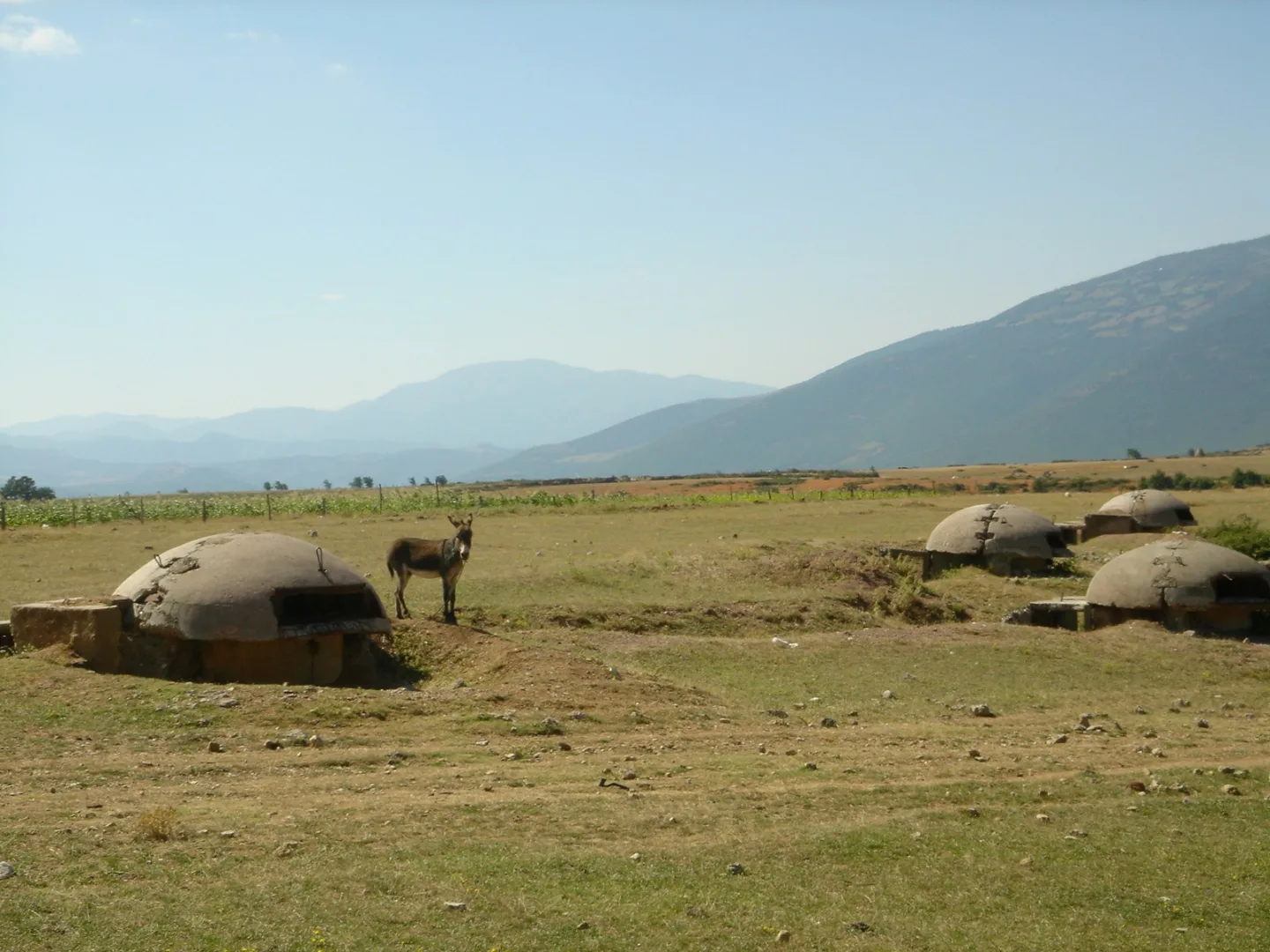
Most Mediterranean coastlines are built to keep tourists comfortable. Albania’s was built to keep invaders out. For four decades the dictator Enver Hoxha was convinced that everyone, from NATO to his former friends in Moscow and Beijing, was about to land on his beaches. So he covered the country in concrete pillboxes, commonly put at around 170,000 of them. Almost nobody turned up to invade. Now the British do, every summer, with suncream and a Ryanair-sized cabin bag.
That’s the odd appeal of the Albanian Riviera. The Ionian Sea here is as clear as anything in Greece, the mountains drop straight into it, and the evening bill still makes you look twice. But you’ll also find mushroom-shaped bunkers on the sand, a Cold War submarine tunnel, and a country that has only been open to the world for about thirty years. The hype is getting louder, so here’s what’s actually worth the trip.
Is the Albanian Riviera worth visiting?
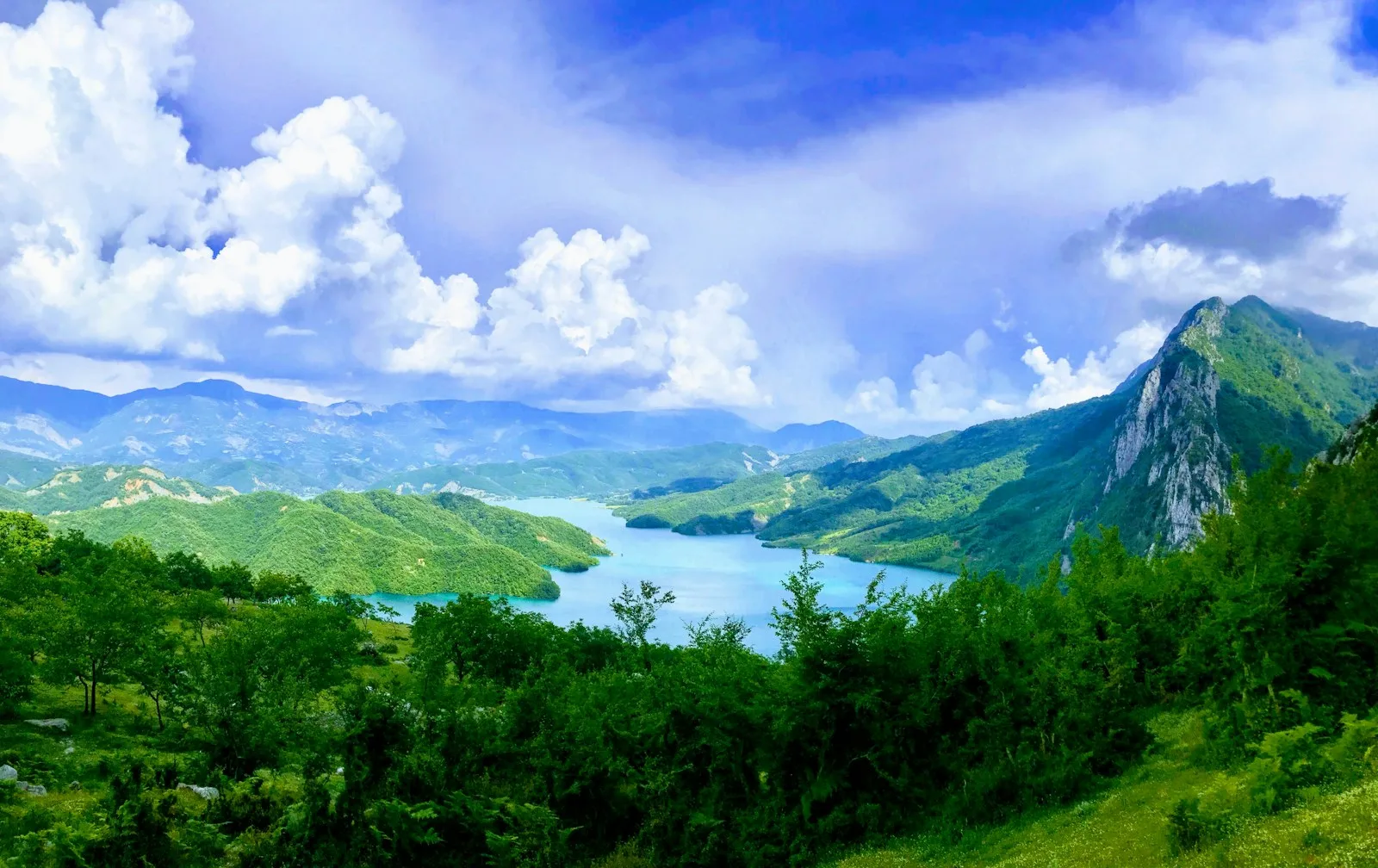
Short answer: yes, if you go knowing what you’re getting. The riviera runs roughly from Vlorë in the north to Sarandë and the Greek border in the south, about 120 kilometres of coast squeezed between the Ceraunian Mountains and the sea. The road over the Llogara Pass climbs past 1,000 metres before dropping in hairpins towards Dhërmi. On the first time over, it’s the view that makes you go quiet. On the second, it’s the coach coming the other way.
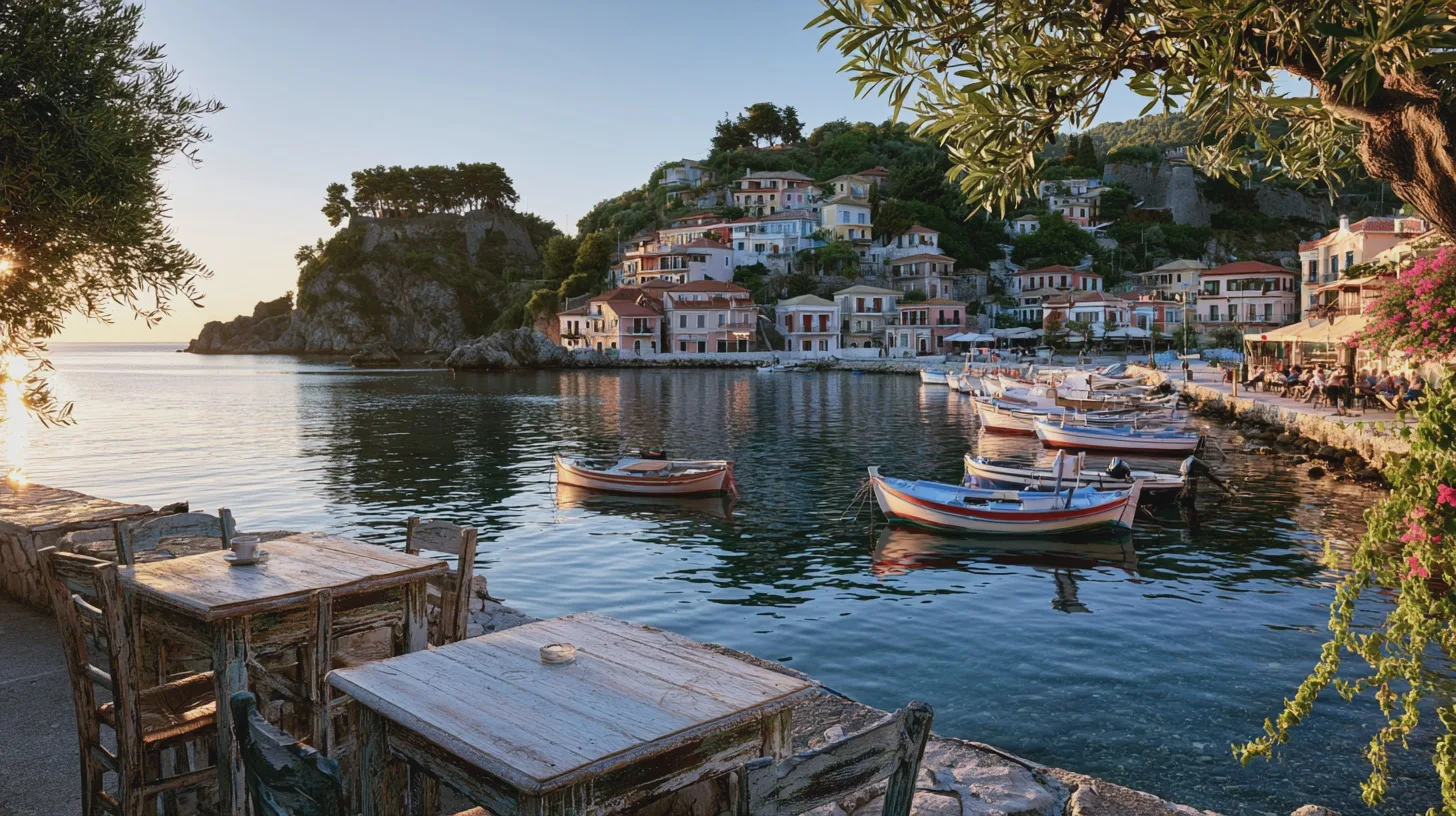
The beaches are mostly pebble, the water is a startling blue, and the villages behind them, Dhërmi, Himarë and Qeparo, still have old stone quarters up the hillside that have nothing to do with tourism. Old Qeparo in particular, a half-abandoned hill village looking down on its newer seaside twin, gives you a better sense of the place than any beach club.
The honest caveat is that the coast is developing fast and not always prettily. Half-finished concrete hotels are as much a part of the scenery as the olive groves, and in July and August the most famous beaches fill up with sunbeds you have to pay for. Albania isn’t undiscovered any more. It’s just undiscovered by the people who still think it’s 1995.
Albania spent forty years preparing for an invasion from the sea. It finally arrived, and it wants a sunbed by the water and a cold beer.
Bunkers, tunnels and a dictator’s paranoia
The concrete is what makes the riviera unlike anywhere else in the Mediterranean. The small domed pillboxes pop up in fields, on headlands and sometimes right on the beach, too heavy and too solid to be worth demolishing. Some have been painted, a few have become bars, and most just sit there, looking slightly surprised that nobody came.
For the bigger story, start in Tirana. Bunk’Art 1, a vast nuclear shelter dug into the hillside for the party elite, and Bunk’Art 2, closer to the city centre, have been turned into museums about the regime and its secret police. They’re sobering, well done and quite claustrophobic, which seems right. On the coast, Porto Palermo has a near-perfect triangular fortress linked to Ali Pasha, the Ottoman-era strongman. Round the bay is a tunnel blasted into the rock to hide submarines. Getting in has depended on military access over the years, so check locally before you make a special trip.
Inland, Gjirokastër is the one detour you shouldn’t skip. It’s a UNESCO-listed Ottoman town of stone-roofed tower houses, where Hoxha was born, and it has a cracking castle with a captured US Air Force plane parked on the battlements. Near the southern tip of the coast, the ruins of Butrint, also UNESCO-listed, run from Greek to Roman to Venetian. They sit in a lagoon full of frogs and tortoises and are best seen first thing, before the coach parties arrive.
Where to stay, and where the hype outruns the reality
Ksamil, near Butrint, is the one on every Instagram feed: little islands, white beaches, turquoise water. It’s genuinely pretty, but in high summer it’s crammed, overbuilt and noticeably pricier than the rest of the coast. Sarandë is a lively, slightly brash resort town with a long promenade and decent restaurants. It works as a base, though nobody would call it charming.
For most readers, Himarë is the sweet spot: a proper working town with a quiet old quarter, beaches you can walk to, and fish restaurants run by people who caught the fish, or know who did. Dhërmi and nearby Drymades are more fashionable, with beach clubs and a younger crowd in August. Go in June or September and you get warm sea, empty tables and the same views at lower prices. May and October are good for walking, and the Llogara national park and the coastal footpaths are lovely in spring.
Eat what’s local and simple: grilled fish and octopus, byrek (filo pie), lamb, tomatoes that taste of something, and olive oil from the trees you’ve just driven past. Albanian wine is improving and raki is everywhere, often homemade. Treat the raki with respect.
How do you get to the Albanian Riviera from the UK?
Several UK airports now have direct flights to Tirana, with budget airlines and full-service carriers alike, and the flight takes about three hours. From Tirana it’s roughly a three- to four-hour drive to the southern coast. Hiring a car gives you the most freedom. Albania drives on the right, the roads are much better than their reputation, though local driving habits haven’t quite caught up, and the FCDO suggests carrying a 1968 International Driving Permit along with your UK licence. You can only buy one in the UK, so sort it before you go.
The other classic route is to fly to Corfu, which many UK airports serve in summer, and take the short ferry across to Sarandë. It’s a satisfying way to arrive, and handy if you want a Greek-Albanian double bill. Buses link the coastal towns, but the timetables are more of a suggestion.
Paperwork-wise, the FCDO says British passport holders can visit for up to 90 days in any 180-day period without a visa. Your passport must have an expiry date at least three months after the day you plan to leave. Rules change, so check the latest FCDO travel advice and entry requirements before you book. Albania isn’t in the EU, so don’t rely on your GHIC. Comprehensive travel insurance is essential, not optional.
What does a holiday in Albania cost?
Albania is still one of the best-value seaside destinations in Europe, but it’s no longer silly-cheap, especially in Ksamil in August. The currency is the lek, and a pound buys somewhere around 110 lek, though check the current rate before you go. Euros are widely accepted on the coast, usually at a rate that suits the seller. Carry some cash: smaller restaurants and guesthouses don’t always take cards.
Rough prices away from the most fashionable beach bars: a half-litre of local beer costs about 200–350 lek (£2–£3). A good dinner per person with a glass of wine is about 1,500–2,500 lek (£14–£23), and grilled fish sold by weight pushes that up. A short taxi ride of about 5 km is around 700–1,000 lek (£6–£9). Agree the fare first, because meters aren’t always switched on. Sunbeds at the popular beaches are charged by the day, and the price climbs the closer you get to the water.
In short
The Albanian Riviera is worth the trip for clear Ionian water, dramatic mountain roads, two UNESCO sites and a Cold War history you can literally sit on. Skip peak August and the Ksamil crowds, base yourself somewhere like Himarë in June or September, and hire a car. It’s no longer a secret, but it’s still one of the few Mediterranean coasts where the bill comes as a pleasant surprise.
Sources
Midcent Travel
Archie Inglis writes about travel for men 45 and over: city breaks, winter sun, road trips, rail journeys, walking holidays and the longer trips you've been putting off. Where's worth going, how to get there without the hassle, and how to make the money go further.
One of Midcent's writers. Spotted something? Write to archie@midcent.uk.