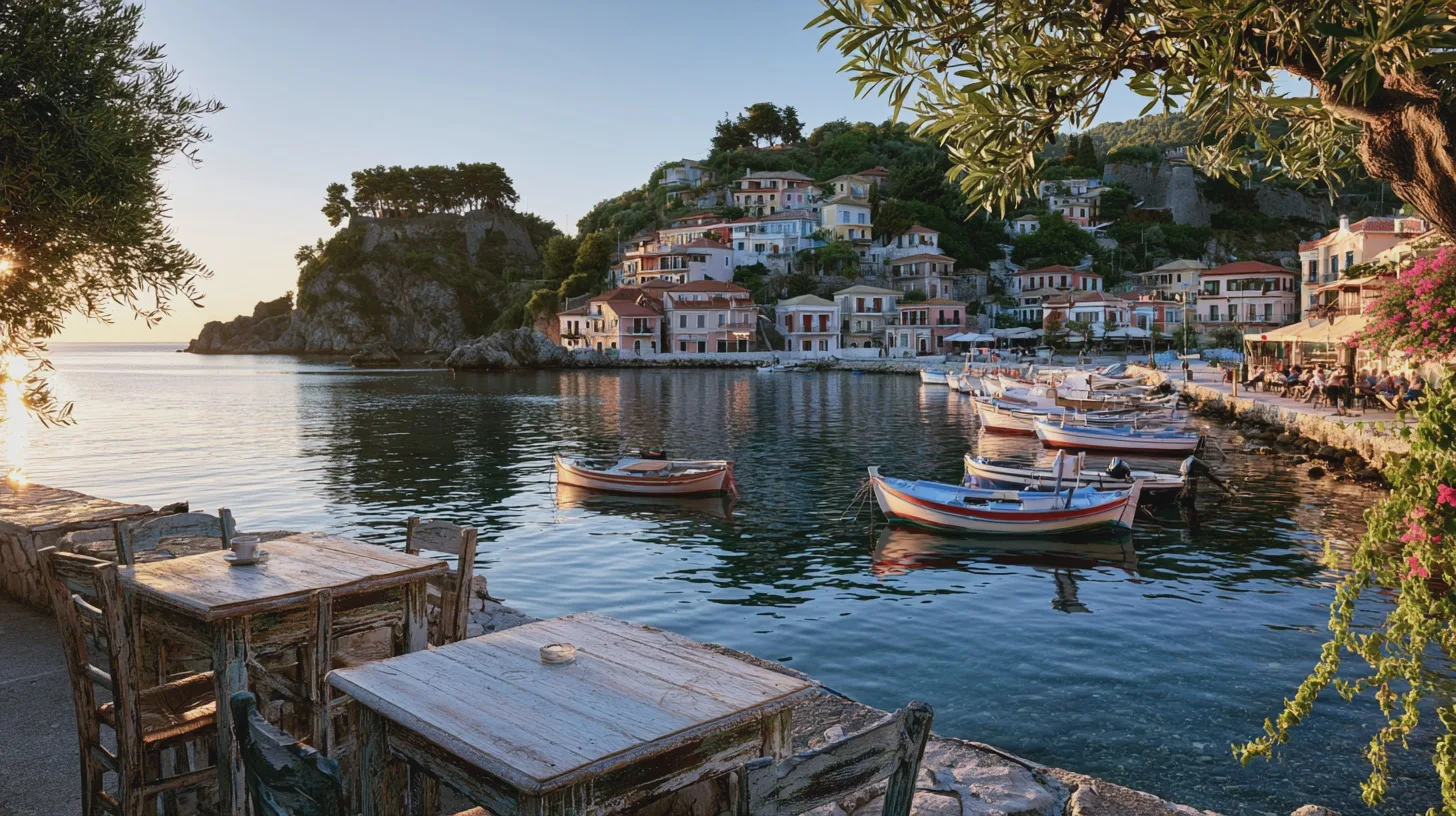
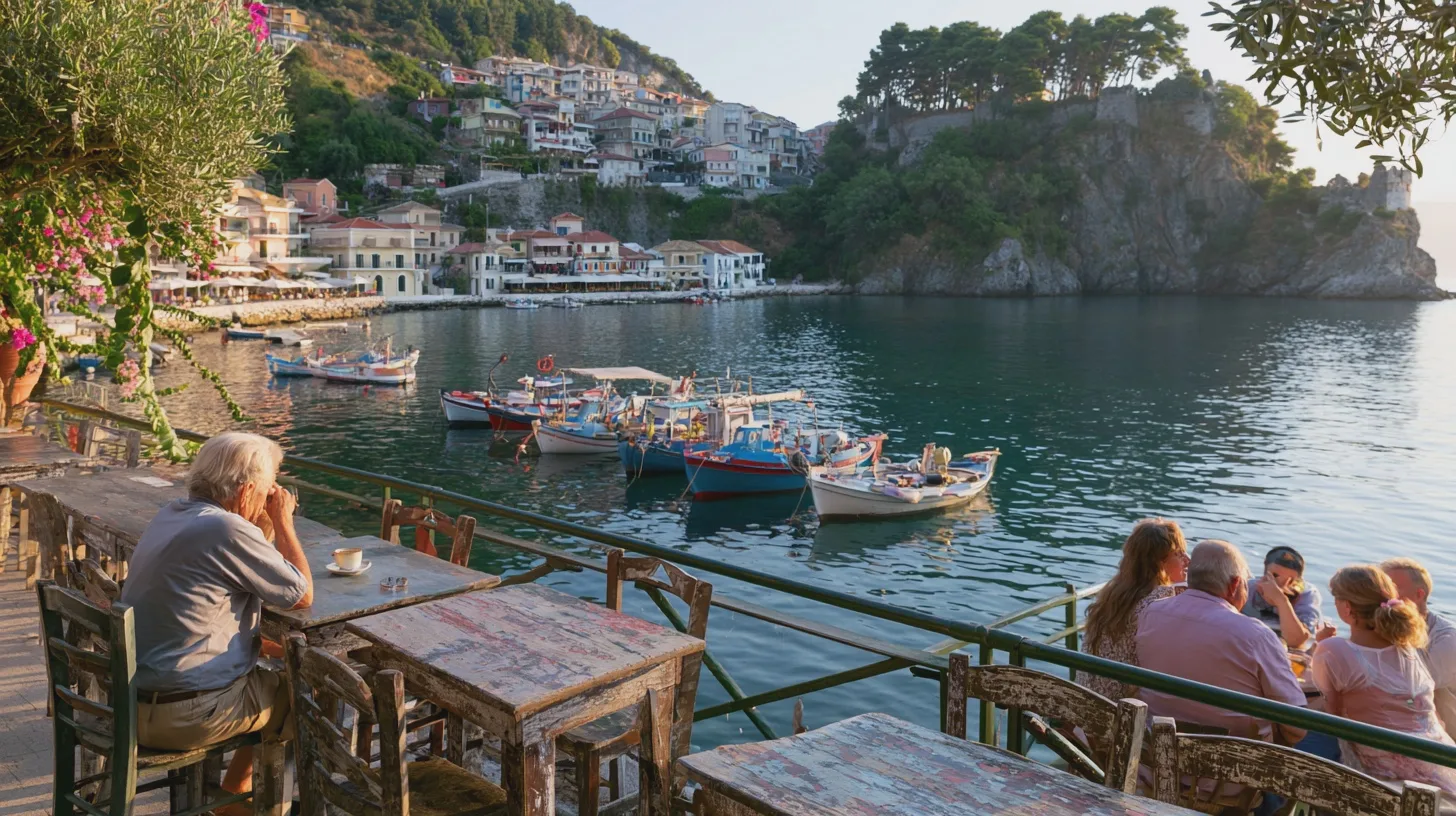
Parga looks like a Greek island but isn’t one. It has the full set: pastel houses climbing a hillside, a Venetian castle on the headland and a little chapel on an islet in the bay. Yet you can drive there. It sits on the mainland coast of Epirus in north-western Greece, with Paxos and Corfu on the horizon and nobody asking for your ferry ticket.
That bit of geography is the whole appeal. You get the island looks, the clear Ionian water and the octopus hung out to dry by the harbour, without paying island prices. If you’ve done the Cyclades and come home feeling you’d mostly paid for the view, Parga is the corrective.
Where is Parga and how do you get there from the UK?
Parga is in the Preveza region, on the Ionian coast roughly halfway between the ferry port of Igoumenitsa and the town of Preveza. The nearest airport is Preveza (Aktion). Several UK airports have seasonal flights there, mainly from late spring to October, on a mix of low-cost and package-holiday airlines. From the airport it’s a drive of somewhere between an hour and an hour and a half north to Parga. You can take a hire car, a pre-booked transfer or a taxi.
I’d get the car. Parga itself is best on foot, but some of the most memorable things nearby are half an hour away along the coast or inland. The other option is to fly to Corfu, which has a wider choice of UK flights, then take the ferry to Igoumenitsa and drive south. It takes longer but can be cheaper in high season. Parga is also a long-standing package destination, so a deal that includes the transfer is worth comparing.
The best months are June and September, when the sea is warm and the lanes aren’t crowded. July and August are hot and busy. Parga is no secret to Greek and Italian families, so this is not an undiscovered fishing village. It’s a well-loved resort that happens to have kept its manners. In May and October it’s quieter, though some places run reduced hours, and plenty of businesses close for the winter.
The ruined Venetian castle crowns the hill between the harbour and Valtos beach. You reach it up a tangle of stepped lanes lined with bougainvillea and shops selling olive-wood spoons. Venice held Parga for roughly four centuries, which is why it feels more like Corfu than mainland Greece. The Ionian-style architecture is part of what makes it so unlike the concrete resorts further down the coast. From the top you look over the Ionian Sea in one direction and the town’s rooftops in the other. Go in the late afternoon, when the stone has stopped radiating heat and the light softens.
The history has a part that British visitors may find awkward. In 1819 Britain, then the protecting power in the Ionian Islands, handed Parga over to Ali Pasha of Ioannina. Rather than live under him, the townspeople left for Corfu, and accounts say they took their ancestors’ bones with them. It was not Britain’s finest diplomatic hour. Ali Pasha’s own fortress still stands in ruins above the nearby village of Anthousa. It’s a good short excursion and the views are free.
Which are the best beaches in Parga?
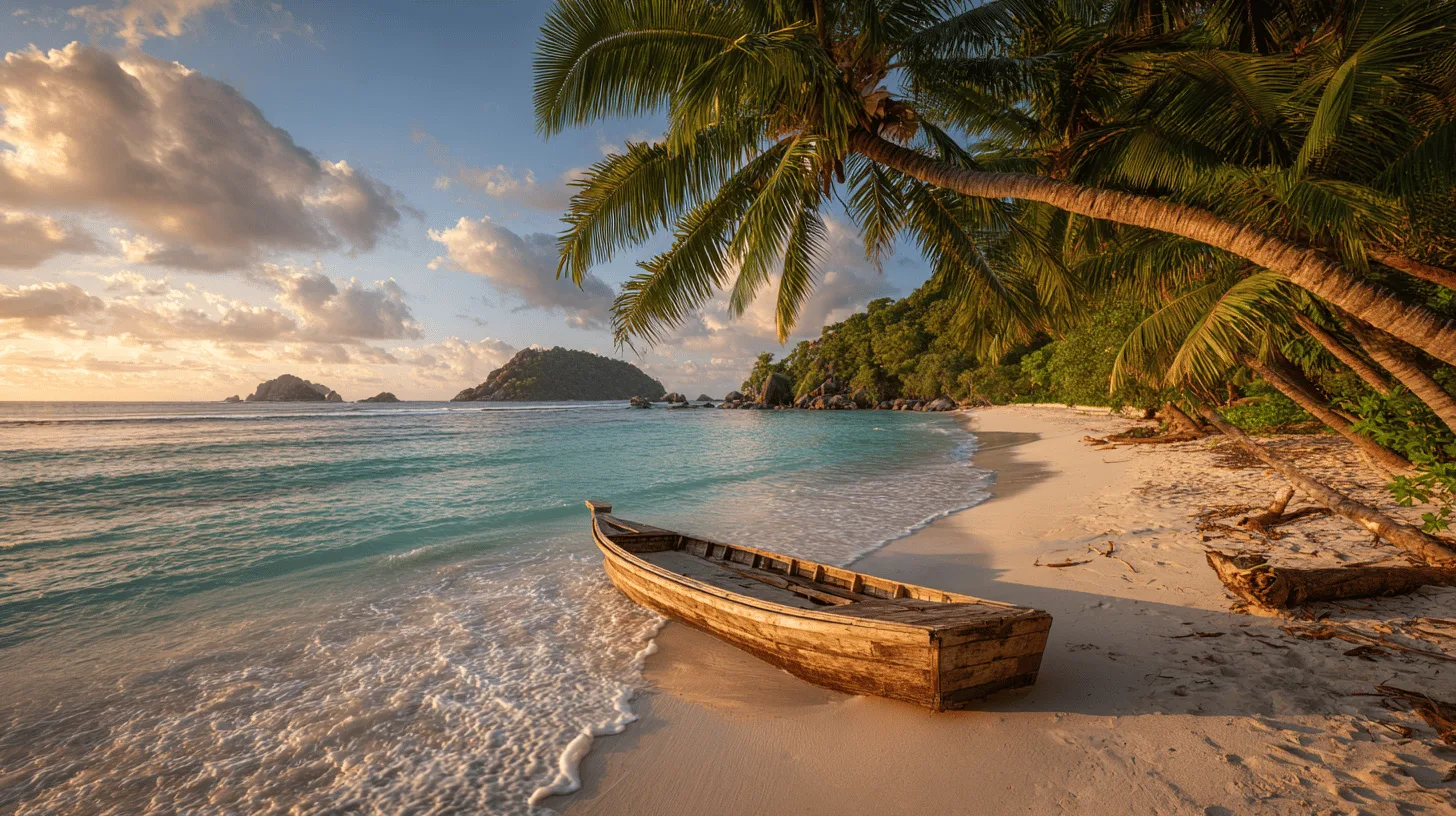
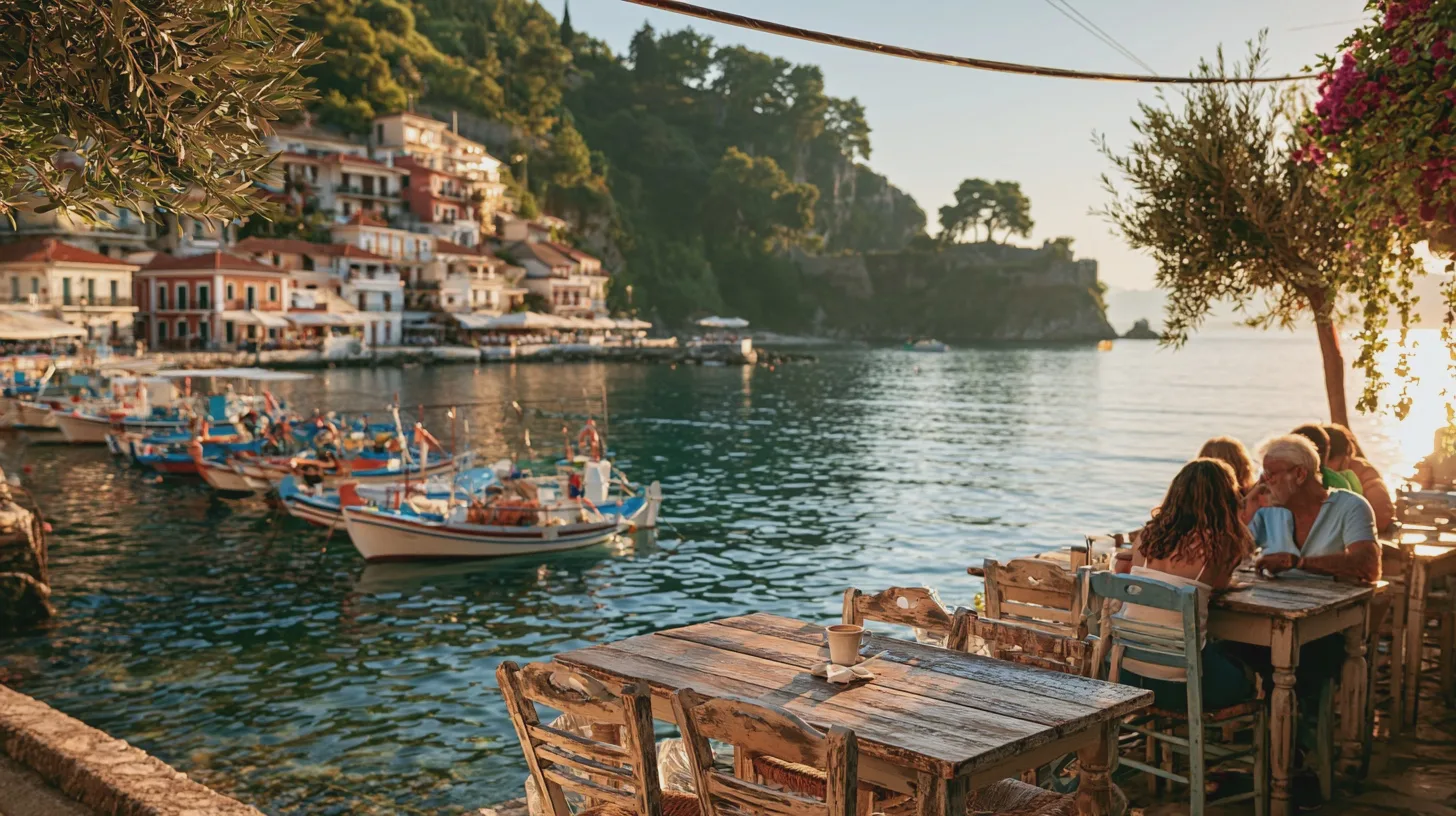
Kryoneri is the town beach, a few steps from the cafés. Just offshore is the islet with its small chapel to the Virgin Mary, close enough for a decent swimmer. Over the castle hill is Valtos, the big one: a long curve of beach with sunbeds, bars and watersports, backed by green hills. The shoreline is pebbly, so bring water shoes unless you enjoy walking like a man crossing hot coals.
West of town is Sarakiniko. To the east is Lichnos, a sheltered cove of the sort that ends up on postcards. The local municipality also suggests Piso Kryoneri and Ai Giannakis. In summer, water taxis run from the harbour to the main beaches. They save you the uphill walk back and the battle for a parking space, and both are worth avoiding in August.
Mykonos sells you the view of the sea. Parga includes the sea, the castle and the grilled octopus, for roughly what you’d pay elsewhere for a sunbed.
What is there to do in Parga besides the beach?
This is where Parga has the edge on the islands. The ancient Greeks believed the Acheron River led to the underworld. At its springs near the village of Glyki, inland from the coast, you can wade upstream into a narrow gorge. The water is cold enough to take your breath away even in high summer. Near the river mouth at Ammoudia there’s a long sandy beach. A short drive away, near Mesopotamos, are the ruins of the Necromanteion, the oracle of the dead, where pilgrims came to consult the departed. It’s an unusual morning out, and the gift shop doesn’t sell fridge magnets of Hades.
Boat trips leave the harbour in summer for Paxos and Antipaxos. Paxos has its small harbour villages, and Antipaxos has water so clear the boats look as if they’re hovering. Prices and timetables vary by operator and season, so compare the boards along the quay before you buy.
Epirus is mountain country, and the food reflects that. Order the savoury pies (pites), lamb, local feta and whatever fish came in that morning. The harbourfront tavernas charge extra for the view. Walk two streets back up the hill and you’ll usually find better cooking at lower prices, with locals at the next table.
How much does a holiday in Parga cost?
Parga isn’t a giveaway, but it’s noticeably kinder to the wallet than the fashionable islands. Much of the accommodation is in small, family-run studios and apartments rather than designer boutique hotels. Roughly what to expect, at around €1.15 to the pound:
Beer: a half-litre of draught lager, the nearest thing to a pint, costs about €4–5 (£3.50–£4.30). Dinner: a taverna meal with house wine comes to around €20–30 a head (£17–£26). Taxi: a ride of about 5 km is roughly €10–15 (£9–£13), more late at night or from the airport rank.
The main ways to overpay are front-row sunbeds on Valtos in August and menus with photographs being waved at you along the quay. Before you go, check the latest FCDO travel advice for Greece and the current entry requirements, including the passport validity rules for the EU. Bring your GHIC for state healthcare and buy proper travel insurance as well, because a GHIC won’t cover everything.
In short
Parga, on the mainland Ionian coast of north-western Greece, has the castle, pastel houses and clear water of an island resort without island prices. Fly to Preveza on a seasonal flight from the UK and drive for about an hour or so. Go in June or September and expect to pay roughly £4 for a beer and £17–£26 for dinner. Make time for the Acheron springs and a boat to Paxos, because the area offers more than beaches.
Sources

Midcent Travel
Archie Inglis writes about travel for men 45 and over: city breaks, winter sun, road trips, rail journeys, walking holidays and the longer trips you've been putting off. Where's worth going, how to get there without the hassle, and how to make the money go further.
One of Midcent's writers. Spotted something? Write to archie@midcent.uk.