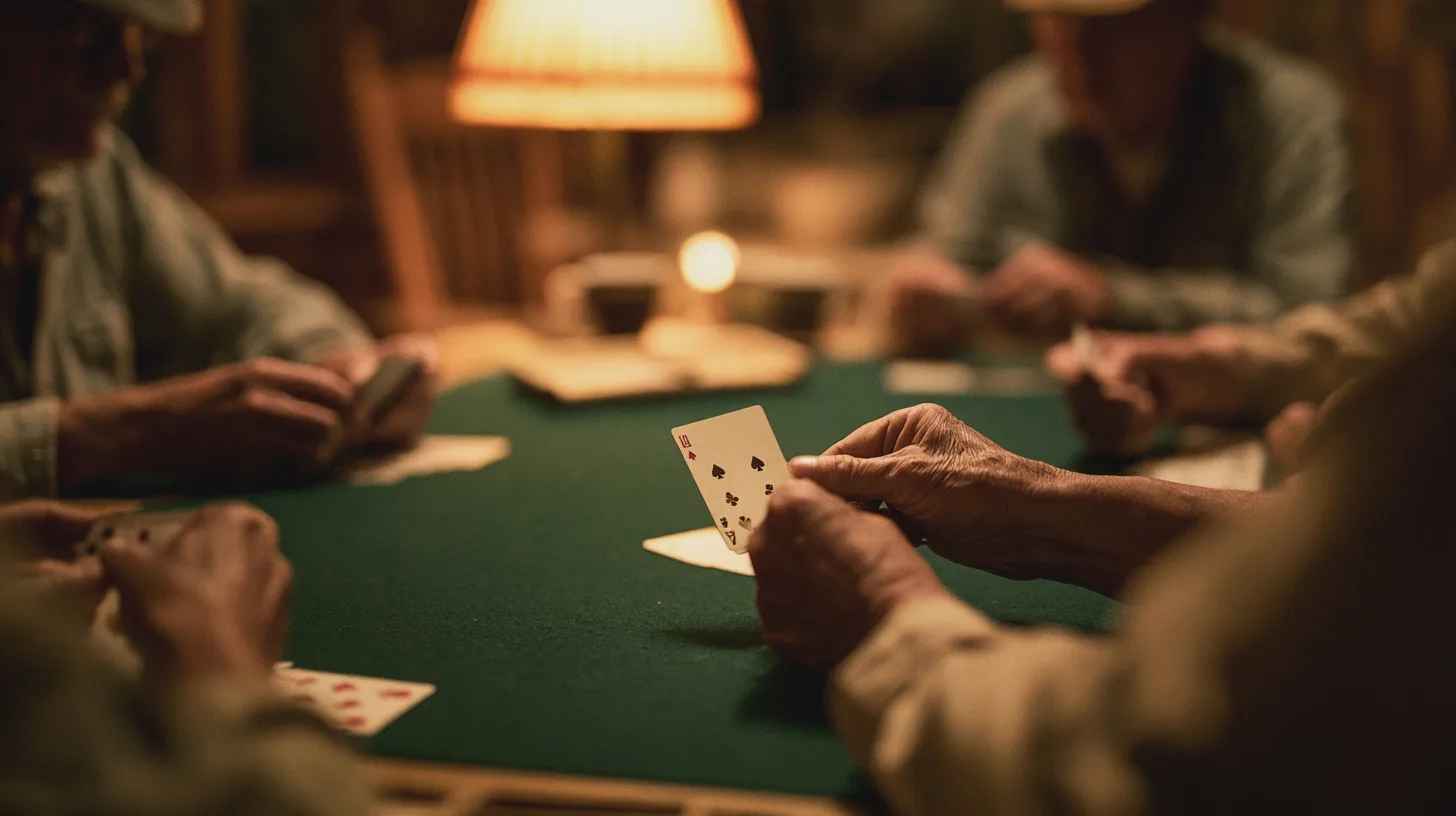
There is a particular pleasure in discovering that your partner has understood exactly what you meant — especially when you have spent the last ten minutes communicating through playing cards. Bridge offers that pleasure. It also offers plenty of opportunities to discover that neither of you understood a thing.
If you are looking for a hobby that makes you think and gets you out of the house, it is worth a look. If someone has sold it to you as a way to prevent dementia, put your wallet away for a moment. Those are two quite different claims.
What actually happens at a bridge table?
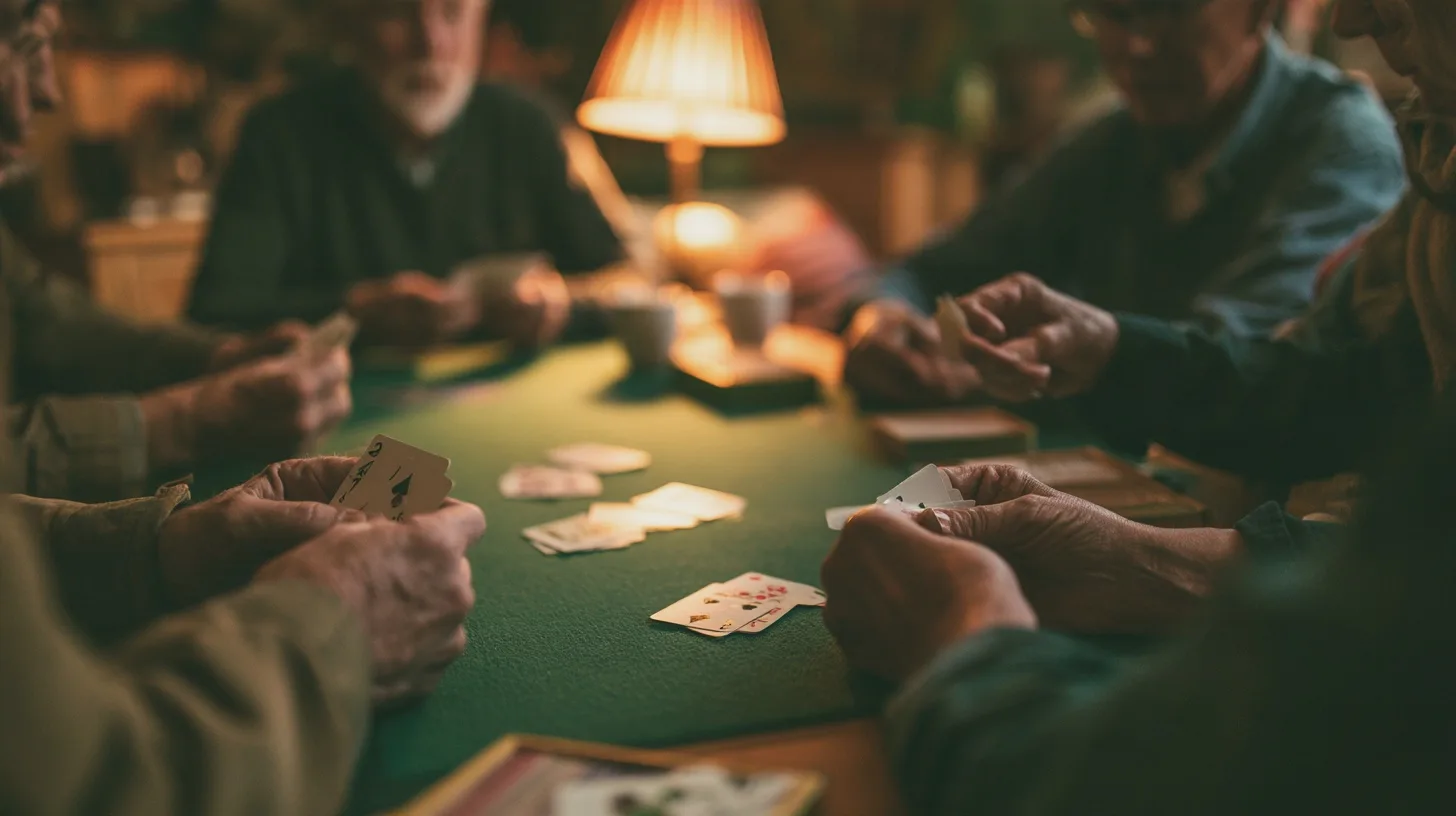
Bridge is played by four people in two partnerships. You and your partner bid to decide the target for a hand, then one partnership tries to make that target while the other tries to stop them. You have to judge what the bids tell you, remember what has been played and decide when to take a risk. Unlike a solitary puzzle, your decisions affect someone sitting opposite you — someone who may have a view about them afterwards.
That combination is the attraction. You are planning, paying attention and learning a shared language with your partner, but there is still enough uncertainty to keep the evening interesting. You do not need to memorise every card from day one. A beginner spends much of the time learning the basic shape of the game and making mistakes that become obvious approximately three seconds too late.
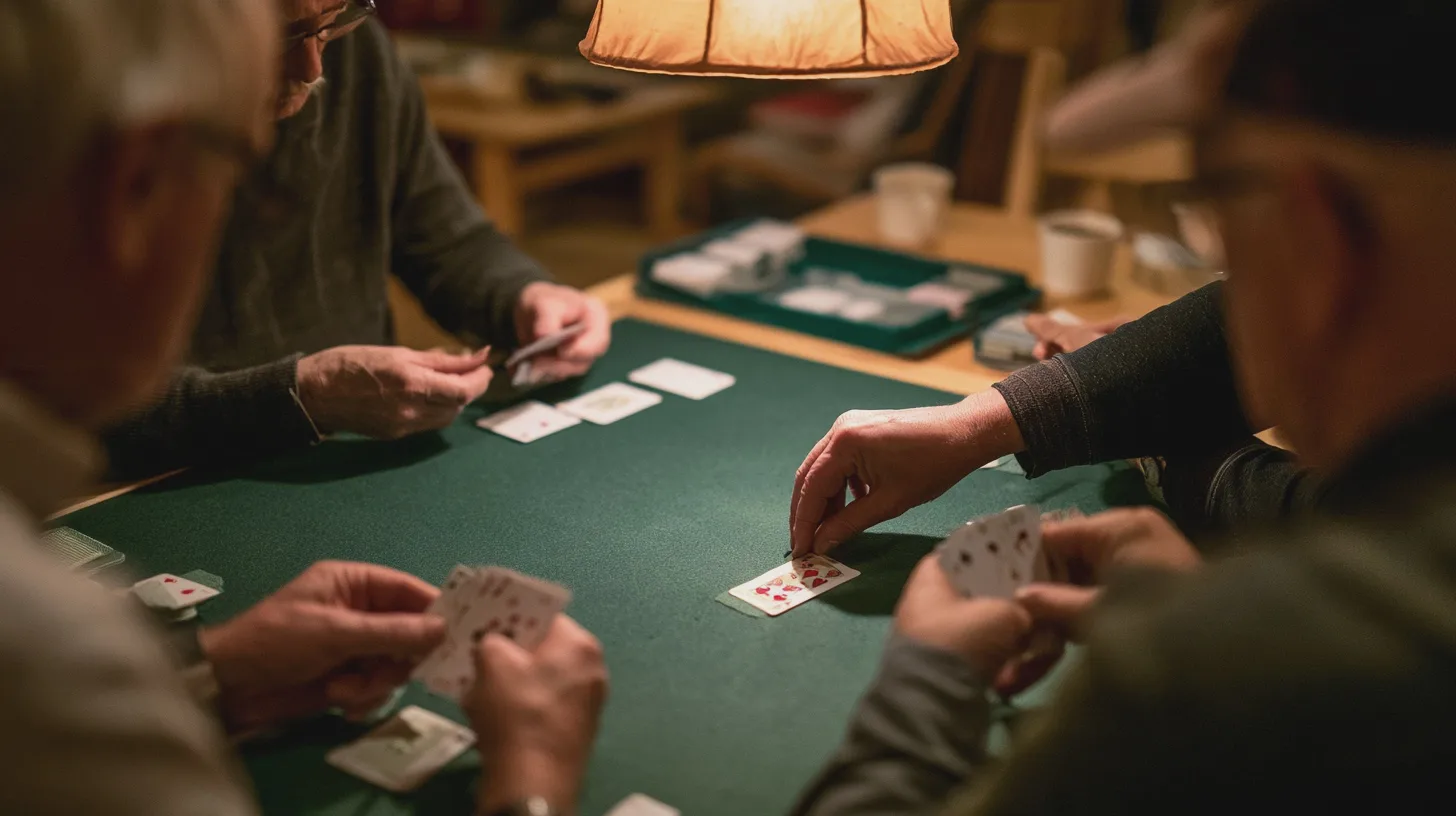
At many clubs you will encounter duplicate bridge. Different pairs play the same deals, and results are compared with others who held the same cards. A poor hand, then, is not necessarily an excuse for a poor result — an arrangement that removes one familiar defence from the average card player. The English Bridge Union describes both social and duplicate ways to play, in person and online.
There is a social challenge here as well as a card-playing one. You have to turn up, meet people, take your turn and recover gracefully when your brilliant plan leaves your partner doing the recovering. If you miss having a regular evening with a purpose, that may be more valuable to you than any promise about sharpening your wits.
Can playing bridge prevent dementia?
There is no good evidence that playing bridge prevents dementia. Alzheimer’s Society says there is no strong evidence that brain-training activities reduce a person’s risk of developing it. Mentally stimulating activities have been associated with lower rates of cognitive decline in observational research, but that cannot show that the activity itself caused the difference. People who take up such hobbies may differ in other ways, too.
Getting better at bridge is a reasonable expectation if you practise. Assuming that improvement protects your brain against disease is a leap the evidence does not support. Nor should a difficult session at the club be treated as a test of your health. Everybody forgets a card, loses track of a bid or has an evening when concentration goes missing.
Play bridge because you enjoy the challenge and the company, not because you expect it to insure your memory.
That does not make mental and social activity pointless. Alzheimer’s Society encourages people to stay mentally well and socially active as part of a broader approach to reducing risk. Bridge might suit you particularly well because it gives you a reason to keep learning and to see other people regularly. But no single hobby can carry the whole burden of brain health, and none comes with a guarantee.
The NHS puts stronger emphasis on the wider picture: regular physical activity, a healthy diet, not smoking, keeping alcohol within recommended limits and looking after blood pressure. It recommends at least 150 minutes of moderate-intensity activity a week and strengthening activities twice a week. If you are planning a big change to your exercise routine, check with your GP first. A bridge evening and a brisk walk can happily coexist; the cards do not count as the walk, however animated the post-match discussion becomes.
If memory problems are affecting your day-to-day life, speak to a GP rather than prescribing yourself more card games. The NHS notes that memory problems can have several causes, some of them treatable. Forgetting a bridge convention is not, on its own, a diagnosis; persistent difficulties deserve a proper conversation.
How do you start playing bridge in the UK?
Start with a beginner lesson, not a full-speed club competition. The English Bridge Union offers a course-and-teacher search, a club directory and information about MiniBridge, a simpler introduction. A short taster lets you find out whether you enjoy the game before committing to a course. If you played years ago, ask about supervised play: you get a slower session and someone to help when the bidding becomes a thicket.
Do not let the lack of a ready-made partner put you off. The English Bridge Union’s club directory identifies clubs offering ‘hosting’, where you may be able to arrive without one, and ‘gentle bridge’ sessions for learners. Check with the club first: some ask for notice, and an ordinary duplicate evening may move faster than you would enjoy while learning.
Prices depend on the club and the course, so ask about lessons, annual membership and the session fee — usually called table money — before you sign up. To give the sums some shape, Aberdeen Bridge Club advertises its 2026/27 beginner lessons at £70 per ten-lesson term. Mayflower Bridge Club in Essex lists 2026/27 table money of £4 for members and £5 for visitors. Those are examples, not a national tariff, and you need not pay for lessons until you have found a format and timetable that work for you.
The English Bridge Union’s directory covers England, not the entire UK. For Scotland, Scottish Bridge has routes into clubs and lessons; in Wales, the Welsh Bridge Union publishes club contacts; and in Northern Ireland, the Northern Ireland Bridge Union has a club directory. Ask a nearby club whether it has evening or weekend beginners’ sessions if you are still working. A wonderfully sociable Tuesday afternoon is less useful when you are in a meeting.
Make it a hobby, not homework
The sensible first investment is time: try a taster, learn with other beginners and give yourself enough sessions to get past the stage where every bid feels like an exam question. Then decide whether you like the people, the pace and the game. You can practise online, but a local club gives you the face-to-face routine that may be half the appeal.
You do not have to become a competitive player to justify the effort. A regular game with friends can be an excellent outcome, provided everyone accepts that learning includes the occasional spectacular misunderstanding. And if bridge turns out not to be for you, find another activity you genuinely want to return to. The useful hobby is the one you keep doing; a theoretical benefit is no consolation for an evening you dread.
In short
Bridge is a challenging, sociable game, but there is no good evidence that playing it prevents dementia. Try a beginner session if the game appeals, and treat it as one enjoyable part of life alongside exercise, social contact and attention to your wider health. If memory problems affect everyday life, speak to a GP.
Sources

Midcent Home & Leisure
Alistair Ives writes about the home and the weekend for men 45 and over: DIY, renovation, the garden, the outdoors and the hobbies worth the time. What a job really costs, what you can do yourself, and when it's worth paying someone who knows.
One of Midcent's writers. Spotted something? Write to alistair@midcent.uk.