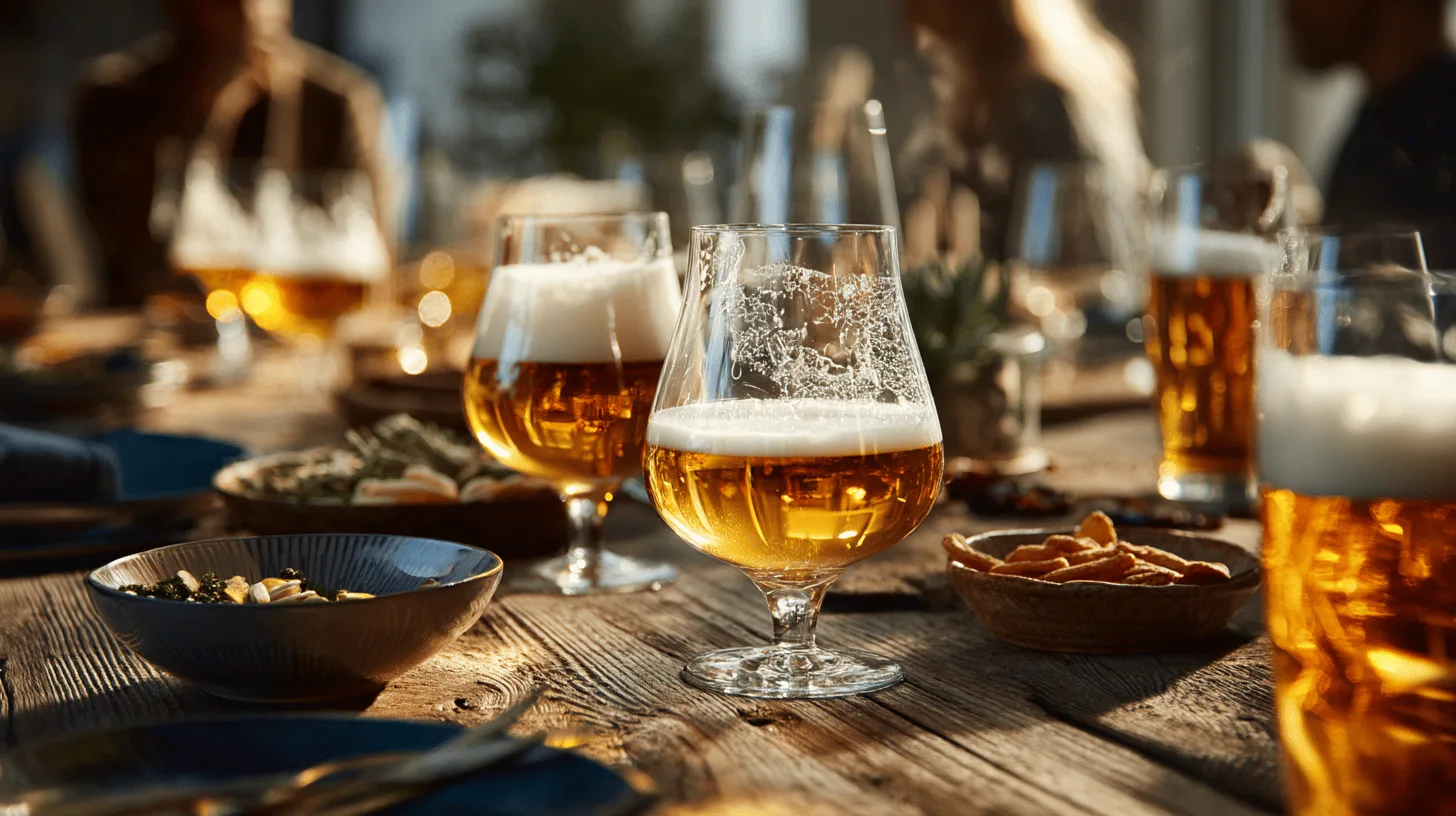
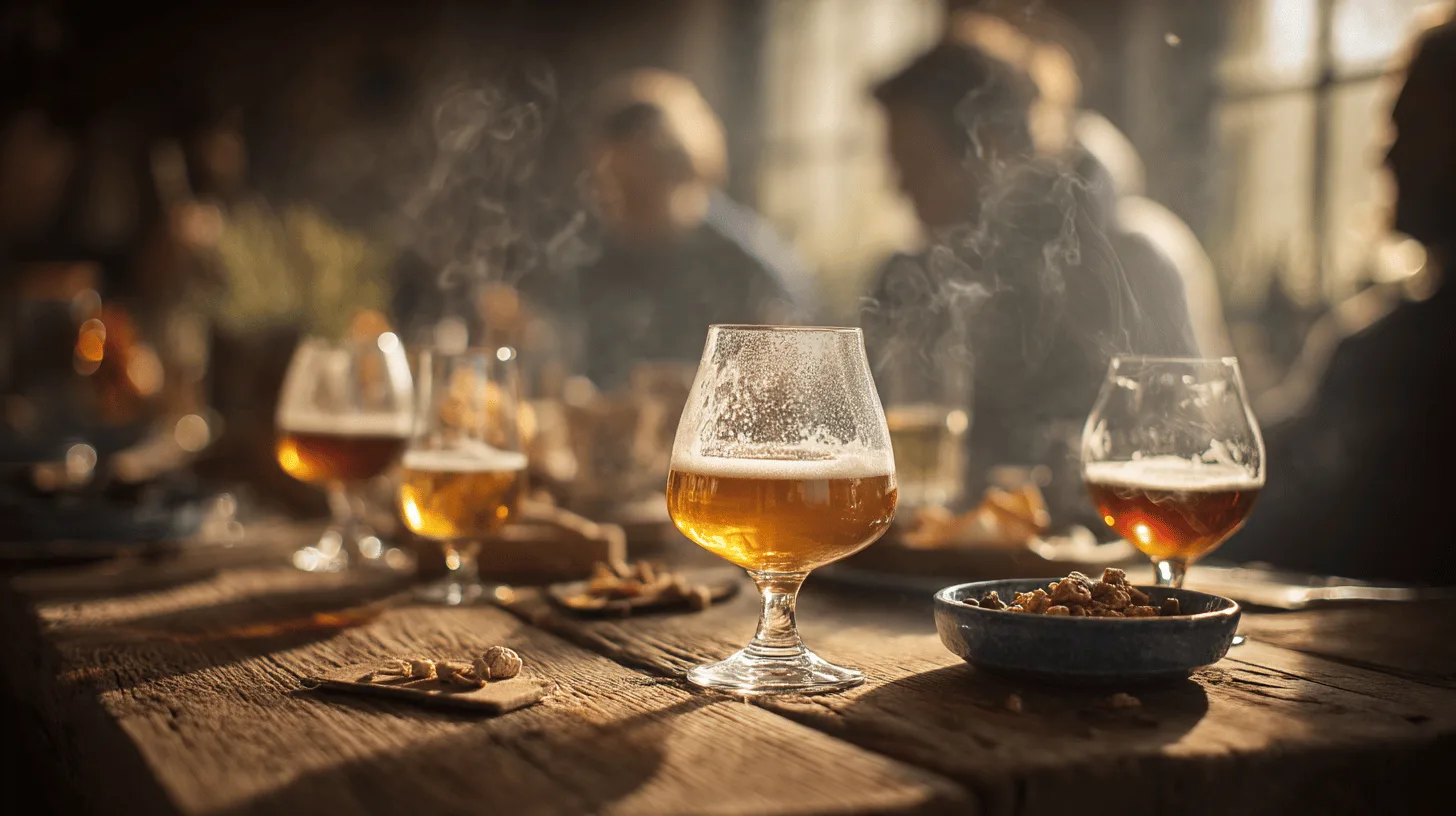
Real ale, craft beer and a few friends round the kitchen table. How to plan a home beer tasting that’s fun, educational and doesn’t end with someone asleep on the sofa.
Reviewed, edited and approved by Editor-in-chief Daniel Sköld · Updated 23 October 2026
Contents
Most of us have spent decades drinking beer and very few minutes actually tasting it. You order a pint and talk about the football, and by the time anyone thinks about what’s in the glass, it’s gone.
A home beer tasting fixes that. Get half a dozen friends round, line up a run of carefully chosen beers and give them proper attention. It’s cheaper than a night in the pub, more interesting than another barbecue, and you’ll come away knowing what you actually like. Here’s how to do it well.
AD
How do you host a beer tasting at home?
Start with the numbers. Somewhere between four and eight people works best. Fewer than that and it feels like a quiet night in. More and you spend the whole evening pouring and never get to taste anything.
Pick five or six beers and no more. That’s enough for variety and to see how styles differ, and few enough that everyone still has something useful to say about the last one. Pour thirds of a pint, not halves. Third-pint glasses are cheap, and a third is plenty to judge a beer properly.
Order matters. Go from light to dark and weak to strong: a golden ale or pale bitter first, then a best bitter, an IPA, maybe a mild or a porter, and something big like an imperial stout at the end. Do it the other way round and the big flavours early on will numb everyone’s palate by the third glass.
Give the evening a theme. It turns a drinks party into something people will talk about afterwards. You could do one county’s breweries, classic British styles against their American craft versions, or a blind run of best bitters with the labels hidden. Blind tastings are especially good for humbling the friend who swears he can always spot his favourite brand.
Real ale, craft keg or bottles: what should you pour?
Bottles and cans are the easy option, and the choice now is huge. Independent bottle shops, brewery taprooms and the bigger supermarkets all carry a decent range. Look for bottle-conditioned beers, which carry on fermenting in the bottle, the same way cask ale does. They’re the nearest you’ll get to real ale without a handpump.
If you want the real thing, plenty of small breweries sell cask ale to take home in bag-in-box containers or polypins. A pin is 36 pints, so that’s enough for a decent crowd and a few heroic leftovers. The catch is that real ale is still alive. Collect it a day or two early, keep it somewhere cool and still so the sediment can settle, and drink it within a few days of opening. Ask the brewery how long their beer keeps, because it varies.
Temperature is where most home tastings go wrong. Real ale should be served at cellar temperature, roughly 11–13°C. That’s cool, not cold. A garage or utility room in spring or autumn is often about right. Lagers and very hoppy pale ales can be colder. Strong stouts and barley wines taste of more if they’re allowed to warm up a little in the glass. Straight from the fridge is fine for lager, but it kills the flavour of a good bitter.
If you need a framework, the Campaign for Real Ale (CAMRA) publishes tasting notes for the main beer styles, from milds and bitters through to porters, stouts and old ales. It has been banging the drum for cask beer since the 1970s, and its local branches and beer festivals are a good place to try a style before you buy a whole box of it.
AD
How much should each person drink at a beer tasting?
Less than you’d think, which is the point. The NHS and the UK Chief Medical Officers advise both men and women not to drink more than 14 units a week on a regular basis, spread over three or more days. They are clear that no level of drinking is completely safe.
It’s easy to work out. Units equal the strength (ABV) multiplied by the volume in millilitres, divided by 1,000. A third of a pint is about 190ml, so a third of 4% bitter is about 0.75 units. Six thirds averaging 5.5% come to just over six units each. That’s a full evening’s drinking, so don’t top people up between beers, and leave a 10% imperial stout as a final third rather than a nightcap.
The best tasting is the one where people can still remember the fourth beer the next morning.
Put jugs of water on the table and encourage people to rinse their glasses and drink some between beers. Serve proper food. Sort out lifts or taxis before anyone arrives, not at 11pm. And always have a good alcohol-free beer or two in the line-up. They’ve improved hugely, and the designated driver deserves something better than squash.
Glasses, cheese and a scoring sheet
You don’t need fancy glassware, but use the same clear glass for every beer so the comparison is fair. Wine glasses or stemmed tulips are better than straight-sided pint glasses because they trap the aroma. Give everyone their own glass and a jug of water for rinsing, or set out one glass per beer if you have enough.
Go through the same four steps with each beer. Look at the colour, clarity and head. Smell it properly: is it biscuity malt, citrusy or piney hops, roasted coffee, dark fruit? Taste it, letting it sit on your tongue before you swallow. Then notice the finish, meaning how bitter it is, how dry, and how long the flavour lasts. A simple sheet with those four headings and a mark out of ten makes people slow down and gives you something to argue about over the last glass.
Food turns a good evening into a great one. Plain crackers and bread clear the palate between beers. Cheese is the classic match: a mature Cheddar with a best bitter, a blue cheese with a stout or barley wine, something milder with a golden ale. Pork pies, Scotch eggs and a decent sausage roll do the job too, and they keep everyone fed, which matters as much as the matching.
One legal point. A private tasting where you share beer you’ve bought with friends is just hospitality. If you start charging for tickets or selling drinks, you’re selling alcohol, and that needs a licence under the licensing laws, which differ between England and Wales, Scotland and Northern Ireland. Keep it to bring-a-bottle or split the cost informally among friends, and check with your local council before doing anything more ambitious.
In short
To host a good beer tasting at home, invite four to eight friends, choose five or six beers around a theme, and serve them in thirds from lightest and weakest to darkest and strongest. Serve real ale cool at cellar temperature, not fridge-cold, and use the same glass and the same simple tasting steps for each beer. Keep an eye on units, put out water and proper food, sort out lifts in advance, and don’t sell drinks without a licence.
Alistair Ives writes about the home and the weekend for men 45 and over: DIY, renovation, the garden, the outdoors and the hobbies worth the time. What a job really costs, what you can do yourself, and when it's worth paying someone who knows.
Loft, walls and floors: how much insulation you really need, which jobs you can do yourself, how to avoid damp and mould, and where to look for grants.
Chess is often sold as a workout for the brain that might hold off dementia. Here is what the evidence actually shows, and why joining a club could still be the smart move.
Garden saunas are having a moment in Britain. Before you order a barrel and a stove, here’s how planning, Building Regulations and smoke control rules affect your build.
Hill walking, muddy trail runs, splitting logs and cold-morning bike rides work your whole body. Here is how to make autumn your fittest season without the gym.