Pickleball might be your next favourite weekend habit
Pickleball is easy to start, sociable and cheaper to try than you might expect. Here’s how the game works, what a session costs and how to play safely.
Reviewed, edited and approved by Editor-in-chief Daniel Sköld · Updated 23 October 2026
Contents
You turn up at a leisure centre with an old pair of trainers. An hour later, you’re arguing cheerfully about whether a plastic ball clipped a line and wondering when you can come back. That is pickleball’s appeal in a nutshell.
It gives you a proper game without requiring a tennis serve you last possessed in 1994. But is it as easy on your body and your wallet as people suggest? Here’s what to know before you book.
AD
What is pickleball, and why does it suit midlife?
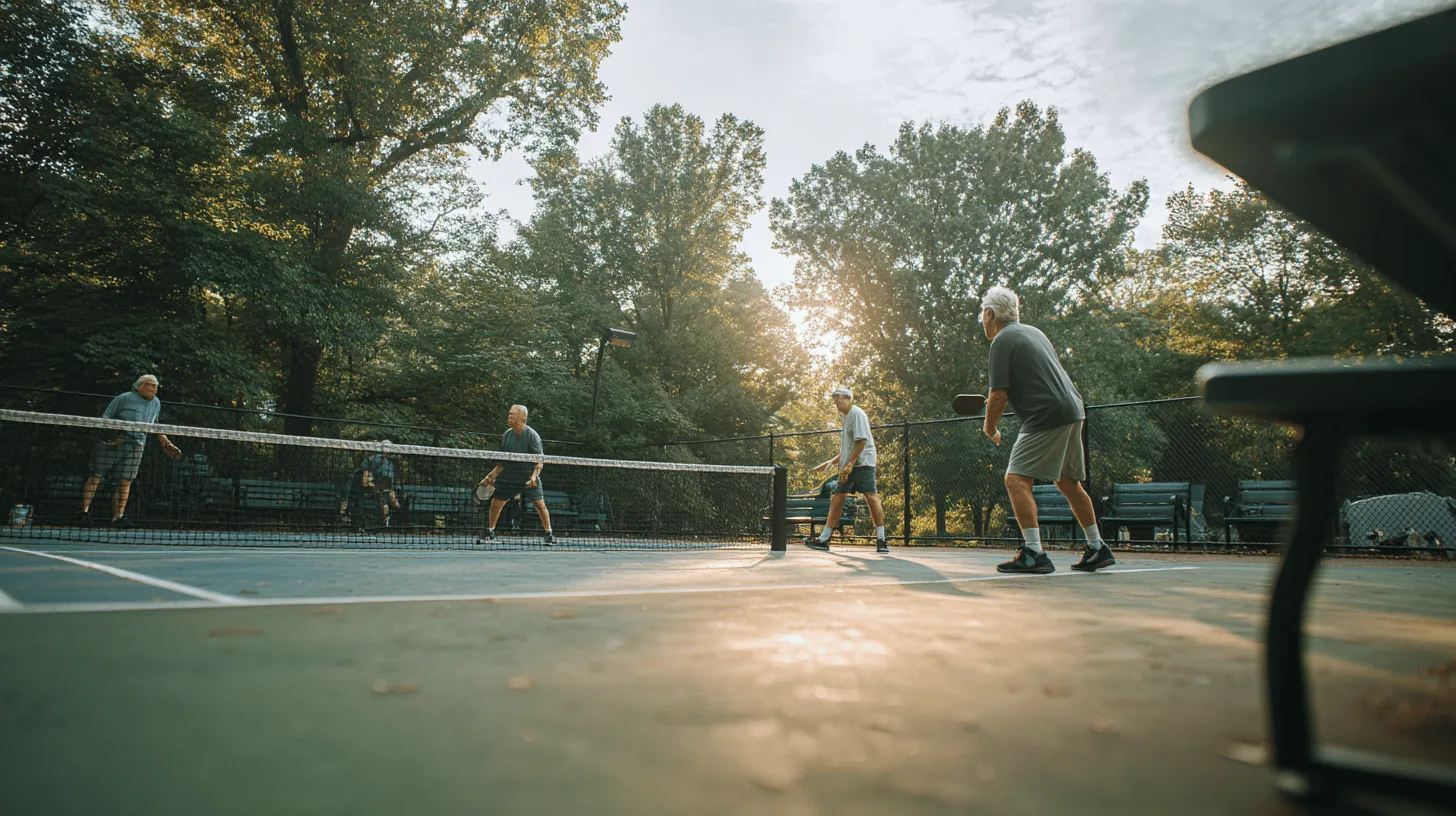
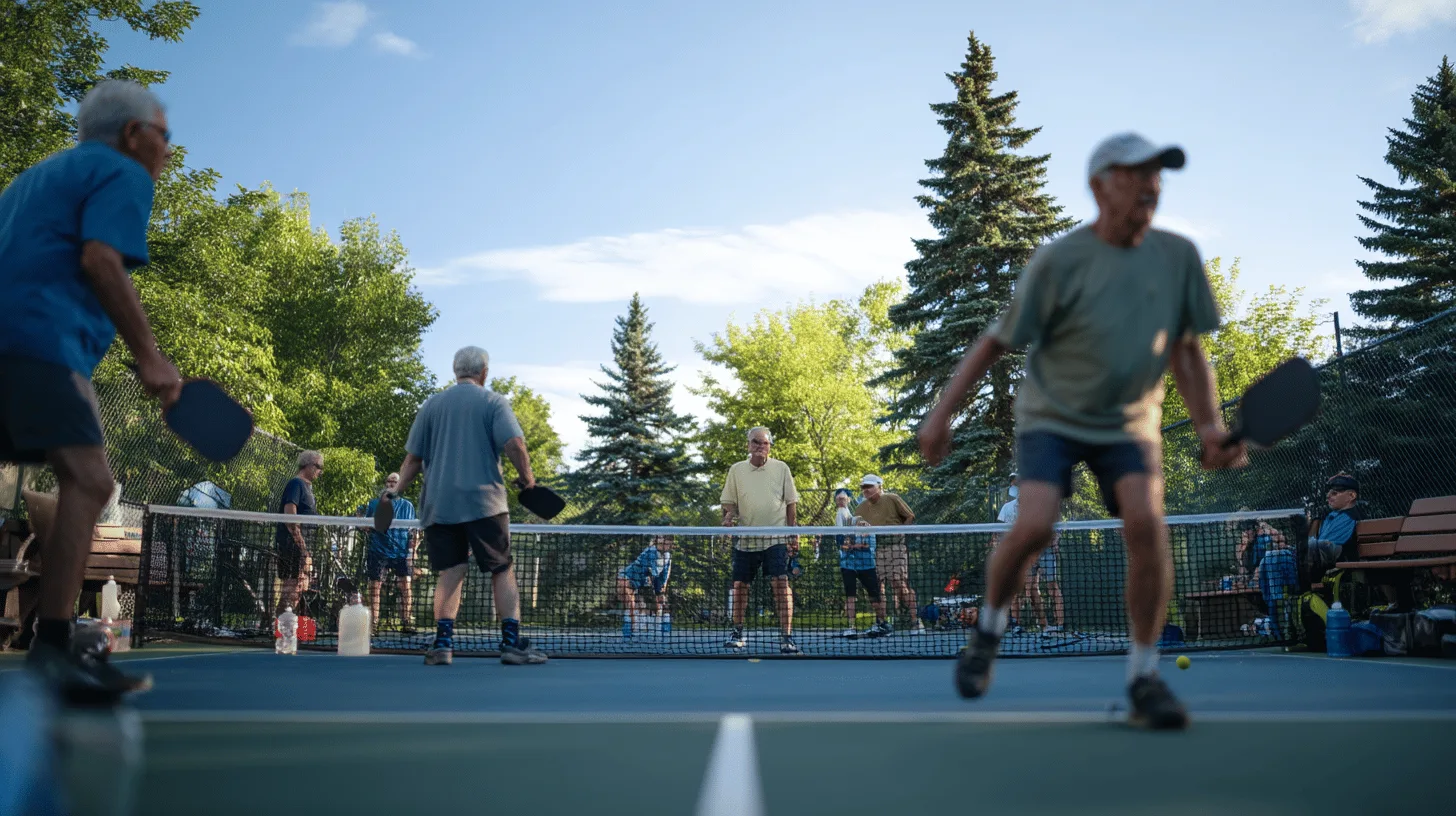
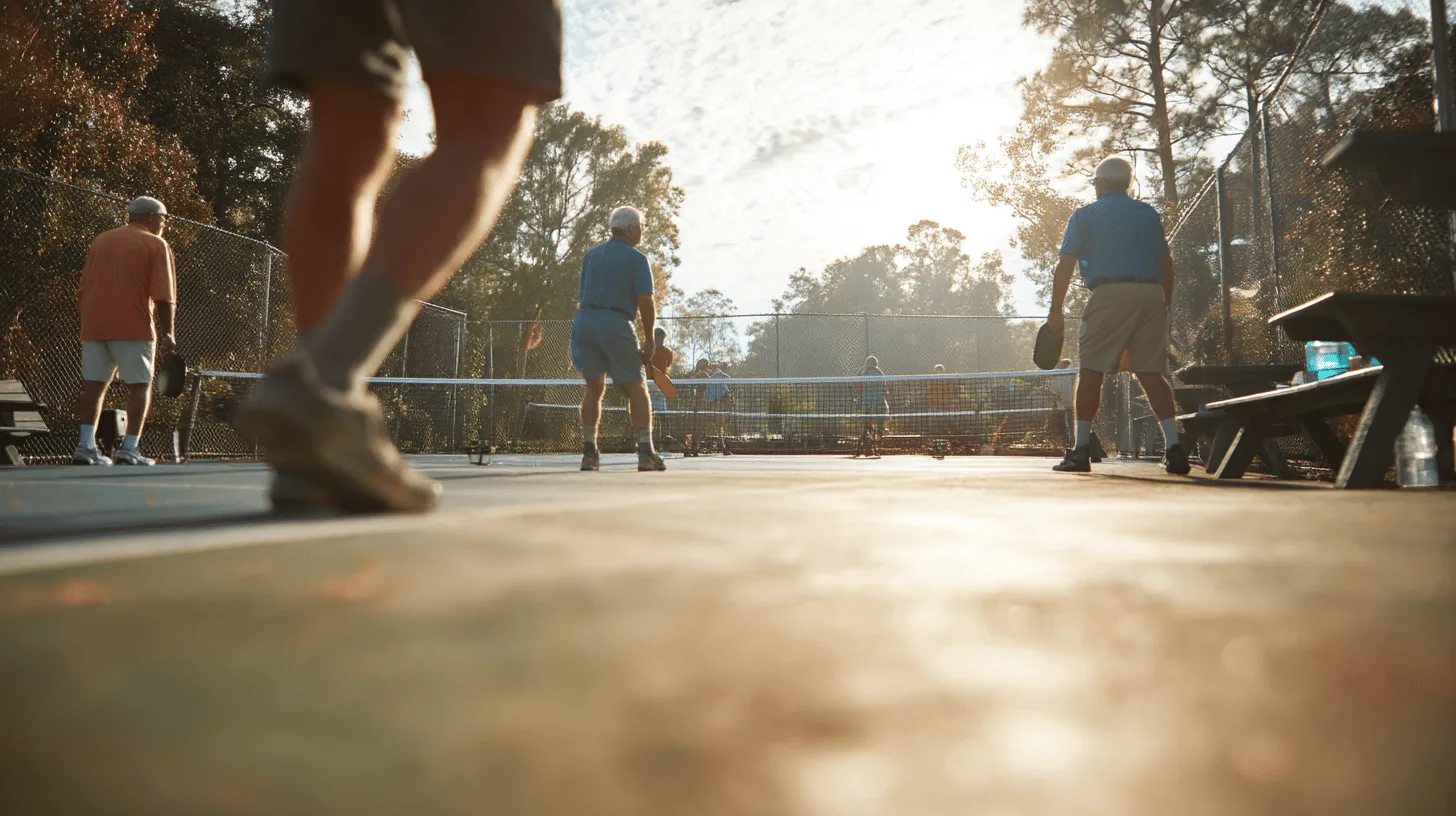
Imagine doubles tennis played with solid paddles and a light, perforated plastic ball on a court the size of a badminton court. The net is lower than a tennis net. You can play singles, but doubles is the natural starting point: less ground to cover, more shots to share and three other people to talk to between points.
That small court changes the game. You do not need a huge serve or a sprint from one baseline to the other to have a competitive rally. Touch, placement and knowing when not to belt the ball matter. Previous racket-sport experience helps, but a newcomer can soon be involved rather than spending an hour fetching missed shots.
There are a few rules worth learning before you arrive. Serve diagonally. Let the serve bounce before returning it, then let that return bounce before the serving side hits it. After those two bounces, volleys are allowed — except while you are in the marked non-volley zone beside the net, known as the kitchen. In the usual scoring format, only the serving side wins points; games generally go to 11, with a two-point margin.
That sounds like a committee designed it, but it is easier on court. The bounce rule stops every point becoming an immediate smash at the net. The kitchen encourages control rather than rewarding whoever can stand closest and swat hardest. Give the scoring a couple of games; even experienced players occasionally need someone to remind them whose serve it is.
Is pickleball kind to your knees?
Kinder than chasing tennis balls across a full-sized court, perhaps. Injury-proof, certainly not. There are still quick sideways steps, sudden stops and the irresistible temptation to lunge for a ball you had no business reaching. A smaller court does not make an awkward landing disappear.
Start with a beginner or social doubles session, not singles against somebody with suspiciously good footwork. Spend a few minutes walking briskly, moving sideways and hitting gently before playing hard. Wear comfortable sports clothes and trainers that grip the surface and feel stable when you move laterally. Ask the venue whether it has a particular footwear rule; outdoor and sports-hall surfaces are not the same.
The aim is to enjoy another game next week, not win your first one at the cost of your calf.
Take a drink, particularly if you are playing outdoors in warm weather, and pause when you need to. On an outdoor court, check for a slippery surface or strong wind before starting. If pain changes how you move, stop rather than trying to play through it. A social game should not turn Monday’s stairs into an expedition.
The NHS advises adults aged 19–64 to aim for at least 150 minutes of moderate activity a week, alongside strengthening work on two days. A game can contribute to the activity part, depending on how hard you actually play; standing around waiting for a court does not count as a workout. If you have not exercised for some time, have a medical condition or plan a big change in activity, speak to your GP first. At 65 and over, NHS guidance also puts particular emphasis on balance and flexibility.
AD
How much does it cost to start playing pickleball?
Less than you might spend preparing for a hobby you never take up. Your first booking should be a social session that supplies paddles and balls, or at least offers hire. Do not buy a paddle before you know whether you like the game, where you will play and what equipment that venue provides.
For a sense of real prices, Exeter Pickleball Club lists group sessions at £4, with paddles and balls supplied by its leisure centres. Everybody Health & Leisure lists standard social sessions at £5.20 for 60 minutes or £6.30 for 90 minutes. At Better’s Delta Tennis Centre in Swindon, a non-member social session is listed at £10, while non-member court hire is £14.20. These are venue examples, not a national tariff; check the booking page before setting off.
There is an important difference between paying for a session and hiring a court. A social booking buys you an organised game and people to play with. Court hire buys you space: you still need fellow players, and you may need to sort out paddles and balls. If you have three friends keen to play doubles, divide the court price between you. If you do not, the social session is usually the better first purchase.
Once you have played a few times, you can decide whether owning a paddle makes sense. Try the club’s loan equipment first and ask what suits your grip and style. There is no prize for arriving at your first lesson carrying expensive kit that makes precisely the same noise as everyone else’s.
Find a game before you buy a paddle
Start with Pickleball England’s club locator if you live in England. Pickleball Scotland and Pickleball Wales have their own places-to-play or club listings. In Northern Ireland, check local leisure-centre timetables and clubs. Wherever you live, look specifically for ‘beginners’, ‘social’ or ‘open play’, then check whether the organiser matches players or expects you to bring a group.
Before booking, ask four useful questions: Is equipment included? Is the session suitable for a complete beginner? What does a non-member pay? Do you need indoor shoes? Also check the length of the booking. A 90-minute social is not necessarily 90 minutes of continuous play; rotating players can be a welcome breather rather than a disappointment.
Go alone if you have to. In an organised social session, mixing partners is part of the point. You can learn the rules from people who already know them, discover whether you prefer patient rallies or a competitive edge, and leave without organising a four-person calendar negotiation. That is a remarkably efficient use of a weekend.
If you enjoy it, make the next booking before the novelty wears off. Regular play gives you something to improve at and people who notice when you turn up. You need not become obsessed, despite what the keenest players might tell you. Getting out for a game and having a reason to come back is quite enough.
In short
Pickleball is worth trying if you want a sociable racket sport you can learn without buying kit first. Book a beginner-friendly doubles session, check its price and equipment arrangements, and ease into the movement rather than assuming the smaller court makes you invincible. If you enjoy the first game, find a regular slot before you consider buying a paddle.
Alistair Ives writes about the home and the weekend for men 45 and over: DIY, renovation, the garden, the outdoors and the hobbies worth the time. What a job really costs, what you can do yourself, and when it's worth paying someone who knows.
Dark evenings and wet roads need not end your riding. Set up your bike for British weather, make indoor sessions count and know when to stay off the road.
Chess is often sold as a workout for the brain that might hold off dementia. Here is what the evidence actually shows, and why joining a club could still be the smart move.
Loft, walls and floors: how much insulation you really need, which jobs you can do yourself, how to avoid damp and mould, and where to look for grants.