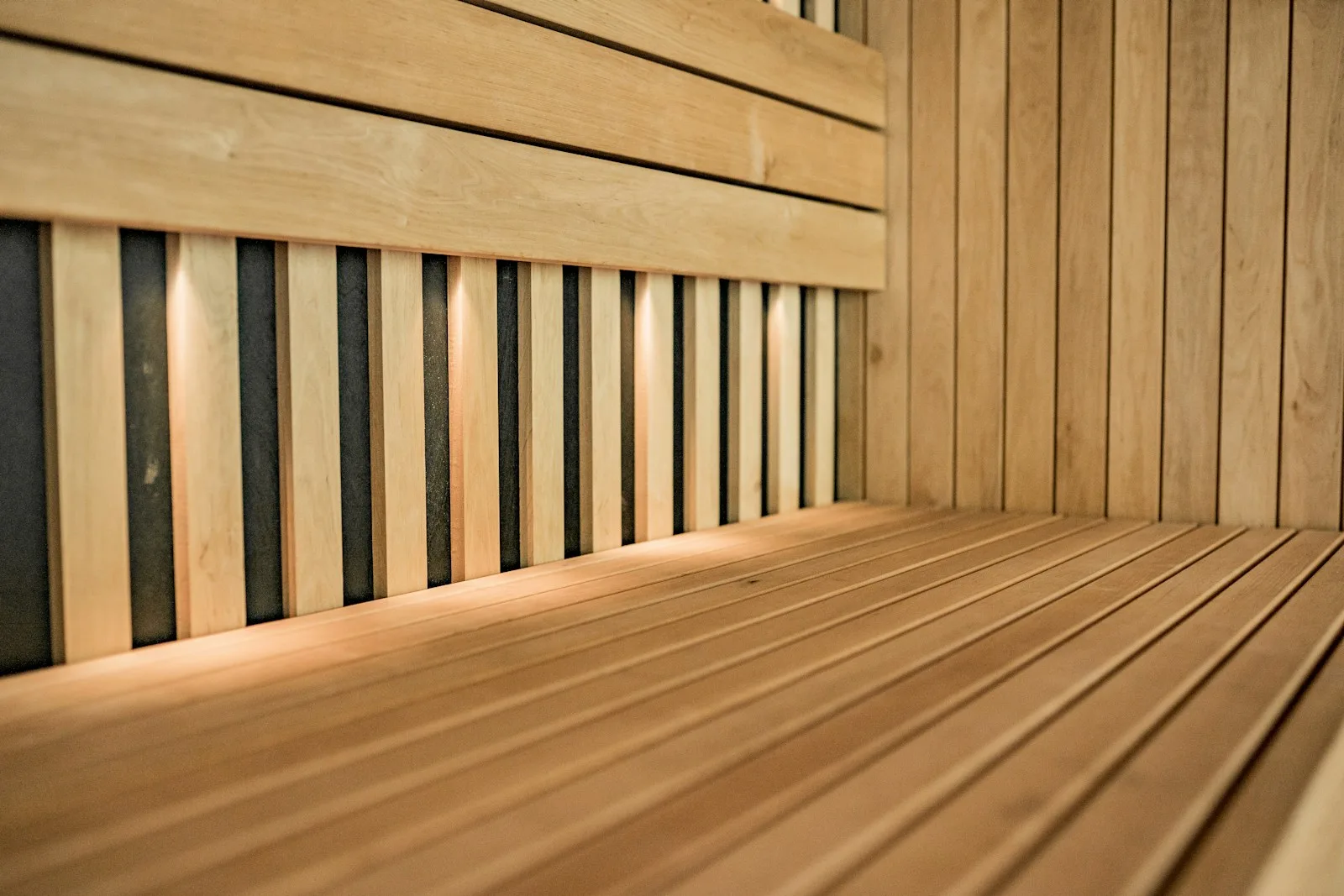
Building a garden sauna? Read the small print first
Garden saunas are having a moment in Britain. Before you order a barrel and a stove, here’s how planning, Building Regulations and smoke control rules affect your build.
Reviewed, edited and approved by Editor-in-chief Daniel Sköld · Updated 25 October 2026
Contents
Somewhere between the cold plunge videos and your mate who won’t stop talking about his heart rate variability, the garden sauna has stopped being a Scandinavian oddity. It has become a serious contender for the bottom of the British garden. Barrel saunas are turning up next to sheds and the pizza oven, and the people who own one tend to evangelise about it.
It’s easy to see why. You can’t get much further from a laptop than a hot wooden box on a wet Tuesday in November. But a sauna is a building with a fire or a big electric heater inside it. That means three sets of rules apply before you lay a single slat: planning, Building Regulations and, if you want the crackle of real logs, the law on smoke.
AD
Do you need planning permission for a garden sauna?
In England, usually not, as long as it fits within permitted development for outbuildings. The Planning Portal sets out the limits, and the one that catches most people is height near the fence. Any building within two metres of a boundary can be no more than 2.5 metres high overall. Further away, you can go up to four metres with a dual-pitched roof or three metres with any other roof, with eaves no higher than 2.5 metres.
That 2.5-metre figure is why so many sauna kits sit just under it. Check the overall height, though, not just the body of the barrel. A chimney flue sticking out of the roof can push you over, and on a small plot most of us want the thing tucked against the back fence.
The other limits are worth knowing too. It has to be single storey. It can’t sit forward of the front wall of the house. Together with any extensions and other outbuildings, it can’t cover more than half the land around the original house. Watch that last one if a previous owner has already built a conservatory, a garage and a summerhouse.
The rules are tighter in national parks, Areas of Outstanding Natural Beauty (now National Landscapes), the Broads and World Heritage Sites. On that designated land, an outbuilding more than 20 metres from the house is limited to 10 square metres. If you live in a listed building, any outbuilding within its grounds needs planning permission.
Wales broadly mirrors England on the 2.5-metre rule near a boundary, but the Welsh Government sets its own limits. For example, flat-roofed buildings are capped at 2.5 metres. Scotland and Northern Ireland have their own permitted development schemes with different thresholds. If you live there, check your council’s guidance or the national planning website rather than assuming the English numbers apply. Wherever you are, if you’re in any doubt, a Lawful Development Certificate (or the local equivalent) is cheap insurance for when you come to sell.
What about Building Regulations?
Small detached outbuildings are generally exempt from Building Regulations in England and Wales if nobody sleeps in them. The usual line is under 15 square metres of floor area. Between 15 and 30 square metres, a building can still be exempt if it is at least a metre from the boundary or built mostly of non-combustible materials. Almost every garden sauna is well under 15 square metres, and nobody should be sleeping in one.
Electrics are a different matter, and this is where the DIY instinct needs a firm hand. An electric sauna heater draws a lot of power and needs its own dedicated circuit run out to the garden. In England and Wales, a new circuit is notifiable work under Part P. In the wiring regulations, a sauna is also a “special location” with its own requirements because of the heat. This is a job for a registered electrician who can self-certify the work, not a weekend project with a reel of cable from Screwfix. Get at least two quotes, and check for membership of a competent person scheme such as NICEIC or NAPIT, or TrustMark.
The kit goes up in a weekend. Getting the heat source legal is where the real thinking happens.
AD
Can you use a wood-fired sauna stove in a smoke control area?
This is the question that should come before you fall in love with the idea of logs. Many towns and cities, and a fair number of villages, are designated smoke control areas. In England, the Energy Saving Trust explains that you can’t let substantial smoke come out of a chimney there unless you’re burning authorised fuel or using an appliance Defra has approved as exempt. Councils in England can issue a penalty of between £175 and £300 for breaking that rule. Buying unauthorised fuel to burn in a non-exempt appliance in a smoke control area can bring a fine of up to £1,000.
A sauna stove is still a stove. Before you buy, find out from your council or the government’s smoke control area map whether you’re in one. Then check whether the stove you’re considering is on Defra’s exempt appliance list. If it isn’t, and you’re in a smoke control area, an electric heater is the sensible answer. The Clean Air Act framework applies across the UK, but enforcement and the detail differ in Scotland, Wales and Northern Ireland, so check locally.
Even outside a smoke control area, think about what you burn. Defra’s Ready to Burn guidance recommends dry wood with a moisture content of 20 per cent or less. Wet logs smoke, tar up the flue and make a lot less heat. Your neighbours may love the idea of your new hobby less than you do if their washing smells like a bonfire. Under statutory nuisance rules, the council can act on persistent smoke whether or not you’re in a smoke control area.
Wood or electric: which suits your garden?
Wood gives you the soft heat, the ritual and the sound, and you don’t need a new circuit. It also brings a hot flue, embers and carbon monoxide into a small wooden room. If you go that way, follow the manufacturer’s clearances to the letter, use a proper insulated flue and fit a carbon monoxide alarm. A HETAS-registered installer can advise on the stove and flue, even where the building itself is exempt from the regulations.
Electric is cleaner, quicker to control and the only realistic choice for most town gardens. The trade-off is the electrician’s bill and higher running costs that will show up on your energy bill. Infrared cabins are cheaper to run and gentler, but they aren’t the same experience. Try both at a public sauna before you decide. They’re popping up at lidos, beaches and riversides all over the country.
Before you strip off: base, siting and your heart
Whatever you buy, it needs a level, solid, well-drained base. Paving slabs on compacted hardcore or a concrete pad both work. A sauna full of people and water is heavier than you’d think. Keep it away from overhanging trees, give the chimney plenty of clearance from fences and hedges, and think about where you’ll cool down. A garden hose is cheap. A cold plunge tub is the next thing you’ll be tempted by.
Finally, the bit nobody wants to hear. Heat puts real strain on the heart and blood pressure. If you have a heart condition, take blood pressure medication or haven’t done anything like this before, have a word with your GP first. Don’t mix it with alcohol, drink plenty of water, and keep the first sessions short.
In short
In England, most garden saunas don’t need planning permission if they stay within permitted development, which means no higher than 2.5 metres within two metres of a boundary. Small saunas with nobody sleeping in them are usually exempt from Building Regulations. Electric heaters need a new circuit fitted by a registered electrician, and wood stoves in smoke control areas must be Defra-exempt or burn authorised fuel, or you risk a fine. Wales, Scotland and Northern Ireland have their own rules, so check locally before you order.
Alistair Ives writes about the home and the weekend for men 45 and over: DIY, renovation, the garden, the outdoors and the hobbies worth the time. What a job really costs, what you can do yourself, and when it's worth paying someone who knows.
Chess is often sold as a workout for the brain that might hold off dementia. Here is what the evidence actually shows, and why joining a club could still be the smart move.
Hill walking, muddy trail runs, splitting logs and cold-morning bike rides work your whole body. Here is how to make autumn your fittest season without the gym.
Most RNLI volunteers never wear a yellow helmet. Here’s what lifeboat crew, shore crew and fundraising roles actually involve, who can apply, and how to start.
Loft, walls and floors: how much insulation you really need, which jobs you can do yourself, how to avoid damp and mould, and where to look for grants.