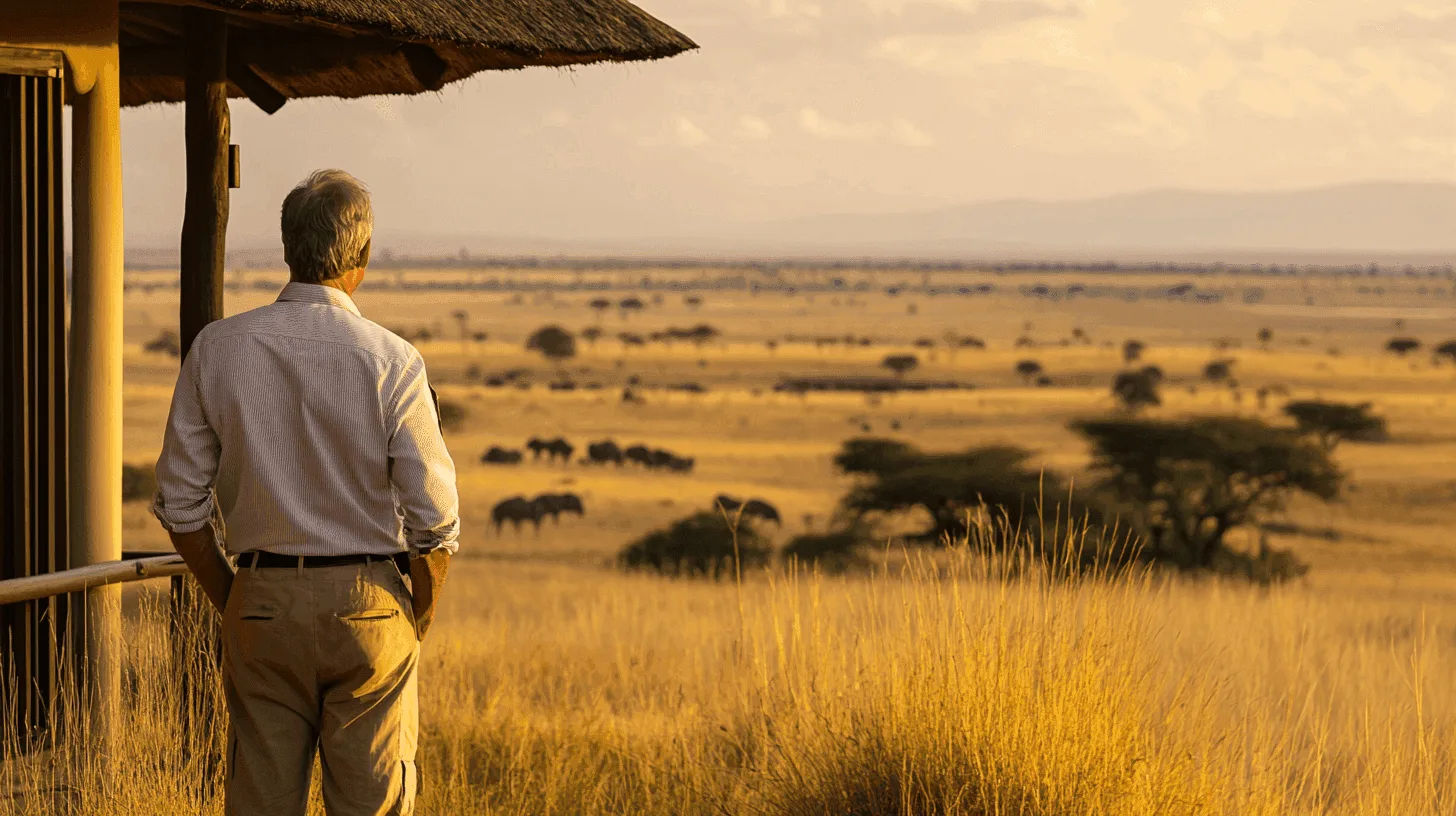
The most famous wildlife reserve in Africa has a traffic problem. Turn up in the Maasai Mara in August and you may find a cheetah on a termite mound, watching a semicircle of pop-top minibuses and their long lenses watching it. Spotting the Big Five isn’t the hard part in Kenya. Seeing them without an audience is.
That’s the real argument for a private safari, and it isn’t just about snobbery. Kenya has quietly built a network of private and community conservancies where vehicle numbers are capped, guides can go off-road, and you can walk, drive at night and eat breakfast without the sound of anyone else’s diesel. It costs more. For most people who’ve been on safari before, it’s worth it.
What actually makes a safari private?
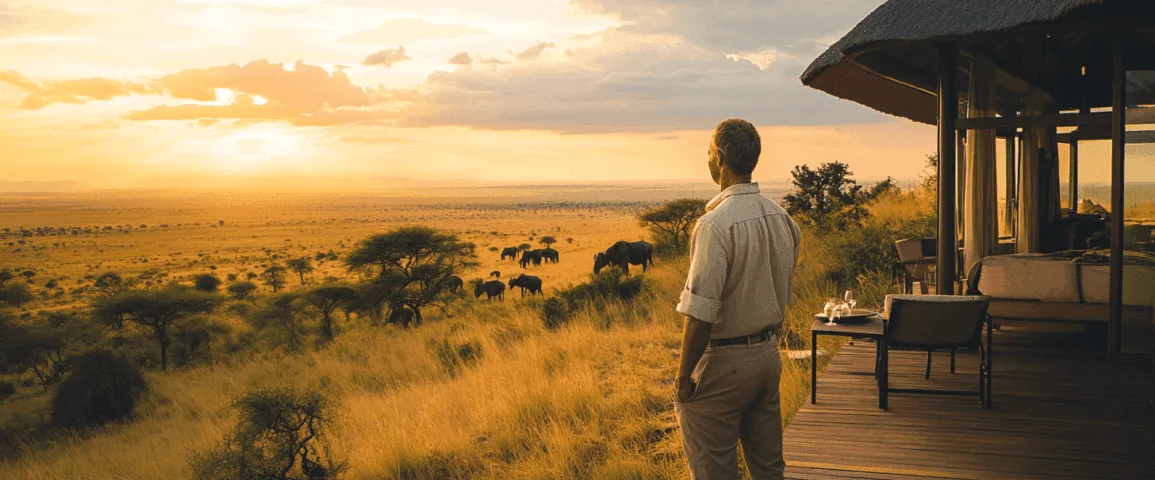
Strip out the brochure language and a private safari in Kenya means three things. You get your own vehicle and guide, so nobody else decides when you’ve looked at the leopard long enough. You stay in small, usually all-inclusive camps or lodges. And, the bit that matters most, you base yourself in a conservancy rather than in the national reserve itself.
The conservancies around the Maasai Mara, such as Mara North, Olare Motorogi and Naboisho, are land leased from Maasai landowners, who receive an income in return for leaving it to the wildlife. The rules differ from the public reserve. Each camp has a limited number of beds, there’s a cap on how many vehicles can sit at one sighting, and guided bush walks and night drives are allowed. Night drives are where you meet the animals the daytime crowd never sees: aardvark, genet, bush babies and hyenas on the night shift.
Because the conservancies border the reserve, the animals move freely between them. You get the same lions without the same queue, and you can still make a day trip into the main reserve if you want the Mara River crossings.
In Kenya the scarce resource isn’t wildlife. It’s solitude, and that’s the bit you’re really paying for.
Maasai Mara or Laikipia: where should you go on safari in Kenya?
The Mara is the classic, and rightly so. Rolling grassland, big cats in quantity, and from roughly July to October the great migration of wildebeest and zebra coming up from Tanzania’s Serengeti. If it’s your first time in Kenya, go there first. Just stay in a conservancy.
Laikipia, on the plateau north-west of Mount Kenya, is the connoisseur’s choice. It’s drier, higher and more varied, with acacia scrub, kopjes and the mountain on the horizon. It’s also Kenya’s rhino country. Lewa Wildlife Conservancy, part of the Mount Kenya UNESCO World Heritage Site, has helped bring black and white rhino back from the brink. Nearby Ol Pejeta looks after Najin and Fatu, the last two northern white rhinos on Earth, both female. Meeting them is a sobering experience you won’t forget. Laikipia also has species you won’t find in the Mara, such as Grevy’s zebra and reticulated giraffe, and plenty of camel treks, horse rides and walking safaris for people who’ve done enough sitting in Land Cruisers.
The best trip combines both, with a few nights in each linked by a light aircraft. If you have time to spare, add Amboseli for elephants under Kilimanjaro, but Kilimanjaro is shy and spends a lot of the day hiding in cloud.
How do you get to Kenya from the UK?
Easily, as it happens. British Airways and Kenya Airways both fly direct from London Heathrow to Nairobi’s Jomo Kenyatta International Airport, an overnight flight of roughly eight and a half hours. Kenya is three hours ahead of GMT, two during British Summer Time, so jet lag is barely worth complaining about.
From Nairobi, most private safaris carry on by air. Small scheduled planes leave from Wilson Airport, the city’s domestic airfield, and land on dirt airstrips in the Mara or Laikipia in about an hour. Soft bags are the rule, because hard suitcases won’t fit in the hold, and there’s a strict weight limit that’s usually around 15kg including hand luggage. Check with your operator, and pack like you mean it.
The paperwork has changed. Since January 2024, Kenya has replaced visas with an Electronic Travel Authorisation (eTA), and British visitors need one before they travel. Apply through the official government portal, not one of the lookalike sites that charge extra, and do it at least three days before you fly. A week or more is safer. Check the latest FCDO travel advice for Kenya on GOV.UK before booking and again before you leave, including the guidance on parts of the country near the Somali border. Make sure your passport meets the validity rules and has blank pages. Your GHIC is no use here, so you’ll need travel insurance with proper medical evacuation cover. Get a travel health appointment well ahead, as malaria prevention is usually advised for safari areas and yellow fever requirements depend on your route. One quirk worth knowing: Kenya has banned plastic carrier bags, so leave the duty-free bag behind.
When to go and what it costs
The long dry season from roughly late June to October is peak time. The grass is short, animals gather around water and the migration is in the Mara. January and February are also dry, quieter and often cheaper. The long rains, usually April and May, bring green landscapes and lower prices, but some camps close and a few roads become mud baths. The short rains in November are lighter and can be a good-value gamble.
Let’s be honest about the money. Conservancy camps are almost always full board, with game drives, drinks and often laundry included, but prices typically run to several hundred pounds per person per night, and the best-known names cost far more. Add internal flights and conservancy and park fees, which can be considerable on their own. Then there’s tipping guides and camp staff, which is expected and worth budgeting for properly. Booking through a reputable UK specialist with ATOL protection costs no more than piecing it together yourself, and they’ll know which camp has the guide everyone requests.
Once you’re back in Nairobi, prices return to normal. Approximate guide prices:
A bottle of Tusker in a bar: around KSh 300–450 (about £2–£2.70). Dinner in a good restaurant: around KSh 2,500–4,000 per person (about £15–£24). A 5km taxi or ride-hail trip: around KSh 500–800 (about £3–£5).
Is a private safari worth the money?
For a first-timer on a tight budget, a good shared safari in the national reserve will still put lions in front of you. But if you’ve done the minibus version, or never want to, the conservancy model changes the experience completely. You can sit with a pride for an hour without radio chatter. You can walk out with a Maasai guide who reads tracks like the morning paper. And you can go to sleep listening to hippos complaining in the river nearby.
There’s also the conscience factor. Conservancy fees go directly to local landowners, which gives communities a financial reason to keep the land wild rather than fence it for cattle. It’s one of the rare occasions in travel where spending more actually does some good.
A practical note to finish. Spend your first night in Nairobi rather than connecting straight through. The Giraffe Centre, the David Sheldrick Wildlife Trust’s elephant orphanage and a long lunch in Karen make a gentle start. Then you’ll arrive in the bush rested enough to notice the small things, which in Kenya are often the best part.
In short
A private safari in Kenya means your own guide and vehicle and a base in a conservancy bordering the Maasai Mara or in Laikipia, where vehicle numbers are capped and walking and night drives are allowed. British Airways and Kenya Airways fly direct from Heathrow to Nairobi, and British visitors need an eTA before travelling. Go from July to October for the migration, or January–February for quieter, better-value trips, and budget generously because the solitude is what you’re paying for.
Sources

Midcent Travel
Archie Inglis writes about travel for men 45 and over: city breaks, winter sun, road trips, rail journeys, walking holidays and the longer trips you've been putting off. Where's worth going, how to get there without the hassle, and how to make the money go further.
One of Midcent's writers. Spotted something? Write to archie@midcent.uk.