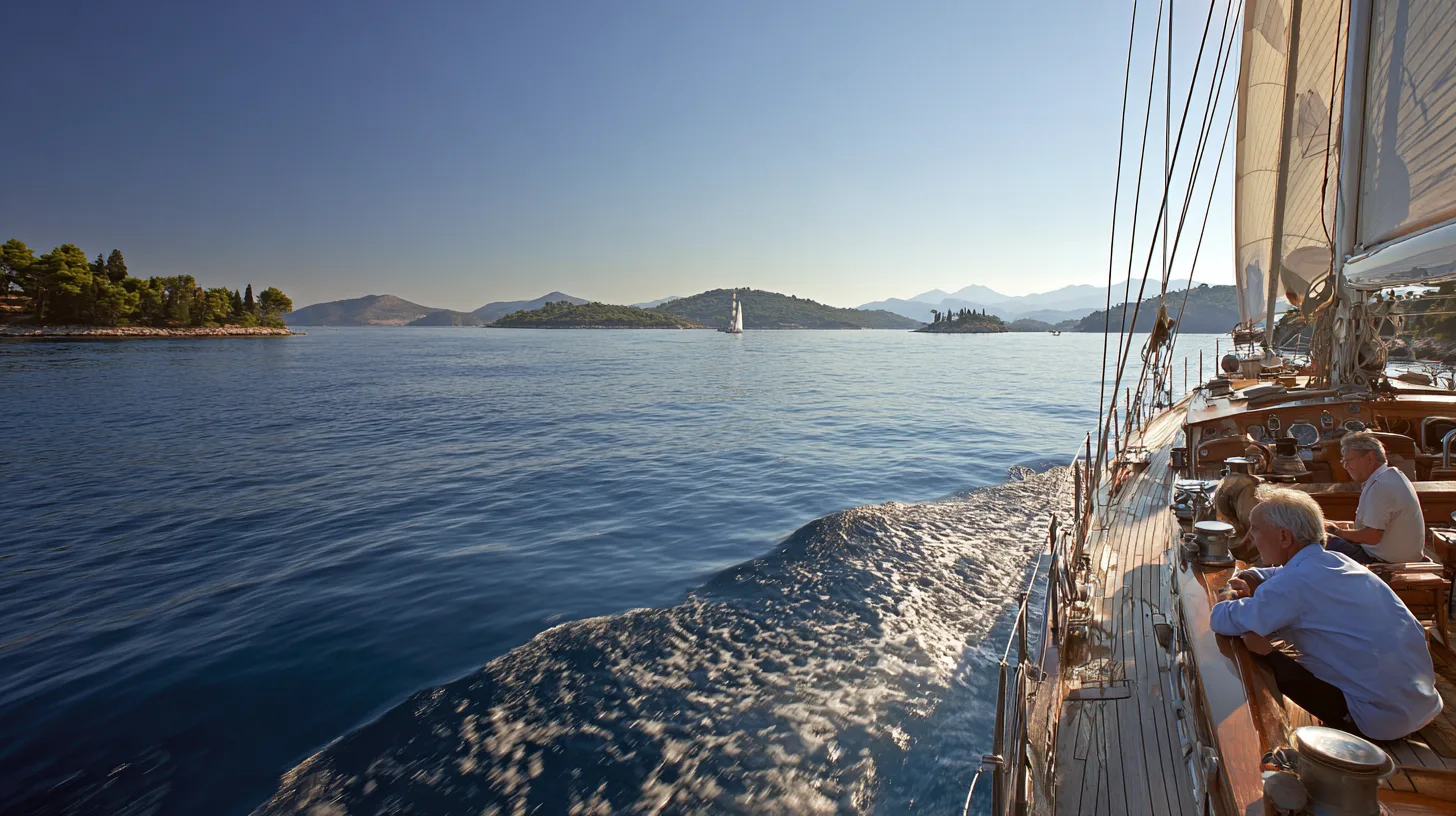
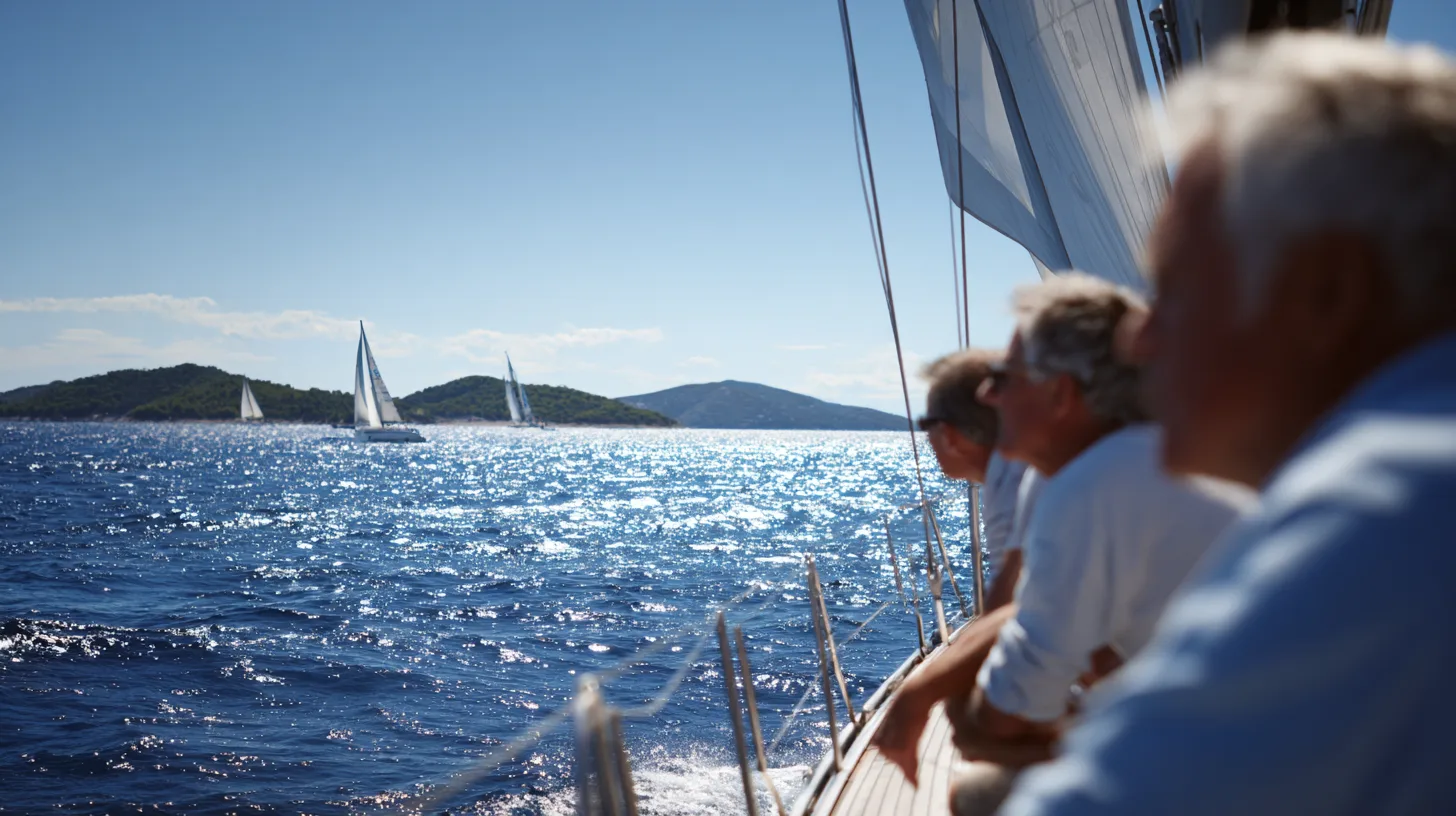
Croatia’s islands look made for a yacht, but you needn’t own one. Here’s when a flotilla earns its price, what the extras cost, and when to take the ferry.
Reviewed, edited and approved by Editor-in-chief Daniel Sköld · Updated 23 October 2026
Contents
The most expensive sound on a Croatian sailing holiday may not be the yacht’s engine. It may be the small clink of another harbour fee landing on your bill. The sea is free; tying up somewhere convenient generally isn’t.
That doesn’t put island-hopping out of reach. It means choosing what you’re buying: the pleasure of sailing, the reassurance of a flotilla, or simply a few days on an island. Get that decision right and Croatia is rather less likely to require a conversation with your mortgage provider.
AD
Do you need to know how to sail?
A flotilla is not a cruise with smaller plates. You skipper your own yacht, travel a planned route alongside other boats and have a lead crew for briefings and support. It offers independence without quite the same feeling of being alone with a chart, a crosswind and an audience on the quay. Your crew still needs to handle the boat.
For its Agana base near Split, Sunsail lists an ICC or RYA Day Skipper qualification, plus a VHF certificate and relevant skippering experience. Ask your chosen operator to confirm its current requirements for your route before paying a deposit. If you haven’t sailed, consider training first or price a yacht with a professional skipper. The latter buys expertise, but also adds a person to your boat and a substantial daily cost.
That is why a flotilla makes most sense for someone who already enjoys sailing but would welcome help with local arrangements. If your ideal afternoon involves reading in the shade while somebody else finds the harbour, don’t book a self-skippered yacht because the photographs looked restful.
Which islands earn the crossing?
Start around Split and keep the first trip manageable. Hvar deserves its reputation, but the island is more than Hvar Town’s glamorous waterfront. Stari Grad has an old centre worth lingering in and access to the agricultural plain recognised by UNESCO. It is a better choice if you want a walk and an unhurried dinner rather than the busiest berth in the photograph.
Brač and Šolta suit a shorter-hops holiday. Both appear on sailing routes from Agana, giving you a chance to spend more time ashore and less time trying to collect island names. Choose the route by the harbours and distances you actually fancy, not by how many pins it puts on a map. A small boat rewards people who are happy to stay put occasionally.
Vis is the more tempting choice if getting farther from the mainland is the point of the trip. It can also be the dearer mooring proposition: Sunsail’s published estimates for its Agana flotillas put a week’s monohull fees on the Vis route above those on its Brač route. That is not an argument against Vis. It is an argument for reading the itinerary and its likely harbour costs together.
The best island itinerary leaves room for the island you decide not to leave.
AD
How much does a Croatian flotilla really cost?
As a starting point, Sunsail’s published low-season Croatia price was £1,645 for a seven-day flotilla yacht charter based on two people, last updated in April 2026. That is a starting charter price, not a £823-per-person holiday delivered to the gangplank. Dates, boat size and availability change the quote; July and August deserve particular scrutiny if value matters more than school-holiday convenience.
Then add UK flights to Split or Dubrovnik, transfers, food, fuel, mooring, any damage-waiver or deposit arrangement, and insurance. Check precisely what your quote includes. Sunsail suggests allowing another 25–50% of the charter price for living and operating expenses. Its March 2026 Agana guide estimated €215–€465 (roughly £180–£390) in weekly monohull mooring fees on the Brač flotilla route, against €355–€865 (roughly £300–£725) on the Vis route. Those are indicative fees, not bills you are guaranteed to receive.
Saving money does not mean demanding a free anchorage every night. Ask the lead crew what is safe and practical in the conditions, and decide when a convenient berth is worth paying for. A monohull usually makes more financial sense than a catamaran if you are watching costs. So does shopping for breakfast and a few suppers before departure, rather than discovering that the only easy option tonight is the restaurant beside the mooring.
For a modest shore-side reality check, October 2026 crowd-sourced Split prices suggest about €4.25 (£3.60) for a half-litre of draught beer; around €33 (£28) per person for half of a mid-range three-course dinner for two, without drinks; and roughly €13 (£11) for a standard-tariff taxi ride of about 5 km. These are planning figures, not promises about a particular island restaurant or taxi. Sterling equivalents are rounded using an October 2026 reference exchange rate.
When is the ferry the cleverer boat?
If you want Hvar but not a week of helming, take the ferry. Jadrolinija runs a year-round Split–Stari Grad service, with a crossing of about two hours, and lists connections from Split to islands including Brač, Šolta and Vis. Timetables and fares change, so check them when you book. Ferries let you sleep in a proper bed, spend a whole afternoon inland and leave the weather decisions to somebody employed to make them.
A sensible compromise is a few nights based in Split, then two or three on one island. You can still watch the boats arrive over dinner; nobody will ask you to coil a rope afterwards. It may be the better-value holiday for a couple, especially if only one of you is keen on sailing. For four friends who can skipper and are content to share a yacht, comparing a flotilla quote with separate rooms and ferries becomes more interesting. Price both trips in full before declaring a winner.
Book the weather, not just the postcard
Look first at late spring or September for sailing, while remembering that quieter dates and lower charter prices do not guarantee gentle conditions. Build slack into the itinerary rather than treating every harbour as a compulsory appointment. Fly from the UK to the airport that fits your departure base, then allow for the transfer and the yacht handover; a bargain flight is less impressive if it costs you the first useful day aboard.
Before travelling, check the latest FCDO advice for Croatia, including entry requirements and passport validity. Take a valid GHIC or EHIC if eligible: it helps with medically necessary state healthcare, but it does not replace travel insurance. Make sure that insurance covers sailing and the activities you plan to do. If you are skippering, confirm the paperwork and experience your operator requires. The least enjoyable part of a Croatian holiday would be discovering at the marina that the only thing ready to sail is everybody else’s boat.
In short
Yes, you can sail Croatia without spending a fortune, particularly on a shoulder-season monohull flotilla if you already have the required skills. Compare the full cost of flights, food, fuel and moorings, not just the yacht’s headline price. If the islands interest you more than handling the boat, take the ferry and spend the savings on staying longer.
Archie Inglis writes about travel for men 45 and over: city breaks, winter sun, road trips, rail journeys, walking holidays and the longer trips you've been putting off. Where's worth going, how to get there without the hassle, and how to make the money go further.
One of Midcent's writers. Spotted something? Write to archie@midcent.uk.
Spring is the season for Dubrovnik. Walk the walls, hunt down the Game of Thrones locations and see the old Ragusa beneath the fan tourism, all before the summer crowds arrive.
Why a private safari in Kenya’s conservancies beats queuing behind 20 minibuses for one lion, plus flights, the eTA, timing, costs and how to get there from the UK.
Fjords, Bach, dark skies, Flemish masterpieces, Lyon’s bouchons and Valletta’s knights: six European breaks you can reach by Eurostar or a short flight, with honest costs in pounds.