The Amalfi Coast road is world-famous for its views, and a handful of locals will tell you, with a straight face, that the best way to see it is from the deck of a ferry. They have a point. The SS163 Amalfitana runs for roughly 40 km of hairpins between Vietri sul Mare and Positano. In high summer the queues can stretch for kilometres, which means you see a lot of the bumper in front and not much of the Tyrrhenian Sea.
So is a road trip here a romantic Italian fantasy or a costly exercise in reversing? Done properly, it is the first. The trick is to treat the car as your way off the coast and up into the hills, not as a way to crawl between Positano and Amalfi at lunchtime in August.
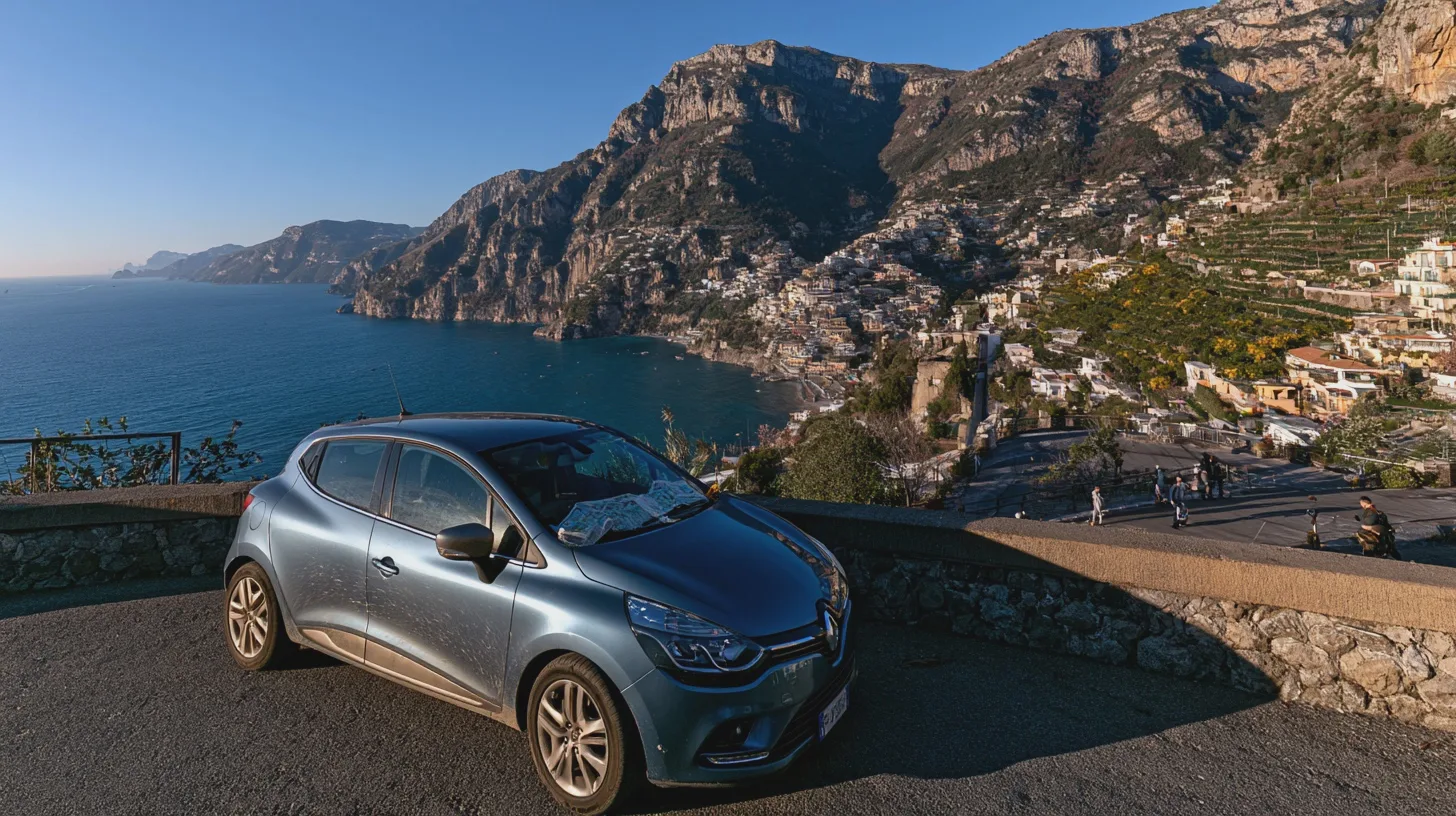
Is it worth driving the Amalfi Coast?
Yes, with conditions. A car gives you what buses and boats can’t: the freedom to go to Ravello at seven in the morning before the coach parties arrive, to drop down to the fishing village of Cetara for lunch, or to climb the Chiunzi Pass into the chestnut woods of the Lattari Mountains when the coast gets too busy. It also lets you stay somewhere cheaper and quieter inland, such as Agerola, and come down to the sea when it suits you.
What a car won’t do is make the coast road relaxing in peak season. The SS163 is narrow and full of blind bends. Local SITA buses take them with an ease that is somewhere between skill and contempt, and scooters overtake on either side. Parking in Positano and Amalfi is scarce and expensive, and you’ll often pay by the hour for the privilege of leaving the car in a cliff-side garage.
The sensible plan is a hybrid. Drive the full length of the road once, early in the morning, for the views. Then base yourself in one town, leave the car in a garage, and use ferries and buses for the day trips along the coast.
On the Amalfi Coast, the car’s best job is getting you out of the traffic, not into it.
The number-plate lottery
This is where many British drivers get caught out. To ease summer congestion, an alternating number-plate scheme, the targhe alterne, applies to the SS163 between Vietri sul Mare and Positano. When it’s in force, cars may use the road between 10am and 6pm only on days that suit the last digit of their plate, odd or even. In 2025 it ran at weekends and on public holidays in June and July, then every day in August and September. Some recent guides suggest the season is being stretched further into spring and autumn.
English-language websites don’t agree on which way round the odd/even rule works, so check the current ANAS or regional ordinance, or ask your hotel, before you set off. Motorbikes and scooters are exempt, as are residents and taxis. Guests with a confirmed booking at accommodation on the coast can usually drive to and from it on arrival and departure day, but not tour about for fun. Fines are sent to the hire company, which will pass them on to you with an admin charge.
Because hire companies don’t let you choose your number plate, look at it when you collect the car and plan your driving days around it. Before 10am and after 6pm, the road is open to everyone.
What are ZTL zones and how do you avoid a fine?
Many Italian towns have a ZTL, or zona a traffico limitato: a restricted traffic zone, usually in the historic centre, where only permitted vehicles may enter. The entrance is marked by a white sign with a red circle and a camera above it. There’s no barrier and nobody waves you down. The camera reads your plate, and some months later the fine arrives at the hire company, which charges your card and adds a handling fee. Satnav apps happily send you straight through these zones.
Naples is the one to watch. The historic centre has several ZTLs with different hours, and some of them run late into the night. The simplest fix is to collect the car from Naples Capodichino airport, which is on the edge of the city, and head straight for the motorway rather than going into town. If your hotel is inside a ZTL, ask it to register your plate with the local police before you arrive. Never just follow the car in front through a gate.
The A3 motorway towards Salerno brings you out at Vietri sul Mare, at the eastern end of the coast. Alternatively, you can approach Positano from the west via the Sorrento peninsula, which has its own seasonal plate restrictions. Book the smallest automatic you can fit into. A Fiat Panda feels like a lorry on the SS163, so anything bigger is a mistake.
When is the best time to drive the Amalfi Coast?
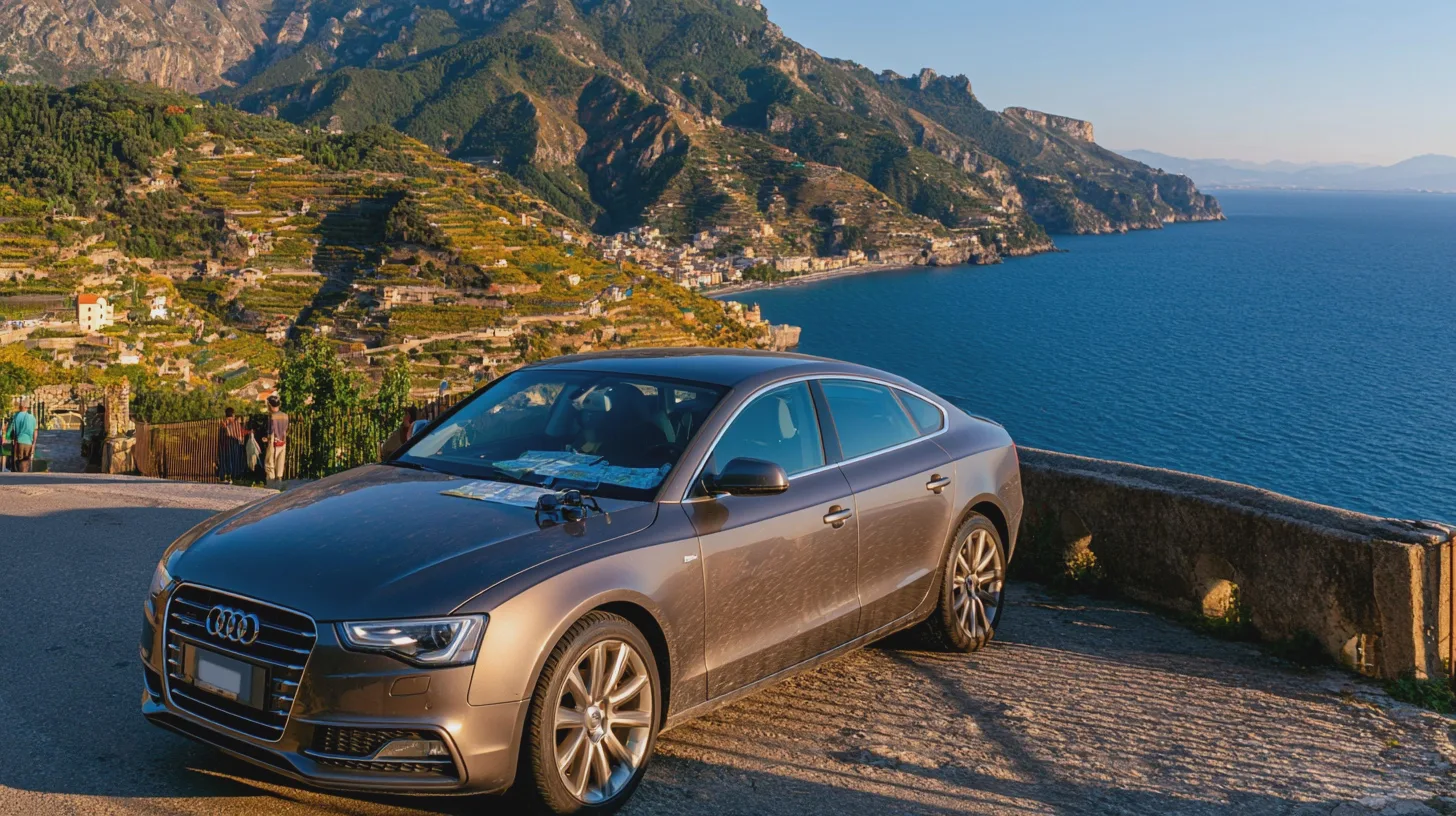
May and early June are the best compromise: warm enough for swimming and lunches outdoors, but before the worst of the traffic and the full daily plate rules. Late September and October are also good, with warm seas and thinner crowds, though some hotels and restaurants start closing for winter towards the end of autumn. In July and August, plan to drive before 9am and after 7pm, and use boats and buses in between.
Where the car earns its keep
Ravello sits high above the coast at the end of a twisting side road. Visit early and you’ll have the gardens of Villa Rufolo and the clifftop Terrace of Infinity at Villa Cimbrone almost to yourself. Cetara is a working fishing village and the place to try colatura di alici, an amber anchovy sauce descended from the Roman garum. It tastes much better on spaghetti than it sounds. Atrani, a few minutes’ walk from Amalfi, feels like Amalfi with the volume turned down. Furore has a dramatic fjord-like inlet under a road bridge.
Walkers should drive up to Bomerano, near Agerola, and set off along the Path of the Gods (Sentiero degli Dei) towards Nocelle above Positano. It’s the classic coast walk, mostly downhill in that direction, with views that make the hairpins look tame. You’ll need to return to the car by bus or taxi, so plan that bit first.
One thing to avoid is the summer sport of stopping in a lay-by on a blind bend for a selfie. The bus drivers have opinions about it.
What it costs, and the paperwork
The Amalfi Coast is pricier than most of southern Italy, and Positano is pricier still. As a rough guide, a beer in a bar costs about €6–8 (£5–7), more on a terrace with a view. Dinner with a main course, wine and a starter or dessert is about €45–70 (£38–60) a head. Taxis are notoriously expensive here, so expect €30–50 (£25–43) for a short hop of around 5 km. Hotel parking can add a noticeable daily charge, so ask about it before you book.
There are direct flights to Naples from several UK airports. Before you travel, check the latest FCDO travel advice and entry requirements for Italy, including passport validity rules. Check GOV.UK on driving abroad with a UK licence too, and bring your physical photocard licence. Carry a GHIC for state healthcare and buy proper travel insurance, and read the hire contract’s excess and fine-handling terms before you sign.
In short
A road trip to the Amalfi Coast is worth it if you treat the hire car from Naples as your way into the hills, not as transport along the coast road in high summer. Avoid Naples’ ZTL zones, check the plate rules before you set off, drive early or late, and use ferries and buses in the middle of the day. Do that and you get the views without spending your holiday in a queue.
Sources

Midcent Travel
Archie Inglis writes about travel for men 45 and over: city breaks, winter sun, road trips, rail journeys, walking holidays and the longer trips you've been putting off. Where's worth going, how to get there without the hassle, and how to make the money go further.
One of Midcent's writers. Spotted something? Write to archie@midcent.uk.