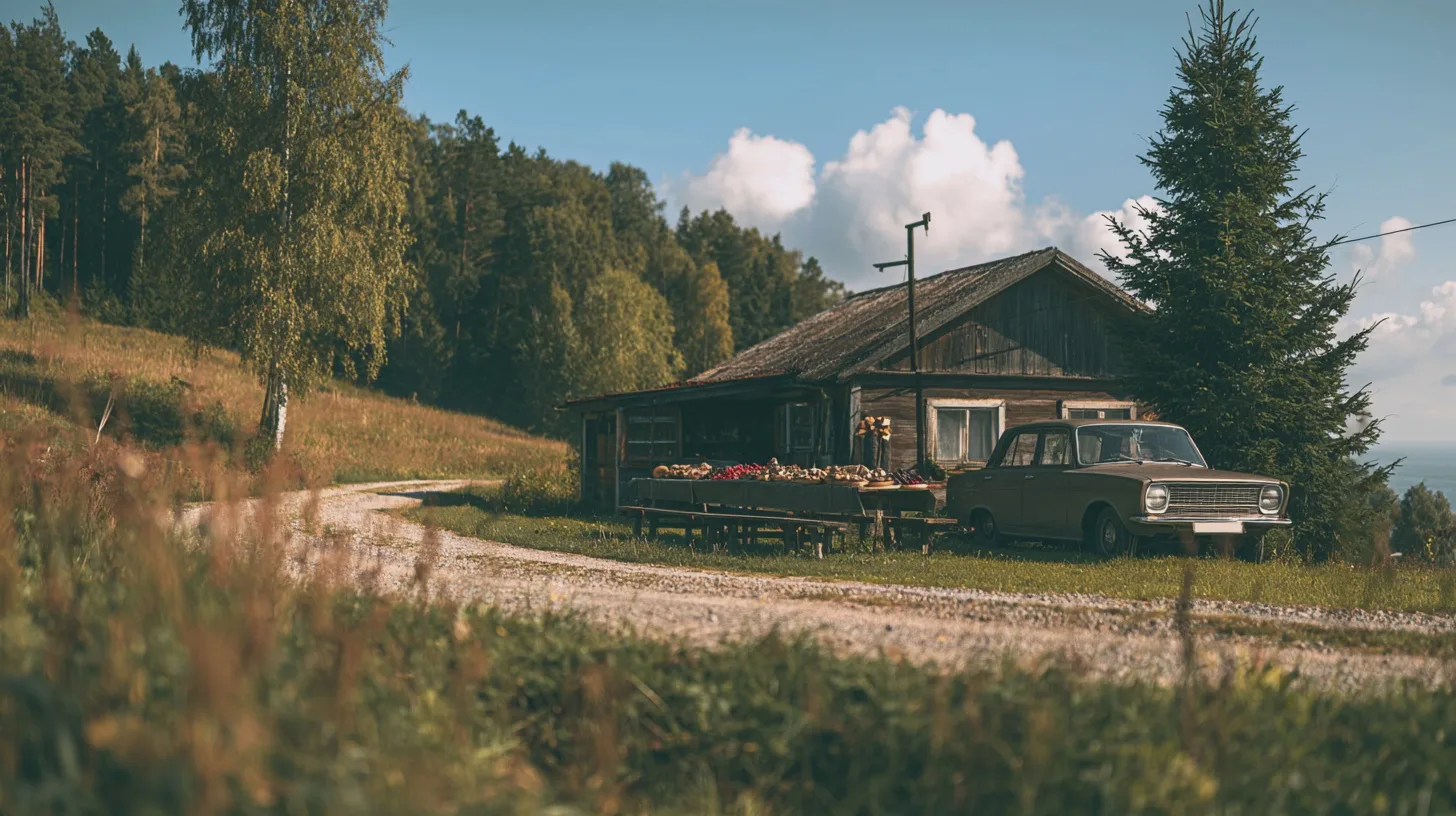
Why spring suits the North Coast 500 best: quieter single-track roads, long light evenings, distilleries in every other town, fairytale castles and hardly a midge in sight.
Reviewed, edited and approved by Editor-in-chief Daniel Sköld · Updated 25 October 2026
Contents
Every summer, thousands of people drive the North Coast 500 and spend most of it stuck behind a campervan, slapping at midges and waiting for a passing place. Then autumn comes and the Highlands go quiet again, and it’s hard to avoid the feeling that everyone turned up at the wrong time.
The best time is spring. From April into late May you get long, clear evenings, empty beaches, snow still on the tops of the Torridon hills and distillery visitor centres that have only just reopened. It’s also a holiday that needs no passport, no airport queues and no worrying about the exchange rate. All you need is a full tank and some patience on single-track roads.
AD
What is the North Coast 500, and how long do you need?
The NC500 was launched in 2015 as a marketing idea, and it worked far better than anyone expected. It is a loop of roughly 516 miles that starts and finishes in Inverness, following the coasts of Easter Ross, Caithness, Sutherland and Wester Ross. On paper you could drive it in three days. Do that and you’ll mostly see tarmac. A week is about right, and ten days is better if you want to walk, eat properly and stop at every distillery that catches your eye.
Go round the east coast first, with the gentler roads, the whisky towns and the castles. Then turn west along the empty north coast and finish on the west coast, where the roads get narrower, the scenery gets wilder and the driving demands more of you. That way the trip improves as it goes on, and the hardest roads come when you’re fully used to the car.
Castles worth slowing down for
Just north of Golspie is Dunrobin Castle, seat of the Earls and Dukes of Sutherland. Charles Barry, who also worked on the Houses of Parliament, remodelled it in the 1840s, and with its pointed turrets it looks more like the Loire Valley than the Highlands. The formal gardens run down to the sea and the falconry displays are well worth seeing. Don’t forget the Sutherland family’s part in the Highland Clearances, though. The huge statue of the first Duke on Ben Bhraggie above the town is still argued over locally, and it’s worth knowing why before you admire the plasterwork.
Further north, near John o’ Groats, the Castle of Mey was the Queen Mother’s Highland retreat, and it is a much more homely sort of castle. Her coats are still in the hall and the walled garden still produces vegetables. On the west coast, Ardvreck Castle is a roofless ruin on a spit of land in Loch Assynt. It costs nothing to visit and is one of the best things on the whole route. If you can manage a detour south from Lochcarron, Eilean Donan is the castle from the shortbread tins, and it lives up to its reputation if you get there before the coaches. Opening seasons for most of these start in spring and change from year to year, so check the dates before you build your route around one.
Where are the best distilleries on the NC500?
The east coast is basically a whisky trail with sea views. Glen Ord at Muir of Ord, Dalmore at Alness, Glenmorangie at Tain, Balblair at Edderton and Clynelish at Brora are all within a morning’s drive of each other. Further north, Old Pulteney sits in Wick’s old herring port, and Wolfburn in Thurso calls itself the most northerly whisky distillery on the Scottish mainland. Each has its own character. Glenmorangie’s stills are famously tall, and Clynelish has a waxy style that people tend to love or hate.
The obvious problem is that someone has to drive. Scotland’s drink-drive limit is 50mg of alcohol per 100ml of blood, which is lower than the 80mg limit in England and Wales. In practice, one dram can be enough to put you over. Most distilleries understand this and will put your tasting measures into small bottles for you to take away, so ask when you book. Book ahead in spring as well, because tour numbers are small and some sites only run a limited timetable early in the season.
In the far north-west, the fuel gauge, the light and the next passing place matter more than the satnav.
AD
How do you drive single-track roads without annoying everyone?
Long stretches of the north and west coasts are single-track, with passing places marked by diamond-shaped or square signs. The rules are simple. Pull into a passing place on your left, or wait opposite one on your right, so the oncoming car can get by. Pull in as well to let faster local traffic overtake, because the post van has a schedule to keep and you don’t. Never park in a passing place to take a photograph. That’s the quickest way to annoy everyone in Sutherland.
The Bealach na Bà, the pass over to Applecross, climbs to 626 metres with gradients of up to 20 per cent and hairpins tighter than a hotel shower cubicle. It isn’t advised for learner drivers, caravans or large vehicles, and early-spring snow can close it. When it’s open and clear, the view from the top across to Skye is unforgettable. Petrol stations get scarce in the far north-west, so top up whenever you pass one. Electric car drivers should plan charging stops carefully, because chargers are spread thin and sometimes out of order.
The practical bit: getting there, eating and costs
Inverness is the obvious starting point. LNER’s direct Highland Chieftain runs from London King’s Cross, the Caledonian Sleeper leaves London Euston at night and arrives in the Highlands the next morning, and there are flights into Inverness from several UK airports. Hire a car when you arrive. Driving up from southern England is possible but uses up two days of your holiday. Book accommodation early, even in spring, because rooms in places like Durness and Applecross are limited.
Good food on the route is easy to find. The west coast lands langoustines, scallops and crab that often go straight to Spain, and the Applecross Inn’s seafood is famous enough that people drive the Bealach just for lunch. Ullapool is the best place to stop for a night or two in the west, with music in its pubs and ferries leaving for Lewis. Two things on the route don’t live up to the hype. John o’ Groats is not actually the northernmost point of the mainland, so carry on to Dunnet Head for that. Smoo Cave near Durness gets busy at midday, while the beaches at Ceannabeinne and Balnakeil a few minutes away are often empty.
Expect to pay roughly £5–£6.50 for a pint in a Highland pub, around £30–£45 per person for dinner in a decent restaurant without wine, and about £10–£14 for a 5km taxi ride in Inverness. Taxis further north are scarce, which is another reason the driver gets the takeaway drams.
In short
Spring, from April to late May, is the best time to drive the North Coast 500. It brings long days, quieter roads, newly reopened distilleries and few midges. Allow at least a week for the 516-mile loop from Inverness, start with the whisky and castles of the east coast, and save the dramatic single-track roads of the west for the end. Remember that Scotland’s drink-drive limit is lower than England’s, so ask distilleries to bottle the driver’s samples to take away.
Archie Inglis writes about travel for men 45 and over: city breaks, winter sun, road trips, rail journeys, walking holidays and the longer trips you've been putting off. Where's worth going, how to get there without the hassle, and how to make the money go further.
One of Midcent's writers. Spotted something? Write to archie@midcent.uk.
A 7–10 day fly-drive from Riga to Vilnius, planned around rye bread, smoked fish, Karaim pasties and cepelinai, with realistic prices in pounds and the back roads worth taking.
From Kintyre to the Julian Alps, these five drives reward getting out of the car. Here’s where to start from Britain, and which famous routes to reconsider.
Forget the neon nostalgia. Drive from Oregon’s working harbours to California’s redwoods for a US road trip built around good seafood, short walks and worthwhile detours.