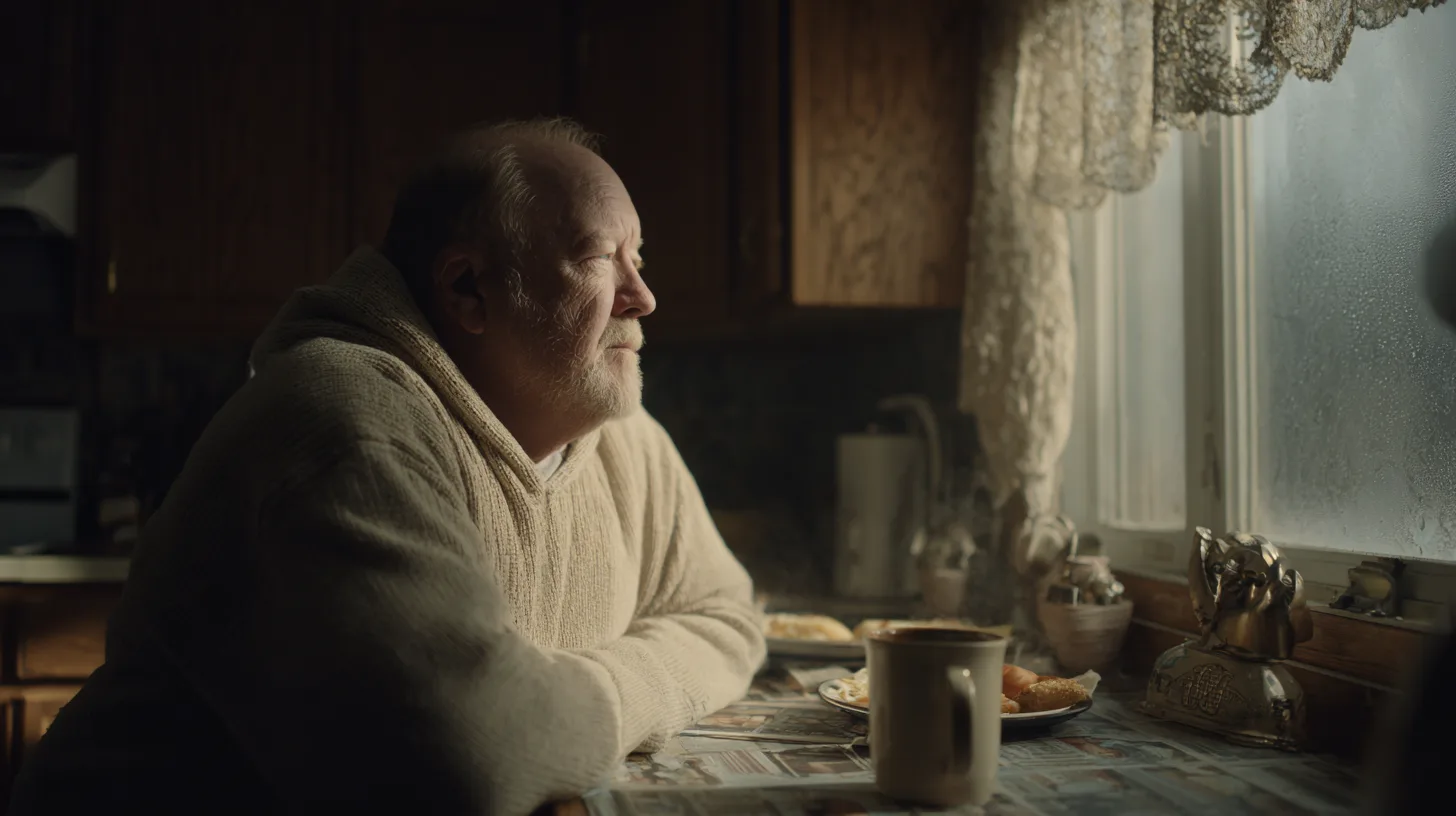
The silent divorce: when a marriage ends but nobody says so
No rows, no slammed doors, just two flatmates sharing a mortgage. Why so many marriages end quietly, why men stay, what leaving actually costs and when settling is fine.
Reviewed, edited and approved by Editor-in-chief Daniel Sköld · Updated 23 October 2026
Contents
Saturday night. Two people, one sofa, two phones, and a streaming service picking for them because neither can be bothered to ask what the other fancies. Nobody has shouted in years. No plates thrown, no affairs, no drama worth telling the lads about. On paper, it’s a success.
That’s the trouble. Plenty of marriages don’t end with a bang. They end in the gap between “what time are you back?” and “did you put the bins out?”, and nobody says so out loud. For a lot of men in their fifties, the silent divorce is the most common break-up they’ll never file for.
AD
What is a silent divorce?
It’s the marriage that has stopped emotionally while the admin keeps going. The joint account still pays the council tax. The family WhatsApp still runs. You still turn up together at weddings and do a passable impression of a couple. But the conversations have shrunk to logistics, and the honest feeling when she’s away for the weekend is relief.
The warning signs are rarely dramatic. You make plans for retirement in your head and she isn’t in them. You can’t remember the last thing you talked about that wasn’t the kids, the house or her mother’s hip. Affection has turned into politeness. Arguments have stopped, and not because you’ve sorted anything out. You just can’t face them any more.
A caveat before anyone books a solicitor: every long marriage has flat patches. Years of nappies, mortgages and teenage sulks would grind down anybody. Quiet isn’t the same as dead. The question is whether you’re in a lull or a long, slow fade.
Why do men stay in marriages that have gone cold?
Partly inertia, which is undramatic but powerful. Partly fear of being the bad guy, the one who wrecked the family over something as vague as feeling a bit empty. And partly simple maths.
Splitting up turns one household into two. Two lots of council tax (the 25 per cent single-person discount helps, but only a little), two energy bills, two broadband contracts, two sofas nobody will sit on together. A mortgage that worked on two incomes at 35 looks very different on one at 55, with fewer working years left to pay it off. After the house, the pension is often the biggest thing you own, and it goes on the table too. The fear of the one-bed flat above a vape shop is not entirely irrational.
Then there’s loneliness. Men in midlife are famously bad at keeping friendships going, and for many the spouse is the whole social life. Leaving the marriage can feel like leaving everything.
Is it okay to just settle?
Sometimes, yes. Not every marriage has to be a grand passion. Companionship, shared history, someone who knows how you take your tea and why you hate your brother-in-law: none of that is trivial, and plenty of couples make a perfectly decent life out of it. Choosing contentment over fireworks is a grown-up decision.
But choosing is the key word. Settling on purpose is different from drifting because nobody wants to start the conversation. One is an agreement between two adults. The other is a slow standoff where you both quietly hope the other one will break first.
A marriage rarely dies in a row. It dies in all the conversations nobody bothers to start.
A useful test: if you knew then what you know now, would you pick this again? And would she? If you honestly don’t know, you have something to talk about, which is more than you had before.
AD
Does couples counselling actually work, and what does it cost?
It won’t fix every marriage, and it isn’t meant to. Sometimes the outcome is a better relationship. Sometimes it’s an honest, less bitter ending. Either is better than ten more years of silence.
Relate, the biggest relationship counselling service in England and Wales, charges between £65 and £145 per session for couples, depending on household income, and sessions are available online over Zoom. That last bit matters for men who would sooner have a filling than sit in a waiting room. It also offers a one-off 50-minute session for £75 if you want to tackle one specific problem, and you can go on your own. In Scotland the equivalent is Relationships Scotland, and in Northern Ireland it’s Relate NI.
Going alone is underrated. Working out what you actually want, before you say anything at home, beats blurting it out at 11pm after a third glass of red.
What did no-fault divorce change, and what didn’t it?
In England and Wales, the Divorce, Dissolution and Separation Act 2020 came into force on 6 April 2022. You no longer have to blame anyone. You simply state that the marriage has irretrievably broken down, and couples can apply jointly. There’s a minimum wait of 20 weeks before applying for the conditional order, then six weeks and a day before the final order. The court fee is now more than £600.
The ONS figures for 2023 are telling. There were 102,678 divorces in England and Wales, and 74.2 per cent went through under the new law. Yet nearly three in four of those new-law final orders came from sole applications. The law took the blame out of divorce, but in most cases it’s still one person who decided, often long before the other one noticed.
Scotland runs its own system. You can divorce after a year’s separation if your spouse agrees, or two years if they don’t, or on grounds of adultery or behaviour. Sheriff court fees for an ordinary divorce were set at £185 from 1 November 2024. Northern Ireland still uses an older system based on fault or long separation, so get local advice there.
One trap applies everywhere: the divorce itself doesn’t settle the money. Unless you get a financial order from the court, claims against each other can stay open for years. A quiet ending still needs its paperwork done properly.
In short
A silent divorce is a marriage that has ended emotionally while the house, the bills and the habits carry on. Settling can be a perfectly sound choice if you both make it with your eyes open, but drifting along because nobody will speak up isn’t the same thing. Counselling, which Relate offers online from £65 a session, is a cheaper first step than splitting into two households. And if you do separate, no-fault divorce in England and Wales takes the blame out of it, though you still have to have the conversation.
Andy Irwin writes about the way we live now for men 45 and over: work, relationships, mental health, getting older, and the trends and debates that land on men in the middle of life. With the facts, a dry sense of humour, and no lectures.
One of Midcent's writers. Spotted something? Write to andy@midcent.uk.
You share a house, a fridge and a Netflix login, but you stopped being a couple some time ago. How to spot a silent divorce, and what you can do about it.
The kids leave, the mortgage shrinks and the silence gets louder. Why divorce clusters in the mid-forties and fifties, and what men facing it need to know.
Bins, boilers and booking the dentist: when a long marriage turns into a small business. Why the passion fades, why it matters after 50, and what actually brings it back.
The children leave, parents need care, retirement looms and you both change. Here is why couples in midlife drift, what helps, and why some drifting is fine.