You needn’t abandon Sunday lunch or swear off the pub. Start with a proper reading, then make changes to food, movement and drinking that you can keep up.
Reviewed, edited and approved by Editor-in-chief Daniel Sköld · Updated 23 October 2026
Contents
Being told to lower your blood pressure can sound suspiciously like being told to stop enjoying dinner. Less salt, fewer pints, more exercise: apparently your arteries would prefer you lived on steamed broccoli.
Fortunately, this is not an all-or-nothing job. The useful approach is to find out where you stand, make a few changes you can live with, and check whether they are helping. High blood pressure rarely announces itself, so guesswork is a poor plan.
AD
How do you know if your blood pressure is high?
Get it measured. You can feel perfectly well while high blood pressure puts extra strain on your heart, blood vessels and kidneys. A reading has two numbers: the top is the pressure when your heart pumps; the bottom is the pressure between beats. The NHS generally regards 140/90 mmHg or higher at a healthcare appointment, or 135/85 mmHg or higher at home, as high. One reading, though, is not a diagnosis.
If you are in England, aged 40 to 74 and eligible, you should be invited for a free NHS Health Check every five years. It includes a blood pressure measurement and looks at wider cardiovascular risk. You needn’t wait for an invitation if you are concerned: ask your GP practice or a pharmacy for a blood pressure check. Many pharmacies in England offer free checks to people aged 40 or over.
The NHS Health Check is an England-only programme. In Scotland, Wales and Northern Ireland, ask your GP practice about a check; pharmacies may offer blood pressure testing, but availability varies. NHS 111 Wales says some Welsh pharmacies may charge, while Northern Ireland’s Department of Health says some community pharmacies offer monitoring.
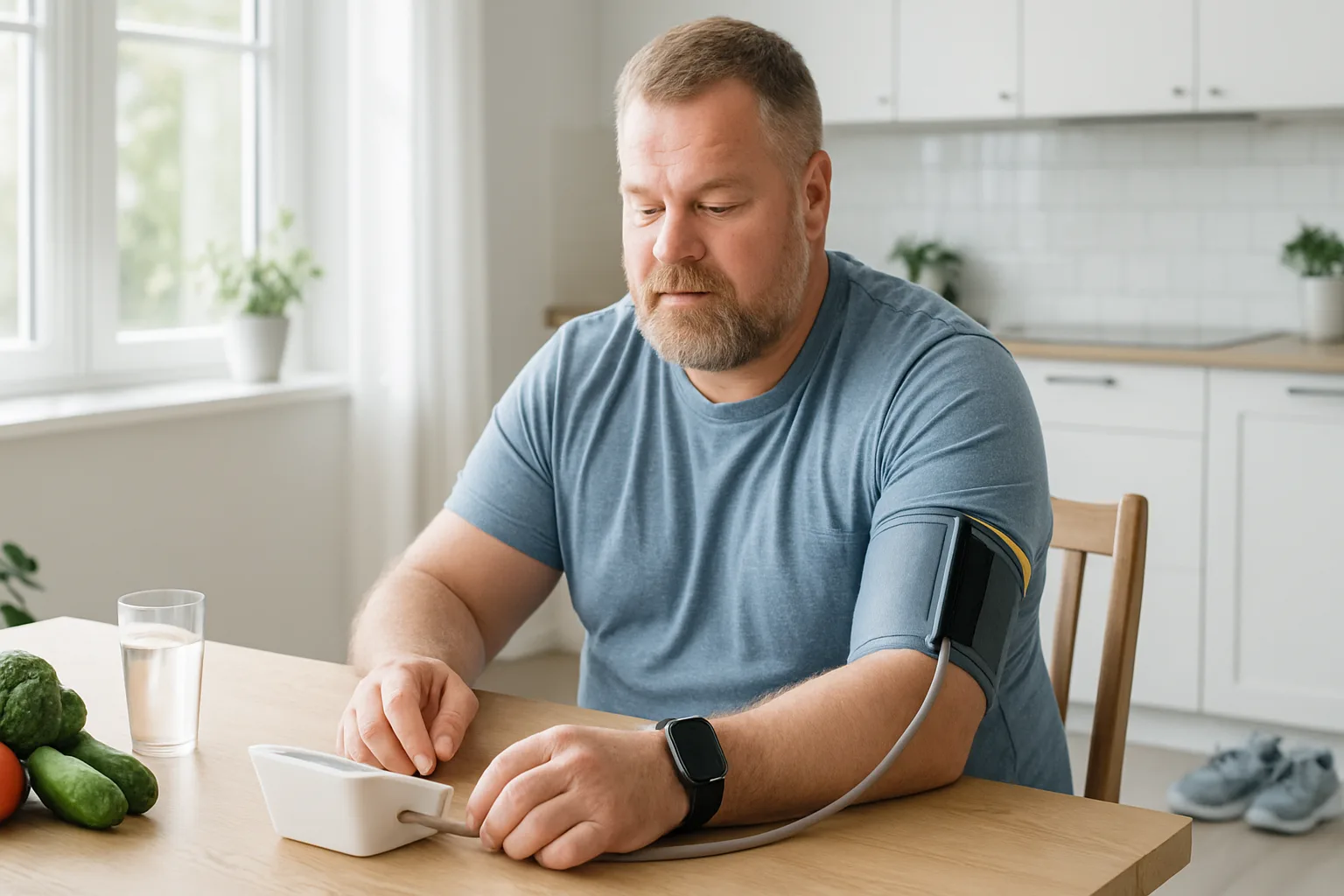
If you use a home monitor, choose a validated upper-arm model with a cuff that fits. Sit with your back supported, feet flat and arm resting on a table; keep quiet and take a second reading. If a clinician asks you to monitor at home, follow their schedule. NICE recommends morning and evening readings over at least four days, ideally seven, when home monitoring is used to confirm a diagnosis. Your GP can interpret the pattern rather than a single alarming number.
What can you eat without giving up flavour?
Start with the salt you do not see. The NHS recommends no more than 6g a day for adults, roughly a teaspoon in total, and says about three-quarters of the salt we eat is already in bought food. Bread, sauces, soup and ready meals can do more damage to your daily tally than the salt cellar you heroically ignore.
Compare labels on the foods you buy every week. Choose a lower-salt soup or sauce you actually like; use less of a salty ingredient and add garlic, chilli, lemon, vinegar or herbs to keep the flavour. Your favourite takeaway needn’t be banished, but having it less often is easier to sustain than declaring it forbidden and then eating it twice on Friday.
Think about what you can add as well as what you can cut. The DASH-style pattern, supported by the British Heart Foundation, emphasises vegetables, fruit, wholegrains, pulses, nuts and leaner protein alongside less salt. That might mean beans in a chilli, vegetables with your roast or unsalted nuts instead of crisps some evenings. It is a way of eating, not a magic ingredient.
The best blood-pressure change is the one you can still make when it’s raining, you’re busy and dinner is late.
Be wary of products promising to fix your numbers. Evidence is stronger for an overall eating pattern than for a single juice, supplement or fashionable powder. If you have kidney disease or heart failure, ask your clinical team before using potassium-based salt substitutes or trying to increase potassium: what helps one person may be unsuitable for another.
AD
How much movement actually helps?
You do not need to become the bloke posting his dawn run before the rest of us have found the kettle. For adults aged 19 to 64, NHS guidance recommends at least 150 minutes of moderate activity a week, plus muscle-strengthening activity on at least two days. Brisk walking counts: you should be able to talk, but singing would be ambitious.
Make the first step almost embarrassingly manageable. Walk after lunch, get off the bus earlier, cycle for an errand or take a lap of the park before going home. Build towards the weekly target rather than treating it as an entrance exam. Add strength work you can repeat, such as resistance bands, carrying shopping or exercises using your body weight. Being active can help your blood pressure even if the scales barely move.
If you are above a healthy weight, gradual, sustainable weight loss may help too. You do not have to set an arbitrary target in stone or kilograms to begin: swapping some high-calorie drinks, adjusting portions and moving more gives you somewhere practical to start. Ask your GP or pharmacist for support if you want it. If you have a medical condition, concerns about exercise or have been inactive for a long time, speak to your GP before making a big jump in intensity.
Keep the pint, lose the autopilot
Alcohol can raise blood pressure, but cutting down does not require a solemn farewell ceremony for every pint. UK guidance recommends drinking no more than 14 units a week on a regular basis, spread over three or more days. That is a limit, not a target. Check the strength on the label: a strong pint and a weaker one are not interchangeable just because the glasses look the same.
Try a smaller serving, a lower-strength beer or an alcohol-free drink between rounds. Decide which drinks you genuinely enjoy and skip the ones you have simply because somebody else is buying. A few drink-free days can help stop a routine becoming invisible. If cutting back gives you shaking, sweating or anxiety before your first drink, seek medical advice rather than trying to manage withdrawal alone.
Caffeine is worth noticing, too, particularly if you rely on repeated large coffees or energy drinks. The NHS advises against too much caffeine for people trying to lower blood pressure. Poor sleep and stress can also make healthy habits harder to keep up; if you snore loudly, wake gasping or are persistently sleepy, mention it to your GP, as sleep apnoea may need assessment.
Finally, treat your readings as information, not a contest you must win without help. Share persistently high results with your GP. Lifestyle changes matter, but some people also need medicine because of their blood pressure or overall risk; do not change prescribed treatment on your own. Use NHS 111 for urgent advice about worrying symptoms. Call 999 for sudden chest pain that does not go away, especially with breathlessness, sweating or pain spreading to an arm or jaw.
In short
To lower blood pressure without giving up everything you enjoy, first get a reliable reading. Then cut hidden salt, eat more of the foods that support a healthy diet, move regularly and keep an eye on alcohol. Review your readings with your GP if they stay high; enjoyable habits and medical care can work together.
Adrian Irving writes about health for men 45 and over who would rather do something than worry. Training, weight loss, sleep, cholesterol and blood tests, heart health, testosterone, the prostate, mental health and your sex life – what the evidence says, what's worth trying, and when it's time to see your GP.
One of Midcent's writers. Spotted something? Write to adrian@midcent.uk.
Stress gets blamed for high blood pressure, but its real effect works through your coping habits. Here is what the evidence says and how to check your numbers.
Short nights, loud snoring and 3am wake-ups can all push your blood pressure up. Here is what the evidence says, which signs matter and what to do about them.
You might not feel stressed, but your body may disagree. How to spot the quiet signs of chronic stress in midlife, what it does to your heart, and how to fight back.
More than half the calories in the average British diet come from ultra-processed food. Here’s what the evidence really shows, and how to cut back without a bonfire of the cupboards.