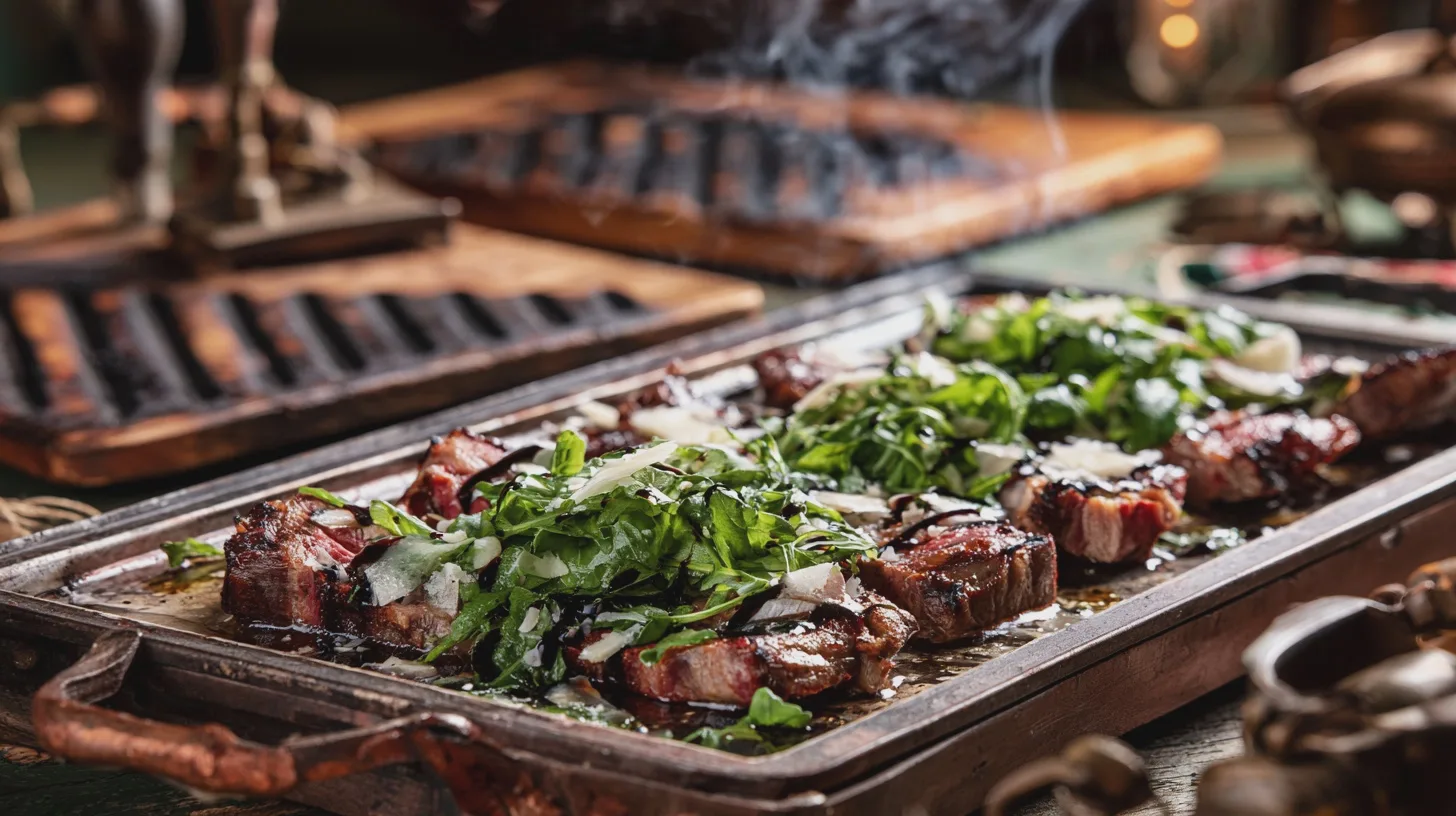
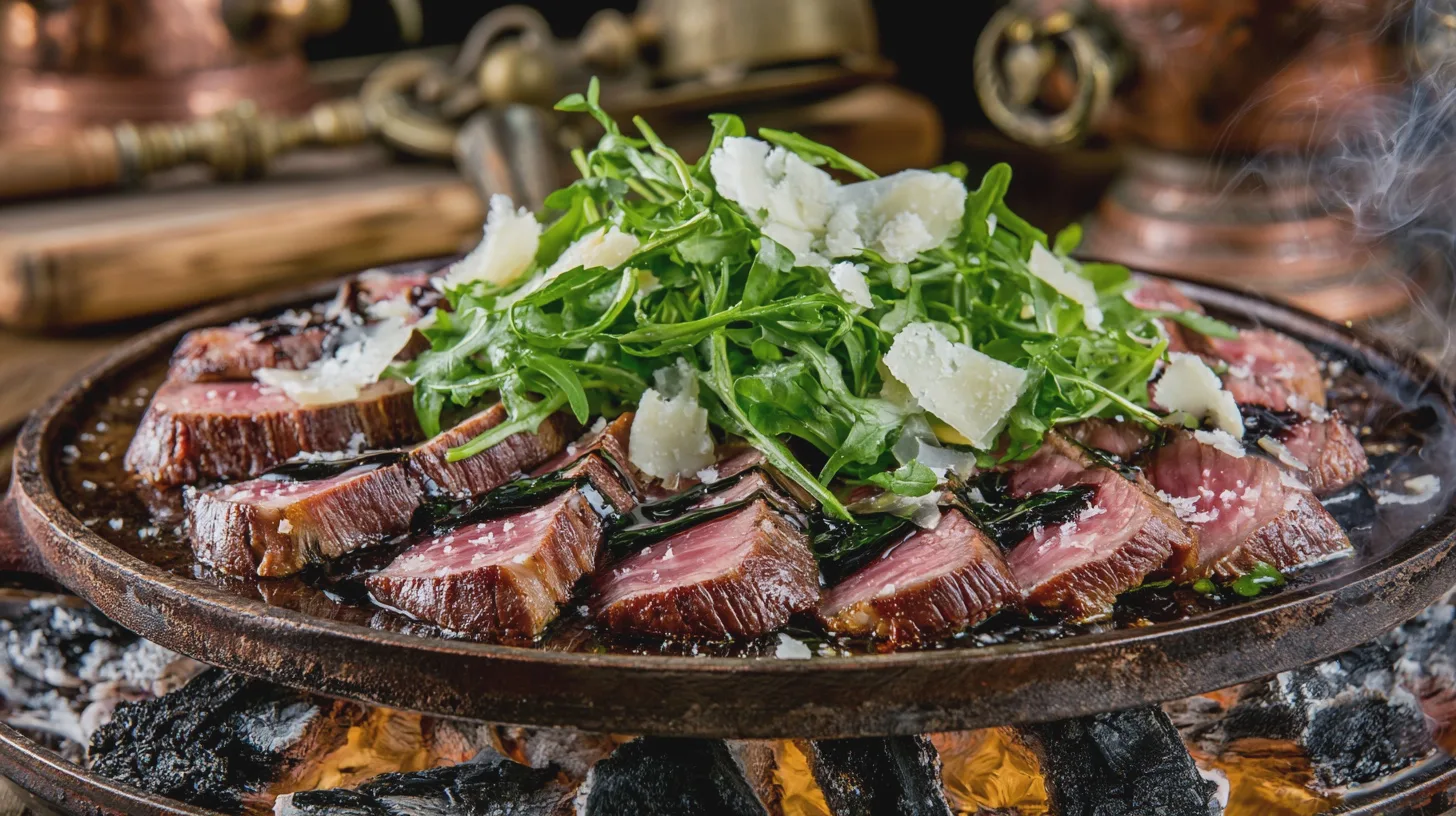
Some dishes take a weekend. Tagliata takes about as long as it takes to open a bottle of red and let it breathe. Seared steak, sliced thick, laid over peppery rocket, then finished with shaved parmesan, good olive oil and a few drops of balsamic. That’s the whole dish.
It’s what Italians do with a steak when they’d rather look after their guests than babysit a grill. It also stretches one good piece of beef further than a plate-sized slab ever will, which matters when you’ve seen what a butcher charges for sirloin these days.
What is tagliata, exactly?
The name comes from the Italian verb tagliare, to cut. Tagliata just means sliced. It’s a boneless steak, grilled or seared, rested and carved into strips, usually served on rocket with parmesan. Think of it as the easy-going cousin of bistecca alla Fiorentina, the huge Tuscan T-bone served blood rare.
There’s no single official recipe. Olive magazine has a Tuscan version made on rib of beef, brushed with rosemary and garlic oil, and another that tops sirloin with a punchy black olive and sherry vinegar dressing. Eataly, the Italian food hall chain, keeps it bare: steak, rocket, lemon, parmesan, balsamic, flaky salt. Learn the basic method and the toppings are up to you.
Which steak is best for tagliata?
You’ve got two good routes, and they suit different moods.
Sirloin or rib-eye, the cut the French and Swedes call entrecôte, is the treat. Rib-eye’s marbling keeps it juicy and forgiving. Sirloin is leaner, with a strip of fat along the edge that you should render until crisp. Go for a steak about 3cm thick. Thin steaks are overcooked before they’ve built a crust.
Flank, often sold as bavette, is the clever option. It’s a loose-grained, hard-working muscle with a big beefy flavour, and it usually costs noticeably less than sirloin. It does need careful slicing (more on that below), but cut properly it’s a revelation. Rump is a good middle ground, and hanger steak works well if your butcher has one.
Most big supermarkets stock decent rump, sirloin and rib-eye. For bavette, hanger or a proper thick sharing steak, an independent butcher or a reputable online butcher is your best bet. Ask for dry-aged if your budget allows. A 500g piece serves two generously, or four as part of a wider spread.
How do you cook tagliata at home?
Take the steak out of the fridge 30 minutes before cooking. Pat it completely dry with kitchen paper, because a wet steak steams instead of searing. Rub it with a little olive oil and season well with flaky salt.
While it comes up to temperature, make the oil. Strip the leaves from a sprig of rosemary, chop them finely with half a garlic clove and a pinch of salt, then stir in 3 tbsp extra virgin olive oil.
Get a heavy frying pan or ridged griddle smoking hot. Cast iron is ideal. For a 3cm sirloin or rib-eye, hold it fat-side down with tongs for a couple of minutes to render the fat. Then give it roughly 3 minutes a side for medium-rare, turning once or twice. Brush it with the rosemary oil as it cooks. With a thicker sharing steak, follow Olive’s approach: sear it all over, then finish it in an oven at 180°C fan (200°C conventional) for 6 to 8 minutes.
Flank is thinner and leaner, so cook it hot and fast: 3 to 4 minutes a side, no more. Cooked past medium, it goes chewy.
If you own a digital probe thermometer, take sirloin or rib-eye off at around 50–52°C in the centre. It’ll climb a few degrees as it rests and land at medium-rare. A probe costs less than one good steak, so it pays for itself the first time it saves one.
Then rest it on a warm board for at least 5 minutes. Don’t skip this. Keep the juices that run out and mix them into the dressing.
Rest it, then slice across the grain. Get that one cut right and a cheap flank steak eats better than a badly carved sirloin.
Slicing, dressing and serving
Look at the steak and find the lines of muscle fibre running along it. Slice straight across them, not along them. With sirloin and rib-eye, cut strips about 1cm thick. With flank, the grain is very obvious and the meat is tougher, so angle your knife and slice thinner, around 5mm. Short fibres mean tender mouthfuls.
Scatter a couple of handfuls of rocket over a big platter or board, dressed with a squeeze of lemon and a little oil. Fan the steak slices over the top and drizzle them with the rest of the rosemary oil and the resting juices. Shave parmesan over with a vegetable peeler, roughly 40g for four people. Finish with a few drops of balsamic and a pinch of flaky salt.
About the balsamic: a thick, aged balsamic vinegar of Modena is lovely here, but you only need a few drops. If all you’ve got is a thin supermarket bottle, simmer 100ml in a small pan until it’s reduced by half and coats a spoon. Let it cool before using.
Not keen on very pink beef? The Food Standards Agency’s advice is that whole cuts of beef like steak can be eaten pink or rare, provided the outside is properly cooked. That’s because any bacteria sit on the surface. The rule changes for minced or rolled meat, which needs cooking right through.
On the side, serve crusty bread for the juices, crisp rosemary roast potatoes, or griddled courgettes and aubergine. Olive suggests doubling their olive dressing to spoon over exactly those vegetables.
What wine goes with tagliata?
Stay in Italy. A Chianti Classico has the cherry fruit and fresh acidity to cut through rich beef and salty parmesan, and it handles balsamic better than most reds. A Montepulciano d’Abruzzo is a soft, generous and good-value choice. If you want something lighter, try a Barbera from Piedmont. And if the weather’s warm and you’re eating outdoors, a chilled bottle of dry rosé will do the job.
Enjoy a glass, maybe two, but stick to the UK Chief Medical Officers’ guidance of no more than 14 units a week, spread over several days. One standard 750ml bottle of 13.5% red contains about 10 units. On nights off, a decent alcohol-free red or an alcohol-free Italian-style lager pairs surprisingly well with steak. So does a sparkling water with a twist of lemon.

In short
Tagliata is simply seared steak, rested and sliced, served on rocket with parmesan, olive oil and a few drops of balsamic. Buy a 3cm sirloin or rib-eye for a treat or a bavette (flank) for flavour and value, sear it hard, rest it for 5 minutes and slice across the grain. It’s on the table in about 20 minutes, and a Chianti Classico or a good alcohol-free alternative makes the perfect partner.
Sources

Midcent Food & Drink
Angus Irvine writes about food and drink for men 45 and over who like to eat well but don't want a performance. Recipes that work on a weeknight, dinners worth the effort at the weekend, what to pour with them – wine, beer and the good alternatives – and the restaurants and pubs worth the trip. Without the fuss.
One of Midcent's writers. Spotted something? Write to angus@midcent.uk.