Chicken tikka masala has been called Britain’s national dish so many times that people have stopped arguing about it. That’s a pity, because the version most of us eat comes in a foil tray on a Friday night, costs a small fortune once you add rice and a naan, and is frankly a bit sweet.
You can do better. Make a big pot on a Sunday and you get a proper curry house dinner plus four or five lunches that put the office canteen to shame. Here’s how.

Was chicken tikka masala really invented in Glasgow?
The most famous claim belongs to Ali Ahmed Aslam, who ran the Shish Mahal restaurant in Glasgow’s West End and died in December 2022, aged 77. As the story goes, a customer in the 1970s sent back his chicken tikka because it was too dry. Aslam improvised a sauce, and a classic was born.
He put the yoghurt and cream down to local tastes, saying his customers usually didn’t want a hot curry. The city is so proud of it that a Glasgow MP, Mohammad Sarwar, once tabled a motion in the Commons over it.
Not everyone agrees. Rival claims come from Birmingham, London and Delhi, and a dish this simple has probably been made up more than once. What isn’t in doubt is that the creamy, tomatoey, mildly spiced version we all know is a product of Britain’s curry houses. That makes it as British as fish and chips, and every bit as worth getting right.
This serves six. You won’t need a specialist shop, though a world food aisle helps.
For the chicken: 1.2kg boneless, skinless chicken thighs, cut into large chunks; 200g full-fat natural yoghurt; 4 garlic cloves, grated; a thumb of ginger (about 30g), grated; 2 tsp garam masala; 2 tsp ground cumin; 1 tsp turmeric; 2 tsp Kashmiri chilli powder (or 1 tsp mild chilli powder plus 1 tsp paprika); 1 tsp salt; and the juice of half a lemon.
For the sauce: 2 tbsp ghee or vegetable oil; 2 onions, finely chopped; 4 more garlic cloves; another thumb of ginger; 1 green chilli; 2 tsp garam masala; 2 tsp ground cumin; 1 tsp ground coriander; 1 tsp paprika; 2 tbsp tomato purée; 2 x 400g tins chopped tomatoes; 150ml double cream; 1 tbsp dried fenugreek leaves (kasoori methi); 1 tsp sugar; and a knob of butter.
Use thighs, not breast. They’re cheaper, they stay juicy on reheating and they forgive you if you overcook them a bit. The fenugreek is the secret ingredient. It’s what makes a home curry taste like it came from the curry house, and a packet lasts for ages.
How do you make tikka masala taste like the curry house?
Char the chicken first. Mix the marinade ingredients, coat the chicken and leave it in the fridge for at least two hours, overnight if you can. Then spread it on a lined baking tray and roast at 240°C (220°C fan, gas 9) for 12 to 15 minutes, or put it under a very hot grill, until the edges catch and blacken in places. Those burnt bits are the ‘tikka’. Without them you’ve made a chicken stew.
Meanwhile, heat the ghee in a large pan and cook the onions gently for a good 15 minutes until soft and golden. Don’t rush this. Add the garlic, ginger and chilli for two minutes, then the dry spices for one more, stirring so nothing burns. Stir in the tomato purée, tip in the tomatoes with a tin of water, and simmer for 20 minutes.
For a curry house finish, blitz the sauce smooth with a stick blender. Then stir in the cream, sugar, butter and the fenugreek, crumbling it between your palms as you go. Add the chicken and any juices from the tray and simmer for 10 minutes, until the chicken is piping hot all the way through. Taste, adjust the salt, and finish with a squeeze of lemon and some chopped coriander.
Char the chicken hard and cook the onions slowly. Get those two right and you’ll never phone for a takeaway tikka again.
Is homemade tikka masala cheaper than a takeaway?
Comfortably. Prices vary by shop and by week, but by my own rough sums, using supermarket thighs and own-brand tins and cream, a pot like this works out at about £2 to £3 a portion. Spices bought once last for months.
Compare that with a supermarket ‘takeaway’ ready meal: Morrisons’ own 400g tikka masala is £4.25 before you add rice. A main course from your local Indian is usually a good deal more, and that’s before the rice, naan, poppadoms and delivery charge. For a family of four, cooking at home easily covers the cost of a decent bottle.
Speaking of which, a cold lager is the obvious partner. An off-dry Riesling or a Gewürztraminer also copes well with the spice and cream. If you’re having a night off the booze, Lucky Saint is a very good alcohol-free lager, and a mango lassi made with yoghurt, mango pulp and a pinch of cardamom is better still. Do keep an eye on the UK Chief Medical Officers’ limit: no more than 14 units a week, spread over several days.
Batch cooking, freezing and reheating safely
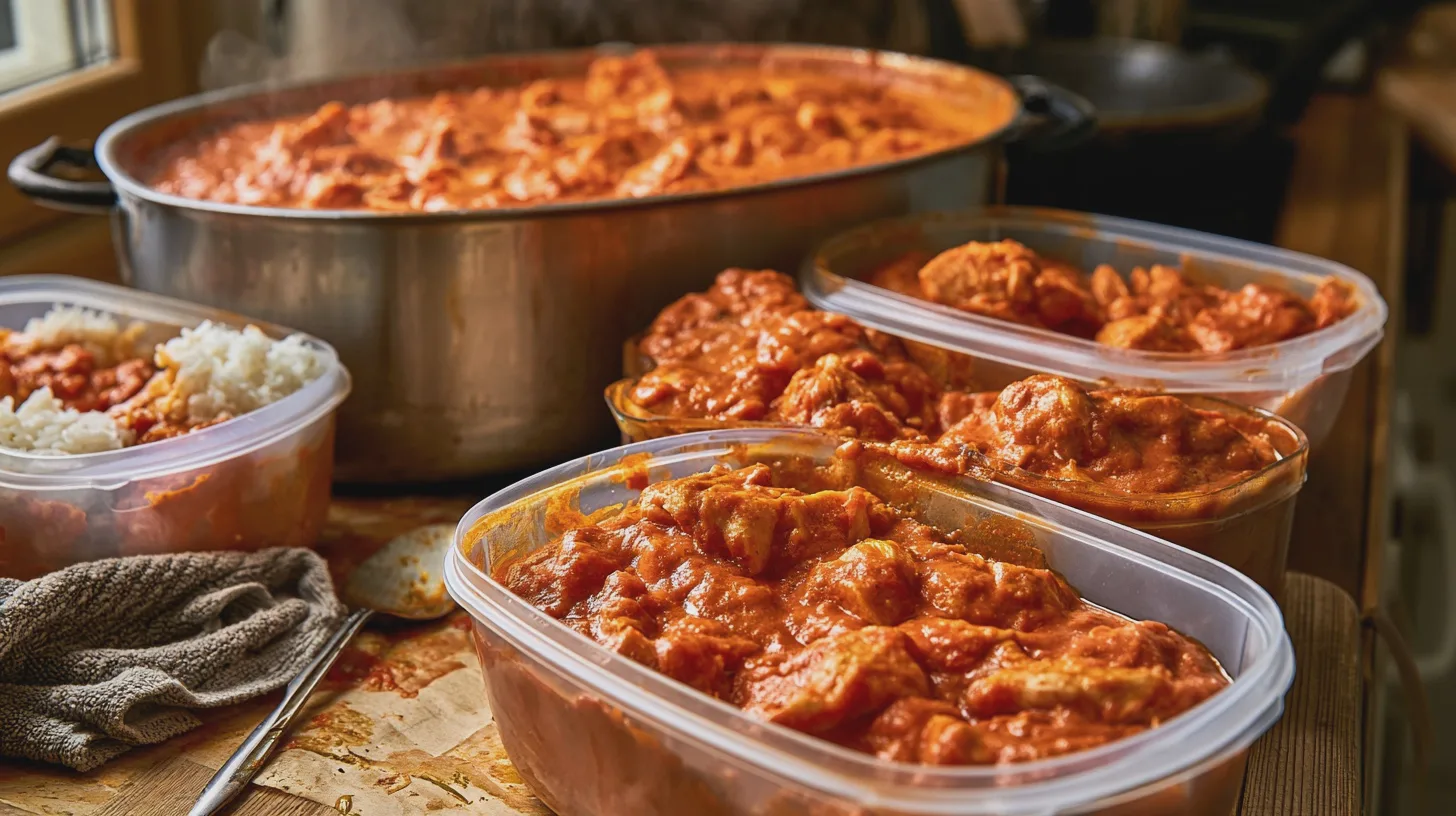
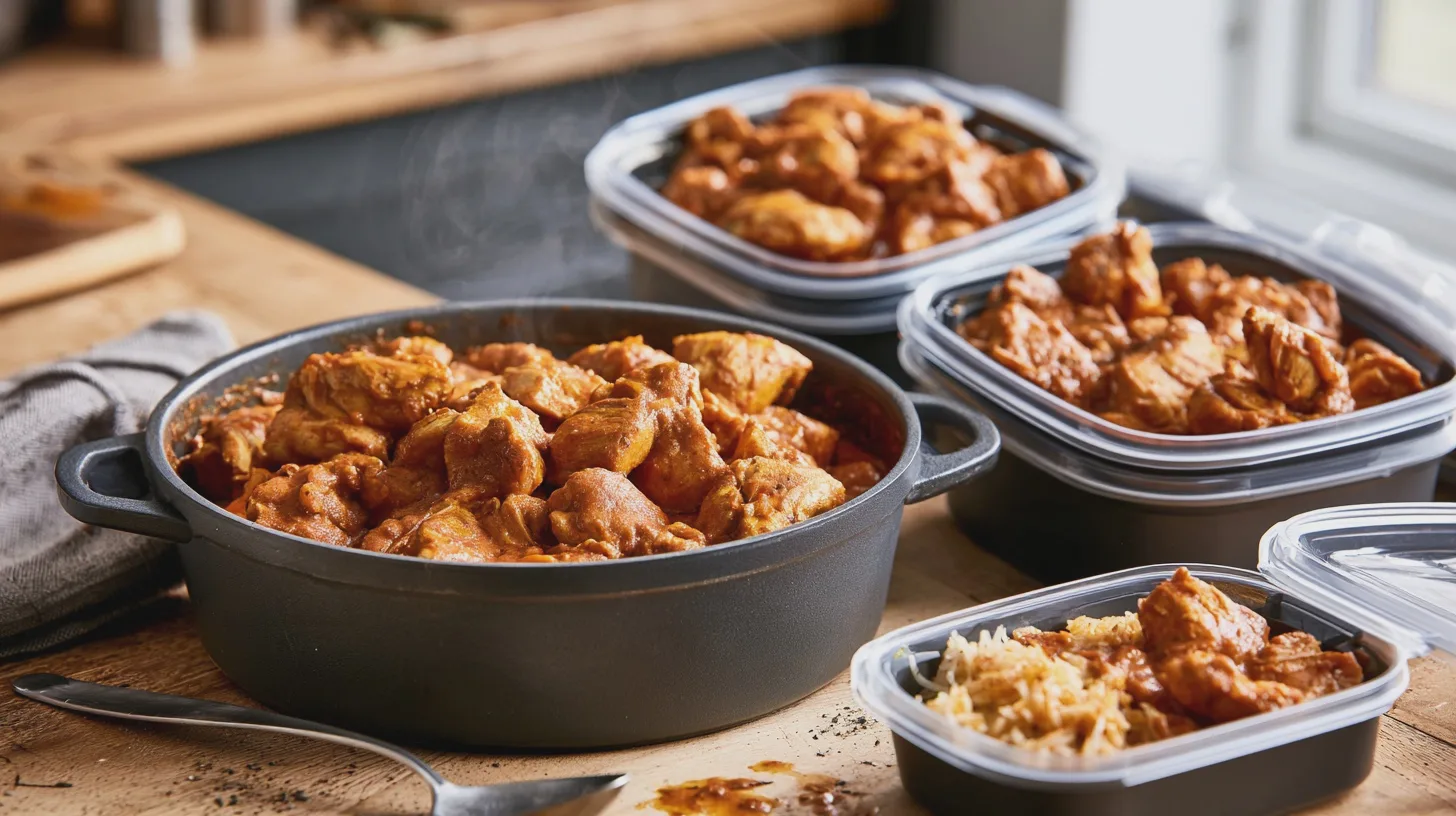
This is where the real value comes in. Once the curry is cooked, spread whatever you’re not eating into shallow tubs so it cools quickly. The Food Standards Agency’s advice is to get leftovers into the fridge within two hours and eat them within two days. Anything beyond that should go in the freezer. Label and date the lids, because nobody can tell one frozen orange tub from another in February.
Frozen curry keeps safely for months, but it tastes best within about three. Defrost tubs overnight in the fridge rather than on the worktop. If the cream has split slightly, a splash of water and a good stir when reheating will bring it back.
The FSA’s rule on reheating is simple: reheat cooked meat only once, and make sure it’s steaming hot in the middle. In a work microwave, cover the tub loosely, heat it, stir it, then heat it again so there are no cold pockets. One useful point: it’s fine to cook a fresh curry with chicken that was frozen raw and defrosted, then freeze the finished dish. Just don’t defrost and reheat the same curry twice.
Rice needs more care than the curry. The FSA warns that uncooked rice can carry spores of Bacillus cereus, which survive cooking and can produce toxins if the rice is cooled slowly. Cool any cooked rice quickly, get it into the fridge or freezer within an hour, and reheat it only once. Or do what most curry fans eventually do: freeze the curry and cook the rice fresh. It takes 12 minutes.
In short
A homemade chicken tikka masala made with marinated, charred chicken thighs, slowly cooked onions, blended tomato sauce, cream and dried fenugreek beats most takeaways. By rough supermarket sums it costs about £2 to £3 a portion. Make six portions, chill the extras within two hours, freeze what you won’t eat in two days, and reheat each tub only once until it’s steaming hot. That gives you a week of lunches better than anything in a foil tray.
Sources

Midcent Food & Drink
Angus Irvine writes about food and drink for men 45 and over who like to eat well but don't want a performance. Recipes that work on a weeknight, dinners worth the effort at the weekend, what to pour with them – wine, beer and the good alternatives – and the restaurants and pubs worth the trip. Without the fuss.
One of Midcent's writers. Spotted something? Write to angus@midcent.uk.