The best beef stew starts with the right cut and a properly browned pan. Here’s a practical recipe for tender beef, rich gravy and no last-minute fuss.
Reviewed, edited and approved by Editor-in-chief Daniel Sköld · Updated 25 October 2026
Contents
There is a particular pleasure in putting a casserole in the oven, tidying the kitchen and letting dinner improve while you do something else. Beef stew should reward patience, not demand constant attention.
This version serves four generously. It uses shin or chuck, a handful of familiar ingredients and one sensible rule: don’t mistake more liquid for more flavour.
AD
Which cut of beef makes the best stew?
Buy 1kg of beef shin or chuck, cut into roughly 4–5cm pieces. Shin has plenty of connective tissue that softens during a long, gentle cook and gives the gravy a pleasingly silky feel. Chuck, usually sold as braising steak, is an excellent alternative and may become tender sooner. Ask a butcher for either cut, or check the braising beef at a supermarket; if the pack does not name the cut, ask rather than guessing.
Keep the pieces substantial. Small cubes can fall apart before the sauce has developed, leaving you with something closer to beef paste. Trim away thick exterior sinew from shin, but do not strip every seam of fat or connective tissue: some of that is precisely why you bought it. Pat the beef dry with kitchen paper, then season it with salt and black pepper just before cooking.
You need a large, heavy casserole with a lid, preferably one that works on the hob and in the oven. It should hold the beef in a comfortable layer once the liquid is added. If you only have an ovenproof dish, brown everything in a frying pan and transfer it, scraping every browned bit across. Those bits have already done some of the work for you.
How do you get a rich gravy without a packet mix?
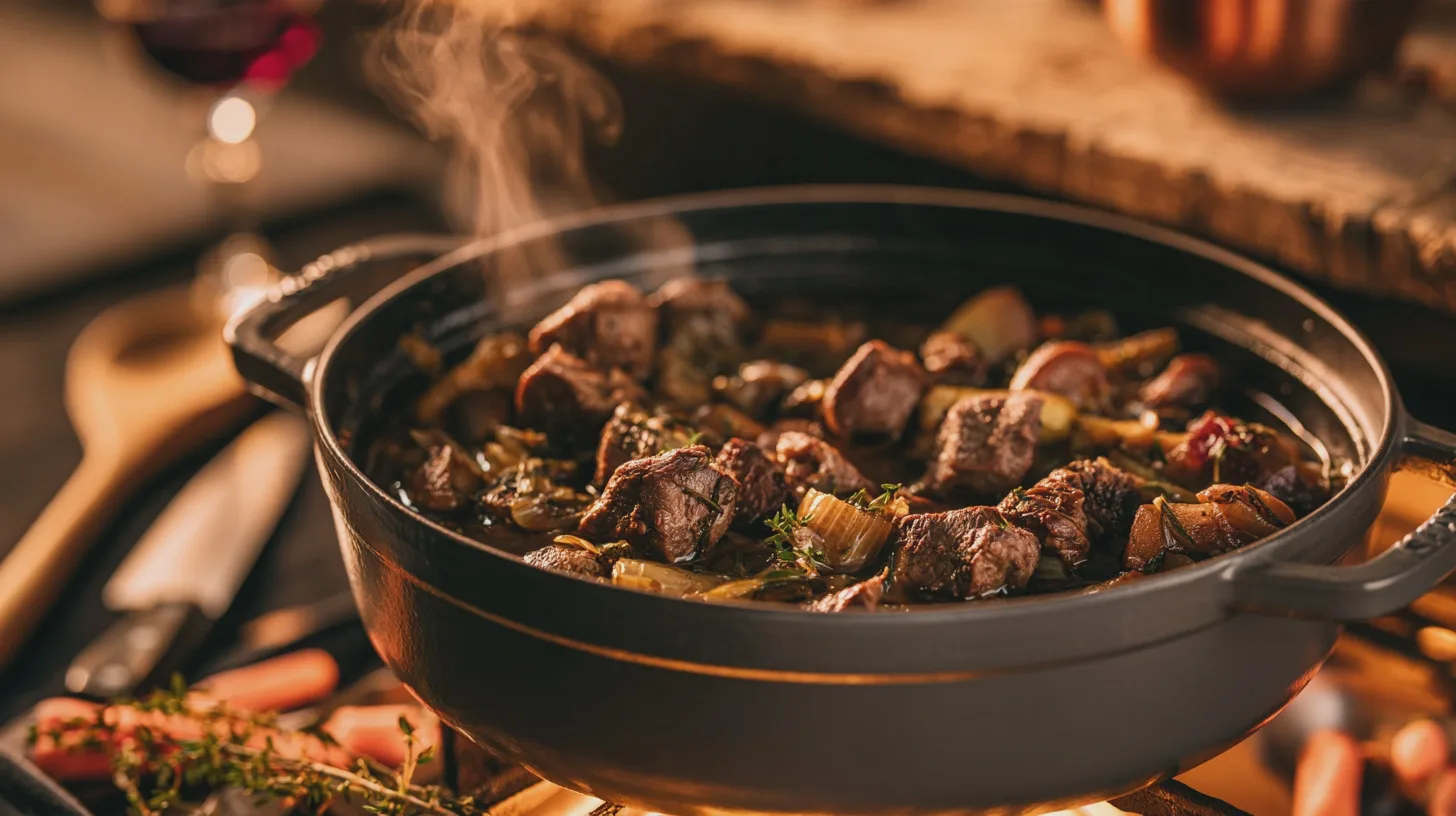
Start with heat and space. Put 2 tablespoons of vegetable or rapeseed oil in your casserole over a medium-high heat. Brown the beef in three or four batches, turning until several sides have a deep brown crust. Allow roughly 2–3 minutes per side, adjusting the heat if the pan starts to scorch. Transfer each batch to a plate. A crowded pan steams meat; a brown crust gives the sauce a head start.
The secret to a good stew is not more ingredients. It is giving the beef room to brown and enough time to soften.
Turn the heat down to medium. Add 2 chopped onions, 2 thickly sliced carrots and 2 chopped celery sticks, with another small splash of oil if the pan is dry. Cook for about 10 minutes, stirring, until the onions have softened and picked up some colour. Stir in 2 tablespoons of tomato purée for 1 minute, then 1 tablespoon of plain flour for another minute. The purée brings savoury depth; the modest amount of flour helps the finished gravy cling to the beef rather than run across the plate.
Pour in a little of your stock and scrape the base of the pan thoroughly with a wooden spoon. Add the rest to make 500ml beef stock in total, preferably reduced-salt so you can control the seasoning. Stir in 2 teaspoons Worcestershire sauce, 2 bay leaves and a few sprigs of thyme. Return the beef and any juices on its plate. The liquid should come partway up the meat, not drown it; add a little water if your pot is especially wide.
If you fancy stout, replace 150ml of the stock with 150ml stout. It brings a darker, slightly bitter note, but is optional: you can make a fine stew entirely with stock. Do not assume that alcohol disappears completely during cooking. If you are avoiding alcohol, stick with the stock and serve an alcohol-free beer or sparkling water alongside. If you do drink, the UK Chief Medical Officers advise no more than 14 units a week, spread over three or more days.
AD
How long should beef stew cook in the oven?
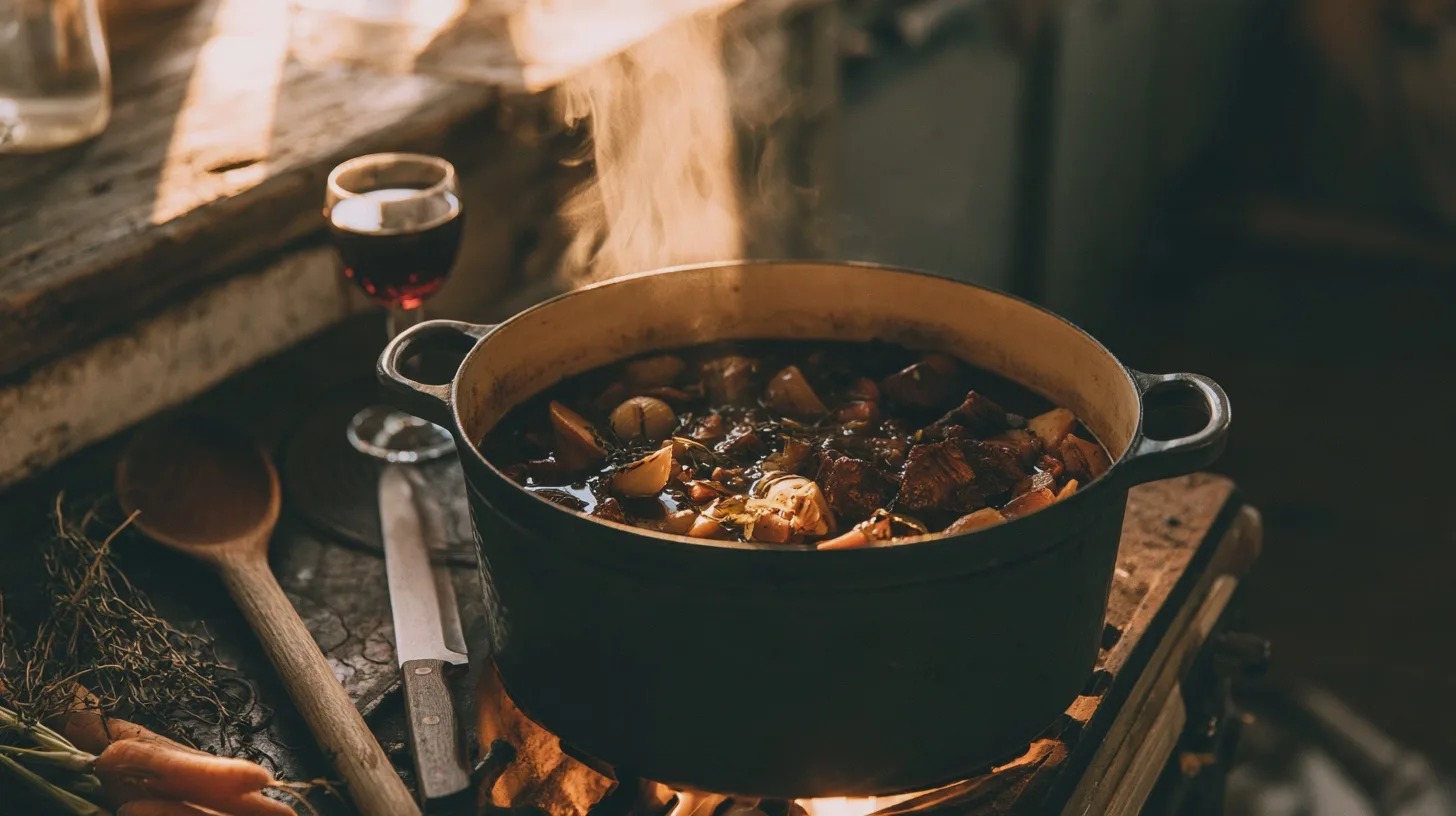
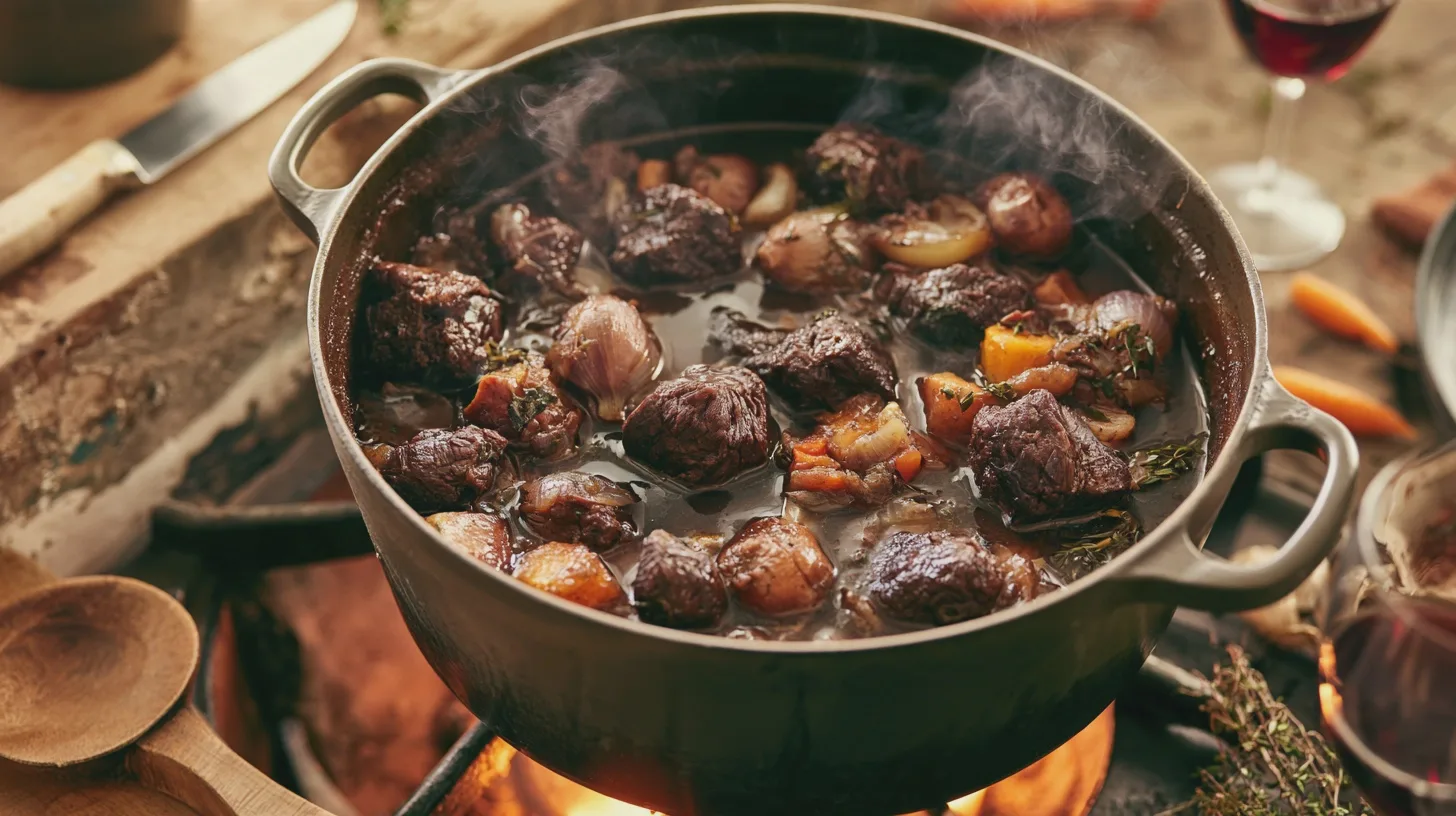
Bring the casserole to a gentle simmer on the hob, cover it and put it in an oven preheated to 160°C conventional, 140°C fan, gas mark 3. Check after 2½ hours, then every 30 minutes. Chuck may be ready around the three-hour mark; shin may need 3–3½ hours or a little longer. Timings are a guide, not a verdict. A fork should slide into a piece with little resistance, but the beef should still hold together.
Keep the lid on for most of the cooking. If the surface is bubbling hard, turn the oven down slightly; you want a quiet simmer, not a rolling boil. If the gravy threatens to dry out, add a small splash of hot water. If it looks thin when the meat is tender, take off the lid and return the casserole to the oven for 15–25 minutes. You can also lift out the beef and briefly simmer the sauce on the hob, which avoids cooking the meat past its best.
Want mushrooms? Halve 250g chestnut mushrooms, brown them separately in a hot frying pan and add them for the final 30–45 minutes. Cooking them first gives them colour; adding them late means they still look and taste like mushrooms at dinner. It is an optional extra, not a test of character.
What should you serve with beef stew?
First, taste the gravy. Add salt and pepper as needed, then try 1 teaspoon of red wine vinegar. Stir, taste again and add up to another teaspoon if the stew still seems heavy. You are not trying to make it sour. That small lift of acidity stops a rich sauce from becoming monotonous. Remove the bay leaves and thyme stalks before serving.
Mashed potatoes are the obvious partner because they catch every drop. For four people, peel about 1kg potatoes, boil until tender and mash with butter and a little warm milk. Buttered greens or steamed cabbage add colour and bite. Alternatively, serve the stew with crusty bread and a sharp green salad. Put the casserole on the table if you like; there is no prize for transferring hot gravy to a prettier dish.
This is also a useful dinner to make ahead. Let leftovers cool promptly, portion them into shallow containers and refrigerate within two hours. Eat them within 48 hours or freeze them. Reheat only the portion you need, once, until it is steaming hot all the way through, stirring so the centre heats properly. A stew you can safely bring back for lunch is a decent return on an afternoon’s patience.
In short
For a rich British beef stew, use large pieces of shin or chuck, brown them in batches and braise gently with vegetables and just enough stock at 160°C conventional, 140°C fan, gas mark 3. Cook until the beef yields to a fork, usually after about three hours, then reduce the gravy if needed and sharpen it with a little vinegar. Serve with mash and greens.
Angus Irvine writes about food and drink for men 45 and over who like to eat well but don't want a performance. Recipes that work on a weeknight, dinners worth the effort at the weekend, what to pour with them – wine, beer and the good alternatives – and the restaurants and pubs worth the trip. Without the fuss.
One of Midcent's writers. Spotted something? Write to angus@midcent.uk.
Glasgow’s gift to the nation, made properly at home: charred chicken, a silky sauce, a fraction of the takeaway price and a freezer full of weekday lunches.
Red with meat and white with fish? Not necessarily. Here’s a practical guide to choosing wine for the food you actually cook, without turning dinner into an exam.
Seven proper British comfort dinners for when the rain is coming in sideways, from Lancashire hotpot to cullen skink, plus the wine, beer and cider to pour with them.