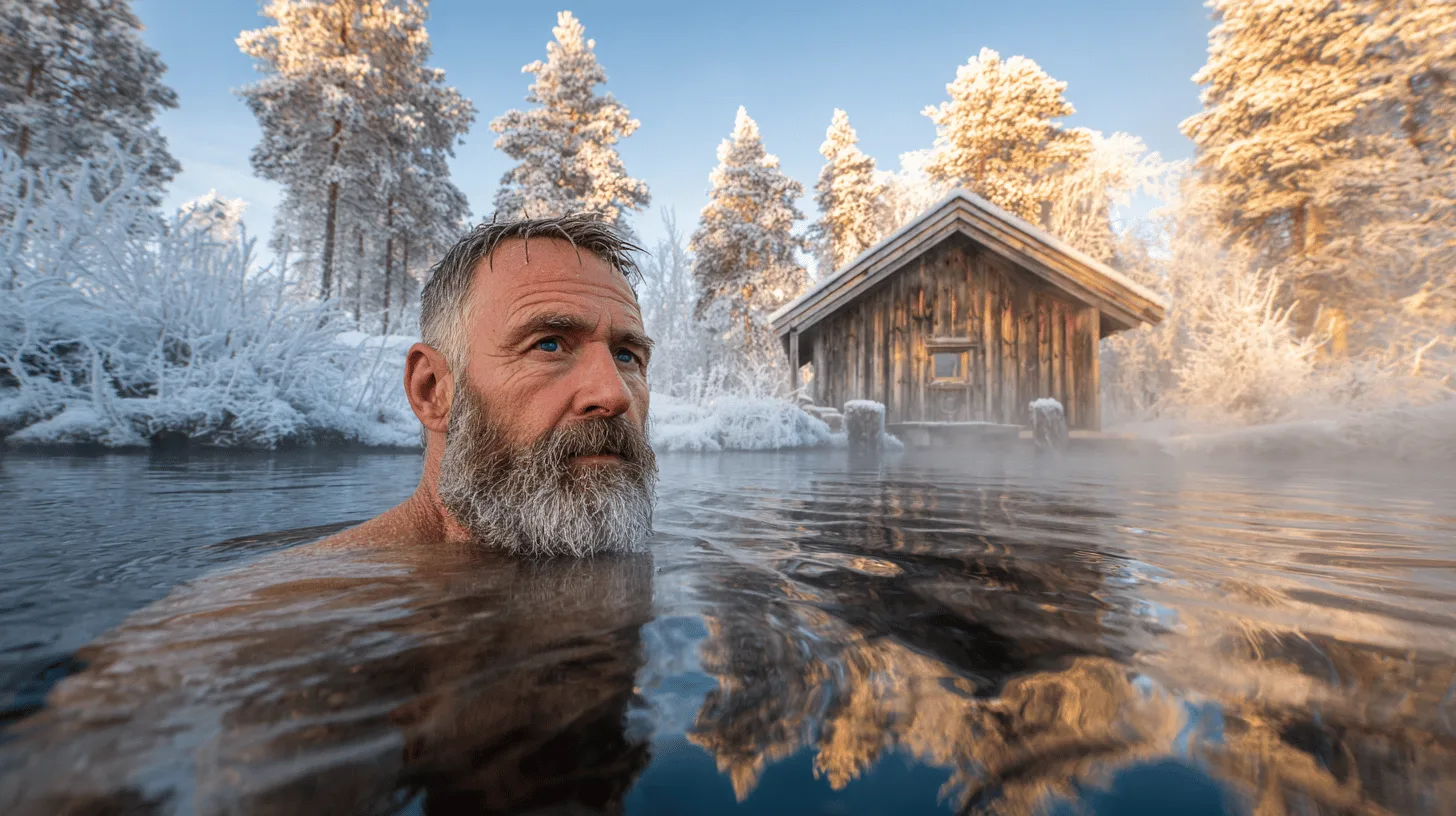
There was a time when the only men who swam in the sea in January were Boxing Day charity dippers in fancy dress, and a retired colonel in every coastal town. These days the beach car park at 7am on a February Sunday is full of people in dryrobes, flasks in hand, looking quietly pleased with themselves.
If you’re over 50 and wondering whether to join them, the honest answer is that it can be one of the best things you do for your weekend. It can also go wrong very quickly if you treat cold water like a warm pool. Here is how to get the good bits without being carried out.

What actually happens when you get in?
The first thing cold water does is take your breath away, literally. Hit water below roughly 15°C and your body triggers cold water shock: an involuntary gasp, then fast, shallow breathing you can’t control, and a sharp jump in heart rate and blood pressure. That’s the dangerous bit. Breathe in water during that gasp and you’re in trouble before you’ve swum a stroke.
The good news is that the shock passes. The RNLI’s Float to Live advice is built around this: if you go in unexpectedly or panic, lean back, let your ears go under, spread your arms and legs and float until your breathing settles. Fighting the water in that first minute is what drowns people. Waiting it out is what saves them.
Once your breathing calms, most regulars describe a strange clarity: skin tingling, head emptied of everything except the cold. Then, after you get out, the warm glow and a mood lift that can last for hours. That afterglow is the reason people come back, and it’s why the habit has spread so fast among people who never thought of themselves as swimmers.
Is cold water swimming safe after 50?
For most healthy people, yes, if you go about it sensibly. But age changes the sums. That spike in heart rate and blood pressure is no great matter for a fit 30-year-old; it’s a bigger ask if you have a heart condition, high blood pressure, or take medication that affects either. If any of that applies, or if you’ve had chest pain, fainting spells or an irregular heartbeat, talk to your GP before you get anywhere near a winter sea.
The science on the wider benefits is more modest than social media suggests. Claims about immunity, metabolism and inflammation rest mostly on small studies, and nobody should take up winter dipping as a medical treatment. What is easier to stand behind is the ordinary stuff: you’re outdoors, moving, in daylight, usually with other people, and you come home feeling better than when you left. At our age, that’s not nothing.
The cold won’t cure you of anything, but respecting it might be the most alive you feel all week.
Then there’s alcohol. A hip flask on the beach is a fine tradition, but not before you go in. Alcohol dulls your judgement and speeds up heat loss, which is precisely the wrong combination.

How do you start cold water swimming without getting hurt?
Start in summer and keep going. The best way to cope with a 6°C sea in January is to have been swimming in it every week since August, so your body adjusts as the temperature drops. Turning up cold, so to speak, on New Year’s Day is how people get hurt.
Never swim alone. Join a local group: most coastal towns and plenty of lakes now have informal swimming clubs, often found through Facebook or by asking at the beach. They know the tides, the currents, the safe entry points and who has the spare towel. Tell someone on shore when you expect to be out.
Get in slowly, wade in, splash your face and neck, and control your breathing before you put your shoulders under. Keep early dips very short: a couple of minutes is plenty to begin with. Stay within your depth and close to the shore. Your arms and hands lose strength as they cool, so the swim back always feels further than the swim out. Get out before you think you need to.
The cold catches up after you get out. Your core temperature can keep dropping for a while after you’re dry, which people call the afterdrop. Dry off and dress quickly, warm layers and a hat first, then a hot drink. Resist a scalding shower straight away; warm up gradually. If you’re still shivering hard or fumbling with your buttons, you stayed in too long. Do less next time.
What kit do you really need?
Less than the marketing suggests. A brightly coloured silicone hat and a tow float are the two things worth buying first, because being seen by boats, paddleboarders and anyone watching from shore matters more than anything else. A tow float is the price of a decent takeaway and doubles as somewhere to rest.
Neoprene gloves and socks make winter swimming far more bearable, since hands and feet go first. Water shoes help on shingle and rocky entries. A wetsuit is a matter of taste: purists swim in trunks, but there’s no shame in neoprene, and it buys you time in the water. For afterwards, all you really need is a big towel, loose clothes you can pull on with numb fingers, a woolly hat and a flask. The changing robe is lovely, but an old fleece does the same job.
Buy from a proper outdoor or swim shop, or from mainstream retailers like Decathlon or Go Outdoors, and try neoprene on, because sizes vary wildly between brands.
Where can you legally swim outdoors in the UK?
This is where the four nations go their separate ways. In Scotland, the Scottish Outdoor Access Code gives you a right of responsible access that includes swimming in most lochs and rivers, so long as you respect other users, the land and wildlife. In England, Wales and Northern Ireland there’s no general right to swim in inland water. Many rivers and lakes are privately owned, and access depends on the landowner. The sea is generally fair game, but take the signs seriously.
If you want an easier start, try an outdoor lido or a managed open water venue. Many lidos stay open through the winter, some are unheated, and they come with lifeguards, changing rooms and no currents. Lots of managed lakes run supervised sessions and introductory courses, which is no bad place to learn how your body copes before you try the open sea.
Wherever you go, check the water. Designated bathing waters are tested through the summer season by the Environment Agency in England, SEPA in Scotland, Natural Resources Wales and DAERA in Northern Ireland. Sewage overflows are more likely after heavy rain, so stay out for a day or two afterwards. Cover cuts, avoid swallowing river water and see a doctor if you get flu-like symptoms after an inland swim, because leptospirosis, or Weil’s disease, is rare but serious. Check tide times and the forecast, and respect red flags and rip currents. If you see someone in trouble at the coast, call 999 and ask for the Coastguard.
In short
Cold water swimming can be a superb habit after 50: it gets you outdoors, gets you moving and gives you a mood lift that lasts for hours, but its real health benefits are smaller than the hype. The dangers are real, so see your GP first if you have heart or blood pressure problems, never swim alone, keep dips short and learn to float through cold water shock. Start in summer and keep going into winter, wear a bright hat and a tow float, and know your local rules and water quality before you get in.
Sources

Midcent Home & Leisure
Alistair Ives writes about the home and the weekend for men 45 and over: DIY, renovation, the garden, the outdoors and the hobbies worth the time. What a job really costs, what you can do yourself, and when it's worth paying someone who knows.
One of Midcent's writers. Spotted something? Write to alistair@midcent.uk.