Reviewed, edited and approved by Editor-in-chief Daniel Sköld · Updated 23 October 2026
Contents
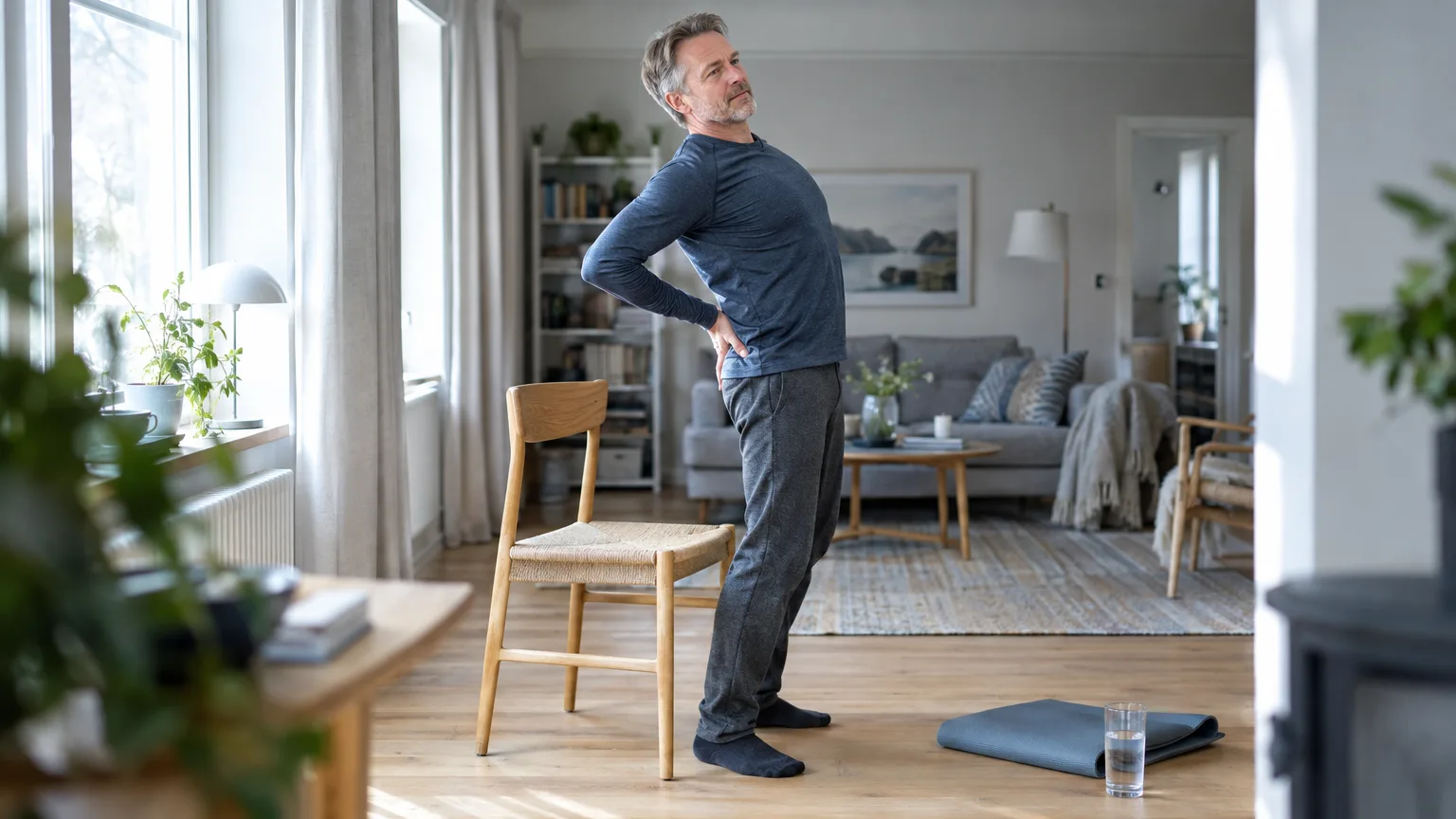
You get out of the car and unfold yourself in stages. Or you wake up feeling as though someone replaced your lower back with a plank overnight. At 45, 55 or 64, it is tempting to call this ‘just getting older’.
Usually, a stiff back is not a sign of something dangerous. But age is not an explanation for every new symptom. The useful questions are what changes when you move, whether the problem is settling, and whether anything else has changed alongside it.
AD
Why is my back stiff in the morning?
Back pain and stiffness often have no clear single cause. A muscle strain may be involved; sometimes the trouble follows an awkward lift, a long spell in one position or an unusually enthusiastic weekend in the garden. And sometimes there is no satisfying answer at all. Your back does not owe you an itemised receipt.
Notice the pattern rather than trying to name the damaged part. Does the stiffness ease as you potter about? Is it worse after sitting and better once you have walked? What can you still do, and what is becoming difficult? Most episodes of ordinary back pain improve within a few weeks, although they can return.
Stiffness that is particularly troublesome in the morning or at night, wakes you repeatedly, and improves with exercise rather than rest deserves a conversation with your GP, especially if it persists. That pattern can sometimes point towards inflammatory back pain. It does not mean you have it: symptoms alone cannot make a diagnosis, and inflammatory spinal conditions often begin before midlife. It does mean ‘I’m getting old’ is not quite enough of a plan.
If pain travels from your back into one leg, perhaps with tingling or numbness, tell a clinician about that too. It may change the advice you need. Pain in one leg is not, by itself, the same emergency as the warning signs involving both legs, your bladder or your bowel described below.
What actually helps a stiff back?
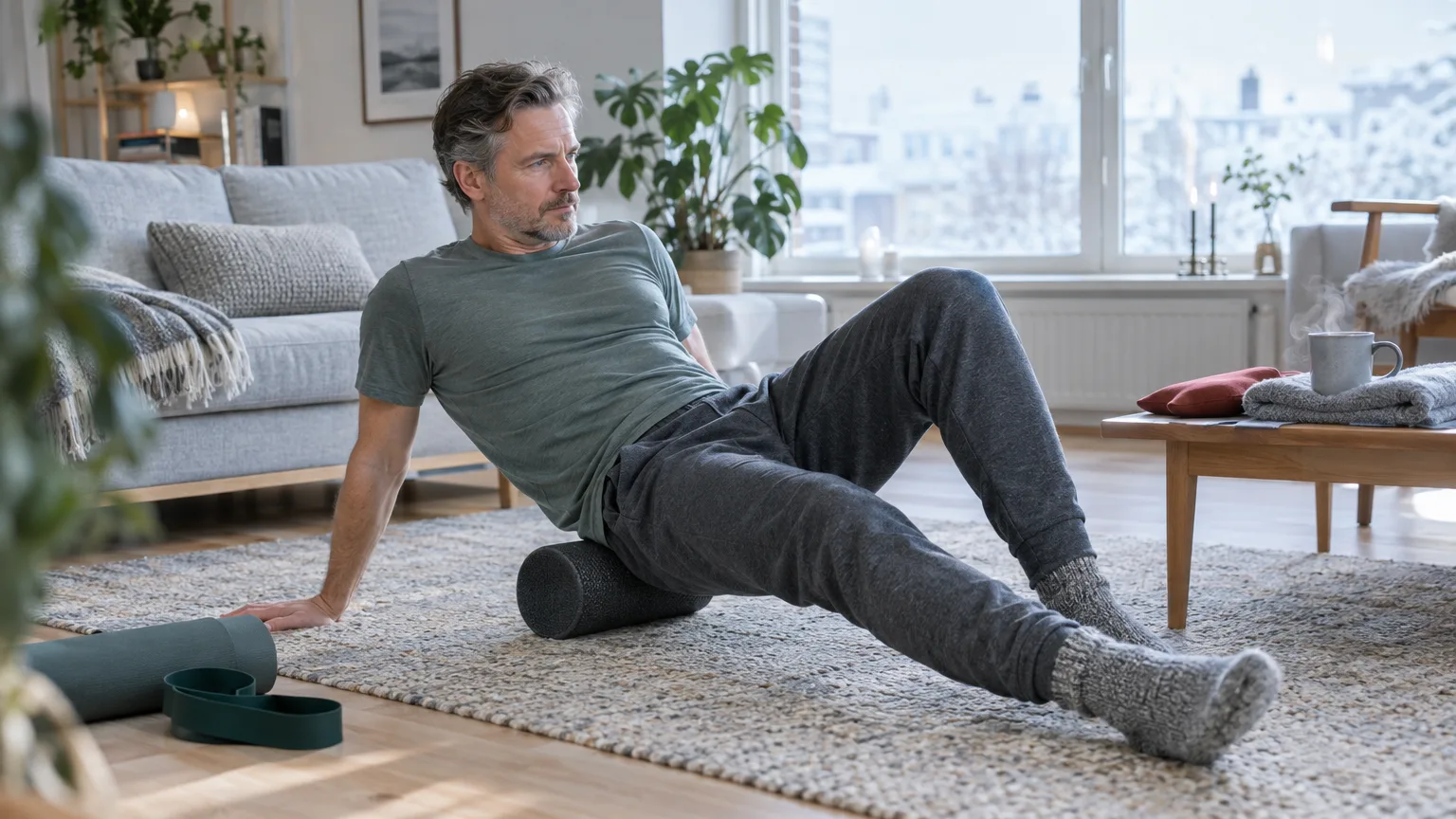
Start with movement you can tolerate. A short walk, gentle everyday activity and changing position regularly are more useful first moves than waiting in bed for your back to become perfect. You do not have to prove anything to a step counter. Begin comfortably and build up as things settle.
Try gentle stretches if they feel helpful, but do not force yourself through worsening pain. Walking, swimming, yoga or Pilates may suit you; none is compulsory. If an exercise makes the pain worse, stop and ask a GP or physiotherapist for advice. You can also use a wrapped heat pack for stiffness or muscle spasm, or a wrapped cold pack if that feels better. Neither is a cure, but comfort counts.
It may help to break up long sitting spells and return gradually to normal jobs rather than attempting an all-or-nothing comeback. If a heavy task repeatedly sets you back, adapt it while you recover. ‘Stay active’ is not an instruction to haul a wardrobe upstairs through gritted teeth.
A stiff back usually needs sensible movement, not a heroic stretch or a week in bed.
What about tablets, massage and scans? Ask a pharmacist or GP which pain relief is suitable for you: anti-inflammatory medicines such as ibuprofen are not appropriate for everyone, particularly when other conditions or medicines are involved. NICE does not recommend paracetamol on its own for low back pain. It considers massage or other manual therapy as part of a package that includes exercise, not as a substitute for it.
An MRI is not the standard starting point for uncomplicated lower-back pain. NICE advises against routinely offering scans in non-specialist care; a specialist may consider one if the result is likely to change treatment. That is not the NHS being stingy with magnets. It is a reminder that the right assessment matters more than obtaining a picture.
AD
When should I speak to a GP about back stiffness?
Book an appointment if your back is not improving after a few weeks of home care, keeps stopping you doing ordinary things, or is becoming hard to cope with. Do not wait for a particular deadline if you are worried. A GP can assess the wider picture and discuss options such as physiotherapy.
Get medical advice sooner if you have unexplained weight loss, a lump or change in the shape of your back, pain that is worse at night or does not improve with rest, or pain high up between your shoulder blades. Mention any history of cancer. These features do not automatically mean something serious is wrong, but they should not be filed under ‘probably the office chair’.
If you feel feverish, shivery or generally unwell with back pain, or severe pain starts suddenly or worsens quickly, ask for an urgent GP appointment or urgent advice. In England, Scotland and Wales you can call 111 when you need urgent help and cannot reach your GP. In Northern Ireland, contact your GP or your local GP out-of-hours service; do not assume the 111 arrangements elsewhere in the UK apply there.
For non-emergency help, access to physiotherapy varies by area. You may be able to refer yourself to an NHS musculoskeletal service in parts of England or Wales. In Scotland, self-referral depends on your health board; in Northern Ireland, ask your GP practice about local options. If you have the emergency symptoms below, skip the physiotherapy queue entirely.
Which back symptoms mean A&E now?
Get immediate help if back pain comes with new numbness around your genitals or anus; trouble starting to pee, loss of bladder or bowel control; or pain, tingling, weakness or numbness in both legs. New changes in sexual sensation or function alongside back pain also need emergency assessment. These can be warning signs of pressure on nerves that control bladder, bowel and sexual function. It is uncommon, but delaying assessment can have lasting consequences.
Back pain with chest pain, or pain that began after a serious accident, also needs immediate attention. Call 999 or go to A&E; if you need an ambulance, call 999. Do not drive yourself to A&E. You do not need to work out which spinal condition you might have before asking for help.
Be clear about what changed and when: ‘I can’t feel the skin around my bottom as I usually do’ is more useful than ‘my back’s playing up’. Embarrassing details about peeing or erections are worth saying out loud. The clinician has heard them before, and this is exactly when they matter.
In short
Most back stiffness improves with gentle movement and time, but speak to a GP if it persists, disrupts daily life or comes with other concerning changes. Seek urgent advice if you are unwell or the pain worsens rapidly. New bladder or bowel problems, numbness around the genitals or anus, symptoms in both legs, chest pain or a serious accident call for immediate help through 999 or A&E.
Adrian Irving writes about health for men 45 and over who would rather do something than worry. Training, weight loss, sleep, cholesterol and blood tests, heart health, testosterone, the prostate, mental health and your sex life – what the evidence says, what's worth trying, and when it's time to see your GP.
One of Midcent's writers. Spotted something? Write to adrian@midcent.uk.
Muscle loss in midlife is not a sentence to spend your sixties avoiding stairs. Here’s how to train, eat and spot changes worth discussing with your GP.