Reviewed, edited and approved by Editor-in-chief Daniel Sköld · Updated 23 October 2026
Contents
Your trousers have become oddly demanding. The scales, meanwhile, insist you weigh much the same as you did a few years ago. It would be tempting to blame the trousers.
But if your waist is growing in midlife, it is worth paying attention. Not because every soft middle is a medical crisis, but because waist size can reveal a risk that body weight alone misses. All you need to make a useful first check is a tape measure.
AD
Is my belly fat dangerous?
A bit of softness around your middle does not tell you whether you have a health condition. Nor can you decide that you are fine because you can still climb the stairs. High blood pressure and high cholesterol often have no obvious symptoms.
Where you carry fat matters as well as how much you weigh. Some abdominal fat sits beneath the skin; some is deeper inside, around your organs. A tape measure cannot tell you exactly how much of either you have. What it can do is give you a practical estimate of abdominal fat and the health risks associated with it. NICE links a larger waist relative to height with increased risk of type 2 diabetes, high blood pressure and cardiovascular disease.
This is why a familiar number on the bathroom scales is not a complete answer. Body mass index, or BMI, relates your weight to your height, but it does not show where weight sits. It can also be less useful if you have a lot of muscle. NICE advises using waist-to-height ratio alongside BMI for adults with a BMI below 35, rather than treating either number as a verdict.
The guideline applies the same waist-to-height categories across sexes and ethnicities. That does not mean everyone has the same overall risk: NICE also notes that people from several Asian, Middle Eastern, Black African and African–Caribbean backgrounds can develop weight-related health risks at a lower BMI. Your family history, smoking, blood pressure and cholesterol matter too. The tape is a prompt to look more closely, not a crystal ball.
How do I measure my waist properly?
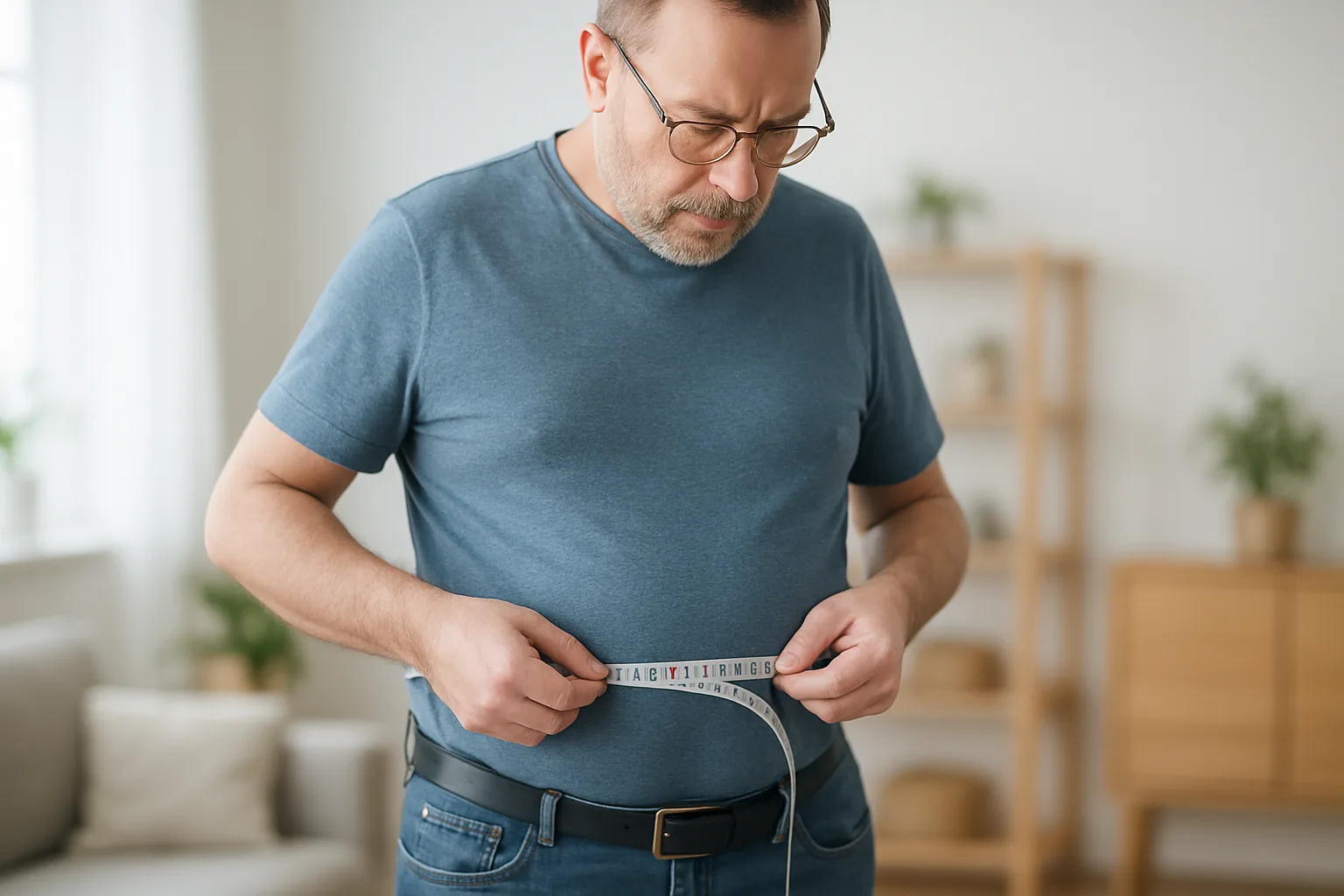
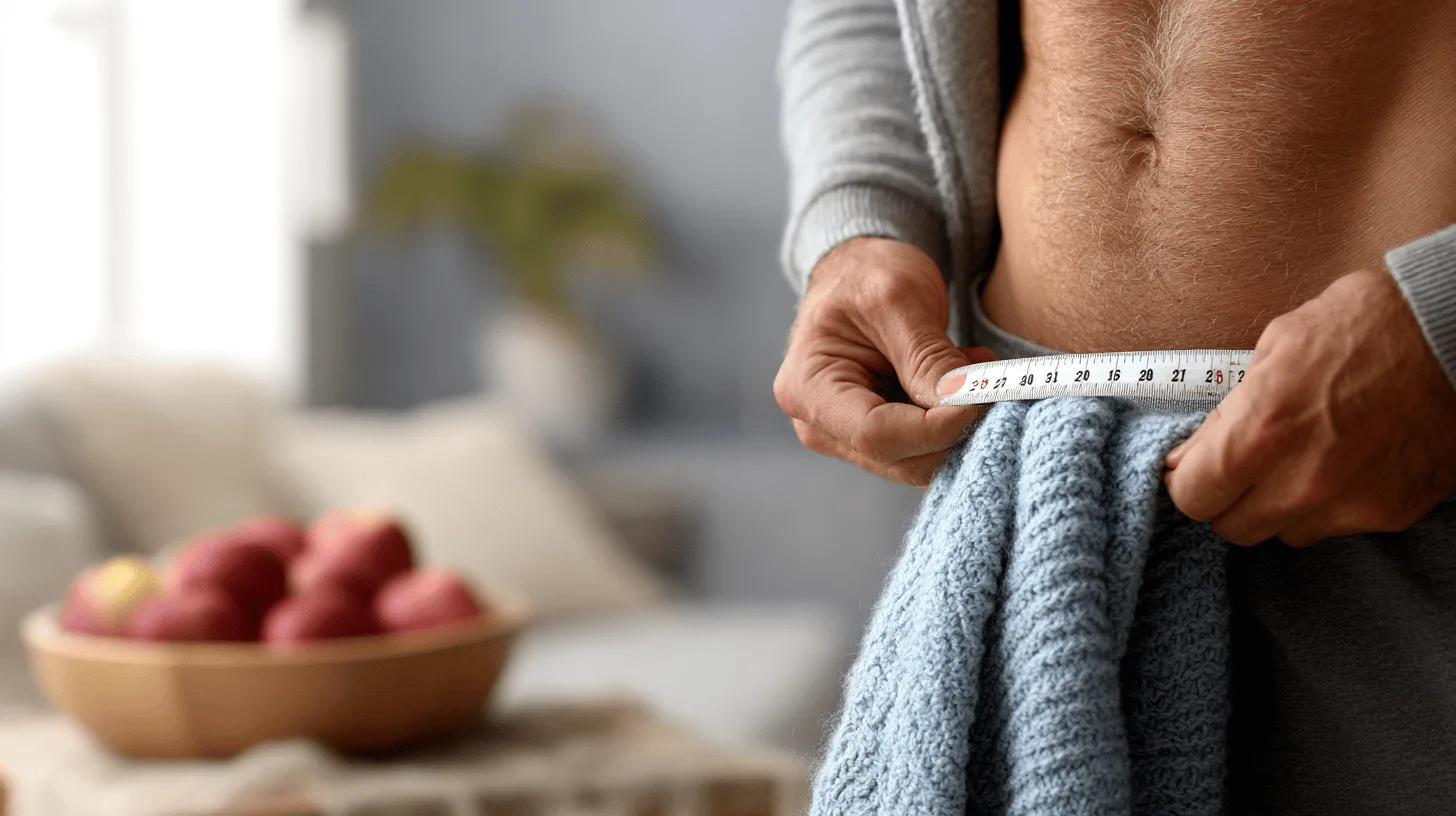
Use a flexible tape measure and stand relaxed. Feel for the bottom of your ribs and the top of your hips, then measure halfway between them, usually just above your belly button. Keep the tape level and snug without pulling it into your skin. Breathe out normally. Do not suck your stomach in; the tape measure has not come to admire your posture.
Write down your waist and height in the same units, then divide your waist by your height. If you are 178 cm tall, half your height is 89 cm. NICE’s simple aim is to keep your waist below that halfway mark. The NHS has a waist-to-height calculator if you would rather leave the division to someone else.
Your waist is a useful warning light, not a diagnosis or a judgement on your appearance.
A ratio from 0.5 to 0.59 indicates increased risk associated with abdominal fat; 0.6 or above indicates a further increase, according to NICE. These are risk categories, not a line between healthy and ill. Being below 0.5 is reassuring about this particular measure, but it does not cancel out other risks. Equally, being above it is a reason to investigate, not to panic or order an expensive body scan.
Measure the same way when you check again so you can compare like with like. You do not need to turn it into a daily referendum on your worth. If your measurement worries you, a pharmacist or GP practice can help you put it in context.
AD
Can I lose belly fat without endless sit-ups?
Yes, but not by choosing where fat comes off. Sit-ups can strengthen your abdominal muscles; they will not selectively remove the fat over them. The British Heart Foundation’s advice is less glamorous and more useful: reducing overall body fat through changes you can maintain is what helps reduce fat around your middle.
Start with the parts of your routine that actually happen. If most lunches are eaten at a desk, could you take a brisk walk afterwards? If dinner tends to arrive with a second helping by default, try serving once and giving yourself time to decide whether you are still hungry. Build meals around vegetables, fruit and other filling foods rather than relying on willpower when you are ravenous. There is no need to declare war on bread or buy a supplement with a photograph of an abdomen on the tub.
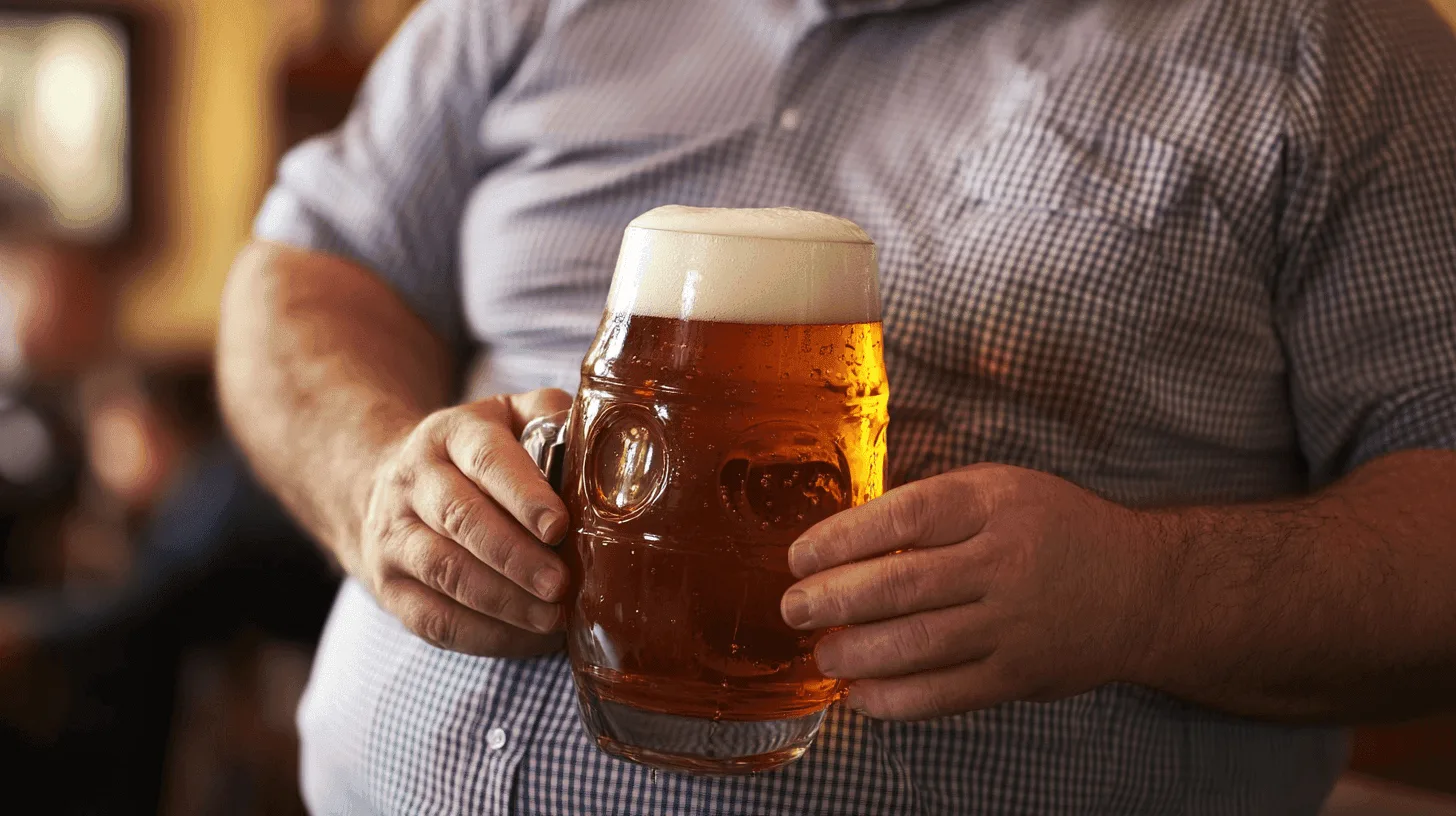
Drinks count as well. Beer is not uniquely capable of creating a belly, but alcohol contains calories, and the extras alongside it are easily overlooked. If drinking has become the automatic end to every working day, cutting back is a sensible place to start. You do not have to make every change in the same week.
For adults aged 19 to 64, the NHS recommends at least 150 minutes of moderate activity a week, such as brisk walking or cycling, plus activities that strengthen the major muscle groups on at least two days. Gardening, resistance bands and carrying heavy shopping can count as strengthening work. The aim is not to train like the person you were at 25; it is to find activity you will still be doing next month. If you have a medical condition, concerns, or have not exercised for some time, ask your GP what is suitable before stepping up.
When should I get a proper health check?
If your waist is at least half your height, arrange a conversation with your GP practice or pharmacist rather than trying to diagnose yourself from one measurement. They can help assess the bigger picture, including blood pressure, cholesterol and whether a blood sugar test is appropriate. Do the same if your waist is changing and you have a family history of heart disease or type 2 diabetes. You need not wait for a particular number before asking about a concern.
In England, eligible adults aged 40 to 74 are offered a free NHS Health Check every five years. It covers cardiovascular risk and usually includes height, weight, waist, blood pressure and cholesterol measurements. Eligibility excludes people who already have certain diagnosed conditions or are receiving some relevant treatment; if that is you, ask your existing care team about reviews instead. If you think you are eligible but have not been invited, contact your GP practice or local council.
That five-year invitation is an England programme, not a UK-wide promise. In Scotland, heart-health checks and support are provided through Scottish services; in Wales, provision can depend on your local health board; and in Northern Ireland, heart-health and community checks are available through local services. Wherever you live, your GP practice can tell you what assessment and support you can access. A growing waist deserves curiosity and, sometimes, a few tests — not a lifetime of breathing in for photographs.
In short
A midlife belly is not automatically dangerous, but a waist measuring half your height or more is a useful sign to check your wider health risks. Measure halfway between your ribs and hips, then discuss concerns with your GP practice or pharmacist. Lasting changes to food, drink and activity matter more than sit-ups or a perfect number on the scales.
Adrian Irving writes about health for men 45 and over who would rather do something than worry. Training, weight loss, sleep, cholesterol and blood tests, heart health, testosterone, the prostate, mental health and your sex life – what the evidence says, what's worth trying, and when it's time to see your GP.
One of Midcent's writers. Spotted something? Write to adrian@midcent.uk.
There is no guaranteed way to prevent dementia. But your blood pressure, hearing, daily movement and social life give you more useful places to start than brain-training apps.
A beer belly isn’t a myth, but beer isn’t the only culprit either. What a pint really costs you in calories, why it settles on your middle, and what to do.
Weight-loss injections can reduce more than body fat. Here is what the evidence says about muscle loss, and how to protect your strength without living in a gym.