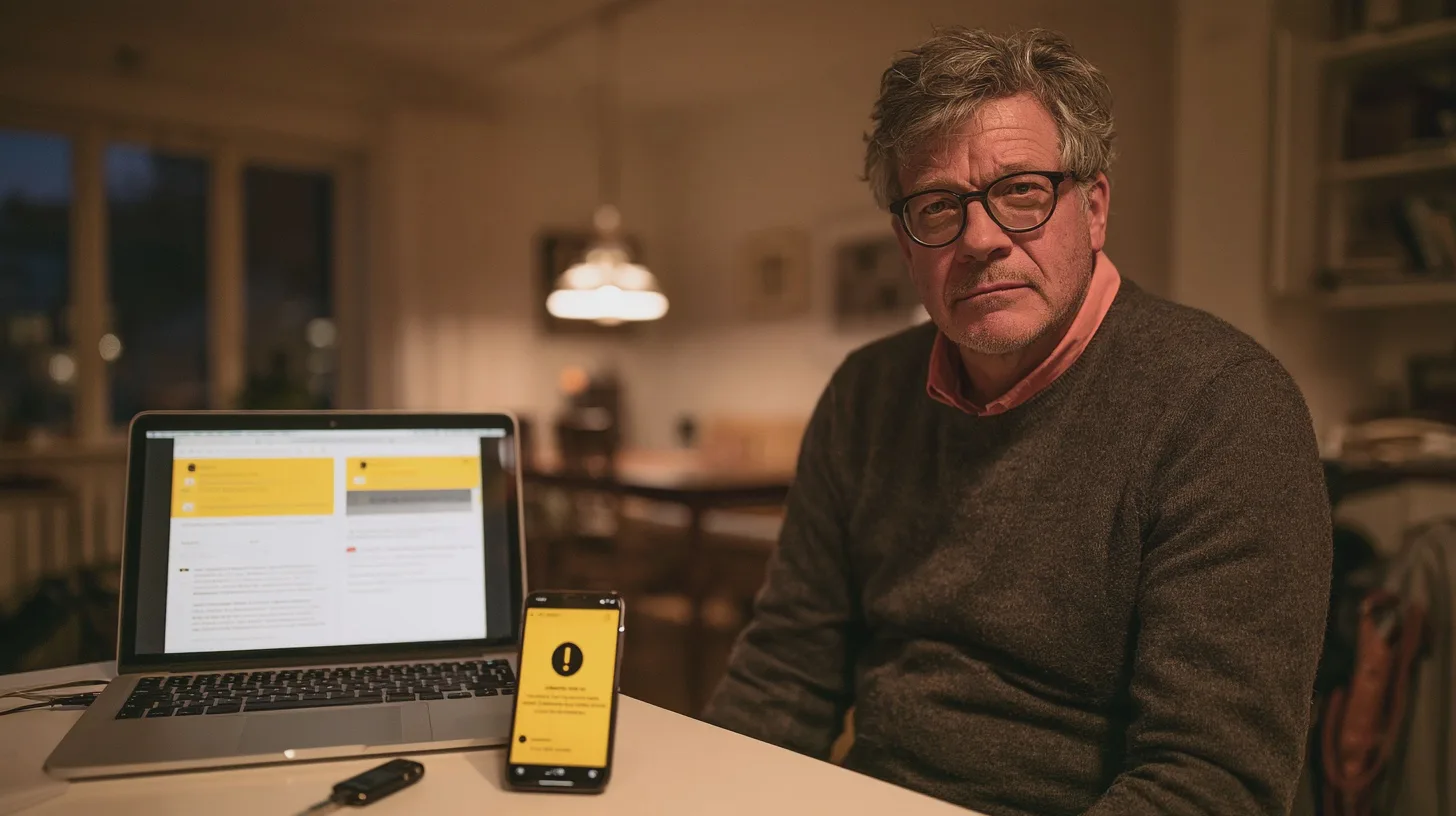
Think back to your twenties. You probably had a crowd: blokes from work, the five-a-side lot, the friend you could ring at midnight without needing a reason. Now count the people you’d phone if something went badly wrong this weekend. If you got stuck at two, you’re far from the only one.
Men don’t usually make a decision to drop their friends. Mortgages, children, careers, divorces and house moves wear them away bit by bit. It matters more than you might think, because loneliness isn’t just a mood. It’s a health risk, and you can do something about it.
Is loneliness actually bad for your health?
Yes, and the evidence is stronger than you might expect. NHS Every Mind Matters says that loneliness which is very severe or lasts a long time may raise the risk of physical conditions such as dementia, and of mental health problems including stress, anxiety, low mood and depression.
Your heart comes into it too. A 2016 review in Heart, a journal from the BMJ group, pooled long-term studies and linked loneliness and social isolation to a roughly 29% higher risk of coronary heart disease and a 32% higher risk of stroke. Larger reviews have also tied weak social connections to a higher chance of dying early, on a scale comparable to well-known lifestyle risks.
Now the caveats. Most of this research is observational. It shows that lonely people tend to have worse health, but it can’t fully prove that loneliness is the cause. People who are ill or depressed often withdraw, and lonely people may also sleep badly, drink more and move less. Researchers try to adjust for that, but they can’t adjust for everything.
Still, the pattern turns up again and again across different countries and study designs. You’d be unwise to shrug it off.
Why do men lose friends in midlife?
Women tend to keep friendships going by talking. Men tend to keep them going by doing things together: the Sunday league, the band, the after-work pint, the shared project. The friendship rests on the activity. When the activity goes, the friendship often goes with it, and nobody makes the call to set up something new.
Midlife takes those activities away one after another. Knees stop you playing football. The kids’ football that gave you touchline mates ends when they grow out of it. Redundancy, early retirement or working from home takes away colleagues. A divorce can split the friends down the middle, and many men find their wife was the one running the social diary all along.
The NHS lists living alone, working alone, retirement, illness and disability among the common causes of loneliness. Plenty of men in their fifties tick several of those boxes at the same time.
It’s also worth knowing that loneliness isn’t the same as being alone. You can feel isolated in a busy office or a full house if nobody there really knows what’s going on with you. Equally, a man who lives alone but has a few solid friends may be doing fine.
You don’t need a big gang. One or two people you’d actually phone in a crisis make all the difference.

How do you make new friends after 50?
The awkward truth is that adult friendships rarely happen by accident. You have to set them up, and that feels odd at first. Here’s what tends to work.
Do something with other people. The idea of shoulder-to-shoulder friendship exists for good reason. Plenty of men find it easier to chat while fixing a bike or walking a trail than sitting face to face over coffee. A walking group, a running club, a choir, a local history society, a volunteer conservation group or a Men’s Shed gives you a reason to show up that isn’t simply wanting company. Men’s Sheds are community workshops where men make, mend and natter, and they now run across all four UK nations.
Go to the same thing regularly. Friendships build up through repeated, low-key contact. Going to the same quiz night every Thursday for three months will do more for you than six different one-off events. People get to know you because you keep turning up.
Say yes more often. When a neighbour suggests a pint or a former colleague mentions a gig, the answer you’d like to give is probably no. Try yes a few more times than feels natural.
Get back in touch with old friends. It’s usually easier to revive an old friendship than to build a new one from scratch. A message along the lines of “Saw this and thought of you, fancy a catch-up?” costs nothing. Most people are pleased to hear from you and wish they’d sent it first.
Start small. NHS inform in Scotland suggests stepping back from the idea that you need a big circle of close friends. Begin with small things, like chatting to the person behind the counter, and work up to joining a group or club.
Watch your crutches. The NHS warns against using alcohol, gambling, cigarettes or drugs to deal with loneliness, because all of them can make your mental health worse. The same goes for losing whole evenings to your phone. It can feel like company, but it doesn’t do much for you.
Can your GP help with loneliness?
More than most men realise. Many GP practices in England have social prescribing link workers. They’re not clinicians, but their job is to connect people with local groups, volunteering, activities and practical support. You can usually ask at reception to be referred to one, so you don’t need to sit in front of a doctor and explain that you’re lonely. Scotland, Wales and Northern Ireland have similar community link schemes, though how they’re organised and what’s on offer depends on where you live.
If loneliness has turned into low mood, anxiety or poor sleep that won’t lift, book an appointment with your GP. In England you can also refer yourself to NHS Talking Therapies without going through your GP. In Scotland, NHS inform lists local mental health support, and in Wales NHS 111 Wales can point you to services.
If you need to talk to someone right now, Samaritans answers at any hour on 116 123, and the call is free. For urgent mental health help, call NHS 111 or ask for an urgent GP appointment. If you’re in immediate danger or worried you might act on thoughts of harming yourself, call 999 or go to A&E.
Be the one who rings
Last thing. A good chunk of the men you know are probably feeling the same and waiting for someone else to get in touch first. They’re fine at work but have nobody to talk to properly at the weekend.
So be the one who makes the call. Set a recurring reminder to message someone every week. Organise the curry. Start a monthly walk. That’s not being needy. Someone has to organise it, and it may as well be you.
In short
Long-lasting loneliness is linked to a higher risk of heart disease, stroke, depression and dementia. Men in midlife are especially exposed, because work, sport and family routines that kept friendships going tend to fall away. The fix is unglamorous but works: join something you can attend regularly, revive old friendships, say yes more often and ask your GP practice about social prescribing. If low mood sets in, talk to your GP or call Samaritans on 116 123.
Sources

Midcent Health
Adrian Irving writes about health for men 45 and over who would rather do something than worry. Training, weight loss, sleep, cholesterol and blood tests, heart health, testosterone, the prostate, mental health and your sex life – what the evidence says, what's worth trying, and when it's time to see your GP.
One of Midcent's writers. Spotted something? Write to adrian@midcent.uk.