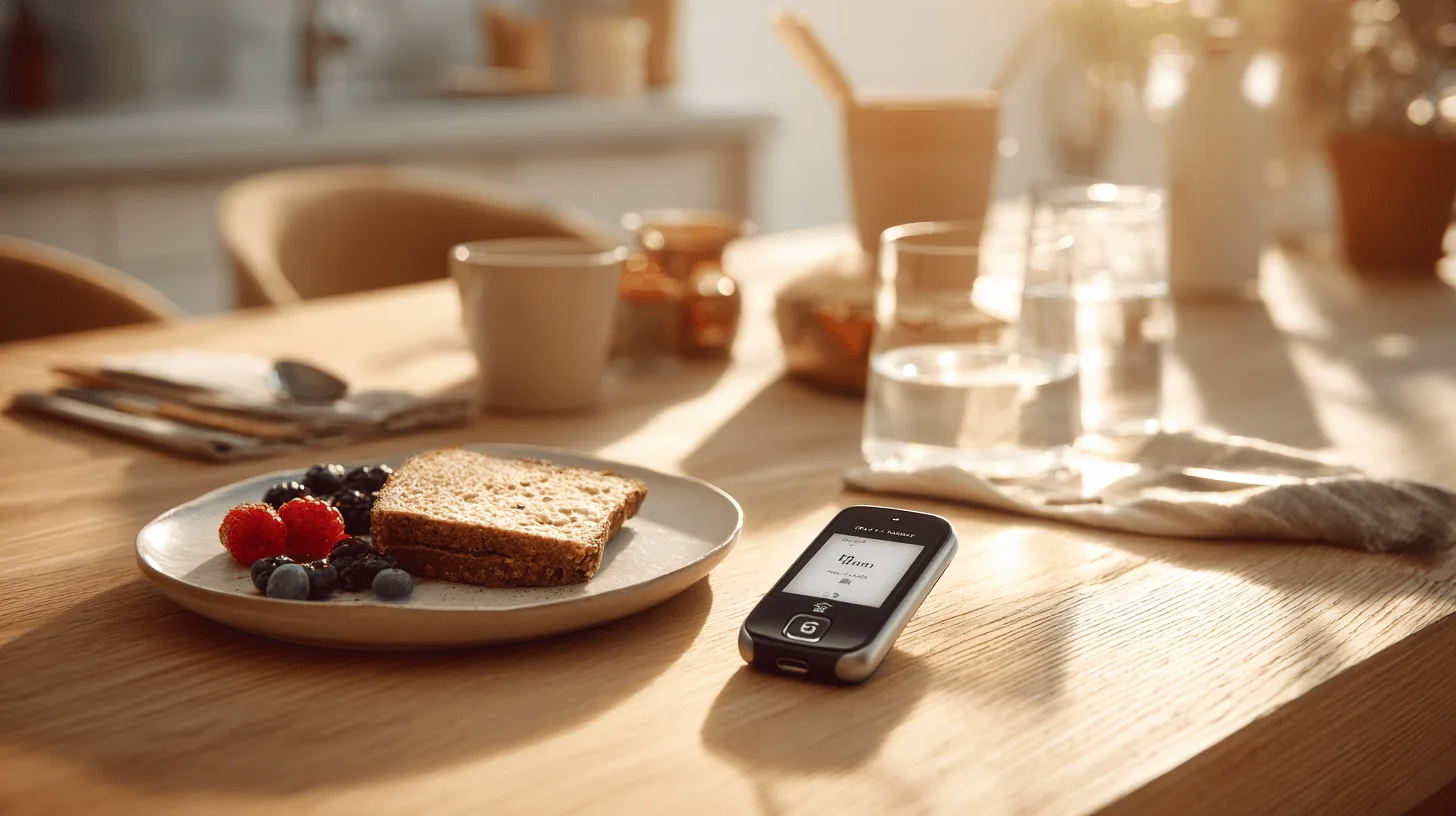
You know your car’s MOT date. You may even know your resting heart rate, thanks to the watch your daughter bought you. But ask most men in their fifties for their blood sugar and you get a blank look, then a joke about biscuits.
That’s a problem, because raised blood sugar is very good at keeping quiet. It can take years to show any symptoms, and by then it may already have started damaging your blood vessels. The good news is that finding out takes one blood test, and if you catch it early you can do a lot about it.

Why doesn’t high blood sugar cause symptoms?
Blood sugar creeps up slowly. Your body gets less good at using insulin, the hormone that moves glucose out of your blood and into your cells, so the level drifts higher year by year. There’s no single day when it goes wrong.
NHS inform, Scotland’s health information service, says that people with type 2 diabetes can have no symptoms for a long time. The signs often appear gradually over a few years, which is why the condition is often found during a routine check-up rather than because someone felt ill.
When symptoms do turn up, they’re easy to blame on something else. The usual list is being very thirsty, getting up in the night to pee, feeling very tired, losing weight without trying, cuts that are slow to heal, blurred vision and repeated bouts of thrush. Most men over 50 could explain away half of those before breakfast: you’re thirsty because it’s warm, you’re tired because you’re 56, and you’re up in the night because of your prostate.
Meanwhile, the damage builds. Over time, high blood sugar harms blood vessels and can make them narrow and blocked. That raises your risk of heart disease, heart attack and stroke, and it can also affect the nerves, eyes and kidneys.
The grey zone before diabetes
Between normal blood sugar and type 2 diabetes there’s a middle stage. You’ll hear it called prediabetes, or non-diabetic hyperglycaemia if your GP is being formal. This is where most of the opportunity lies.
Diabetes UK estimates that around 6.9 million people in the UK are at increased risk of type 2 diabetes based on their blood sugar levels. In Wales, Public Health Wales says one adult in five either has diabetes or is heading that way. Many of them won’t know.
The test your GP is most likely to use is HbA1c. It shows your average blood sugar over the past two to three months, so it doesn’t matter what you had for breakfast and you usually don’t need to fast. The results are in millimoles per mole (mmol/mol). Roughly speaking:
Below 42 mmol/mol is the normal range. From 42 to 47 is the at-risk range, often called prediabetes. 48 or above is in the diabetes range, which your GP will normally confirm before making a diagnosis.
If you land in the middle band, that’s not a diagnosis. It’s an early warning, and it’s the most useful kind of result you can get.
A result in the at-risk range isn’t bad news. It’s the one point where you can still change the ending.
How do I get my blood sugar checked on the NHS?
In England, the free NHS Health Check is the obvious route. It’s for adults aged 40 to 74 who don’t already have certain conditions such as diabetes, heart disease or kidney disease, and it’s offered every five years. It looks at your blood pressure, cholesterol, weight and lifestyle, and can include a blood sugar test if your risk factors suggest you need one. If you haven’t had an invitation, ask your GP practice. Some community pharmacies and local council services run checks too.
Scotland, Wales and Northern Ireland don’t run the same five-yearly scheme. If you live there, speak to your GP practice about whether a test makes sense for you, especially if any of the risk factors below apply.
Don’t wait for an invitation if you have symptoms. Unusual thirst, weight loss you can’t explain, or needing to pee much more often are reasons to book a GP appointment now. If you feel very unwell, call NHS 111. In an emergency, call 999.
Am I at risk of type 2 diabetes?
Your risk goes up after 40, or after 25 if you’re of South Asian, Chinese, African-Caribbean or Black African heritage. Other risk factors include carrying extra weight, especially around your middle, not being very active, having a parent or sibling with diabetes, and having high blood pressure or high cholesterol.
Your waist tells you more than your bathroom scales do. NHS advice is to keep your waist measurement to less than half your height. A man who is 5ft 10in (178cm) should aim for a waist under about 35in (89cm). Measure around your middle, roughly level with your belly button, not where your belt sits after years of slipping down.
For a quick first look, Diabetes UK’s free online Know Your Risk tool takes a couple of minutes. It asks about your age, family history, waist size and a few other things, then estimates your chance of developing type 2 diabetes over the next ten years. It was developed with the University of Leicester and University Hospitals of Leicester NHS Trust. It’s a questionnaire, not a blood test, but a high score is a good reason to ask your GP for one.
A word on gadgets. Home HbA1c kits and pharmacy finger-prick tests are widely available, and continuous glucose monitors stuck on the arms of fitness influencers are everywhere. For people who don’t have diabetes, there’s little good evidence that watching your glucose rise and fall after every meal improves your long-term health. A lab HbA1c test through your GP gives you the number that actually counts.
What should I do if my blood sugar is high?
This is the encouraging part. If your HbA1c is in the at-risk range and you live in England, your GP practice may refer you to the Healthier You NHS Diabetes Prevention Programme. It’s a free nine-month programme, run face to face or digitally, covering healthier eating, weight and physical activity. NHS England says more than a million people have now been through it. An evaluation by the University of Manchester found that completing it cut people’s chances of developing type 2 diabetes by 37%, and participants lost an average of 3.3kg (about half a stone).
Outside England, ask your GP practice what local support is available, because services differ between the nations.
The basics are dull but effective. Losing some weight if you’re carrying extra, moving more and eating fewer refined carbohydrates and sugary drinks all lower your risk. You don’t need to do anything heroic: brisk walks, fewer pints, and not polishing off the family-sized crisps on a Tuesday all count.
If you’re diagnosed with type 2 diabetes, it isn’t the end of the road either. Some people in England who were diagnosed recently and are overweight may be offered the NHS Type 2 Diabetes Path to Remission Programme, which uses low-calorie meal replacements under supervision. Any decisions about medicines are for you and your GP or diabetes team to make together.

In short
High blood sugar usually causes no symptoms for years, so the only reliable way to know your level is a blood test, usually HbA1c. In England, the free NHS Health Check for 40 to 74-year-olds is the easiest route. Elsewhere in the UK, ask your GP practice, and book an appointment straight away if you have symptoms. Catching it in the at-risk range gives you the best chance of keeping type 2 diabetes away.
Sources

Midcent Health
Adrian Irving writes about health for men 45 and over who would rather do something than worry. Training, weight loss, sleep, cholesterol and blood tests, heart health, testosterone, the prostate, mental health and your sex life – what the evidence says, what's worth trying, and when it's time to see your GP.
One of Midcent's writers. Spotted something? Write to adrian@midcent.uk.