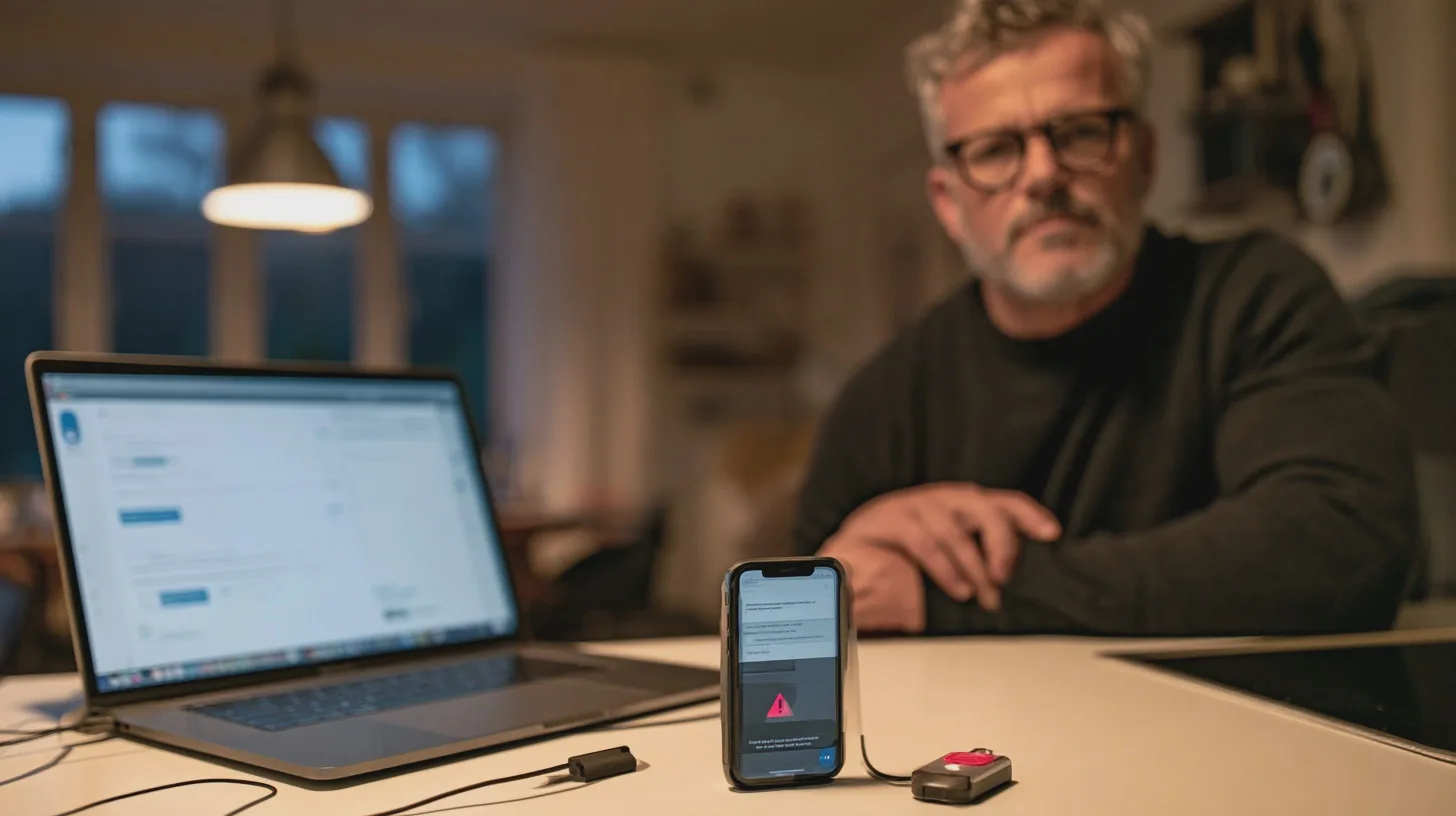
Should you let an AI assistant into your bank account?
AI agents can now pay your bills and shift your savings. Before you hand one the keys, here is who carries the can under UK rules when it gets something wrong.
Reviewed, edited and approved by Editor-in-chief Daniel Sköld · Updated 24 October 2026
Contents
Somewhere in Silicon Valley, a product manager is very excited about the idea of an AI that pays your gas bill, cancels the gym membership you forgot about and moves spare cash into your ISA while you sleep. The demos are slick. The pitch is that you will never have to open your banking app again.
That sounds lovely until you ask the question every bank manager, ombudsman and insurer asks first: when it goes wrong, whose money is it? Under UK rules, the answer depends almost entirely on how the AI got into your account in the first place.
AD
What does an AI banking assistant actually do?
There are two very different things being sold under the same label. The first is the chatbot your bank already runs inside its own app, such as NatWest’s Cora. It can answer questions, find a transaction and point you at the right form. It lives inside the bank’s walls, so the bank is responsible for it, full stop.
The second is newer and far more ambitious: the so-called AI agent. This is software, often from a tech company rather than a bank, that does not just talk but acts. You give it a goal, such as keeping £500 in your current account and sweeping anything above that into savings, and it makes the payments itself. Visa and Mastercard have both announced systems designed to let agents like this make purchases on your behalf, and the big AI firms are building assistants that can operate a web browser for you.
The first type is a convenience. The second is a delegation of authority. That is where it gets interesting.
The safe door: Open Banking
The UK has had a proper, regulated way to let outside apps into your bank account since 2018. It is called Open Banking. A company that wants to read your transactions or start a payment has to be authorised by the Financial Conduct Authority (FCA) as a third-party provider, or TPP. Budgeting apps, some accounting tools and many pay-by-bank checkouts work this way.
The crucial detail is that you never hand over your bank login. The app sends you to your own bank’s app or website, you approve exactly what it can see or do, and your bank issues it a limited digital permission. You can see and revoke those permissions from your banking app, and the provider has to keep checking you still want it.
If an AI service uses this route, you have a regulated company, a clear record of what you agreed to and the FCA on the other end. That is a good start.
The risky door: giving an AI your password
The other way in is the one that should make you wince. Some tools, particularly general-purpose assistants that click around websites on your behalf, effectively need to log in as you. That means your username, password and possibly the codes your bank texts you.
Read your bank’s terms and conditions and you will find a clause, in one form or another, telling you not to share your security details with anyone. Barclays, HSBC, Lloyds, Santander and the rest all say much the same thing. Handing them to a piece of software is still handing them over.
The moment you give an AI your banking password, you stop being the victim of anything it does and start being the person who let it in.
The National Cyber Security Centre has repeatedly warned that AI systems can be manipulated by hidden instructions planted in web pages and emails, a trick known as prompt injection. An agent that is browsing a dodgy site with your bank session open is exactly the scenario security people lose sleep over.
AD
If an AI agent makes a mistake with my money, who pays?
This is where UK law has not caught up, so you have to work from rules written for humans.
Under the Payment Services Regulations 2017, if a payment leaves your account that you did not authorise, your bank must normally refund it promptly. If your card or details were lost or stolen, your liability is capped at £35. You should report it as soon as you can, and no later than 13 months after the payment. But there is a big exception: if the bank can show you acted fraudulently or with gross negligence in keeping your details safe, you can lose that protection entirely. Voluntarily giving your login to an unregulated app is a gift to any bank arguing gross negligence.
Then there is the question of whether a payment your agent made was unauthorised at all. If you told it to pay bills and it paid the wrong £1,200 invoice, you did authorise it, in the sense that you set it loose. Your bank may see that as your instruction, executed badly by your chosen tool, and point you towards the tool’s maker.
The FCA has said it does not plan to write special AI rules for now, preferring to apply existing ones, especially the Consumer Duty, which since July 2023 has required firms to deliver good outcomes for customers and avoid foreseeable harm. That helps when the AI belongs to an FCA-regulated firm. It is little use against an American start-up with no UK authorisation.
Will I get my money back if an AI is tricked into paying a scammer?
Since 7 October 2024, the Payment Systems Regulator has required banks and payment firms to reimburse victims of authorised push payment fraud, where you are tricked into sending money to a criminal. The limit is £85,000 per claim, made within 13 months, and firms can deduct an excess of up to £100. The cost is split between the sending and receiving firms. It covers Faster Payments, and CHAPS payments get similar protection.
It is a genuinely strong safety net, but it was built for people being conned, not software. Banks can refuse if you showed gross negligence or ignored clear warnings, and there is no settled answer yet on whether an AI agent that falls for a fake invoice counts as you being deceived. Expect the first test cases to land at the Financial Ombudsman Service, which is free, can order firms to pay compensation and will hear your case if your bank has not resolved your complaint within eight weeks.
The government has also announced that the PSR will be folded into the FCA, so watch for the rules being revised under the larger regulator.
So should you use one?
For reading your accounts, sorting spending and flagging subscriptions, an FCA-authorised app using Open Banking is low risk and can be genuinely useful. Check the firm on the FCA register before you connect anything.
For letting an AI move money on its own, my answer is not yet. Wait until your own bank offers it inside its app, or until a regulated provider offers it through Open Banking with clear limits and a clear statement of who pays when it goes wrong. If any service asks for your actual banking password, close the tab.
In short
An AI assistant run by your bank, or one connected through FCA-regulated Open Banking, leaves you with solid UK protections, including refunds for unauthorised payments and up to £85,000 for authorised push payment fraud. Give an unregulated AI your login details and your bank may argue gross negligence, leaving you out of pocket. Until the rules catch up, let AI look at your money, not move it.
Alex Innes explains technology for men 45 and over who have seen every gadget since the ZX Spectrum and are not easily impressed. AI and ChatGPT, phones, cars, the smart home, the subscriptions worth keeping and staying safe online – what it does, whether it's worth the money, and whether you need it at all.
One of Midcent's writers. Spotted something? Write to alex@midcent.uk.
AI agents can now book trips, fill in forms and shop for you. Here’s what they’re actually good at, where they go wrong and how to keep your money and data safe.
AI agents promise to book, buy and sort your admin while you put the kettle on. Here’s what they really do, what they cost and where they still fall over.
AI can sift applications, set shifts and flag performance. That does not make it a good manager. Here is where the software helps, where it fails and what you can challenge.