Moussaka without the puddle: firm slices, creamy top
Roast the aubergines, reduce the lamb until it’s thick, set the topping with eggs and let it rest. How to make a moussaka that slices cleanly instead of turning into soup.
Reviewed, edited and approved by Editor-in-chief Daniel Sköld · Updated 2 November 2026
Contents
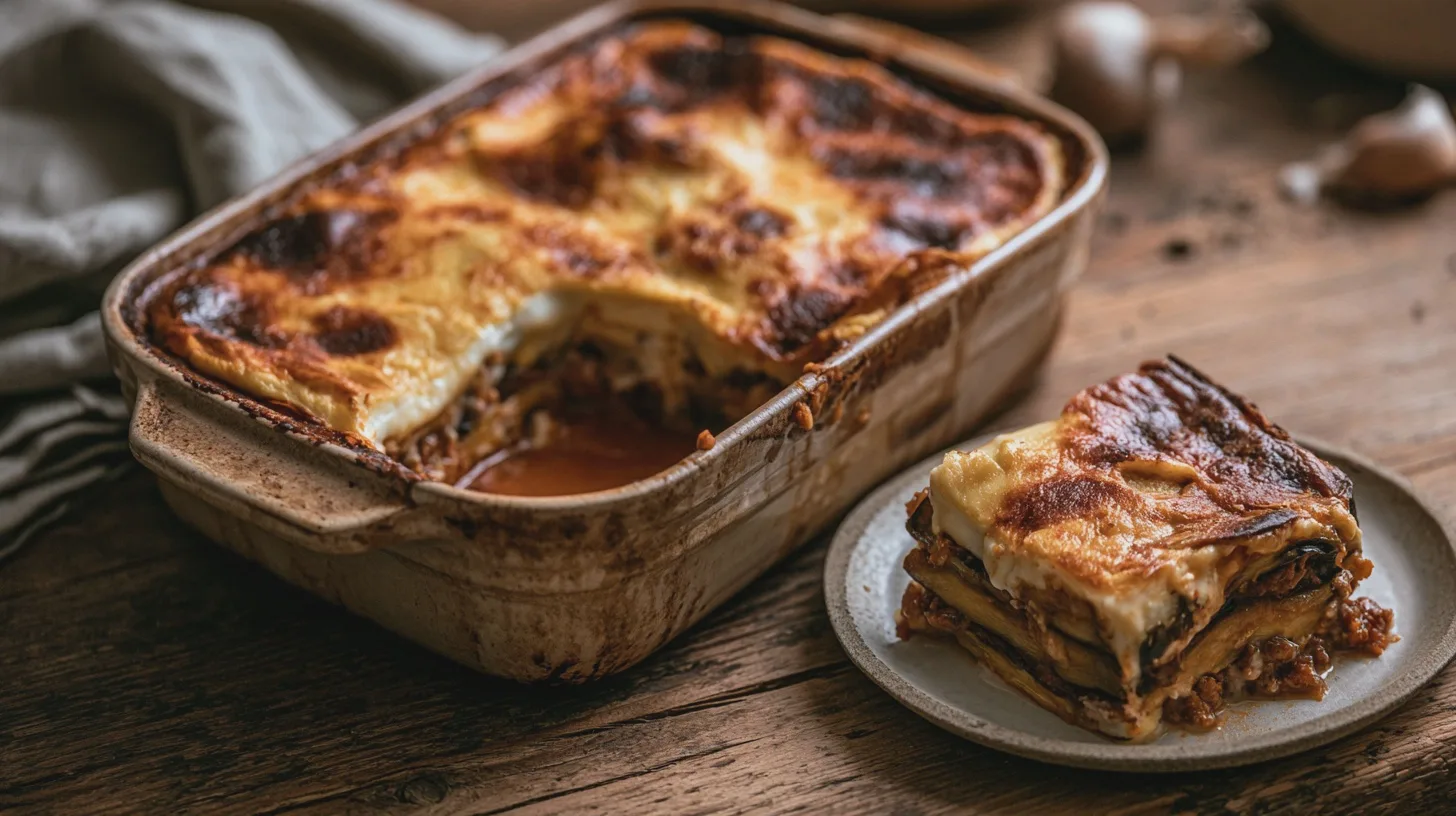
Most of us have made it at least once. A golden, puffed moussaka comes out of the oven, you cut into it with some ceremony, and a tide of orange liquid comes up from below and swamps the plate. It tastes fine. It just looks like a bath.
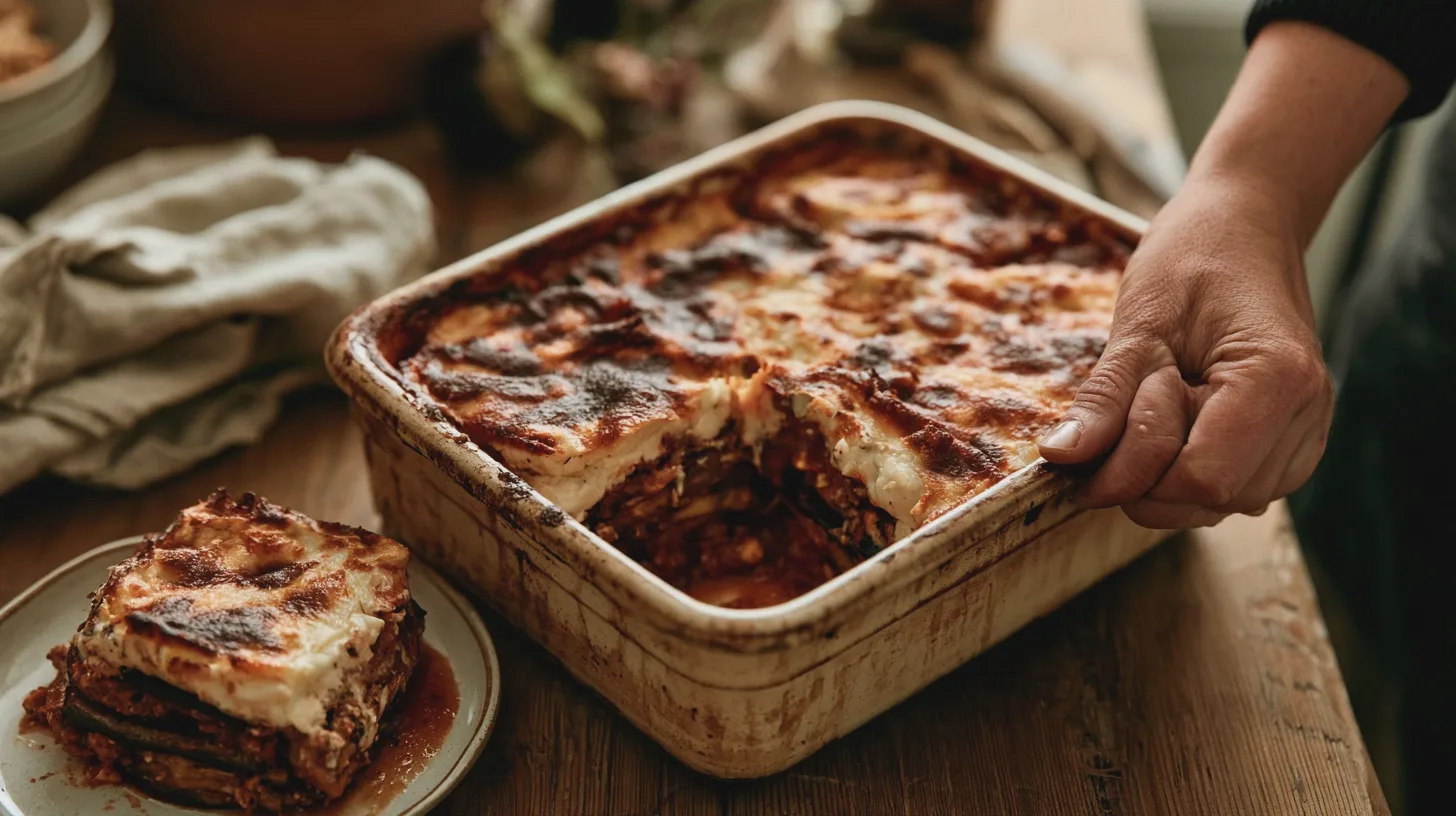
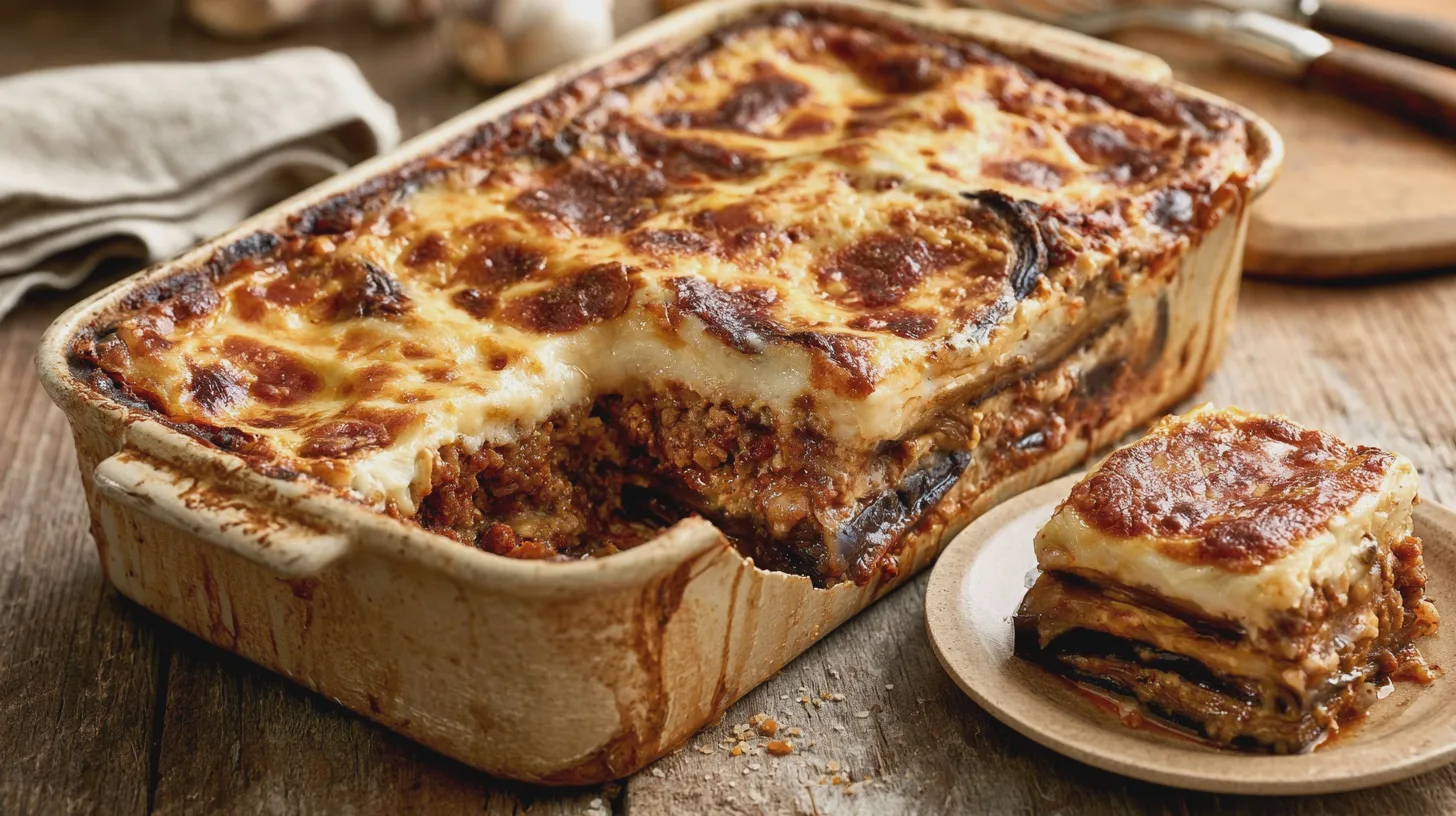
The fix isn’t a secret ingredient. You make four small decisions properly: what you do with the aubergines, how long you cook the lamb, what goes in the topping and how long you’re willing to wait before cutting. Get those right and you’ll have a moussaka that stands up in neat, creamy layers, like the ones in a good Greek taverna.
AD
Why is my moussaka watery?
There are usually three culprits, and they tend to work together. The first is aubergine that was fried quickly or not cooked at all, so it releases its water in the oven. The second is a meat sauce that went into the dish while it was still loose. The third is impatience: you cut it straight from the oven, before the custard and the sauce have had time to set.
Aubergine is mostly water held in a spongy structure. Fry it raw and it soaks up oil like a bath sponge, then gives back a mixture of oil and juice once it’s baked. That’s why so many recipes now skip the deep frying. Good Food’s quick version softens the aubergine in the microwave to save oil, and many Greek cooks roast or grill it instead. The goal is the same either way: get the water out before the slices go anywhere near the dish.
Should you salt aubergines for moussaka?
Modern aubergines aren’t bitter, so you don’t need to salt them for flavour. Salting still helps with texture, though. Slice three large aubergines (about 900g) into rounds 1cm thick, scatter them with fine salt and leave them in a colander for 30 minutes. Then pat them firmly dry with kitchen paper.
Next, roast them. Brush the slices on both sides with about 4 tbsp olive oil, spread them in a single layer over two trays and roast at 220°C (200°C fan, gas 7) for 25–30 minutes, turning once, until they’re golden and floppy. They should look slightly shrivelled. That’s water you won’t be mopping up later.
Potatoes are optional, but they make a sturdy base that holds the whole thing together. Two medium Maris Pipers (about 500g), sliced 5mm thick and roasted alongside the aubergines for 20 minutes, will do the job.
The lamb: cook it longer than you think
For six people you’ll need 750g minced lamb. Lamb mince usually costs more than beef at Tesco or Sainsbury’s, so half lamb and half beef is a perfectly respectable compromise. Brown the mince hard in a large pan in batches, then tip off most of the fat. Lamb gives off a lot.
Soften two finely chopped onions in 1 tbsp olive oil for 10 minutes, then add three crushed garlic cloves, 2 tbsp tomato purée, 1 tsp ground cinnamon (or a cinnamon stick), ½ tsp ground allspice, 1 tsp dried oregano and two bay leaves. Return the meat to the pan, then pour in 150ml red wine and let it bubble down by half. Add a 400g tin of chopped tomatoes and season.
Now simmer it uncovered for 45 minutes to an hour, stirring now and then. Here’s the test: draw a wooden spoon across the bottom of the pan. If the gap stays clear and doesn’t fill with liquid, it’s ready. If it fills, keep going. The sauce should be thick enough to pile up on a spoon. Let it cool a little before you build the dish.
The most important ingredient in a moussaka is patience. An hour’s rest is what turns a puddle into a proper slice.
AD
Béchamel or Greek yoghurt: which topping is best?
The classic Greek topping is a thick béchamel enriched with egg yolks. It’s usually credited to Nikolaos Tselementes, whose cookbook shaped Greek home cooking from the 1920s. For a 20 x 30cm dish, melt 60g butter, stir in 60g plain flour for a minute, then gradually whisk in 600ml (about a pint) of whole milk. Simmer, still whisking, until it’s as thick as custard. Take it off the heat, grate in some nutmeg, then beat in 75g grated cheese followed by two egg yolks.
The traditional cheese is kefalotyri, a hard, salty sheep’s and goat’s milk cheese. You’ll find it at Greek delis and online specialists. If you can’t get hold of it, use a mix of Parmesan or Pecorino Romano and a mature Cheddar. It’s not the same, but it browns beautifully and has the salty bite you want.
The quicker option, and a lighter one, is Greek yoghurt. Beat 500g full-fat Greek yoghurt with two whole eggs and 50g grated cheese. Use full-fat, not 0%, because low-fat yoghurt can split and weep. Either way, the eggs are what matter. They set the topping into a firm lid that holds the layers together when you cut.
Assembly, baking and the hard part
Heat the oven to 180°C (160°C fan, gas 4). Lay the potatoes in the dish if you’re using them, then half the aubergine, all of the lamb and the rest of the aubergine, pressing each layer down gently. Pour the topping over and spread it right to the edges. Bake for 45–50 minutes, until the top is puffed and patched deep golden brown.
Then leave it alone. Rest it for at least 30 minutes, and ideally closer to an hour. It will still be hot in the middle, and every minute it sits gives the custard time to set and the juices time to soak back in. This is also why moussaka makes such good dinner-party food. As Aglaia Kremezi points out in her recipe for Saveur, you can make the components the day before, and the finished dish slices even more neatly when it’s cooled and reheated.
For leftovers, cool them quickly, refrigerate them within a couple of hours and eat them within two days. Reheat only once, until the moussaka is steaming hot all the way through.
What wine goes with moussaka?
Spiced lamb and a creamy topping need a red with some acidity and grip. Greek wine is the obvious and very good choice: Agiorgitiko from Nemea is soft and plummy, while Xinomavro from Naoussa is firmer, with more tannin, a bit like a rustic Nebbiolo. If Greek bottles are hard to find, a Côtes du Rhône or a Rioja Crianza will do the job nicely.
A glass or two with dinner is the right amount. The UK Chief Medical Officers advise no more than 14 units a week, spread over several days. If you’re not drinking, a sparkling water with lemon and a few crushed mint leaves cuts through the richness surprisingly well, and so does a good alcohol-free beer.
In short
To stop your moussaka going watery, salt and roast the aubergines rather than frying them raw, and simmer the lamb sauce uncovered until a spoon drawn across the pan leaves a clear trail. Use a topping set with eggs, either a béchamel with kefalotyri or mature Cheddar or full-fat Greek yoghurt. Then rest the moussaka for 30 minutes to an hour before you cut it.
Angus Irvine writes about food and drink for men 45 and over who like to eat well but don't want a performance. Recipes that work on a weeknight, dinners worth the effort at the weekend, what to pour with them – wine, beer and the good alternatives – and the restaurants and pubs worth the trip. Without the fuss.
One of Midcent's writers. Spotted something? Write to angus@midcent.uk.
Seared scallops on silky cauliflower purée with curry butter looks like it came from a Michelin kitchen. In reality it takes about 30 minutes and very little skill.
Homemade ravioli takes flour, eggs, a rolling pin and an unhurried Sunday afternoon. Here’s the dough, three fillings, the sauce and the wine, with UK shopping notes.
Seven proper British comfort dinners for when the rain is coming in sideways, from Lancashire hotpot to cullen skink, plus the wine, beer and cider to pour with them.
Red with meat and white with fish? Not necessarily. Here’s a practical guide to choosing wine for the food you actually cook, without turning dinner into an exam.