You walk into the kitchen and forget why. You can name the actor but not the film. At some point in your late forties, the brain starts to feel less like a filing cabinet and more like a junk drawer.
So it’s tempting when someone says a handful of blueberries a day will sort it out. Some of that is true, some is hopeful and some is marketing. The good news is that the dull bits are well proven, and they happen to be on your plate.
Can diet really reduce your risk of dementia?
Yes, though it works in a roundabout way. In 2024 the Lancet Commission on dementia, a large international panel of experts, identified 14 risk factors you can change. Together they account for about 45 per cent of dementia cases worldwide. Most matter most in midlife, which is exactly the age you are now.
Diet isn’t on the list on its own. What is on the list: high blood pressure, high LDL cholesterol (newly added in 2024), diabetes, obesity, drinking too much alcohol, smoking and not moving enough. What you eat has a direct effect on at least four of those.
Put simply, what’s bad for your arteries is bad for your brain. Your brain uses a large share of your blood supply, and the small vessels that feed it get damaged by the same things that damage the ones around your heart.
Alzheimer’s Research UK is careful on this point. It says no single diet can prevent dementia, but a growing body of evidence suggests a healthy, balanced diet may support brain health and lower your risk.
Does the MIND diet actually work?
The MIND diet is a mix of the Mediterranean diet and the DASH diet, which was designed to lower blood pressure. It’s the best-known brain diet. It focuses on leafy greens, other vegetables, berries, nuts, beans, wholegrains, fish, poultry and olive oil. It cuts back on red meat, butter, cheese, pastries and fried food.
Observational studies looked promising. People who ate this way tended to have slower memory decline. The catch is that people who eat this way also tend to exercise more, smoke less and have more money, so it’s hard to tell what is doing the work.
A three-year randomised trial, published in the New England Journal of Medicine in 2023, tested it properly. Older adults were put either on the MIND diet or on a control diet, and both groups were asked to cut calories slightly. Both groups lost weight and both improved on thinking tests. There was no meaningful difference between them.
That doesn’t prove the MIND diet is useless. Three years is short when you’re measuring a brain disease that develops over decades, and losing weight may have been the useful part. It does mean nobody can honestly sell you a menu that guarantees a sharper memory.
There is no magic brain food. There is just food that’s good for your blood vessels, and your brain is the hungriest organ they supply.

Which foods are good for your brain and memory?
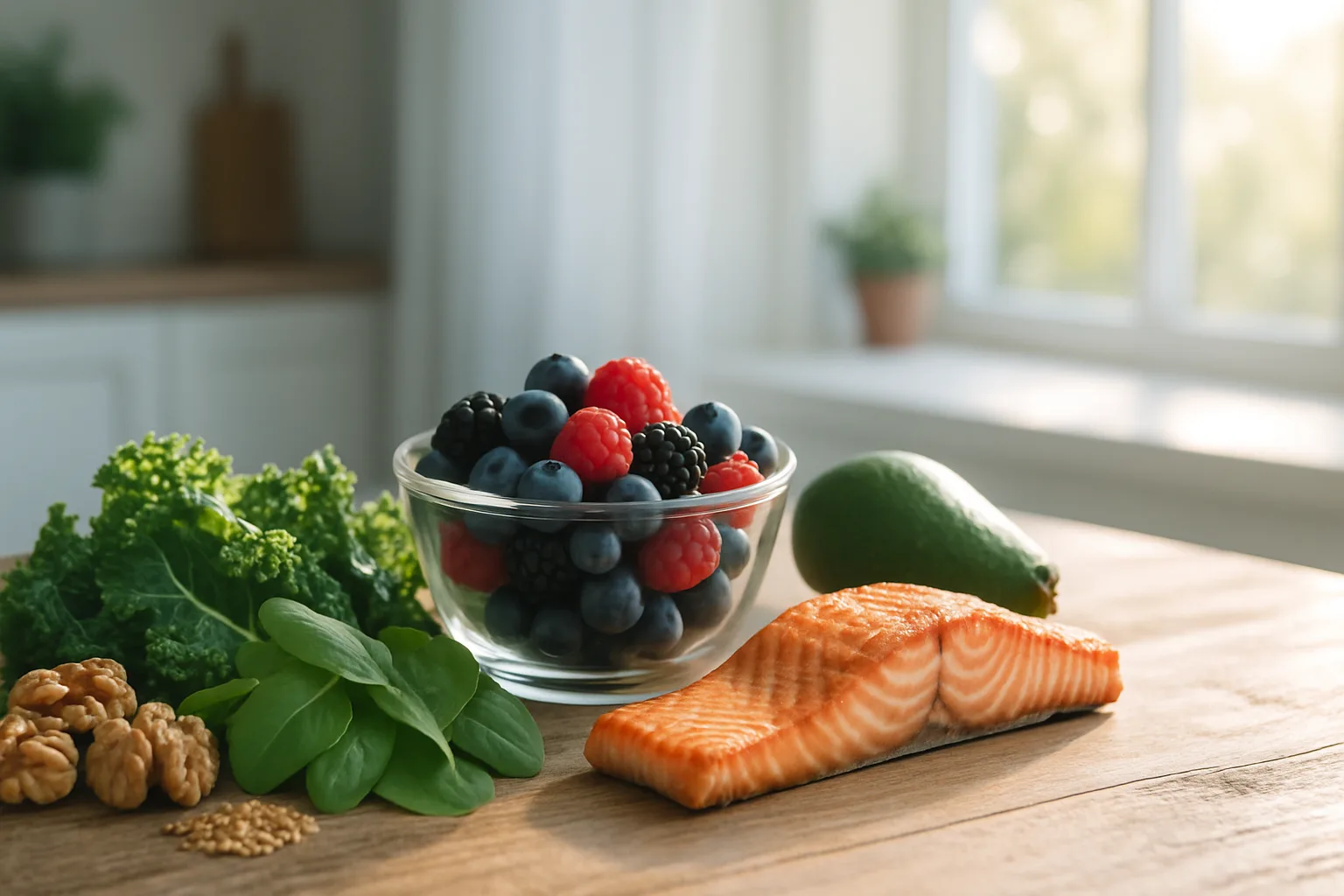
Forget superfoods and think in patterns. The Mediterranean-style pattern behind the MIND diet is also what UK health advice has been recommending for years, so you’re not taking a gamble.
Fish. NHS advice is at least two portions a week, one of them oily: salmon, mackerel, sardines, pilchards or herring. A tin of mackerel on toast counts, and it costs less than a coffee.
Greens and berries. Spinach, kale, broccoli and cabbage, plus whatever berries are cheap. Frozen ones are fine and often better value than fresh. The research on berries and memory is mostly small, short studies, so eat them because they’re good for you and make porridge more interesting, not because they’ll find your car keys.
Nuts, beans and wholegrains. A small handful of unsalted nuts, lentils in a curry, oats for breakfast. The fibre helps your cholesterol and blood sugar, which ties straight back to the Lancet list.
Olive oil instead of butter. It’s an easy swap that helps your LDL cholesterol.
Less of the beige stuff. Processed meat, pastries, sugary drinks and takeaway fried food push up weight, blood pressure and blood sugar. You don’t have to give them up. They just shouldn’t be the main event.
What about supplements and brain boosters?
This is where the evidence gets thin. Omega-3 fish oil capsules have been tested in several trials, with largely disappointing results for memory in people who don’t already have a deficiency. Eating the fish seems to make more sense than swallowing the oil.
Vitamin D is often linked with brain health. Alzheimer’s Research UK points out that while low vitamin D levels have been associated with dementia, taking supplements hasn’t been shown to reduce the risk. The NHS does advise most adults in the UK to consider a daily 10 microgram supplement in autumn and winter, but that is for your bones and muscles, not a promise about memory.
As for nootropics, ginkgo and the expensive memory blends sold online: if one of them reliably prevented dementia, it would be the biggest medical story of the century. Treat them that way. If you take regular medicines, check with a pharmacist before adding anything, because some supplements interact with blood thinners and other drugs.
The bits that aren’t on your plate
Alcohol counts as diet too. The UK Chief Medical Officers advise no more than 14 units a week, spread over three or more days. That’s about six pints of average-strength beer. Heavy drinking is one of the Lancet risk factors, and it’s one you can change.
Weight matters, particularly around the middle. You don’t need to transform yourself. Losing even half a stone (about 3kg) can improve blood pressure and blood sugar if you’re carrying extra.
Then find out your numbers. In England, the free NHS Health Check for adults aged 40 to 74 measures blood pressure, cholesterol and diabetes risk, and from 65 it includes information on dementia. Scotland, Wales and Northern Ireland don’t run the same programme, but your GP practice can check blood pressure and arrange cholesterol and blood sugar tests. Many pharmacies will check your blood pressure for free.
Finally, a word on memory itself. Forgetting a name is normal. Getting lost on familiar routes, repeating yourself or struggling with everyday tasks you used to manage is not. If that’s you, or someone close to you is worried, speak to your GP. Memory problems have several treatable causes, including thyroid problems, low vitamin B12, depression and medicine side effects.
In short
No single food or diet has been proven to protect your memory, and a major trial of the MIND diet found it did no better than a sensible calorie-controlled diet. But high blood pressure, high cholesterol, diabetes, obesity and heavy drinking are all proven midlife risk factors for dementia, and diet affects every one of them. Eat oily fish, greens, beans, nuts, wholegrains and olive oil, go easy on processed food and alcohol, and get your numbers checked. It’s the most reliable brain food there is.
Sources

Midcent Health
Adrian Irving writes about health for men 45 and over who would rather do something than worry. Training, weight loss, sleep, cholesterol and blood tests, heart health, testosterone, the prostate, mental health and your sex life – what the evidence says, what's worth trying, and when it's time to see your GP.
One of Midcent's writers. Spotted something? Write to adrian@midcent.uk.