Roast chicken with cider and Stilton sauce for Sunday
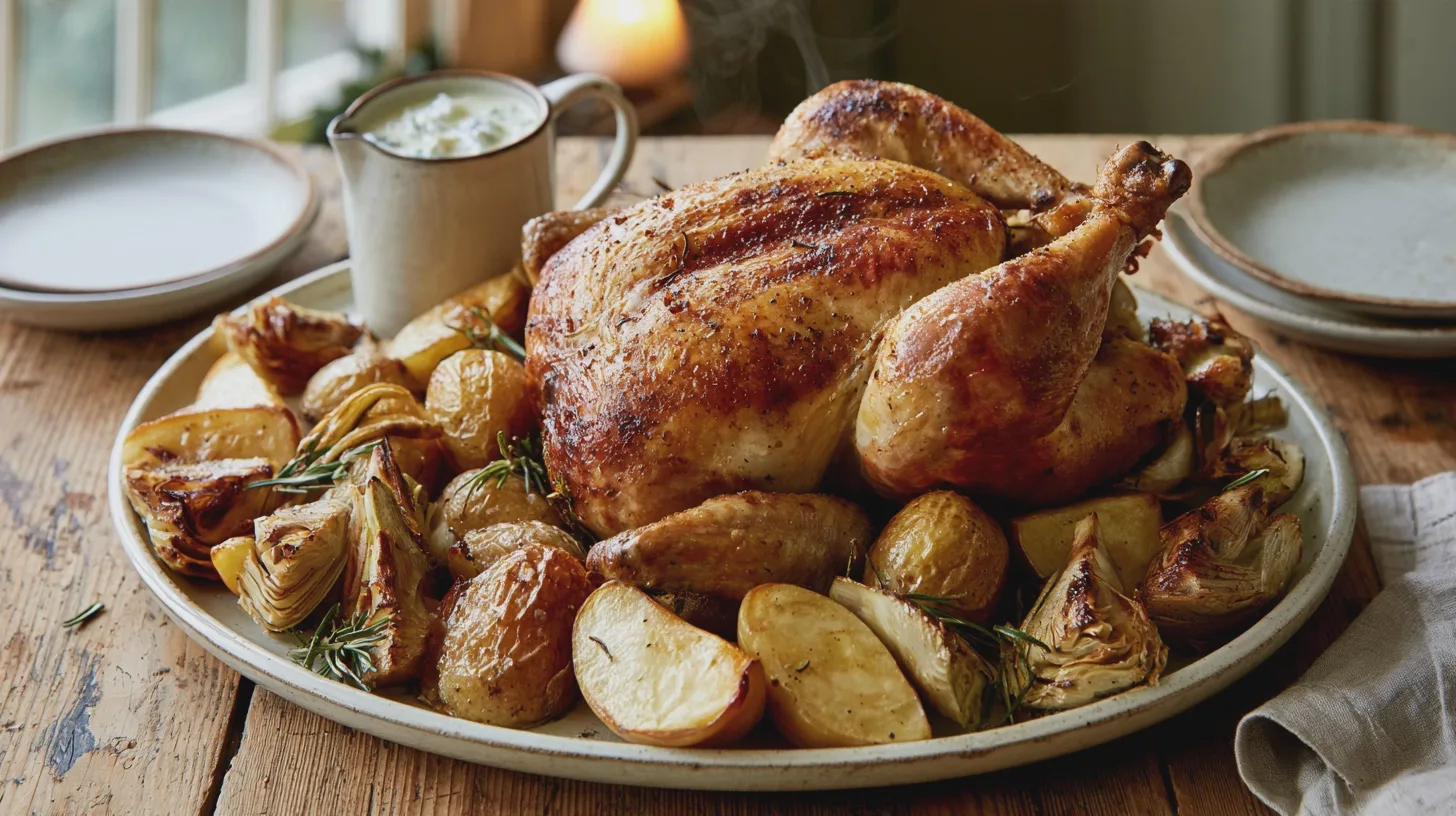
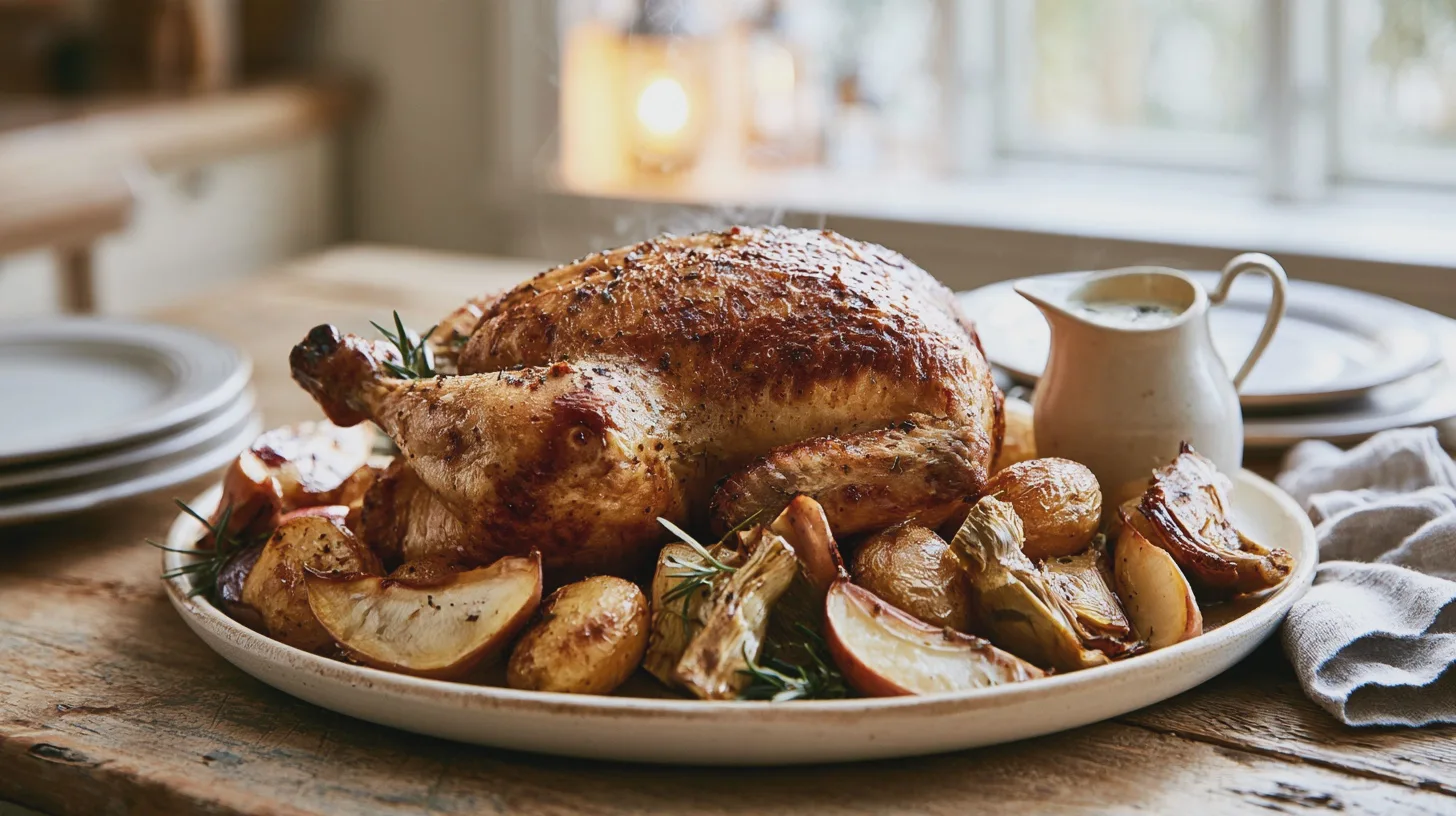
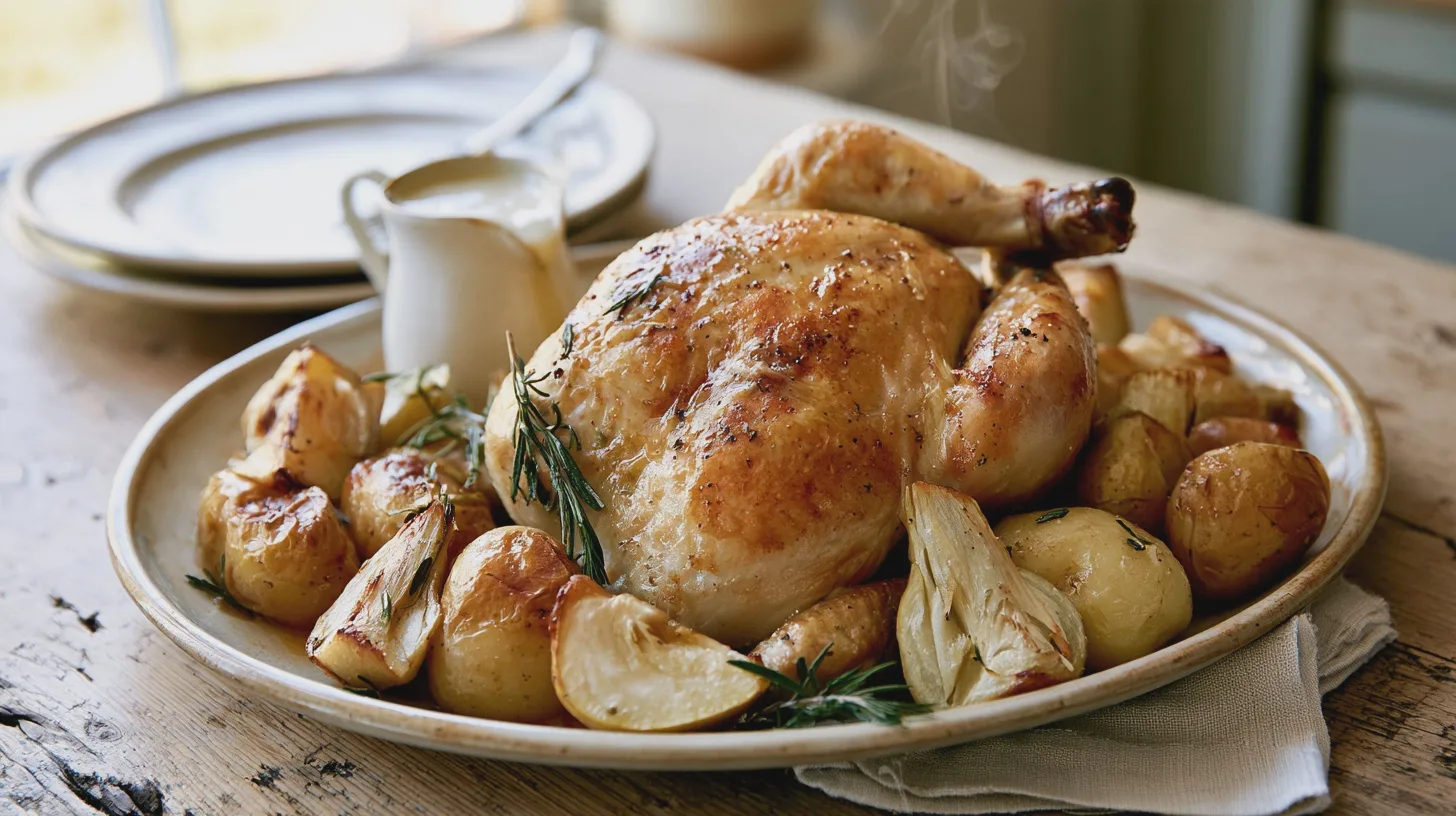
A whole roast chicken with rosemary potatoes, Jerusalem artichokes, Cox apples and a creamy West Country cider sauce finished with Stilton. A proper Sunday lunch with very little fuss.
Reviewed, edited and approved by Editor-in-chief Daniel Sköld · Updated 2 November 2026
Contents
Some Sunday lunches take a whole day of fuss and leave a mountain of pans. This one doesn’t. You put a chicken in a hot tin with potatoes, Jerusalem artichokes and a fistful of rosemary, add a few apples near the end, and make the sauce while the bird rests: dry cider, cream and a crumble of Stilton.
It’s rustic enough for a pub garden and smart enough to serve to the in-laws. The sauce is the reason to make it. It’s sharp, savoury and rich, and it makes a decent supermarket chicken taste like something from a gastropub.
AD
What you need for a cider roast chicken
This serves four, with leftovers if you go easy on the second helpings.
For the tin: 1 free-range chicken of about 1.6–1.8kg; 1kg floury potatoes such as Maris Piper or King Edward; 400–500g Jerusalem artichokes; 1 bulb of garlic, halved across the middle; 4–5 sprigs of rosemary; 1 lemon; 3 tbsp olive oil or rapeseed oil; 30g soft butter; and sea salt and black pepper.
For the apples: 3 Cox apples, quartered and cored. Leave the skin on. Cox keeps its shape in the oven and has a honeyed sharpness that suits chicken. Bramleys collapse into a fluffy purée, which is lovely in a crumble but turns to mush in a roasting tin. If you want a Bramley in there, grate half of one into the sauce, where it adds a sharp edge.
For the sauce: 2 shallots, finely chopped; a knob of butter; 300ml dry cider (just over half a pint); 150ml chicken stock; 150ml double cream; 60–75g Stilton, crumbled; 1 tsp Dijon or English mustard; and a few thyme leaves.
Pick a still or lightly sparkling dry farmhouse cider from Herefordshire or Somerset rather than a sweet, fizzy mainstream one. Too much sugar makes the sauce taste cloying. Supermarkets now stock a reasonable range of West Country and Herefordshire ciders, and independent bottle shops and the producers’ own websites go further.
How long do you roast a whole chicken for?
Take the chicken out of the fridge 30–45 minutes before cooking. Heat the oven to 200°C (180°C fan, gas mark 6).
Don’t wash the bird. The Food Standards Agency has been saying this for years, because splashing raw chicken under the tap spreads bacteria round your sink rather than getting rid of them. Pat it dry with kitchen paper. Rub the butter over the breast, season it well, and push the squeezed lemon halves and a sprig of rosemary into the cavity.
Peel the potatoes and cut them into large chunks. Parboil them for 8 minutes, drain, and shake them in the pan to rough up the edges. Scrub the Jerusalem artichokes and halve any big ones. They don’t need peeling, and their knobbly skins crisp up nicely. Toss everything in a large roasting tin with the oil, garlic, the rest of the rosemary and plenty of salt, then sit the chicken on top.
A 1.6–1.8kg bird needs about 1 hour 15 minutes to 1 hour 30 minutes. Add the Cox quarters for the last 30 minutes. Before you call it done, push a skewer into the thickest part of the thigh. The juices should run clear with no pink, and the meat should be piping hot all the way through. If you own a probe thermometer, the thigh should read at least 75°C.
Lift the chicken onto a board, cover it loosely with foil and rest it for 15–20 minutes. Turn the oven up to 220°C (200°C fan, gas mark 7) and give the potatoes, artichokes and apples a final blast while you make the sauce.
Rest the bird, and use dry cider. Get those two things right and the rest of Sunday lunch takes care of itself.
AD
How do you make a creamy cider sauce?
Spoon most of the fat out of the roasting juices you saved in a jug (or tip the bird’s resting juices in later). Melt the butter in a wide pan over a medium heat and soften the shallots for 5 minutes without letting them brown.
Pour in the cider, turn up the heat and let it bubble hard until it has reduced by about half. That takes 6–8 minutes. This step matters. It boils off the raw, beery edge and concentrates the apple flavour. Add the stock and the chicken juices and reduce for another few minutes.
Stir in the cream and mustard and simmer gently until the sauce coats the back of a spoon. Turn the heat right down, then stir in the Stilton a little at a time. If you let it boil once the cheese is in, the sauce can turn grainy and split. Taste it before you add any salt, because blue cheese is salty already. Finish with the thyme.
Stilton is a protected cheese, so the name can only be used for cheese made in Derbyshire, Leicestershire or Nottinghamshire. It gives the sauce a deep, savoury tang. If blue cheese isn’t welcome at your table, a mature farmhouse Cheddar works well, about 75g of it, finely grated. You get something closer to a posh cheese sauce, nutty and sharp rather than funky.
What should you drink with roast chicken and cider sauce?
The obvious answer is the right one: pour the same cider you cooked with, or a slightly better bottle of the same style. A dry Herefordshire or Somerset cider has enough acidity to cut through the cream and Stilton, and the apple flavours echo what’s on the plate.
If you’d rather have wine, go for a white with some weight and freshness. An oaked Chardonnay, a dry Chenin Blanc or a white Burgundy will all handle a creamy sauce. A red needs to be light, so stick to Pinot Noir or a Beaujolais cru. Anything heavier will fight the blue cheese.
Keep it to a glass or two. The UK Chief Medical Officers advise no more than 14 units a week, spread over three or more days. A pint of 5% cider is nearly three units on its own. Strong farmhouse ciders often run at 6–7%, so check the label. Most supermarkets now sell alcohol-free ciders, and a crisp one or a sparkling apple juice from a British orchard goes very well with this dish.
Getting ahead and using up leftovers
You can parboil and rough up the potatoes the evening before and keep them covered in the fridge. Jerusalem artichokes are at their best from late autumn to early spring, so in summer roast some extra parsnips or shallots in their place. A warning for the uninitiated: artichokes have a well-earned reputation for producing wind. Serve a modest portion if you have plans for the afternoon.
Leftover chicken, apples and sauce can go into a pie the next day: loosen the sauce with a splash of stock, add some leeks and cover it with shop-bought puff pastry. Cool any leftovers quickly and get them into the fridge within a couple of hours. Eat them within two days, and reheat them until they’re steaming hot all the way through.
In short
Roast a 1.6–1.8kg chicken at 200°C (180°C fan, gas mark 6) for about 1 hour 15 minutes to 1 hour 30 minutes on a bed of potatoes, Jerusalem artichokes and rosemary, adding Cox apples for the last half hour. While it rests, reduce 300ml of dry Herefordshire or Somerset cider with shallots and stock, add double cream, and stir in Stilton or mature Cheddar off the boil. Check that the juices run clear before carving, and serve with the same cider or an alcohol-free one.
Angus Irvine writes about food and drink for men 45 and over who like to eat well but don't want a performance. Recipes that work on a weeknight, dinners worth the effort at the weekend, what to pour with them – wine, beer and the good alternatives – and the restaurants and pubs worth the trip. Without the fuss.
One of Midcent's writers. Spotted something? Write to angus@midcent.uk.
Roast the aubergines, reduce the lamb until it’s thick, set the topping with eggs and let it rest. How to make a moussaka that slices cleanly instead of turning into soup.
From the local pub to a tasting menu, here is how to dress for eating out so you look like you made an effort without looking like you’re off to a wedding.
Most home stir-fries come out soggy and grey. Here’s how to get proper heat, crunch and flavour from a wok on a British hob: the kit, the prep and the timings.
Booked somewhere smart and quietly dreading the cutlery? Here’s how to handle fine-dining etiquette in a British restaurant with good manners, no stiffness and no faff.