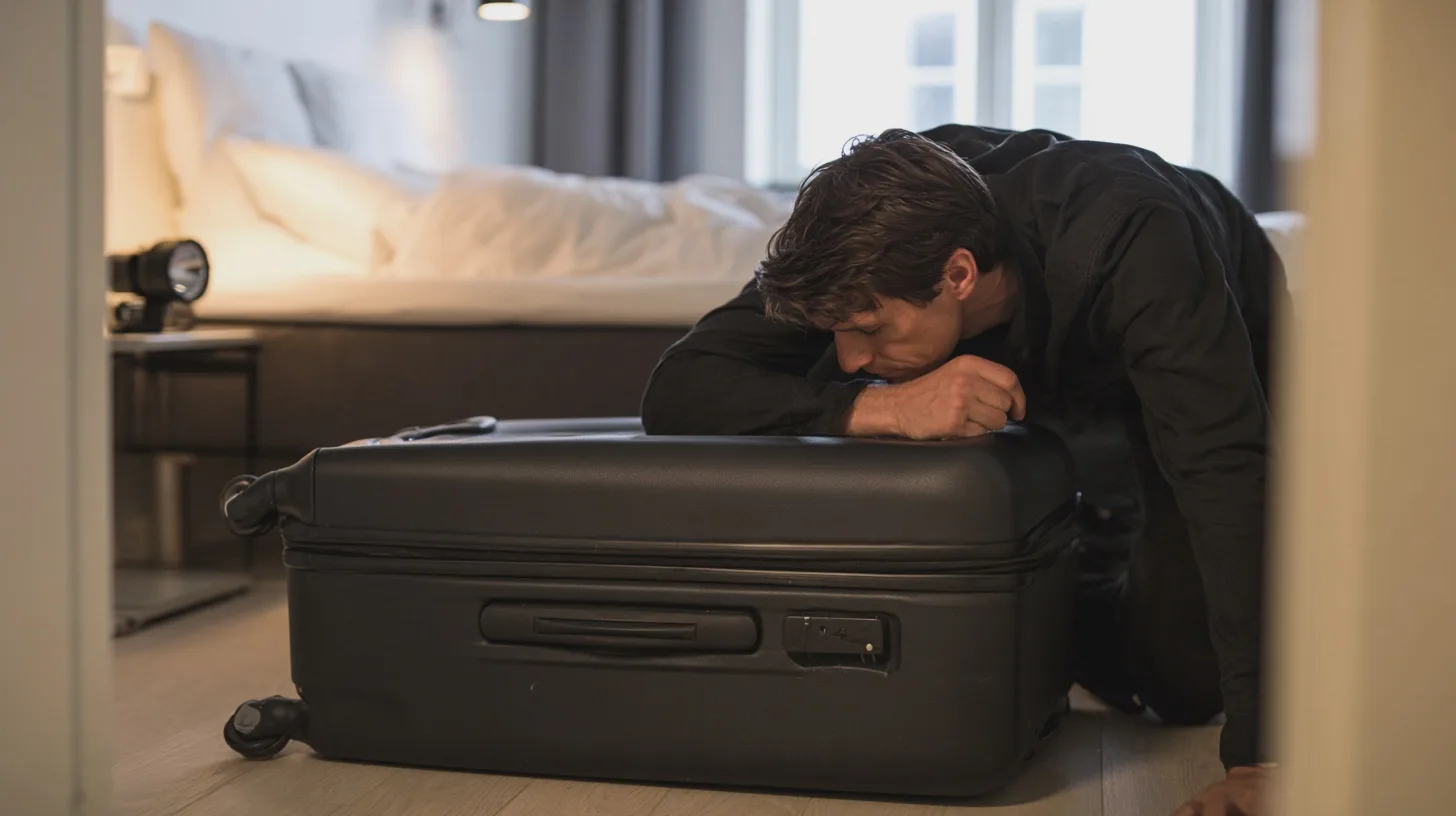
The most useful thing you can do on arriving at a hotel isn’t finding the minibar or working out which of the eleven switches turns the lights off. It’s putting your suitcase in the bath. It looks eccentric and your other half may ask questions, but a bathroom’s hard, shiny surfaces are about the last place a bed bug wants to be. The bedroom carpet, the upholstered luggage rack and the bed are a different matter.
Bed bugs aren’t a verdict on hygiene. They turn up in grand old hotels and budget chains, in country cottages and city flats, and they hitch lifts in luggage, which makes frequent travellers their ideal transport. The good news is that five minutes of looking when you arrive, and a bit of discipline when you get home, cuts the risk a great deal.
What do bed bugs actually look like?
An adult bed bug is flat, oval and reddish-brown, roughly the size of an apple pip. Before feeding it looks like a thin lentil; afterwards it’s plumper and redder. The young are smaller and paler, and the eggs are tiny and white, which makes them hard to spot without reading glasses and a phone torch. Pack both.
They come out at night, feed on blood and spend the day hidden in cracks close to where people sleep. You’re more likely to find what they leave behind than the bugs themselves: small rusty or blood-red spots on sheets, clusters of dark dots like a felt-tip pen has leaked into the fabric, and pale, papery shed skins. A bad infestation can also give off a faintly sweet, musty smell, though by the time you can smell it you’ve already lost.
Bites tend to show up as itchy red bumps, often in a line or a small cluster on skin that was uncovered in bed: arms, neck, shoulders. The NHS says they’re irritating rather than dangerous and don’t usually cause other health problems. Some people don’t react to them at all, so a bite-free week doesn’t prove anything.
How do I check a hotel room for bed bugs?
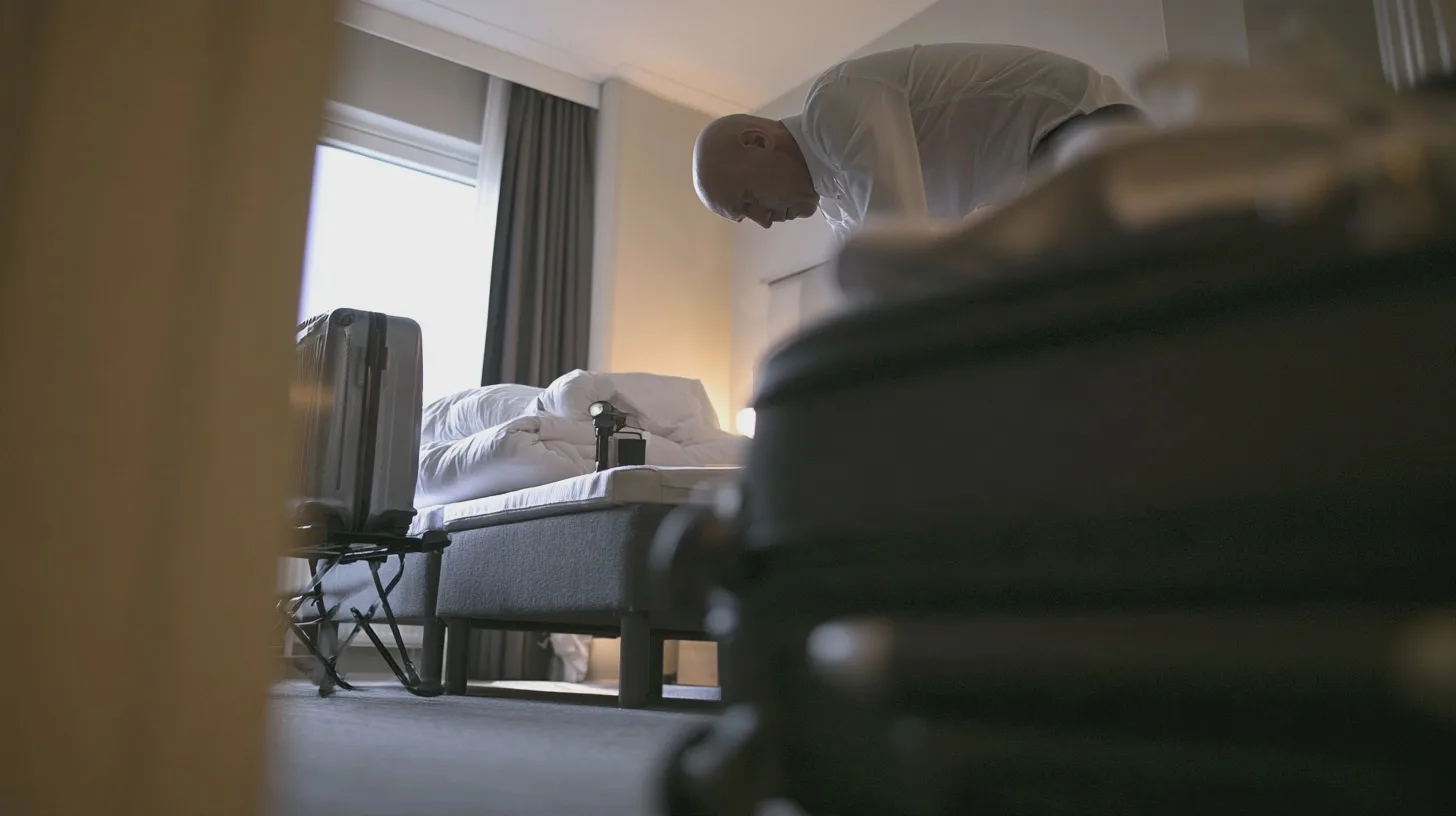
Before you unpack anything, put your suitcase in the bath or the shower tray, or on a hard floor well away from the bed. Then go to the bed with your phone torch.
Pull back the duvet and look at the corners of the fitted sheet. Then lift the sheet at the head end and check the mattress seams and piping, plus the label if there is one. That’s where bed bugs gather first. Look at the base or divan too, especially the corners and any fabric valance. If the headboard is fixed to the wall, look along its edges and behind it as far as you can see. Plenty of infestations live there, in the gap no housekeeper ever reaches.
Next, check the upholstered chair, the fabric luggage rack and the inside joints of the bedside drawers. Skip the curtains and lampshades unless you have time on your hands. Bed bugs prefer staying near their dinner.
A bed bug doesn’t read reviews. The only star rating it cares about is the number of sleeping guests.
Keep it up for the rest of the stay. Use the luggage rack only if it’s metal, keep the case zipped when you’re not using it, and don’t drape clothes over the bed or the armchair. Hang them in the wardrobe, or leave them in the case. It sounds fussy, but it takes no more effort than the alternative.
What should I do if I find bed bugs in my hotel room?
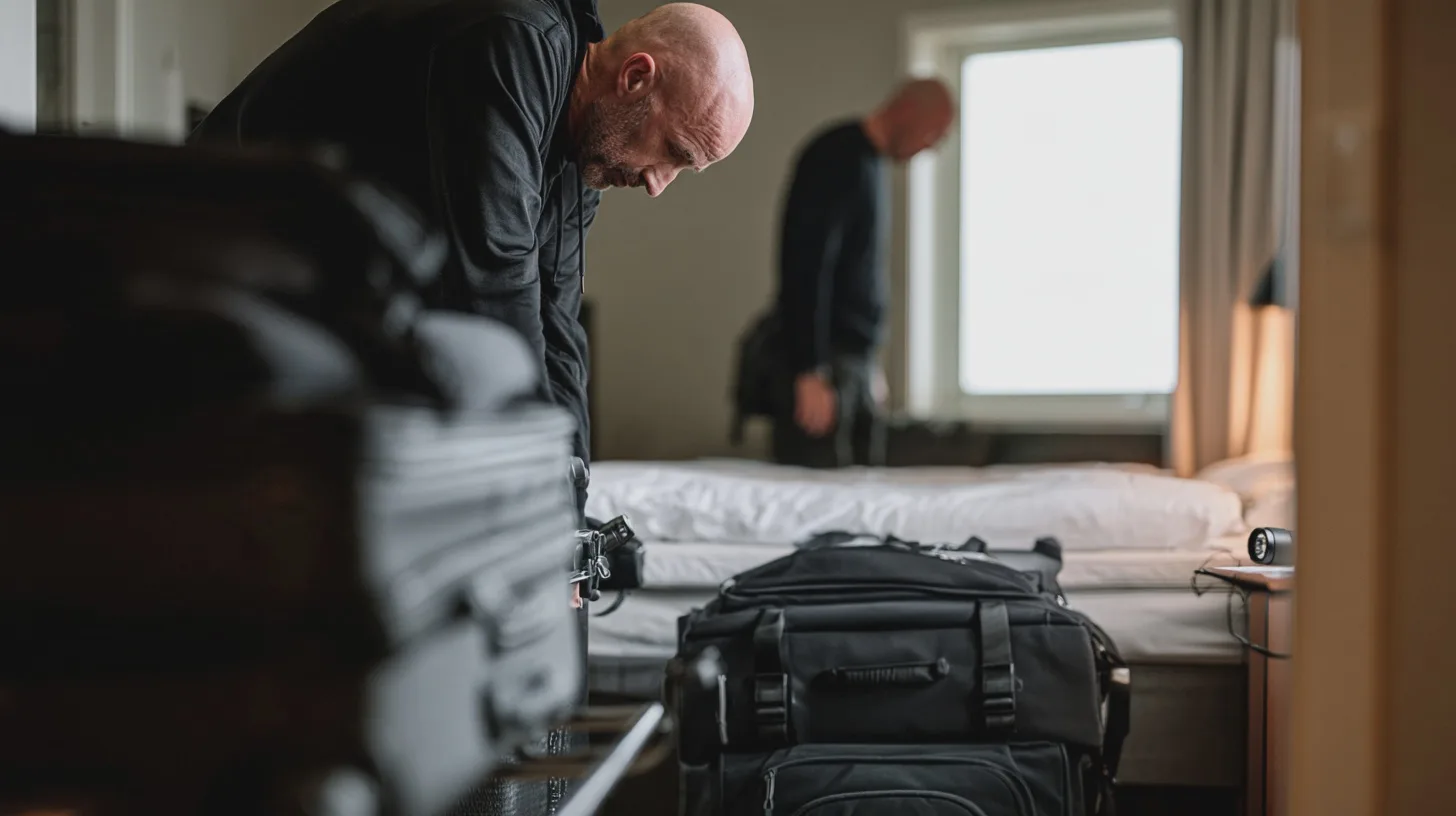
Don’t panic and don’t unpack. Take clear photos of whatever you’ve found, with something in the frame for scale, and go to reception rather than ringing down. Ask for a different room that isn’t next to, above or below the first one, because bed bugs travel through walls, sockets and pipe runs. If the hotel can’t give you that, ask for a refund and leave.
Put the request in writing as well, by email from the lobby if need be, and keep your receipts. In the UK, the Consumer Rights Act 2015 says a service has to be carried out with reasonable care and skill, and a room you can’t sleep in safely is a reasonable basis for a complaint. The same goes for holiday lets: tell the owner or the agency straight away, with photos, before you leave rather than after. Abroad, the hotel’s management or your tour operator should be your first stop. Travel insurance rarely pays out for this, so read the small print instead of assuming.
Before you move to the new room, check your case and the outside pockets. If you think something might have got in, put clothes into sealed plastic bags until you get home.
Keeping them out of the house
This is where the real damage is done or avoided. A bed bug in a hotel is a ruined night. A bed bug in your spare room is a long and expensive project.
When you get home, unpack in the hall, the kitchen or the garage, not on the bed. Put everything washable straight into the machine, including clothes you didn’t wear. The NHS advises washing affected bedding and clothes at 60°C, or tumble-drying on a hot setting for at least 30 minutes. Anything that can’t take that heat, such as a decent jumper, can go into a sealed bag in the freezer for three or four days. Vacuum the suitcase inside and out, paying attention to the seams and wheel housings, then empty the vacuum outdoors. Hard-shell cases are easier to clean than fabric ones, which is worth remembering next time you replace yours.
If you start getting bites at home a week or two later, check your own bed the same way you’d check a hotel bed. Shop-bought sprays and foggers are usually a waste of money and can push bed bugs further into walls and furniture. The NHS recommends professional pest control, and the usual approach is several visits, because one treatment rarely kills every egg.
Council pest control or a private firm?
Start with your local council’s website. Some councils in England, Scotland, Wales and Northern Ireland still run their own pest control service. Many have cut it back, contracted it out or stopped it, and the ones that still offer it usually charge for bed bugs. Prices vary a lot from area to area, and some councils give a discount to people on certain benefits. If yours doesn’t offer the service, choose a private firm that belongs to the British Pest Control Association. Get at least two quotes, and ask exactly how many visits are included. Treating a whole home privately can easily cost a few hundred pounds, which makes a five-minute look under a hotel sheet seem like good value.
If you rent, check your tenancy agreement. Who pays often depends on when the bugs arrived and how they got in, so tell your landlord promptly and in writing.
In short
Bed bugs turn up in hotels and holiday lets at every price, but you can cut the risk a lot in a few minutes. Keep your suitcase in the bathroom, check the mattress seams and the headboard with a torch, and keep clothes off the bed and chairs. If you find them, photograph them, ask for a room well away from the first one or a refund, and put your complaint in writing. When you get home, unpack away from the bedroom, wash everything at 60°C or tumble-dry it hot, and call professional pest control rather than buying sprays.
Sources

Midcent Travel
Archie Inglis writes about travel for men 45 and over: city breaks, winter sun, road trips, rail journeys, walking holidays and the longer trips you've been putting off. Where's worth going, how to get there without the hassle, and how to make the money go further.
One of Midcent's writers. Spotted something? Write to archie@midcent.uk.