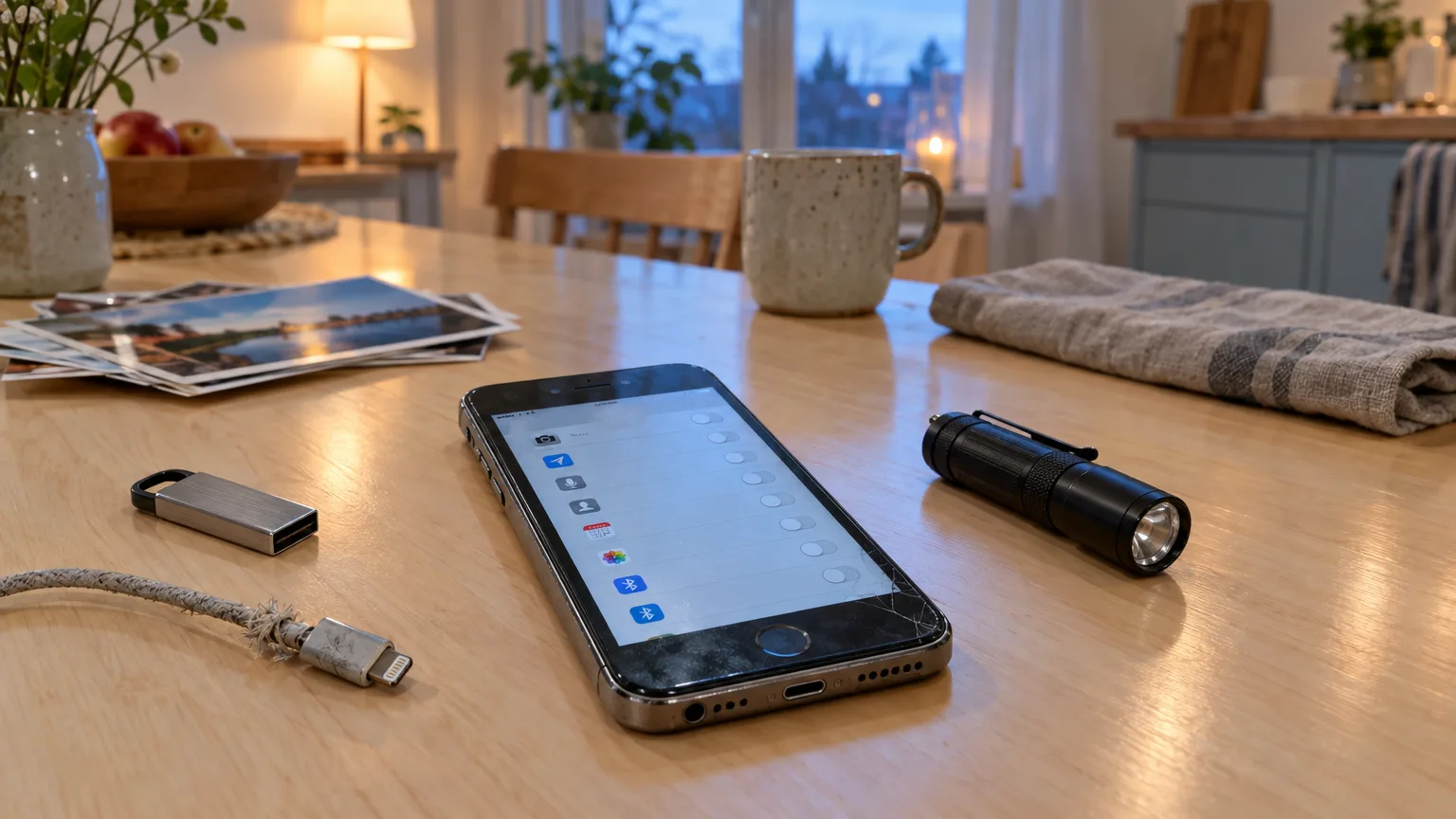
Your phone says the bank has spotted a suspicious payment. A caller knows your name, sounds calm and offers to help. Or your son appears to be asking for money from a borrowed phone. None of these is proof that the person contacting you is who they claim to be.
The useful defence is not learning to recognise every new scam. It is having a routine that still works when the message looks polished, the voice sounds right and you are in a hurry.
Why does a scam message look so convincing?
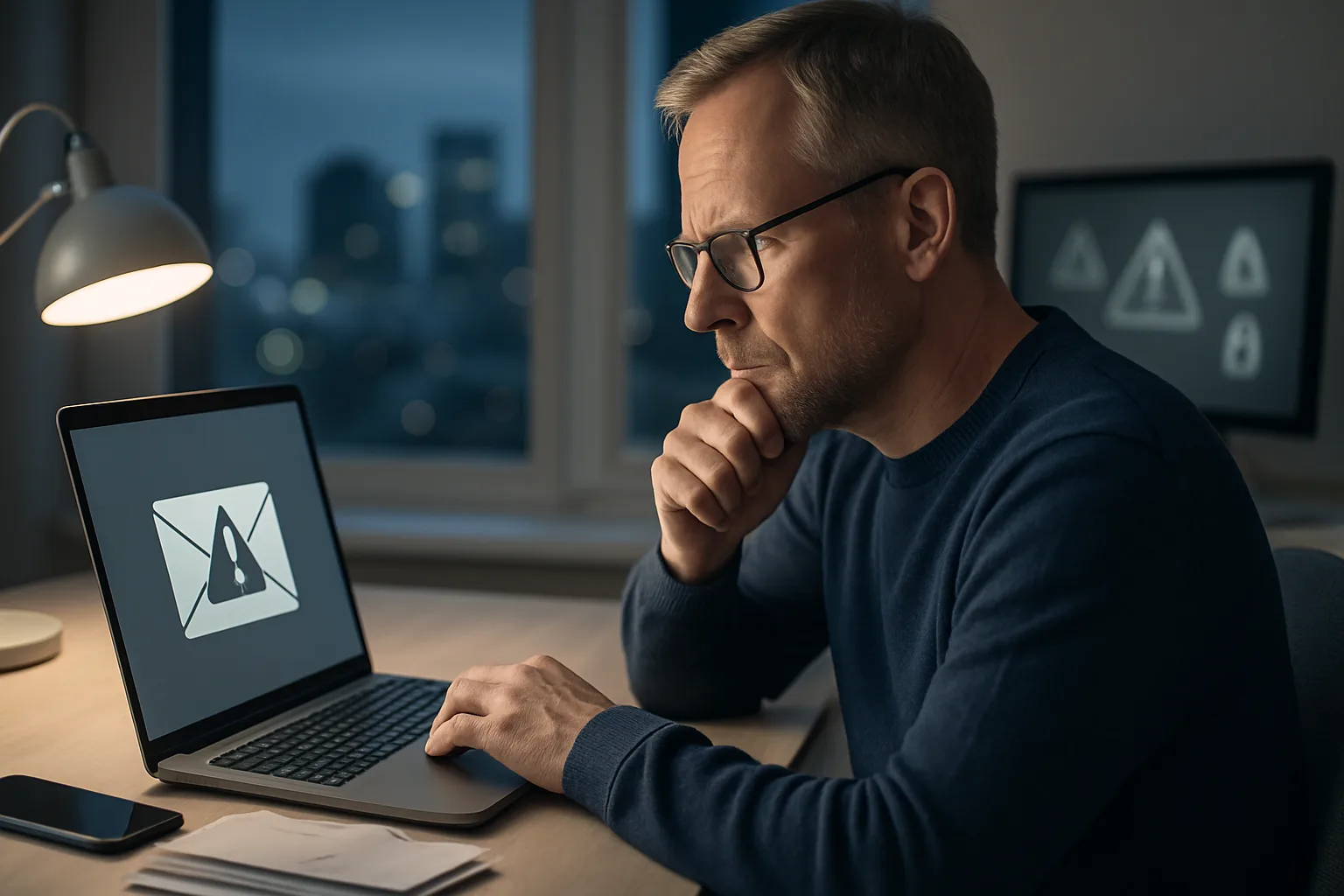
Criminals no longer need a badly spelt email promising an inheritance. A parcel delivery charge, an HMRC tax rebate or a warning about your bank account gives you a plausible reason to act. The message may ask you to follow a link, enter card details or speak to someone who can supposedly fix the problem.
The link may lead to a copy of a familiar website. This is phishing: a message designed to lure you into giving away information or money. Good spelling is no reassurance. Artificial intelligence can help produce fluent messages, while a scammer can disguise the number shown on your screen. Ofcom calls that number spoofing.
Even a familiar name on your phone is not enough. Judge the request, not the polish. An unexpected message asking you to log in, pay a fee or disclose a code deserves a separate check, whether it claims to be from your bank, the NHS or a courier.
Do not use the link or telephone number in the message. Open the organisation’s app yourself, type its address into your browser or use a number you already have on a card or statement. If you are expecting a parcel, check its progress through the retailer or courier you actually used. It takes longer than one tap. That is rather the point.
Can you trust a voice that sounds like someone you know?
Not automatically. Voice cloning uses artificial intelligence to imitate a person’s speech. A request that sounds like a relative in trouble might still be a fraud attempt. You do not need to diagnose the audio; you need to verify the person by another route.
Hang up and call your relative using the number saved in your contacts. If they do not answer, contact someone else who can check on them. Agreeing a private family question in advance can help, but do not treat any one answer as a guarantee. If the caller insists you must stay on the line, that is another reason to end it.
The safest response to an urgent request is a check you start yourself.
The same applies to someone claiming to be your bank’s fraud department. Call the number on the back of your card or use the bank’s app. If your bank supports 159, Ofcom says you can use it to be connected to your bank. Never transfer money to a ‘safe account’ because a caller told you to, and never read out a login or one-time security code to prove who you are.
When you make a bank transfer, pay attention to Confirmation of Payee. It checks whether the recipient name you entered matches the account details. A mismatch is a reason to stop and investigate, not a hurdle to click past. A match tells you the account name matches; it does not prove that the promised car, investment or building work exists.
Where should you report a scam text in the UK?
Forward a suspicious SMS text to 7726. It is free, and your mobile provider can investigate it. You can also use your phone’s built-in spam-reporting option. For a suspicious email, forward it to the National Cyber Security Centre at report@phishing.gov.uk. Reporting an attempt is worthwhile even when you have not lost anything: it helps the relevant organisations investigate messages and sites.
A message received through WhatsApp or another messaging app is different from an SMS. Use the app’s reporting tools; you cannot usually forward an app message to 7726. Do not reply to an unknown sender, even to tell them what you think of them. Once you have reported the message, delete it.
If you have lost money or had an account hacked, reporting the message alone is not enough. In England, Wales and Northern Ireland, report the crime to Report Fraud online or on 0300 123 2040. It replaced Action Fraud on 4 December 2025, so older advice sending you to Action Fraud is out of date. In Scotland, report fraud to Police Scotland on 101. These are reporting routes for victims, not substitutes for calling your bank immediately.
If you entered a password on a suspicious site, change it on the genuine site and on any other account where you reused it. Turn on two-step verification, which requires a second check as well as your password, for important accounts such as email. If you entered card or banking details, contact your bank straight away. There is no prize for waiting to see whether a small charge appears.
Will your bank refund a scam transfer?
Often, but not automatically. An authorised push payment, or APP scam, is when you are tricked into sending money yourself, commonly by bank transfer. UK reimbursement rules covering most qualifying transfers between UK accounts through Faster Payments or CHAPS took effect on 7 October 2024. They generally require payment providers to refund eligible victims up to £85,000 per claim.
You must tell your payment provider within 13 months of the last payment in the scam, though you should report it immediately to give the bank the best chance of tracing the money. A provider may deduct an excess of up to £100. If it refuses an eligible claim because it says you were grossly negligent, it has to demonstrate more than that you made an ordinary mistake. Particular vulnerability to the scam can also affect how the rules apply.
The rules are not a blanket guarantee for every loss. They do not mean a card payment, a cash withdrawal, a transfer overseas or a dispute with a genuine seller is automatically covered by the APP scheme. Tell the bank exactly what happened, keep the messages and payment details, and ask it to explain its decision. If you disagree, complain to the provider; the Financial Ombudsman Service may then be able to review your case, including losses beyond the scheme’s £85,000 limit.
A refund is a safety net, not a reason to gamble on a convincing caller. The habit worth keeping is boring and free: stop, leave the conversation and make your own contact with the real person or organisation.

In short
Do not trust a message, displayed number or familiar-sounding voice on its own. Check urgent requests through a number or app you chose independently, report suspicious SMS texts to 7726, and contact your bank immediately if you have sent money. Since 7 October 2024, eligible UK bank-transfer scam victims have had reimbursement protection, but it has limits and is not a substitute for checking before you pay.
Sources

Midcent Tech
Alex Innes explains technology for men 45 and over who have seen every gadget since the ZX Spectrum and are not easily impressed. AI and ChatGPT, phones, cars, the smart home, the subscriptions worth keeping and staying safe online – what it does, whether it's worth the money, and whether you need it at all.
One of Midcent's writers. Spotted something? Write to alex@midcent.uk.