Nobody wants to date a man in his fifties – or do they?
Swiping in your fifties can feel like shouting into a void. The data tells a different story, and it’s less about romance than about who’s still in your phone.
Reviewed, edited and approved by Editor-in-chief Daniel Sköld · Updated 31 October 2026
Contents
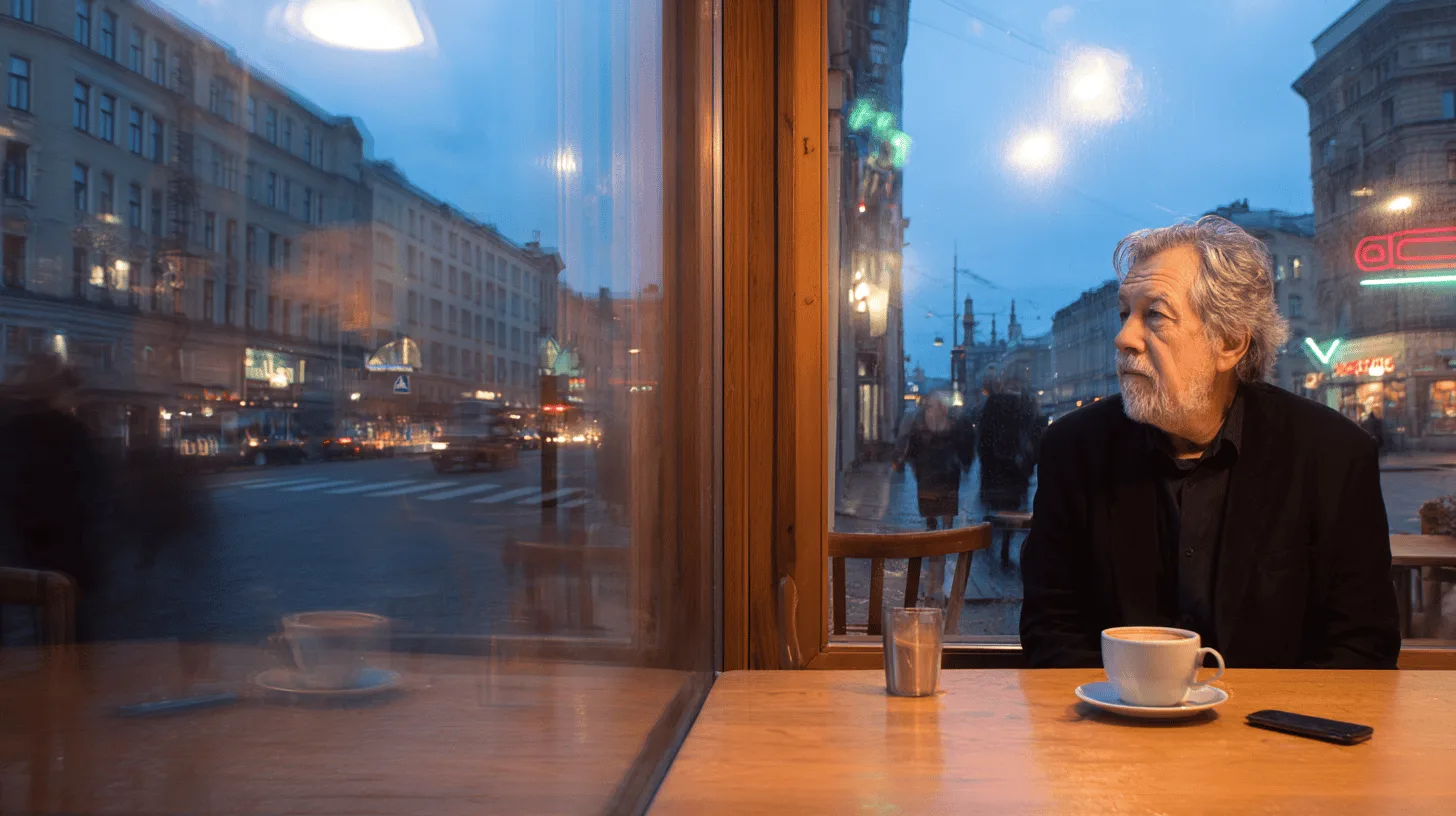
It’s a Tuesday night. You’ve updated your profile picture, the one without the sunglasses because someone told you sunglasses look shifty. You’ve written a bio that says you enjoy walking, good food and travel, which is what everyone writes. Then you swipe for twenty minutes, get one match, and she turns out to be a bot selling crypto. Somewhere around the second glass of red you start to think that nobody wants to date a man in his fifties.
It’s a familiar complaint, and it’s half wrong. The numbers suggest that men in midlife aren’t uniquely unwanted on the dating market. What we’re bad at is the boring stuff underneath it: friends, routine and somewhere to go on a Thursday that isn’t the sofa.
AD
Are men in their fifties actually lonelier than everyone else?
Not according to the people who count these things. The Office for National Statistics asks adults in Great Britain how often they feel lonely in its Opinions and Lifestyle Survey. Ever since it started breaking the answers down by age, younger adults have generally been more likely than older ones to say they feel lonely often, always or some of the time. The lonely generation, statistically, is the one with the ring lights and the oat milk, not us.
The Campaign to End Loneliness analysed the same ONS data and found that 7.1 per cent of adults, about 3.83 million people, were chronically lonely, meaning lonely often or always. That was half a million more than in the first year of the pandemic. The under-30s came out worst: 16- to 29-year-olds were twice as likely to be chronically lonely as the over-70s. Men did slightly better than women, at 6.3 per cent against 7.7 per cent.
There’s a catch, though, and it lands right on our age group. The same analysis found significant rises in chronic loneliness among people aged 30 to 69. That’s the stretch of life where the job, the mortgage and the kids take up all your time, and then, one by one, they stop needing you. We aren’t the loneliest group, but we’re one of the ones getting lonelier.
Do people over 50 still use dating apps?
More than you’d think, and not just on the apps with silver-haired couples on a beach in the adverts. Ofcom, which tracks what Britons do online, found that over half of the users of Plenty of Fish, Badoo and Happn were aged 35 to 54. Among the over-55s, OurTime, the site aimed at the over-50s, has a user base that is 63 per cent over 55. The single most popular dating service for that age group overall, though, is Grindr. So much for the idea that midlife is a romantic dead zone.
What has changed is the mood. Ofcom’s Online Nation research found that about one in ten UK online adults, around 4.9 million people, visited a dating service in May 2024, and the trend has started to slip for the first time. Younger users in particular are said to be drifting back towards meeting people face to face. If the twenty-somethings are bored of swiping, it’s hardly surprising that a 54-year-old who remembers meeting his first wife at a Wonder Stuff gig finds the whole thing soul-destroying.
The apps aren’t really the problem, though. They’re a shop window, and a shop window is a lonely place if it’s the only place you go.
The trouble with midlife dating is rarely the dating. It’s that for too many men, a partner was the whole social life, and the apps can’t replace that.
AD
Why do so many middle-aged men end up single and isolated?
Start with the plain demographics. Marriage rates in England and Wales have been falling for decades, according to the ONS. Divorce has dropped too: 80,057 divorces were granted in 2022, the lowest number since 1971, and the median marriage lasted 12.9 years for opposite-sex couples who divorced. No-fault divorce arrived in England and Wales on 6 April 2022, which made splitting up less acrimonious, though no less lonely. Scotland and Northern Ireland run their own divorce systems and publish their own figures, so be wary of anyone quoting a single UK number.
You know the pattern even if nobody’s put it on a chart. For many men of our generation the social calendar was run by someone else. She remembered the birthdays, booked the dinners and kept up with the couple from antenatal class. When the relationship ends, or the children leave and the conversation dries up, a man can find that his social circle was rented, not owned. The friends from school went to the wedding and then quietly vanished somewhere between the second child and the first knee operation.
That matters on the dating market too. Someone with a full life is more attractive than someone looking for a partner to fill an empty one. Women in their fifties tend to say this outright. Many have their friendships, their book clubs and their walking groups, and they aren’t looking for a project.
Is your phone replacing real company?
Partly, yes. Most of us now carry a device that offers the feeling of contact without any of the substance. You can spend an evening on WhatsApp groups, LinkedIn and the football forum and go to bed having technically talked to forty people and actually spoken to none. The phone doesn’t cause loneliness, but it numbs it, and that’s arguably worse. A sore tooth you can’t feel is a tooth you never take to the dentist.
The fix is unglamorous and very British: turn up to something regularly. A five-minute chat at the bar beats a fifty-message exchange with a stranger in Leeds. The pub quiz team that’s been short a member since Dave moved to Spain. Walking football, which exists precisely because our knees have filed for divorce from our ambitions. Saturday morning parkrun, where nobody cares about your time and everybody stays for coffee. The local Men’s Shed, where the conversation happens sideways, over a workbench, which is how most men prefer to talk anyway. Choirs, allotments, five-a-side, the cricket club that’s desperate for a scorer.
None of this is dating advice in disguise, but it does tend to work as dating advice. Hobbies widen your circle, a wider circle means more introductions, and real introductions beat an algorithm. You also turn up to a first date with something to talk about besides your ex and your cholesterol.
If the loneliness has started to feel heavy rather than just dull, say so. Your GP can refer you to talking therapies, and in England you can refer yourself to NHS Talking Therapies without a GP. Nobody hands out a medal for gritting your teeth through it.
In short
Men in their fifties aren’t unwanted. Plenty of over-50s use dating services, and ONS data shows younger adults are generally lonelier than older ones. The real risk is that loneliness is rising among people aged 30 to 69, and that many men let a partner run their social life. Build a life worth sharing first, at the pub, the club or the parkrun, and the dating usually gets easier. So when did you last make a new friend?
Andy Irwin writes about the way we live now for men 45 and over: work, relationships, mental health, getting older, and the trends and debates that land on men in the middle of life. With the facts, a dry sense of humour, and no lectures.
One of Midcent's writers. Spotted something? Write to andy@midcent.uk.
Shared history keeps old school friendships going long after you’ve stopped sharing much else. How to tell a rough patch from a friendship that’s run its course, and what to do next.
Most men over 50 have plenty of contacts and very few real friends. Here is how to build new friendships in midlife without it feeling like speed-dating.
Middle-aged British men rarely fall out with their friends. They just stop ringing them. Here’s why male friendships fade after 45, and how a pint, a shed or an allotment can bring them back.
The kids have gone, work matters less and the streaming apps keep multiplying. A blunt look at how British men past 50 can avoid drifting and build a life worth getting up for.