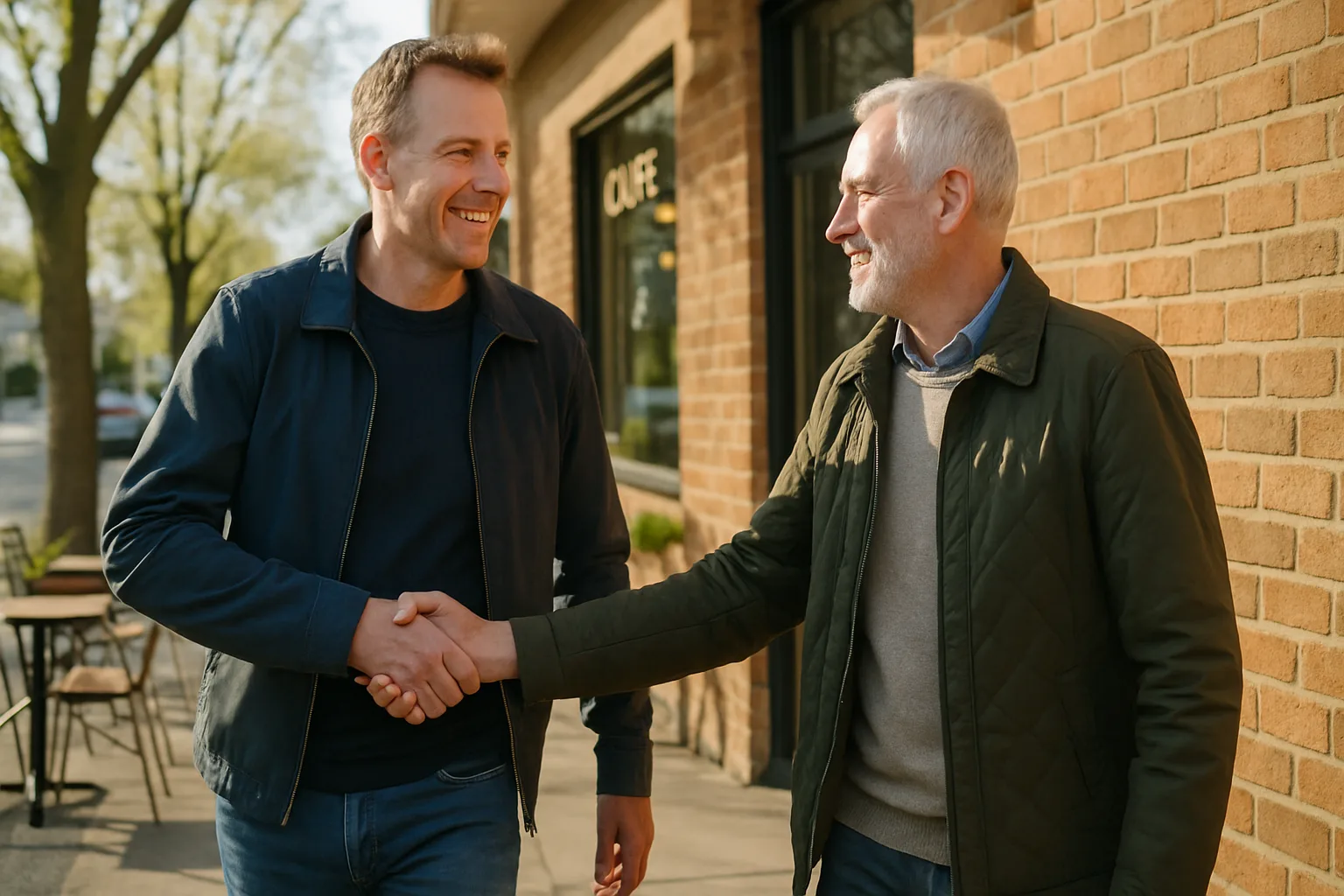
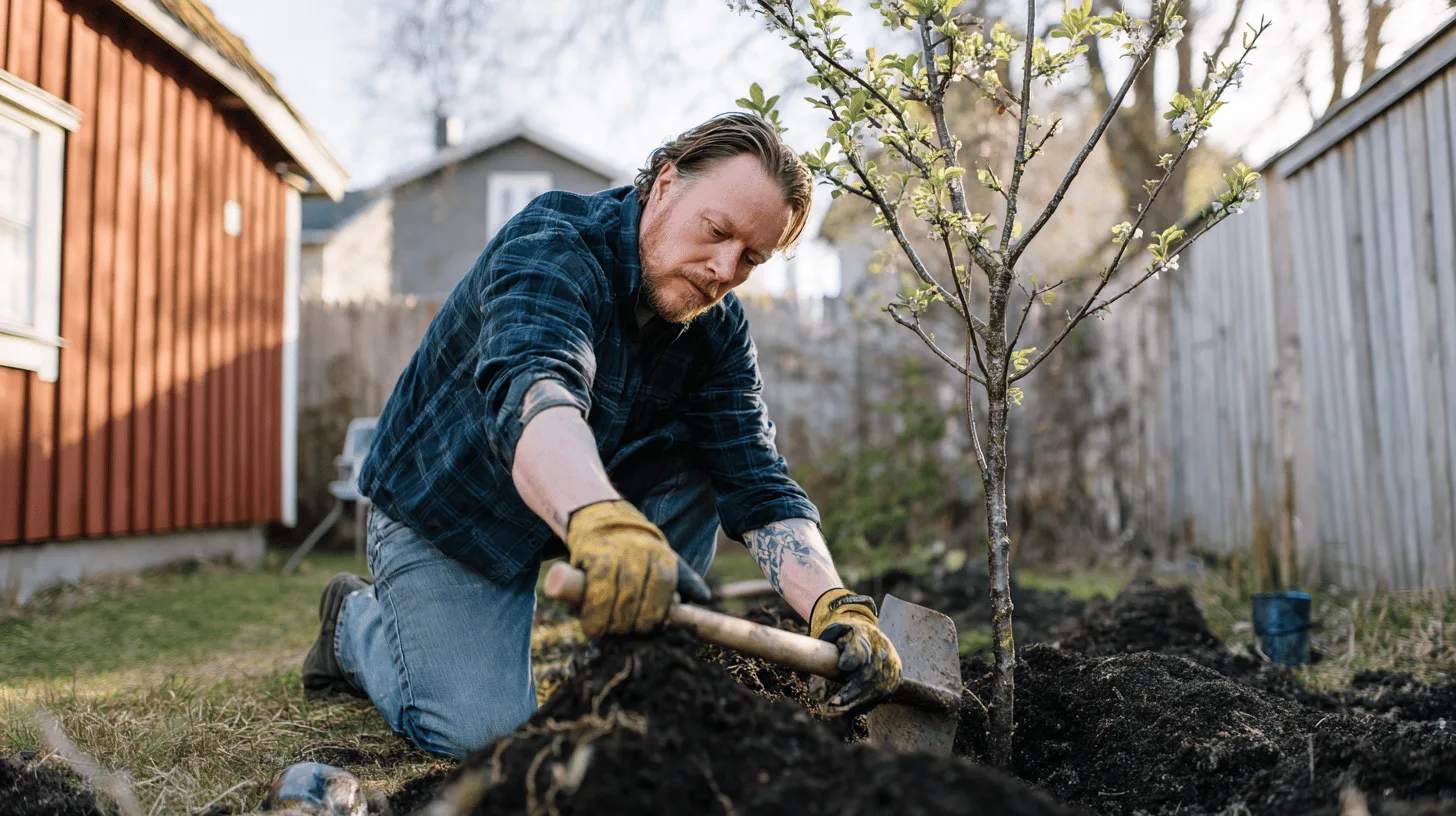
Look at the contacts on your phone. Somewhere between the plumber, a bloke called Dave you met at a stag do in 2004 and four numbers for the same dentist, there are the people you would actually ring if things went badly wrong. For a lot of men over 50 that list is short. A surprising number would struggle to fill one hand.
It sneaks up on you. School friends drifted off, work friends turned out to be friends of the office, and your social life quietly became whatever your partner organised. Then the children leave, the job changes or the marriage ends, and the diary goes very quiet. The good news is that making friends at this age isn’t some mysterious knack you either have or you don’t. It’s a skill, and it takes time, same as fixing a leaky tap.

How lonely are men in their fifties, really?
Less than the headlines suggest, and more than we let on. The Office for National Statistics’ Opinions and Lifestyle Survey for January 2026 found that 23% of adults in Great Britain felt lonely often, always or some of the time. Men (22%) and women (24%) were close. Those aged 50 to 69 came in at 19%, lower than people in their thirties and forties (28%). On paper, then, middle age is a fairly safe spot.
On paper. An earlier ONS analysis, quoted by the House of Commons Library, picked out unmarried middle-aged people as one of the groups most likely to feel some degree of loneliness. Using a broader measure, England’s Community Life Survey for 2019/20 found that around 47% of adults felt lonely at least occasionally. A 2024 poll for the Centre for Social Justice put the figure for feeling lonely at least some of the time at 58%. The numbers swing around depending on how you ask the question. Most of us know which answer we’d give a stranger with a clipboard, and which one we’d give at 2am.
There’s a gap the statistics struggle to capture, too. Plenty of men aren’t lonely in the sense of sitting alone in the dark. They’re busy, married and in work. They simply have nobody outside the household they could talk to properly. That isn’t a crisis yet, but it can turn into one fast the day the household changes.
Why is it so hard to make friends after 50?
Because for most of your life the job was done for you. School, university, five-a-side, the office, the antenatal class you were dragged along to: each one put you in a room with the same people week after week. That repeated, unplanned contact is how friendship actually happens. Nobody ever made a best mate by deciding to.
Research by Jeffrey Hall at the University of Kansas suggests it takes roughly 50 hours together to go from acquaintance to casual friend, around 90 to count as a friend, and more than 200 to become close. Adults rarely get those hours by accident. You have to set them up on purpose, which feels awkward and a bit needy, and that’s usually where men give up.
Friendship after 50 is not a matter of personality. It is a matter of turning up to the same thing, at the same time, for long enough that people notice when you’re missing.
The other problem is pride. Saying out loud that you’d like more friends feels like admitting you’ve failed at something. It helps to put it another way: you’re not lonely, you’re recruiting.
Where can men over 50 meet new people in the UK?
The trick is to choose places built around doing something, not around socialising. Men tend to bond shoulder to shoulder rather than face to face, and a shared task saves you from small talk.
Men’s Sheds are the obvious place to start. They’re community workshops where people make, mend and potter, and the tea and conversation turn out to be the real point. The UK Men’s Sheds Association runs a directory of sheds across the UK, and Scotland has its own Scottish Men’s Sheds Association. Most sheds are open to anyone. You don’t need to know a dovetail from a dowel.
Parkrun is the other one, and you don’t even have to run. The free, timed 5k events every Saturday morning depend on volunteers to marshal, scan barcodes and keep time. Volunteer a few weeks in a row and you’ll find you’re on nodding terms with half the regulars, then chatting with them, then having coffee afterwards. That’s exactly the repeated contact the research describes.
Walking groups work in much the same way. The Ramblers run local groups and gentler wellbeing walks in England, Paths for All runs health walks in Scotland, and there are similar groups in Wales and Northern Ireland. Beyond that there’s the whole menu of ordinary British club life: bowls clubs that are a lot less sleepy than their reputation, choirs, pub quiz teams, allotment societies, cricket clubs that are always short of an umpire, the local history society, the lifeboat station fundraising crew. Pick something you’d enjoy even if nobody spoke to you. Then you won’t mind that nobody does for the first fortnight.
If you’ve hit a properly bad patch, social prescribing is worth knowing about. GP surgeries can refer people to a link worker, who helps match you with local groups and activities. The schemes work differently in England, Scotland, Wales and Northern Ireland, so ask at your own surgery how theirs runs. Nobody will think you’re wasting their time.
How do you turn acquaintances into real friends?
This is the part where men tend to stall. You’ve got a dozen people you say hello to and none you would ring. Getting from one to the other comes down to a few unglamorous habits.
Be the one who asks. Suggest a pint after the shed session or a coffee after parkrun. Most people are quietly pleased to be asked, and if they say no, nothing is lost. Keep it specific: “Fancy the Red Lion on Thursday?” gets a yes far more often than “We should meet up some time.”
Stick at it. The main reason adult friendships fail is that someone stops turning up. Go to the same thing every week for three months before you decide whether it’s working.
Let people in a bit. Friendships between men can run for years on football and gripes about the A14, and that’s fine. But a little honesty about the divorce, the redundancy or your dad’s dementia is often what turns a mate into a friend. You don’t need a deep and meaningful at the first meeting. Just stop treating every conversation like a press conference.
And dig up the old ones. Some of your best future friends are already in your phone. A message to someone you lost touch with ten years ago (“Saw this and thought of you”) costs nothing. Most will be delighted. The odd one won’t reply, and that’s an answer too.

In short
You can build a new circle of friends after 50, but it won’t happen by accident the way it did at school or work. Choose something you’d enjoy anyway, such as a Men’s Shed, parkrun volunteering, a walking group or a local club, and turn up every week for months. Then be the one who suggests a pint, because research suggests real friendships take dozens of hours together, not just good intentions.
Sources

Midcent Society
Andy Irwin writes about the way we live now for men 45 and over: work, relationships, mental health, getting older, and the trends and debates that land on men in the middle of life. With the facts, a dry sense of humour, and no lectures.
One of Midcent's writers. Spotted something? Write to andy@midcent.uk.