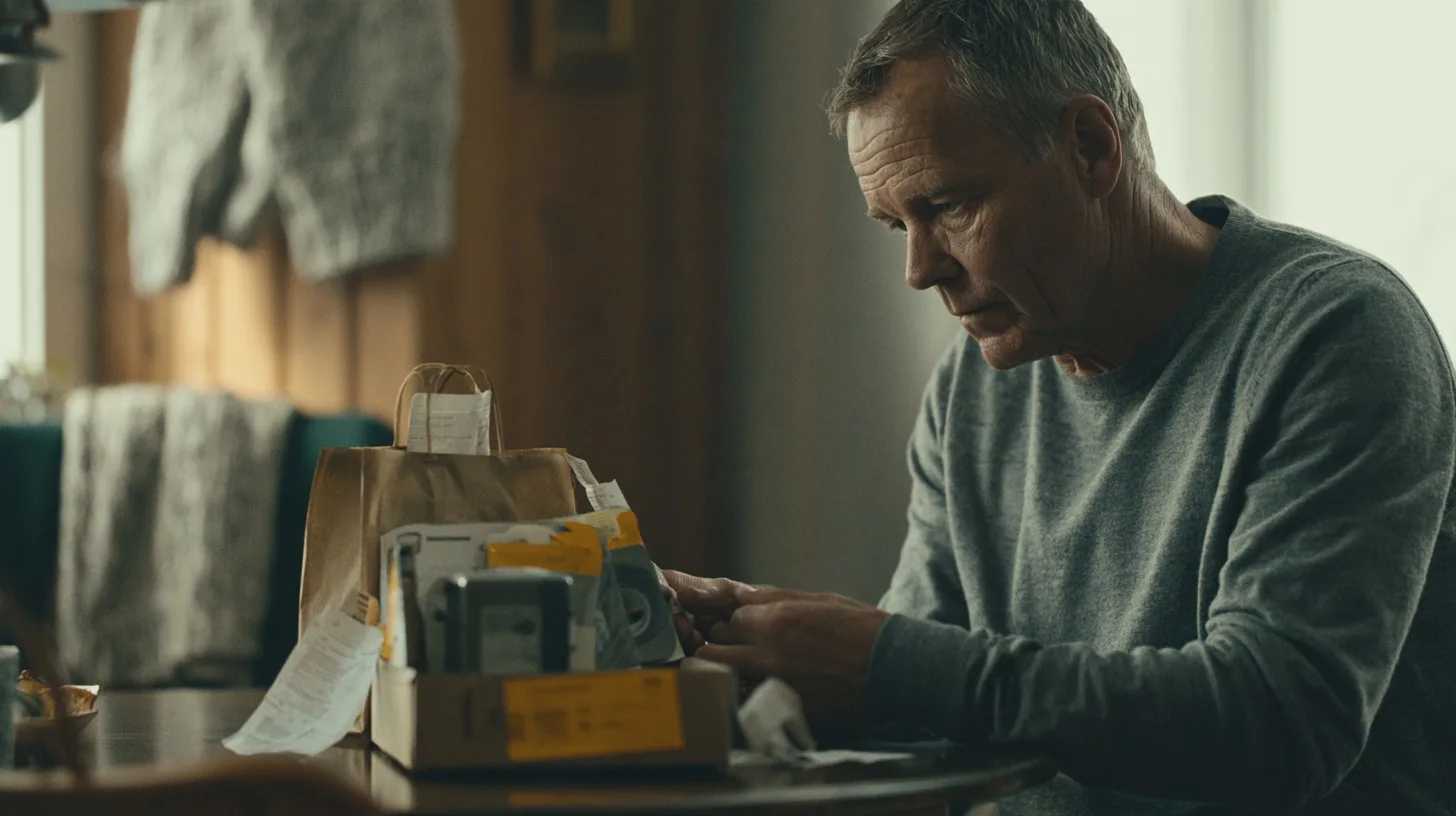
Black Friday returns: what the law says, not the shop
Bought a Black Friday bargain you now regret? Whether you can send it back depends on where you bought it and whether it’s actually faulty. Here’s how UK law works.
Reviewed, edited and approved by Editor-in-chief Daniel Sköld · Updated 2 November 2026
Contents
It happens every year. At half eleven on a Friday night you buy an air fryer the size of a Fiat Panda, because it was £89.99 instead of £149.99 and a little red countdown clock said the offer ended at midnight. By Tuesday it’s on the kitchen worktop like a guest who won’t leave, and you’re wondering whether it can go back.
That depends almost entirely on how you bought it, and only slightly on how sorry you are. UK consumer law has three separate rules for returns, and most people mix them up. The shops know that, and some of them are happy for you to stay confused.
AD
Can I return a Black Friday purchase if I just changed my mind?
If you bought it in a shop, there’s no legal right to return it. That surprises plenty of people, because high-street refund desks have been so generous for so long that we treat it as a law. It isn’t one. Citizens Advice puts it plainly: you don’t automatically get your money back if you change your mind about something you bought and there’s nothing wrong with it.
Whatever you get comes from the retailer’s returns policy, which is a goodwill gesture written by its marketing and finance departments. Lots of big chains extend their returns window over the Christmas period, so a jumper bought in late November can often go back in January. Some don’t, and some exclude sale items or offer only an exchange or a credit note instead of cash. Since the policy is the only thing protecting you, read it before you pay. Once you’ve paid, it’s too late to argue about it. Keep the receipt too, or a gift receipt if the thing is a present.
How long do I have to return something bought online?
Online, the position changes completely. Under the Consumer Contracts (Information, Cancellation and Additional Charges) Regulations 2013, which apply across England, Scotland, Wales and Northern Ireland, anything bought at a distance (online, by phone or by mail order) comes with a 14-day cooling-off period. You don’t need a reason. “I panicked at midnight” counts as much as anything else.
For goods, the 14 days start the day after the item arrives, not the day you ordered it. That matters in late November, when deliveries can drag on for a week. Once you’ve told the seller you’re cancelling, you then have another 14 days to send the item back. When the seller gets it back, or gets proof you’ve posted it, it has 14 days to refund you, and the refund has to include the standard delivery charge you originally paid.
There are catches. You normally pay the cost of sending it back, unless the seller said it would cover returns or failed to tell you that you’d have to pay. For a bulky item like that air fryer, the return courier can easily cost more than a takeaway. You’re allowed to handle the item the way you would in a shop, to check it works, but if you’ve used it properly the seller can knock something off the refund for the loss in value. Some things are excluded altogether: made-to-measure or personalised items, perishable food, sealed hygiene products once unsealed, sealed CDs, DVDs and software once opened, and digital downloads once you’ve agreed to them starting.
The cooling-off right applies to businesses, not private sellers. That bargain from a stranger on a marketplace app is a different matter, and it’s mostly a case of buyer beware.
A discount changes the price, not your rights. A £40 kettle bought on Black Friday has exactly the same legal protection as one bought at full price in March.
AD
What are my rights if a Black Friday item is faulty?
Here the Consumer Rights Act 2015 takes over, and it doesn’t care whether you bought in a shop, online or from a glossy catalogue. Goods must be of satisfactory quality, fit for purpose and as described. If they aren’t, you have a short-term right to reject them and get a full refund within 30 days of taking ownership. The 30 days are set out in section 22 of the Act, and the shop’s returns policy can’t reduce them.
After 30 days, the retailer gets one chance to repair or replace the item. If that fails, you can ask for a price reduction or a refund. If the fault shows up within six months, it’s presumed to have been there from the start, so the retailer has to prove otherwise rather than you proving the fault. After six months that flips, and the burden falls on you. You can bring a claim for up to six years in England, Wales and Northern Ireland, and five in Scotland, although after the first few years a retailer will reasonably argue that an item has had a fair life.
Two practical points. Your claim is against the retailer, not the manufacturer. If a shop assistant tells you to “take it up with the brand”, politely tell them they’ve got that wrong. Also, a sale label doesn’t take away your rights. The only exception is a fault that was pointed out to you before you bought, which is the usual explanation for clearance items labelled “sold as seen”.
So what should you actually do?
First, work out which rule applies. Bought in person and you’ve changed your mind? You’re relying on the shop’s policy. Bought online and you’ve changed your mind? You have the 14-day statutory right. Faulty, wherever you bought it? Consumer Rights Act, 30 days for a full refund. Getting that right before you go in will save you a frustrating ten minutes at the customer service desk.
Second, cancel in writing. An email to the seller does the job, and Citizens Advice publishes a free template letter for cancelling online and phone orders within the cooling-off period. Keep proof of postage when you send the item back. A smartphone photo of the courier receipt is enough.
Third, think about how you pay. If you pay by credit card for a single item costing between £100 and £30,000, section 75 of the Consumer Credit Act 1974 makes the card provider jointly liable if the seller goes bust or refuses to put a genuine fault right. That’s handy when a Black Friday “brand” you’d never heard of turns out to be a website and nothing else. Section 75 doesn’t cover change-of-mind returns, though. That’s still the job of the cooling-off rules.
If a retailer won’t budge, Citizens Advice runs the consumer helpline in England and Wales. In Scotland, consumer advice comes from Advice Direct Scotland, and in Northern Ireland from Consumerline. They can explain where you stand and pass serious cases to Trading Standards.
In short
For a non-faulty item bought in a shop, there’s no legal right to return it, so the retailer’s own policy decides. Buy online or by phone and you have 14 days from delivery to cancel for any reason, then 14 more days to send it back, usually at your own cost. If the item is faulty, the Consumer Rights Act 2015 gives you 30 days to reject it for a full refund wherever you bought it, and Black Friday discounts don’t change any of that. So are you buying because you want it, or because a countdown clock told you to?
Andy Irwin writes about the way we live now for men 45 and over: work, relationships, mental health, getting older, and the trends and debates that land on men in the middle of life. With the facts, a dry sense of humour, and no lectures.
One of Midcent's writers. Spotted something? Write to andy@midcent.uk.
Passed over, plateaued or quietly put out to grass? Here’s how to deal with a stalled career in your fifties, from redundancy rights to free careers advice.
When the children leave home, the house goes quiet and the marriage gets examined. A clear-eyed look at the empty nest: the feelings, the relationship, the spare room and the money.
AI note-takers now sit in on every Teams call. Here’s what UK GDPR and the ICO actually say about recording work meetings, and when you’re allowed to object.