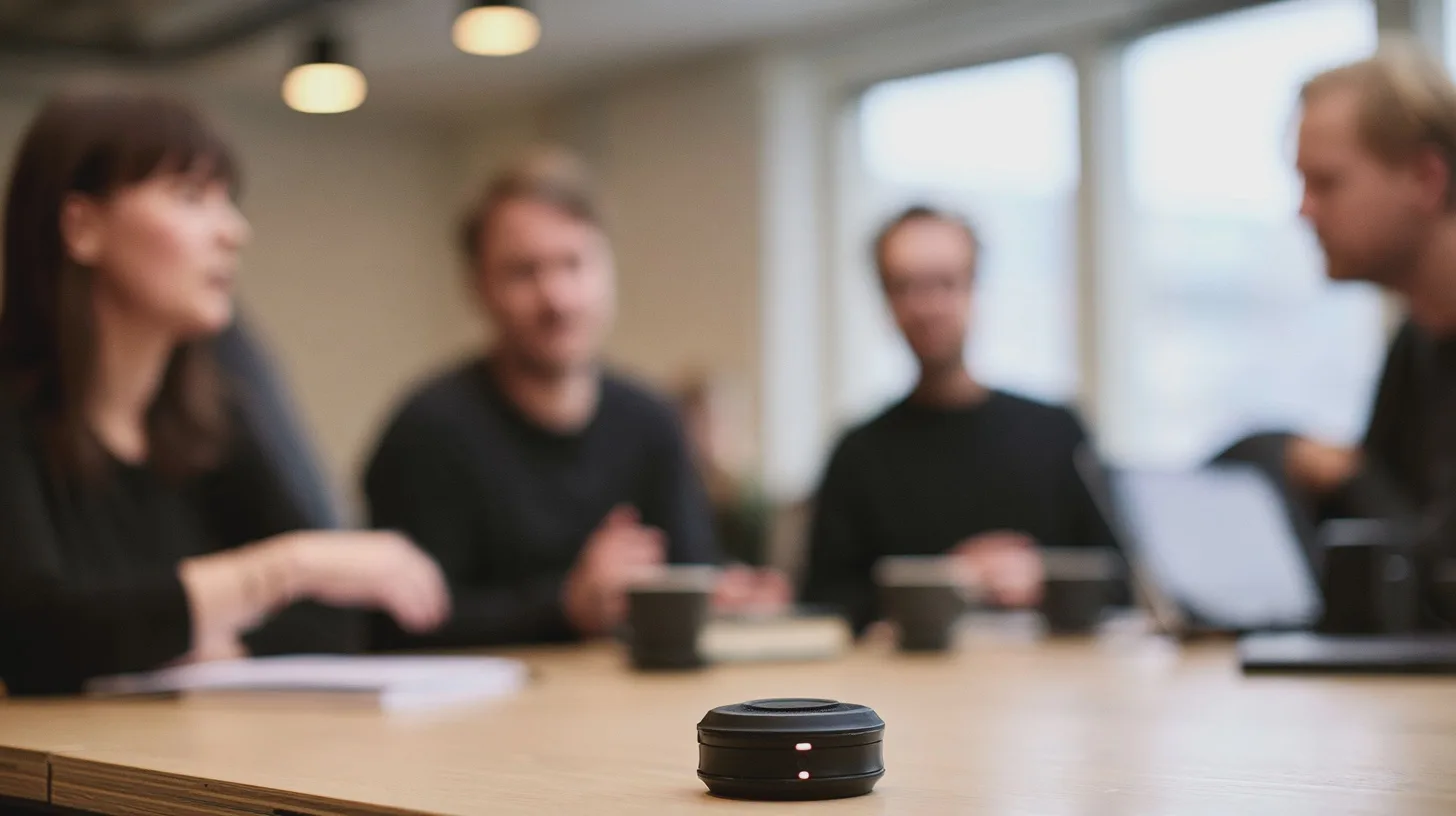
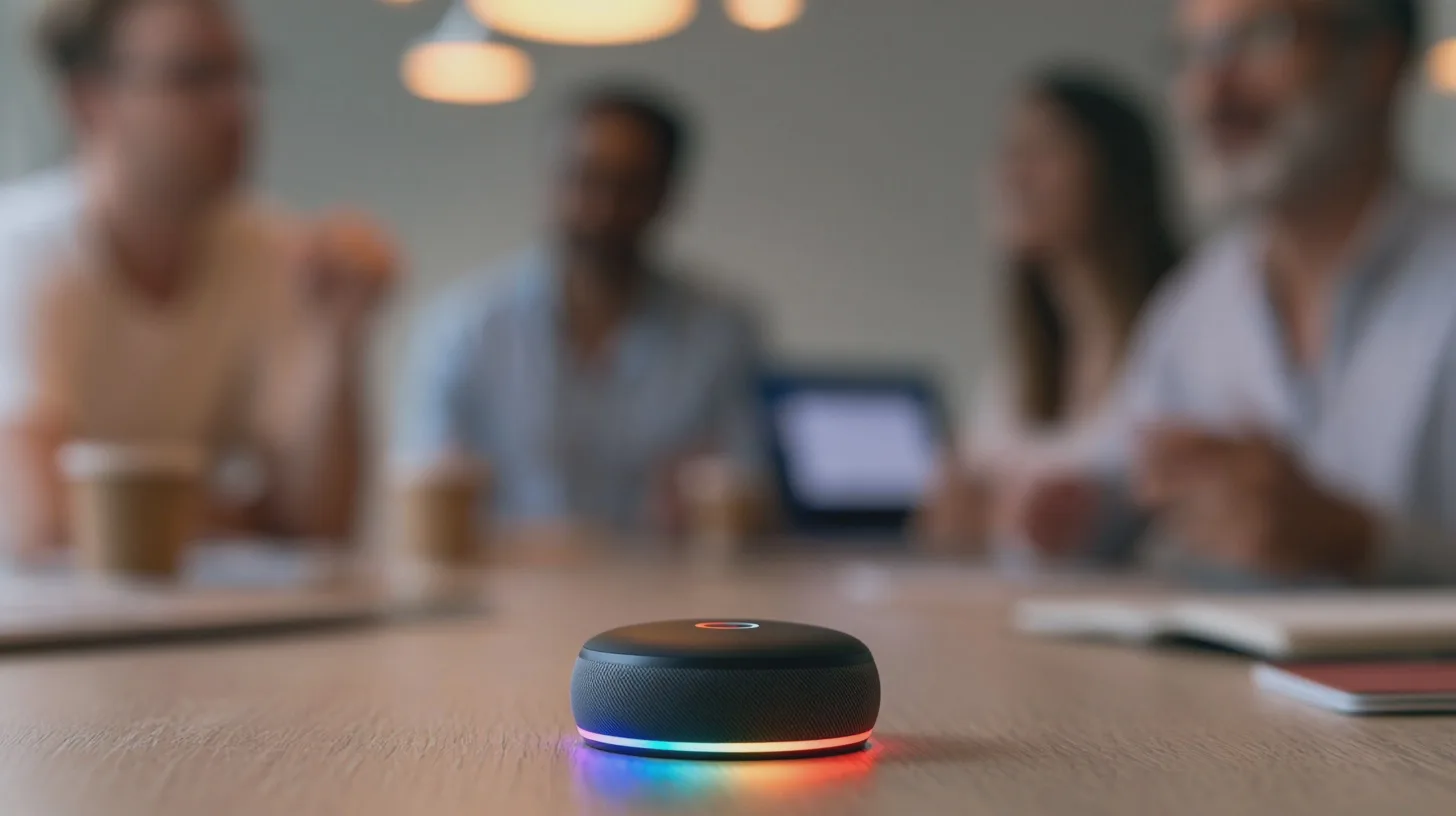
Monday, 9.02am. Twelve faces in little boxes, one of them frozen mid-sneeze, and a polite banner across the top: this meeting is being recorded and transcribed. Nobody asked. Nobody objected. And somewhere a bot that has never had a mortgage or a performance review is writing down that you said the Q3 numbers were, quote, a bit of a car crash.
AI note-takers have sneaked into British offices the way open-plan did: sold as efficiency, with nobody quite sure who agreed to it. So, can you say no? The honest answer is “sometimes”, and it hangs on rules most people in that meeting have never read.
Is it legal to record a work meeting in the UK?
Usually, yes, as long as it’s done properly. A recording of people’s voices, faces and opinions is personal data. That puts it under UK GDPR and the Data Protection Act 2018, with the Information Commissioner’s Office (ICO) as the regulator. Data protection law is the same in England, Scotland, Wales and Northern Ireland, so the rules don’t change at the border.
The law doesn’t ban recording. It asks the organisation doing it to have a lawful basis, to be open about it, to collect no more than it needs, to keep the data accurate and secure, and to delete it once it no longer has a good reason to keep it. An AI transcript, a summary and a list of action points all count. So does the bit where the software decides who said what.
The ICO’s guidance on monitoring workers, published in 2023, says employers can monitor staff, but only lawfully, transparently and fairly. They shouldn’t intrude on people’s private lives, and anything more than light-touch monitoring should usually come with a data protection impact assessment (DPIA). Recording and analysing everything people say in meetings is about as far from light-touch as office life gets.
Does my employer need my consent to record a meeting?
This is where most people’s instincts let them down. You’d think the answer was a big yes. In fact consent is often the wrong legal basis at work. The ICO’s position is that consent has to be freely given, and given the power gap between employer and employee, it rarely is. A “tick here if you agree” from the person who signs off your pay rise isn’t much of a choice.
So most employers rely instead on “legitimate interests”: keeping an accurate record, helping colleagues who missed the call, making meetings accessible to people who need captions. That’s perfectly defensible. But it comes with conditions. The organisation has to weigh its interest against yours, use recording only where it’s actually needed, and tell you plainly what’s being captured, why, who can see it and how long it’s kept.
So in practice your employer may not need your permission. It does need a good reason, a clear policy and honesty about what’s going on. A banner appearing three seconds into the call doesn’t tick all three boxes.
Your employer doesn’t always need your permission to record you. It always needs a reason, and it has to tell you what it is.

Can I refuse to be recorded by an AI note-taker?
You can object, and in many cases you should be listened to. Under UK GDPR you have the right to object to processing based on legitimate interests. The organisation then has to show compelling grounds to carry on, and in a sensitive conversation that’s hard to do. One-to-ones about health, grievances, redundancy chats and anything touching your private life are exactly where an always-on transcript looks like overkill.
Bear in mind, though, that some meetings will be recorded whatever you think: regulated sales calls, for instance, or meetings where the record is the whole point. In those cases the more useful questions are where the recording goes and who gets to read it.
It’s also worth knowing what you’re entitled to afterwards. A transcript that names you is your personal data, so you can ask for a copy through a subject access request, and the organisation normally has one calendar month to reply. If the AI has turned a passing joke into a formal-sounding complaint, the accuracy principle gives you grounds to have it corrected. Speech-to-text software that mixes up “we can’t sign this off” with “we can sign this off” is not a theoretical risk.
What about the colleague who secretly records you on their phone?
This is the other half of the problem, and it’s growing. Someone in a tense disciplinary hearing quietly records it to protect themselves. Is that allowed? Data protection law largely exempts recordings made purely for personal or household purposes, so an individual’s own recording sits in a grey area that UK GDPR doesn’t really cover. Employment law is less relaxed. Recording covertly can be treated as a breach of trust, and many employers’ disciplinary policies list it as misconduct.
Employment tribunals, though, have often allowed secret recordings to be used as evidence where they’re relevant. Recording without asking doesn’t automatically mean gross misconduct, but it can count against the person who did it, including when compensation is worked out. Most employment advisers give the same blunt advice: ask openly first. If you want a record of a grievance or disciplinary meeting, request one, or ask that agreed notes be signed off by both sides. In England, Scotland and Wales, Acas guidance covers how these meetings should be handled. In Northern Ireland the Labour Relations Agency does that job.
What a sensible workplace policy looks like
If you’re the one who manages people, and plenty of Midcent readers are, this is a good moment to look sharp rather than sheepish. A decent policy on recording meetings and AI note-takers answers six questions: which meetings get recorded and which never do, which tool is used and where the data is stored, who can see transcripts, how long they’re kept, how people can object, and whether recordings can ever be used in performance or disciplinary decisions. If the answer to that last one is “maybe”, staff deserve to hear it now, not discover it later.
There are a couple of practical traps too. Staff installing free AI note-takers that join calls on their own can send client conversations to servers nobody has vetted. External attendees, such as suppliers, candidates and customers, have the same rights as your own staff and need telling too. Fines under UK GDPR can reach £17.5 million or 4% of global annual turnover, whichever is higher. Very few organisations will get anywhere near that over a meeting bot, but reputational damage arrives a lot sooner than a fine.
Then there’s the bit no regulation covers. People speak differently when they know they’re being recorded. The half-formed idea, the honest “I don’t think this will work”, the bit of gallows humour that keeps a team going in a bad quarter: those are the first things to go once a transcript is permanent and searchable. Over the years a lot of us learnt that the real meeting happened in the corridor afterwards. AI might simply make the corridor busier.
In short
Recording a work meeting in the UK, AI transcripts included, is generally lawful under UK GDPR and the Data Protection Act 2018 if the organisation has a lawful basis, explains clearly what it’s recording and why, and keeps no more than it needs. Employers rarely rely on consent, but you can object, especially to recording of sensitive one-to-ones, and you can ask for a copy of any transcript about you. The bigger question is whether always-on recording makes meetings more honest, or just quieter.
Sources

Midcent Society
Andy Irwin writes about the way we live now for men 45 and over: work, relationships, mental health, getting older, and the trends and debates that land on men in the middle of life. With the facts, a dry sense of humour, and no lectures.
One of Midcent's writers. Spotted something? Write to andy@midcent.uk.