Antidepressants and your sex life: the talk your GP owes you
Sexual side effects from antidepressants are common, rarely discussed and often fixable. What NHS guidance expects from your GP, and what to ask at your next appointment.
Reviewed, edited and approved by Editor-in-chief Daniel Sköld · Updated 26 October 2026
Contents
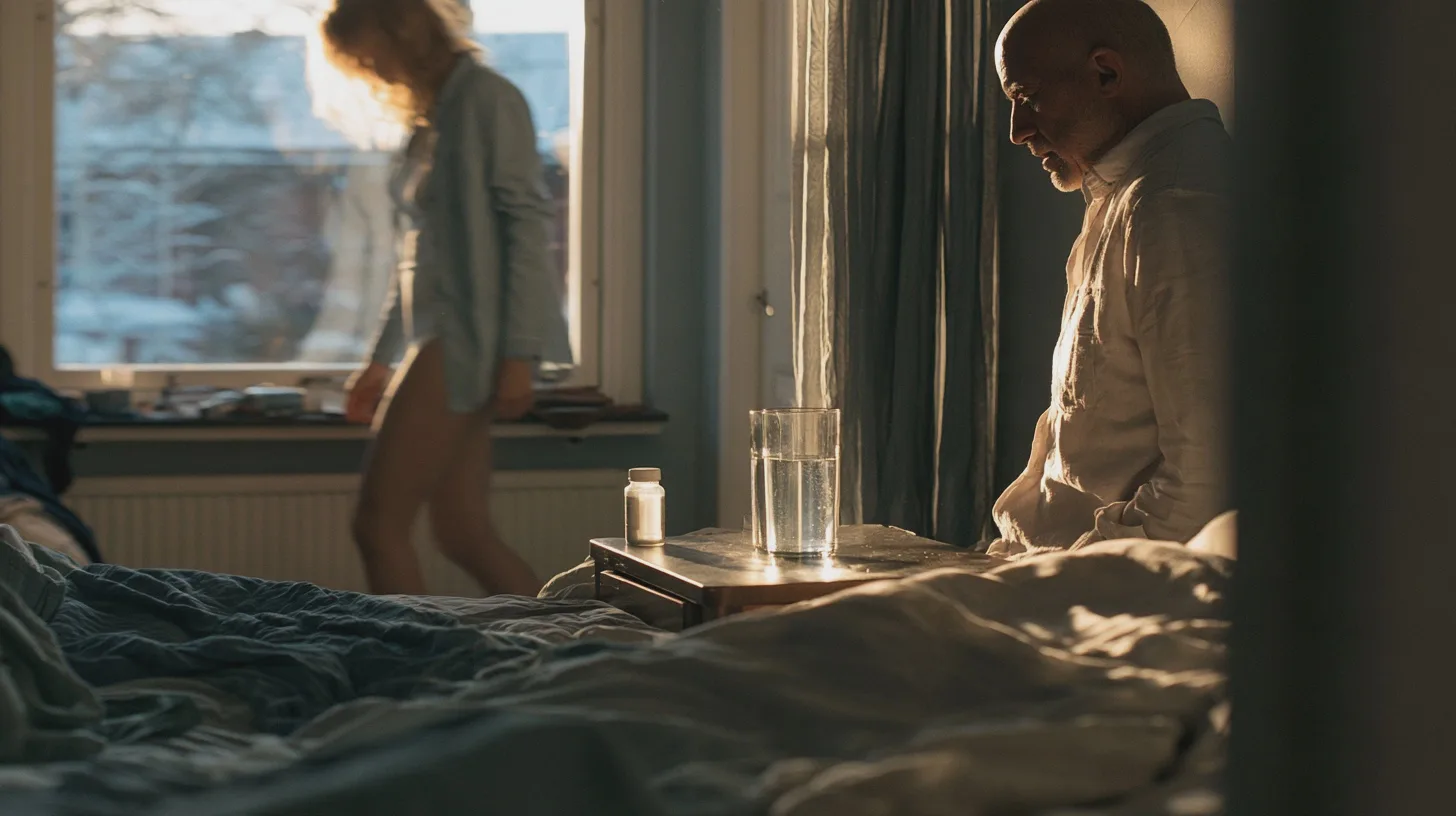
Picture the scene. You’ve finally gone to the GP about the fog that settled over you somewhere around last autumn. Ten minutes, a questionnaire, a prescription for sertraline. The doctor mentions you might feel a bit sick for a week or two. Nobody mentions that a few months later you might be lying in bed next to your partner, feeling better about life in general and oddly indifferent to the one thing that used to need no encouragement at all.
This is one of medicine’s worst-kept secrets. Antidepressants, especially the most widely prescribed ones, commonly affect desire, arousal, erections and orgasm. It’s in the leaflet. It’s in the textbooks. It’s just rarely said out loud in the consulting room, by either party. Let’s say it out loud.
AD
Do antidepressants really affect your sex drive?
Yes, and not as a rare footnote. NHS inform, Scotland’s official health information service, lists low sex drive, difficulty reaching orgasm and, in men, difficulty getting or keeping an erection among the common side effects of SSRIs, the family that includes sertraline, citalopram, fluoxetine and escitalopram. Most side effects improve over time, it notes, but sexual problems can persist.
How common is common? It depends heavily on whether anyone asks. Research reviews published in the US National Library of Medicine put sexual dysfunction at somewhere between 20 and 70 per cent of people taking an SSRI. That range is so wide because, left to volunteer it, patients mostly say nothing. Ask directly with a questionnaire and the numbers climb. Unlike nausea or headaches, which tend to fade within weeks, sexual effects often hang around: one review found only 10 to 15 per cent of affected patients saw real improvement after six to twelve months.
The mental health charity Mind lists the forms it can take: reduced desire, delayed or absent orgasm, delayed ejaculation and, more rarely, the reverse. Some men describe a muted, numb quality, as though someone has turned the volume down. That fits with a related effect researchers call emotional blunting, a flattening of highs as well as lows.
There’s an awkward complication for men of our age. Depression itself flattens libido. So, at 50-odd, can blood pressure, diabetes, falling testosterone, alcohol and sheer exhaustion. Working out what’s causing what takes a proper conversation, not guesswork in the small hours.
What should your GP tell you before you start?
NICE, which sets clinical guidance for England and is widely followed elsewhere in the UK, says in its guideline on depression in adults that treatment choices should be shared decisions. Before you start an antidepressant, your prescriber should talk you through the likely benefits and harms, including side effects, and then review how you’re getting on. Sexual side effects are among the best documented of those harms, so a decent conversation ought to include them.
In practice, a ten-minute appointment, a patient who’d rather discuss anything else and a doctor working through a queue make for a perfect conspiracy of silence. Researchers have flagged the same pattern repeatedly: clinicians often don’t ask, and patients don’t volunteer. The cost isn’t only lost intimacy. Side effects are a major reason people quietly stop taking their tablets, and suddenly stopping brings its own withdrawal symptoms and a real risk of relapse.
A side effect nobody mentions doesn’t go away. It just gets dealt with badly, usually by binning the tablets in secret.
There’s also the longer-term question. Since 2019, patient leaflets for SSRIs and SNRIs in the UK have warned that sexual problems may, in some cases, continue after treatment stops. The condition, known as post-SSRI sexual dysfunction or PSSD, is recognised in the medical literature, but researchers say it’s poorly measured and nobody yet knows how common it is. It’s no reason to refuse treatment you need. It is a good reason to raise the subject early rather than putting up with it for years.
AD
What can you ask your GP about antidepressant side effects?
The good news is there’s usually something to try. Clinical reviews describe a range of options, and none of them involve gritting your teeth and saying nothing. Questions worth taking into the appointment, ideally written down so embarrassment doesn’t edit them out:
Could we wait a little longer? Early in treatment, it can be worth seeing whether things settle, especially if the medication is clearly helping your mood. Agree a date to review it rather than leaving it open-ended.
Could I try a lower dose? Sexual effects are often dose-related. If you’re stable, a careful reduction might keep the benefit and ease the side effects. Never cut the dose yourself; reduce it with your GP’s agreement.
Does timing help? Some people find that changing when they take a once-daily dose makes a difference. A few doctors discuss planned short breaks for certain shorter-acting drugs, but that’s strictly a conversation for your prescriber, because stopping and starting can trigger withdrawal symptoms or a dip in mood.
Is there a different medication? Antidepressants vary in how likely they are to affect sexual function. Some alternatives, such as mirtazapine, vortioxetine or agomelatine, are generally thought to carry a lower risk, though each has its own drawbacks, from weight gain to extra monitoring. A switch should be planned, not improvised.
Could something be added? For erection problems specifically, doctors sometimes prescribe treatments such as sildenafil alongside the antidepressant. Ask about it rather than buying something dubious online.
Should we check anything else? At our age, a blood pressure reading, blood sugar test or hormone check can rule out other causes that have nothing to do with the tablets.
How do you actually bring it up?
Bluntly is best. GPs have heard everything; your love life won’t make their day. Try opening with something like: since starting this medication I’ve had sexual side effects, and I’d like to talk about options. That gives the doctor a clear problem to solve, and it gets the awkward part over in the first breath.
If you’d rather not see your usual GP, ask for another doctor at the practice. If you’re under a psychiatrist or community mental health team, raise it there, as they deal with this all the time. Bring your partner if that helps, or at least tell them what’s going on. Silence in the bedroom gets read as rejection far more often than as a tablet’s side effect.
One practical note on cost if you end up switching drugs. Prescriptions are free in Scotland, Wales and Northern Ireland. In England, there’s a charge per item unless you’re exempt, and everyone aged 60 or over gets them free. If you’re on several regular medicines, a prescription prepayment certificate usually works out cheaper.
In short
Sexual side effects such as low desire, erection problems and delayed orgasm are common with antidepressants, particularly SSRIs, and often don’t fade on their own. NICE guidance expects prescribers to discuss side effects and review treatment, so you’re entitled to raise it. Ask your GP about waiting, lowering the dose, changing the timing, switching medication or adding treatment, but never stop or change your tablets without advice. The real question is why such a common problem still relies on the patient being brave enough to mention it.
Andy Irwin writes about the way we live now for men 45 and over: work, relationships, mental health, getting older, and the trends and debates that land on men in the middle of life. With the facts, a dry sense of humour, and no lectures.
One of Midcent's writers. Spotted something? Write to andy@midcent.uk.
Millions of people in England take antidepressants, and many quietly lose their libido as a result. Here is what SSRIs and SNRIs can do, and what your GP can change.
Men in midlife are experts at ignoring burnout until it flattens them. Here’s how to spot the warning signs, what your employer owes you, and where help actually is.
Middle-aged British men rarely fall out with their friends. They just stop ringing them. Here’s why male friendships fade after 45, and how a pint, a shed or an allotment can bring them back.