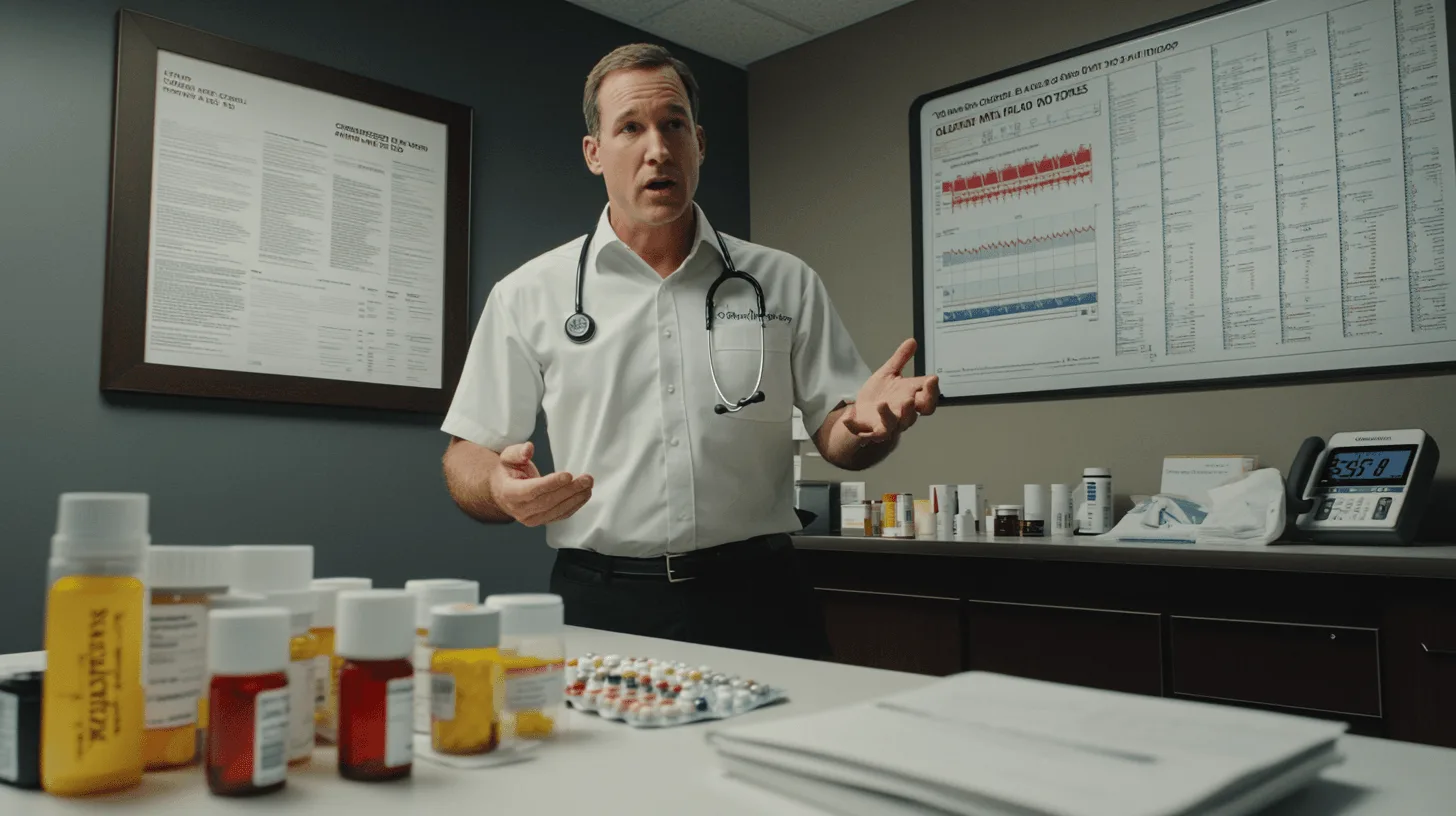
There is no single best blood pressure tablet. Here is how UK treatment steps work, what side effects to watch for and what to ask at your next review.
Reviewed, edited and approved by Editor-in-chief Daniel Sköld · Updated 23 October 2026
Contents
Your GP mentions blood pressure tablets. A mate says his gave him a cough; another says his ankles swelled up. Suddenly the question is not whether to take treatment, but which tablet will make the least nuisance of itself.
There is no champion pill for every man. The useful question is which treatment fits your readings, your other health conditions and the side effects you can live with. Here is how the UK approach works.
AD
Do you actually need a tablet?
First, make sure the number is real. Blood pressure often causes no symptoms, and one high reading at the surgery is not usually enough to diagnose hypertension. A reading of 140/90 mmHg or above in the clinic will generally be followed by a monitor worn during the day. If that is unsuitable, you may be asked to take readings at home. An average of 135/85 mmHg or above outside the clinic helps confirm the diagnosis.
Home monitoring means more than checking once after a difficult meeting. NICE recommends two readings, at least a minute apart, morning and evening, for at least four days and ideally seven. The first day’s results are left out of the average. Use a suitable cuff, sit quietly with your arm supported, and ask your practice how it wants the results recorded.
Whether you need medicine then depends on more than that average. Under NICE guidance, persistent stage 2 hypertension calls for drug treatment alongside lifestyle advice. With milder, stage 1 hypertension, your clinician considers factors such as diabetes, kidney disease, existing cardiovascular disease and your risk of a heart attack or stroke. Even with a lower calculated risk, treatment may be worth discussing if you are under 60.
That is a conversation, not a test of character. You can ask what difference treatment is likely to make for you and what happens if you focus on lifestyle changes first. Eating less salt, moving regularly, drinking less alcohol if you drink heavily, and losing weight if needed can help. They do not automatically replace tablets when your risk is higher.
Which blood pressure medicine comes first?
NICE sets out treatment in steps rather than declaring one drug the winner. At step 1, an ACE inhibitor, such as ramipril, or an angiotensin receptor blocker (ARB), such as losartan, is generally offered if you have type 2 diabetes, whatever your age or family origin. The same choice generally applies if you are under 55 and not of Black African or African–Caribbean family origin.
Without type 2 diabetes, people aged 55 or over, and people of Black African or African–Caribbean family origin at any age, are generally offered a calcium-channel blocker, such as amlodipine, first. These are prescribing starting points, not assumptions about you as an individual. Kidney health, other conditions and medicines still matter. If you have established heart disease, its own treatment guidance may also affect the choice.
The side effects are easier to remember than the class names. Ramipril can cause a persistent dry cough; an ARB may be offered instead if that happens. Both types need attention to kidney function and potassium levels. Amlodipine can cause swollen ankles, flushing or headaches. Tell your clinician if an effect troubles you rather than quietly abandoning treatment.
If a calcium-channel blocker is unsuitable, NICE recommends a thiazide-like diuretic; indapamide is an example. You may pass urine more often at first, and blood tests may be needed to check potassium. It is worth mentioning gout or kidney problems when treatment is discussed. Beta-blockers have uses in heart care, but they are not NICE’s routine first choice for uncomplicated high blood pressure.
AD
What if one tablet is not enough?
Needing a second medicine is common enough that NICE has a plan for it. Before changing treatment, your clinician should ask whether you have been able to take the first tablet as prescribed. If you have not, explain why. Forgetting doses, an awkward routine or a side effect are problems to solve, not grounds for a telling-off.
At step 2, another type of medicine is added. If you started with an ACE inhibitor or ARB, the addition is usually a calcium-channel blocker or thiazide-like diuretic. If you started with a calcium-channel blocker, the options include an ACE inhibitor, an ARB or a thiazide-like diuretic. For someone of Black African or African–Caribbean family origin without type 2 diabetes, NICE advises considering an ARB rather than an ACE inhibitor when adding that type of drug.
The best tablet is the one that lowers your risk without making everyday life unnecessarily difficult.
If two medicines do not control your pressure, step 3 brings together an ACE inhibitor or ARB, a calcium-channel blocker and a thiazide-like diuretic, after checking doses and how treatment is going. An ACE inhibitor and an ARB should not be used together for hypertension.
Pressure still high on three medicines at suitable doses? NICE calls this resistant hypertension. Your team should check readings outside the clinic and review your treatment before considering a fourth drug or specialist advice. Depending on blood-test results, spironolactone may be an option; monitoring matters because it can raise potassium. This is a review to have with your clinician, not a reason to experiment with the medicine cupboard.
Make the treatment fit your life
Ask what target you are aiming for and where it will be measured. For most adults under 80 with hypertension, NICE’s clinic target is below 140/90 mmHg; the corresponding home or daytime-monitoring target is below 135/85 mmHg. Particular conditions, including severe chronic kidney disease or type 1 diabetes, may change the plan. If you feel dizzy on standing, say so: the right number is not much use if you are falling over.
Bring an up-to-date list of medicines, supplements and painkillers to your review. Ibuprofen and potassium-containing salt substitutes can cause problems with some blood pressure medicines. Ask whether you need blood tests after starting or changing treatment, and what to do if you become dehydrated through vomiting or diarrhoea. Do not start, stop or alter a prescription on the strength of an article.
If you have not had your pressure checked recently, ask. In England, eligible adults aged 40 to 74 without certain existing conditions can have a free NHS Health Check, which includes blood pressure. That particular programme is for England. In Scotland, Wales and Northern Ireland, ask your GP practice about a blood pressure check; some pharmacies also offer one, depending on where you live.
A very high reading needs prompt advice, even if you feel fine. If a clinic reading reaches 180/120 mmHg, NICE calls for timely assessment, with same-day specialist assessment when serious symptoms or signs are present. Seek urgent help through your GP or NHS 111; call 999 for an emergency such as chest pain, severe breathlessness or signs of a stroke. The aim is to prevent a crisis, not to win an argument with a machine.
In short
No blood pressure medicine works best for everyone. NICE’s treatment steps use your age, family origin, type 2 diabetes and other health needs to guide the first choice, then add or change medicines if your pressure remains high or side effects get in the way. Confirm your readings, agree a target with your clinician and ask for a review rather than changing tablets yourself.
Adrian Irving writes about health for men 45 and over who would rather do something than worry. Training, weight loss, sleep, cholesterol and blood tests, heart health, testosterone, the prostate, mental health and your sex life – what the evidence says, what's worth trying, and when it's time to see your GP.
One of Midcent's writers. Spotted something? Write to adrian@midcent.uk.
A much-quoted study links frequent ejaculation with fewer prostate cancer diagnoses. Here is what it does and does not prove, and what matters more in midlife.
Blood pressure tends to rise with age, but you needn’t shrug it off. Here’s how to get a useful reading, understand the numbers and decide what to do next.
A high cholesterol result is not a verdict. Here is how to read the numbers, understand your QRISK3 score and decide what is worth discussing with your GP.
Weight-loss injections can reduce more than body fat. Here is what the evidence says about muscle loss, and how to protect your strength without living in a gym.