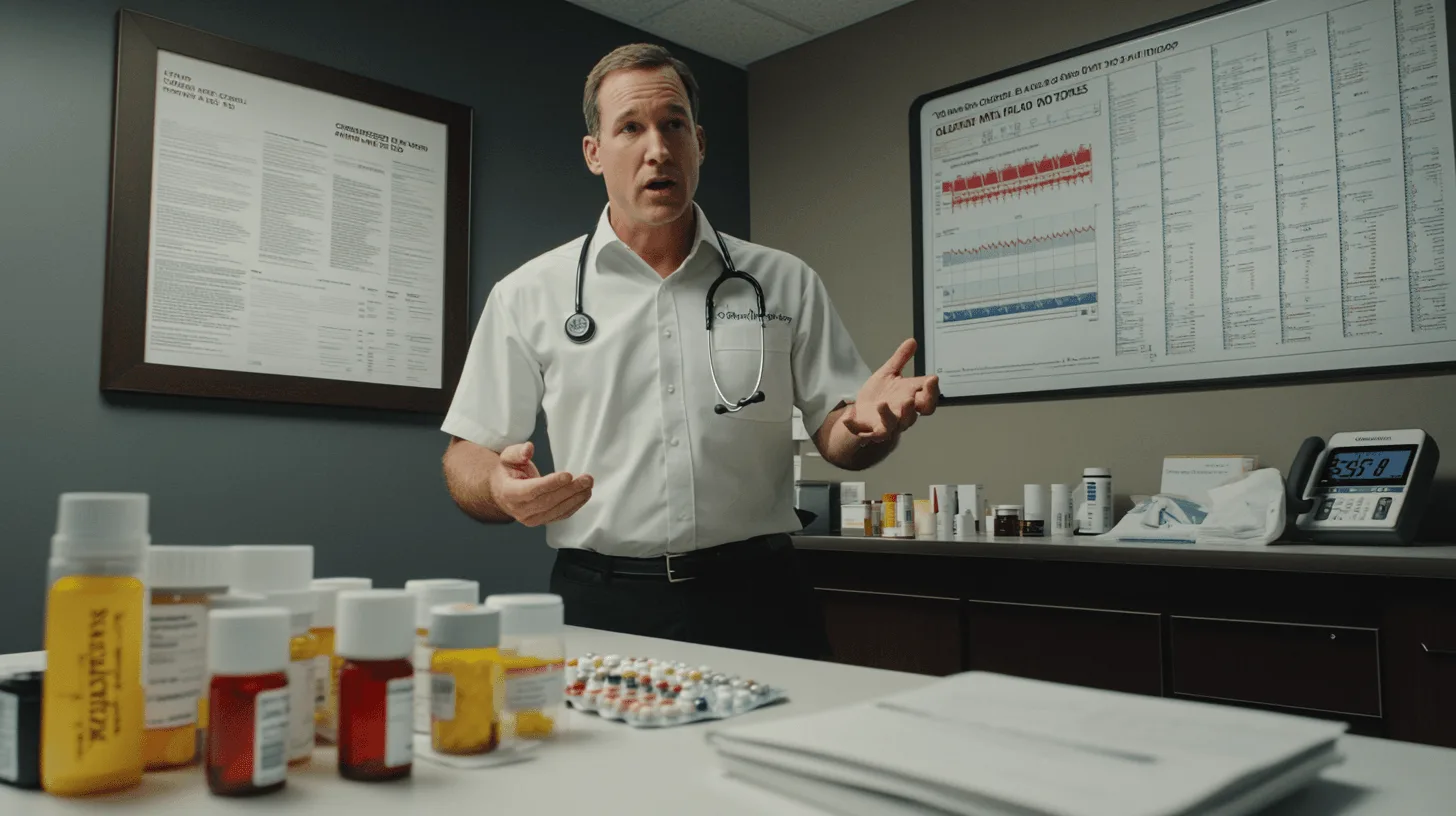
A high cholesterol result is not a verdict. Here is how to read the numbers, understand your QRISK3 score and decide what is worth discussing with your GP.
Reviewed, edited and approved by Editor-in-chief Daniel Sköld · Updated 23 October 2026
Contents
You get a cholesterol result, see a number marked ‘high’, and wonder whether breakfast has been trying to kill you. Then someone tells you statins are essential; someone else says they are poison. Neither is especially helpful.
The useful question is not simply whether your cholesterol is high. It is what your blood results, alongside the rest of your health, say about your chance of a heart attack or stroke — and what you can do about it.
AD
Is high cholesterol always dangerous?
Cholesterol is something your body needs. The problem is that too much of certain types in your blood can contribute to fatty deposits in your arteries over time. High cholesterol usually causes no symptoms, so feeling perfectly fine tells you very little.
A blood test may report total cholesterol, HDL cholesterol, LDL cholesterol, non-HDL cholesterol and triglycerides. Think of LDL as a major part of the cholesterol that can build up in arteries. HDL helps carry cholesterol away. Non-HDL is your total cholesterol minus HDL: a useful measure of the cholesterol carried in particles that can cause trouble. Triglycerides are another type of blood fat.
That is why a single total cholesterol number is a poor basis for either panic or complacency. Two men with the same result may have different levels of LDL, different blood pressure, and very different chances of a cardiovascular event. A favourable HDL result does not simply cancel out a raised LDL result, either.
Context matters particularly if very high cholesterol runs in your family, or a parent or sibling developed coronary heart disease unusually young. An inherited condition called familial hypercholesterolaemia needs its own assessment; a routine risk calculator should not be used to dismiss it. Tell your GP about your family history rather than treating it as an interesting footnote.
If you have never had a cholesterol test and you are over 40, ask your GP practice about one, especially if heart problems run in your family. You do not usually need to fast for a standard lipid test unless you are told otherwise.
What does a QRISK3 score actually tell you?
QRISK3 estimates your chance of developing cardiovascular disease over the next ten years. It draws on more than cholesterol: age, sex, blood pressure, smoking, ethnicity and certain medical conditions also matter. A score of 10% means that, among 100 people with similar risk factors, roughly ten would be expected to develop cardiovascular disease over that period. It is an estimate, not a prediction with your name on it.
Under NICE guidance published in December 2023, clinicians should offer atorvastatin 20 mg for prevention to people without established cardiovascular disease whose ten-year QRISK3 score is 10% or more. That does not mean a prescription is automatic: the decision should follow a discussion of likely benefits, possible harms and what matters to you. A score below 10% does not rule out a statin if you prefer one after that discussion, or your clinician thinks the calculator underestimates your risk.
There are important exceptions. If you have already had a heart attack or stroke, preventing another event is a different conversation; NICE recommends statin treatment for people with established cardiovascular disease regardless of their cholesterol level. Certain conditions, including familial hypercholesterolaemia, also need assessment beyond an ordinary QRISK3 score.
Your cholesterol result is part of the story. Your overall risk is the plot.
In England, eligible adults aged 40 to 74 should be invited for a free NHS Health Check every five years. It considers cardiovascular risk, although people with certain existing conditions or already taking statins are not eligible for that programme and should receive appropriate follow-up instead. If you think you qualify and have not been invited, ask your GP practice or local council.
That invitation scheme is for England, not a UK-wide entitlement. In Scotland, Wales and Northern Ireland, ask your GP practice about a cholesterol test and cardiovascular risk assessment rather than waiting for an NHS Health Check invitation.
AD
Do statins cause diabetes?
Statins can slightly raise blood sugar, and some people who are already at higher risk may develop diabetes sooner. It is a real consideration, not evidence that statins are worse than the heart attacks and strokes they help prevent. The balance depends on your own cardiovascular and diabetes risks, so ask your clinician to put both into perspective.
Muscle aches are another concern worth taking seriously, without assuming every ache is caused by the tablet. NICE says the additional risk of muscle pain caused by a statin is small and severe muscle injury is extremely rare. If you develop unexplained muscle pain, tenderness or weakness while taking one, seek medical advice. Your GP can assess the cause and discuss options such as a different dose or statin; do not change treatment on the strength of a headline or this article.
If you are considering treatment, ask what your estimated ten-year risk is, how much a statin might reduce it in absolute terms, and what follow-up is planned. NICE recommends checking cholesterol and liver enzymes two to three months after starting or changing lipid-lowering treatment. Medicines, supplements and even grapefruit juice can interact with some statins, so run anything new past your pharmacist or prescriber.
What actually helps besides tablets?
Start with changes that improve your wider heart health, not just a laboratory result. Replace some saturated fat — found in butter, fatty meat, sausages and pastries — with unsaturated fats such as olive or rapeseed oil, nuts and seeds. Add oats, beans and lentils: their soluble fibre can help lower cholesterol. These are ordinary meals, not a punishment involving lettuce and regret.
Sugar deserves attention, but not because it is simply ‘the new cholesterol’. Sugary drinks and highly processed, sugary foods can be particularly unhelpful when triglycerides are raised. Alcohol can raise triglycerides too. Look at the whole blood-fat profile rather than choosing a single villain and ignoring everything else.
Aim for at least 150 minutes of moderate activity a week, such as brisk walking or cycling. If you smoke, getting help to stop is likely to do more for your cardiovascular risk than hunting for the perfect breakfast. If you are carrying excess weight, discuss achievable changes with your GP practice; you do not need an arbitrary target in stone or kilograms before taking the first useful step.
Be sceptical of products marketed as natural replacements for statins. Plant sterols and stanols can lower LDL cholesterol, but there is no good trial evidence that they prevent heart attacks or strokes. Red yeast rice may contain a statin-like substance, with uncertain amounts in supplements. Neither is a sensible substitute for a treatment decision made with your clinician.
The practical move is to get your results, ask what they mean for your overall risk, and agree what to review next. That is less dramatic than declaring war on cholesterol. It is considerably more useful.
In short
High cholesterol is a risk factor, not a diagnosis or an automatic instruction to take a statin. Ask about your full lipid results and overall cardiovascular risk; NICE generally recommends offering a statin when a person without established cardiovascular disease has a ten-year QRISK3 score of 10% or more, while allowing for individual circumstances. Diet, activity and stopping smoking matter whether or not you and your clinician decide a statin is worthwhile.
Adrian Irving writes about health for men 45 and over who would rather do something than worry. Training, weight loss, sleep, cholesterol and blood tests, heart health, testosterone, the prostate, mental health and your sex life – what the evidence says, what's worth trying, and when it's time to see your GP.
One of Midcent's writers. Spotted something? Write to adrian@midcent.uk.
A raised cholesterol result is not a verdict on your diet. Here is how to read the numbers, spot possible inherited risk and decide what to ask your GP.
More than half the calories in the average British diet come from ultra-processed food. Here’s what the evidence really shows, and how to cut back without a bonfire of the cupboards.
Blood pressure tends to rise with age, but you needn’t shrug it off. Here’s how to get a useful reading, understand the numbers and decide what to do next.
There is no single best blood pressure tablet. Here is how UK treatment steps work, what side effects to watch for and what to ask at your next review.