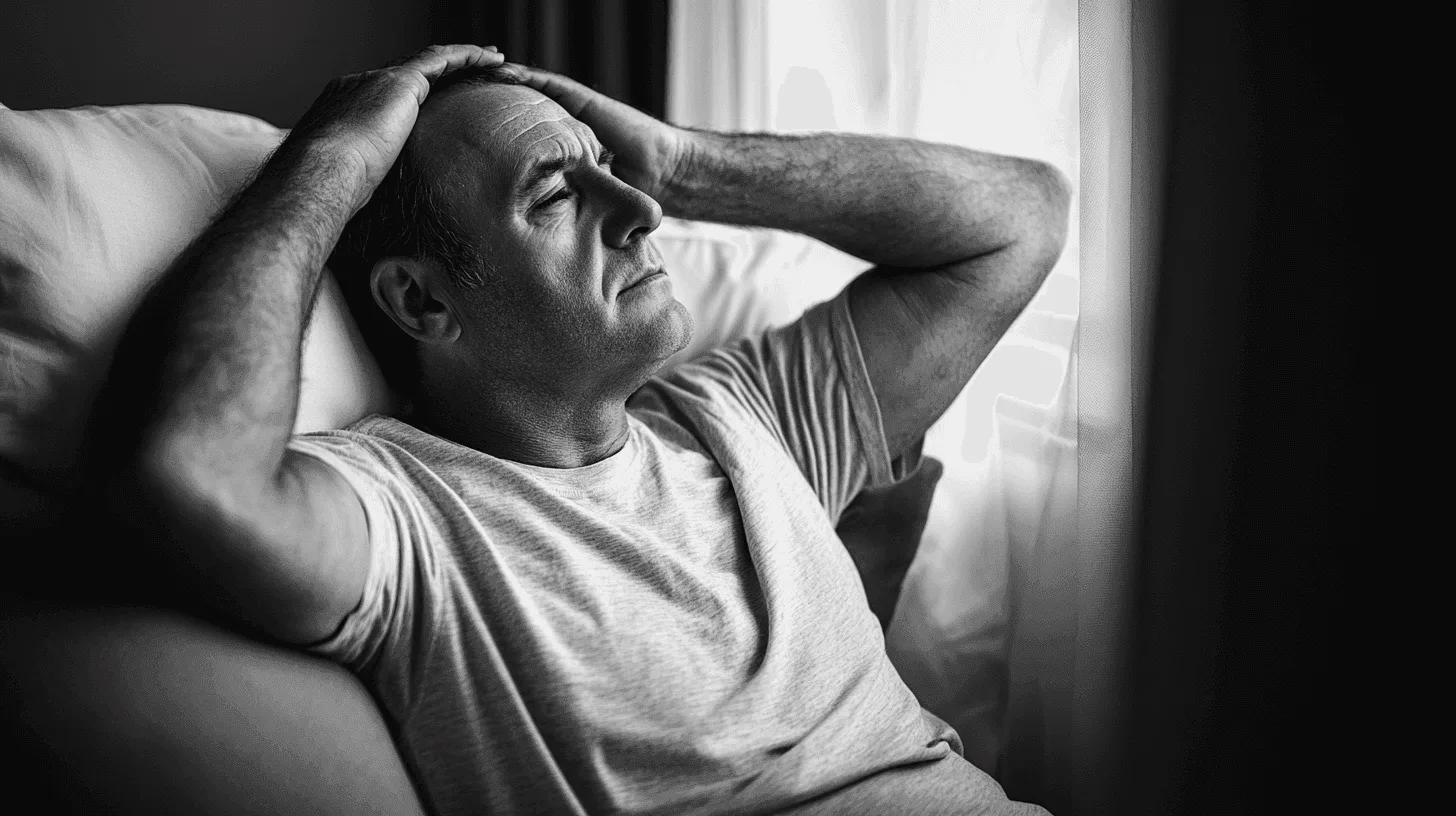
You went to bed at a sensible hour. You even left your phone alone. Yet morning arrives and you feel as though you spent the night assembling flat-pack furniture in the dark.
Sleep can become lighter as you get older, but that does not make persistent exhaustion an inevitable part of midlife. The useful question is not whether you slept perfectly. It is what is disturbing your sleep, and how you feel during the day.

Is waking up tired just part of getting older?
Not necessarily. Sleep often becomes lighter and more easily interrupted with age. You may notice yourself waking earlier, or remembering more of the times you wake during the night. That can be irritating without meaning something is wrong.
But you have not suddenly outgrown the need for sleep. The NHS says most adults need around seven to nine hours, although individuals vary. A better guide than any magic number is whether you can get through the day with reasonable energy and concentration.
There is also a difference between feeling tired and feeling sleepy. Tired might mean you are drained after a demanding week. Sleepy means you struggle to stay awake in a meeting, while watching television or, more worryingly, at the wheel. Neither feeling deserves a shrug if it keeps happening.
Insomnia is not just lying awake until dawn. It can mean regularly struggling to fall asleep, waking repeatedly or waking too early and being unable to drift off again. Feeling unrefreshed, irritable or unable to concentrate the next day is part of the picture. A few bad nights are common; a pattern that disrupts your life is worth addressing.
What is actually waking you up?
Start with the ordinary suspects. Stress can leave your mind running through tomorrow’s jobs at 3am. Alcohol may help you feel drowsy at first but disturb sleep later. Caffeine, a warm bedroom, noise, pain and irregular hours can all play a part. A late-night scroll is rarely the sedative it promises to be.
Then consider what your nights are telling you. If you snore loudly, wake gasping or choking, or somebody notices that your breathing stops and starts, speak to your GP about possible sleep apnoea. Morning headaches and marked daytime sleepiness are further clues. Snoring alone is not a diagnosis, and you cannot rule sleep apnoea out simply because you do not remember waking.
Getting older may change your sleep. It should not be an excuse to ignore a problem that is changing your day.
If you keep getting up to pee, notice whether you also have urgency, a weak stream or difficulty starting. An enlarged prostate is one possible cause, but urinary symptoms should be checked rather than automatically blamed on age. Feeling unusually thirsty and peeing more often can also be a sign of diabetes.
Other clues matter too: an urge to move your legs when resting at night can point towards restless legs syndrome; persistent pain or low mood can disturb sleep. If you feel exhausted despite apparently sleeping enough, a GP may consider causes beyond sleep itself, including anaemia or thyroid problems. None of these can be diagnosed by a bedside clock or a sleep-score app.
Try the boring things before buying the clever ones
If there is no obvious warning sign, give your routine a fair test. Get up at roughly the same time each day, even after a poor night. Go to bed when you are sleepy rather than turning bedtime into a compulsory appointment. Make the room dark, quiet and comfortable, and allow time to wind down.
Exercise during the day can help, but the NHS advises against vigorous exercise close to bedtime. Try cutting out tea, coffee and alcohol in the hours before bed; if your evening drink is part of the ritual, change what is in the cup. Avoid a large late meal. If you are awake and frustrated, do something quiet away from bed and return when you feel sleepy rather than negotiating with the ceiling.
Keep a simple note of bedtimes, waking, naps, caffeine, alcohol and how you feel the next day. You are looking for patterns, not trying to earn a perfect score. It also gives you something more useful to take to a GP appointment than ‘I sleep badly, probably’.
If insomnia persists, ask about cognitive behavioural therapy for insomnia, often called CBT-I. It tackles the thoughts and habits that keep poor sleep going and can be delivered with a therapist or through an online programme. NICE found good evidence that one digital CBT-I programme reduced insomnia symptoms, though access to particular programmes varies locally. An app offering structured therapy is not the same thing as an app announcing that you had a disappointing Tuesday.
Be cautious with quick fixes. Pharmacy sleep aids may help briefly but do not cure insomnia, and some can leave you drowsy the next day. Melatonin is prescription-only in the UK, not a supplement you need to start because a podcast told you to. Ask a pharmacist or GP before taking anything for sleep, particularly if you take other medicines.
When should you speak to your GP?
Book an appointment if poor sleep has lasted for months, sensible changes have not helped, or it is making daily life hard to manage. Do not wait months if you have possible sleep apnoea symptoms, are repeatedly very sleepy in the daytime, or have unexplained tiredness alongside symptoms such as weight loss, marked thirst, mood changes or new problems peeing.
Tell the GP what your nights and days are like. Mention snoring or witnessed pauses in breathing, medicines you take, alcohol, shift work and any pain or worries. Depending on what they find, they may discuss treatment for insomnia, arrange tests for another cause of fatigue or refer you for a sleep assessment. The point is to investigate the right problem, not simply to obtain a sleeping pill.
Do not drive if you feel sleepy. If a sleep condition is causing excessive sleepiness, there are DVLA rules about driving and when you must tell them; ask your doctor if you are unsure. If you cannot pee at all, have blood in your pee or pain when peeing, seek urgent GP advice or contact NHS 111. Call 999 for an emergency.
In short
Sleep may become lighter in midlife, but regularly waking exhausted is not something you have to accept. Check your routine, look for clues such as gasping, daytime sleepiness or urinary changes, and speak to your GP if the problem persists or affects your day. Effective help depends on finding what is keeping you awake.
Sources

Midcent Health
Adrian Irving writes about health for men 45 and over who would rather do something than worry. Training, weight loss, sleep, cholesterol and blood tests, heart health, testosterone, the prostate, mental health and your sex life – what the evidence says, what's worth trying, and when it's time to see your GP.
One of Midcent's writers. Spotted something? Write to adrian@midcent.uk.