Your laptop updates itself overnight without asking. Your phone gets a new operating system every autumn. Your quarterly slide deck gets more redrafts than a peace treaty. And your body, the thing that has to carry all of it into meetings, up the stairs and through the school run or the grandchildren’s visit, last had a proper service in roughly 1997.
Men in their fifties are very good at investing. We know about compound interest, ISA allowances and why you shouldn’t touch the pension. We’re much worse at seeing our own heart, muscles and brain as assets that grow or shrink depending on what we put in. They are, though. And the returns are better than anything your financial adviser will promise you.

Why think of fitness as an investment at all?
Because it works the same way. Small, regular contributions beat heroic one-off efforts. Starting late is better than not starting. Doing nothing has costs too, they just arrive slowly and then all at once, usually in a GP’s surgery.
The government’s advice is less demanding than most men assume. The UK Chief Medical Officers’ physical activity guidelines suggest adults aim for 150 minutes of moderate activity a week (brisk walking counts), or 75 minutes of vigorous activity, plus something that builds strength on at least two days. That’s about 20 minutes a day. Less time than you spend arguing with the self-checkout.
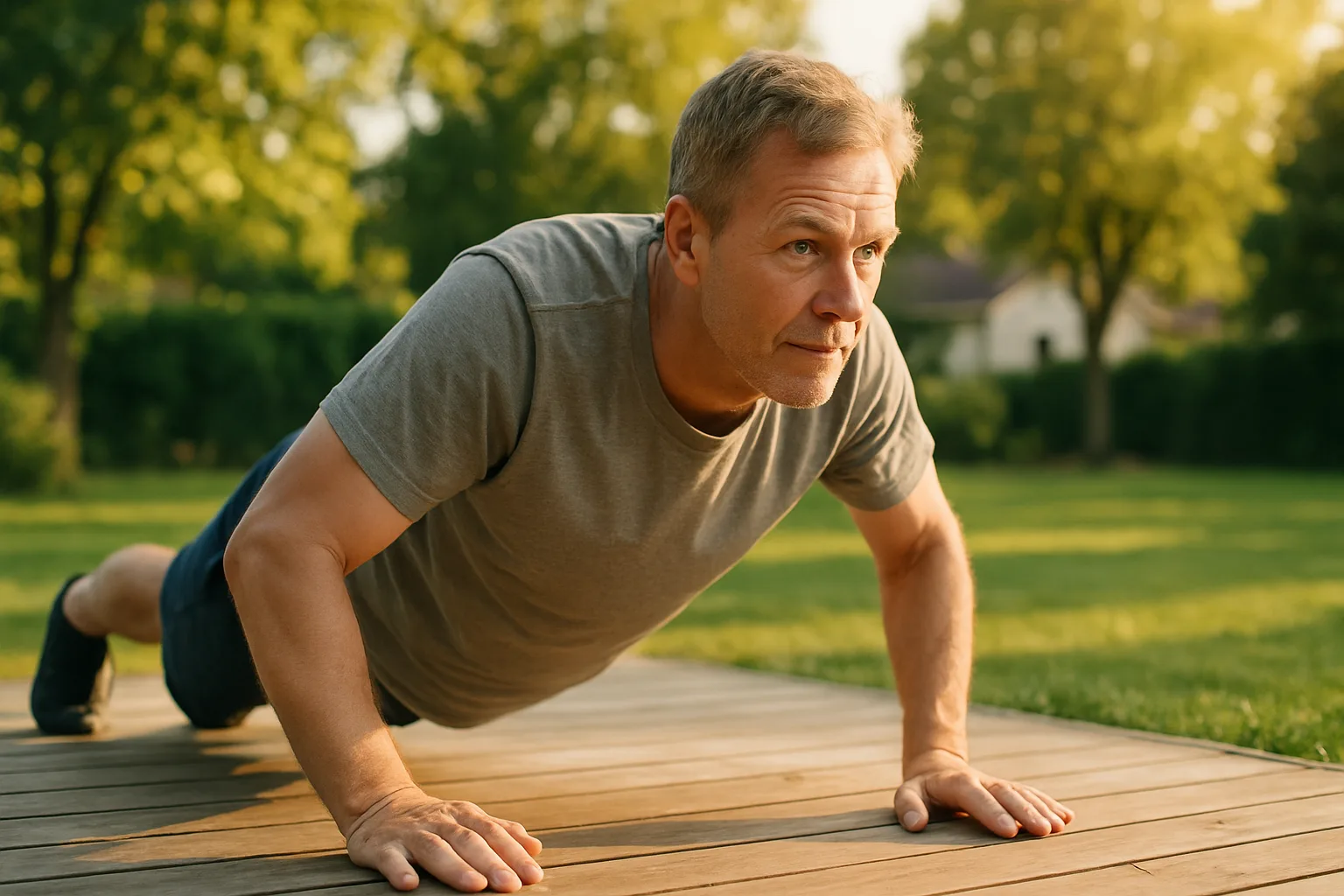
The strength part is the one men in midlife tend to skip, and it’s the one that matters more every year. Muscle declines with age unless you use it. Muscle is what gets you out of a low sofa without the noise, carries the suitcase without the back spasm, and keeps you upright on an icy pavement at 75. Press-ups, squats, resistance bands and lifting heavy things in a gym all count. Digging the garden counts, as long as you do it properly.
Does exercise really keep your brain sharp?
This is where the investment case gets interesting for anyone who still has to perform at work. In 2024 the Lancet Commission on dementia found 14 modifiable risk factors and estimated that nearly half of dementia cases could, in theory, be prevented or delayed by tackling them. Physical inactivity is on the list. So are high blood pressure, high LDL cholesterol, diabetes, obesity, smoking, too much alcohol, untreated hearing loss and social isolation, and you’ll notice most of them are things that regular exercise and a bit of attention help with.
None of that guarantees anything. Plenty of marathon runners get dementia, and plenty of couch potatoes don’t. But in investing terms you’re not buying certainty, you’re shifting the odds. What’s good for your heart is good for your brain, because the brain runs on blood flow. The same habits that bring your blood pressure down also help you stay quick in a meeting where the 32-year-old across the table has clearly read the brief more recently than you have.
You can’t stop the clock, but you can choose whether your fifties are a slow decline or a long, steady plateau.
There’s a mental return as well as a physical one. Learning something new, whether that’s a language, an instrument or finally understanding how the office’s AI tool works, gives the brain the same kind of workout. The men who stay sharp at 60 are usually not the cleverest ones. They’re the ones who never stopped learning.
What is the NHS Health Check and am I eligible?
Before you invest, check the balance. In England, the NHS Health Check is a free check-up offered every five years to adults aged 40 to 74 who don’t already have certain conditions such as heart disease, diabetes or kidney disease. It takes about 20 to 30 minutes, usually at your GP surgery or a local pharmacy, and covers blood pressure, cholesterol, height, weight and your risk of heart disease, stroke, type 2 diabetes and kidney disease. If you’re 65 to 74 you’ll also be told about the signs of dementia.
You should get an invitation, but if you’re in the right age group and haven’t had one in five years, ask your GP surgery. Plenty of men find out about raised blood pressure this way, which matters because high blood pressure usually has no symptoms at all.
This is a scheme for England. Scotland, Wales and Northern Ireland don’t run the same national programme, so if you live there it’s worth asking your GP practice or pharmacist about a blood pressure check and what’s available locally. Many pharmacies across the UK will check your blood pressure for free.
How do I start exercising again at 50 without hurting myself?
Begin embarrassingly small. Men in midlife get injured when they decide to train like it’s 1989 and the five-a-side final is on Saturday. Your tendons haven’t heard the news that you’ve joined a gym.
The NHS Couch to 5K app is free and was built for exactly this. Over nine weeks it takes you from walking to running 5km, three sessions a week, with a coach in your ear telling you when to run and when to walk. It works because it’s dull in the right way: steady, gradual and very hard to fail if you just turn up. The NHS also has its free Active 10 walking guidance and the Better Health website, with plans for losing weight, cutting down on alcohol and getting more active.
Then there’s parkrun, probably the best value public health idea Britain has had since the bicycle. It’s a free, timed 5km on Saturday mornings in parks all over the UK. You register once online, print your barcode and turn up. You can run, jog or walk, and there’s a tail walker who makes sure nobody finishes last. It’s also very sociable, which is useful, because loneliness is on that dementia list too and men in their fifties aren’t known for making new friends easily.
If you’d rather lift weights, budget gyms have changed the maths. You no longer need to pay a fortune to a country club with a sad sauna. Low-cost chains with no contract are widespread, and many council leisure centres offer discounted memberships for older adults or people on certain benefits. Check what your local authority offers before signing anything. If you have a heart condition, joint problems or haven’t exercised in years, speak to your GP first. Some areas offer exercise referral schemes that give you supervised sessions at a reduced price.
How do you make it stick at work and at home?
Treat it like a direct debit, not a New Year’s resolution. Put sessions in your calendar the way you’d put in a client call. Walk to the station rather than drive. Take one meeting a week on foot, using your phone. Keep a kettlebell next to the desk if you work from home, and swing it while the video call buffers.
At home, the return is obvious. You’re the one who can still carry the shopping, play football in the garden without needing ibuprofen afterwards, help move your daughter into her flat, and stay awake past the ten o’clock news. Exercise generally improves sleep, and better sleep helps your mood, your concentration and your patience with everyone in the house.
There’s also the less noble motive, which is perfectly fine: looking and feeling like someone who’s still in the game. Workplaces don’t always say it, but energy gets noticed. So does the bloke who’s out of breath on the first floor.

In short
After 50, your body and brain respond to regular investment like a good pension. Small, steady contributions bring outsized returns in strength, sharpness and independence. Start with a free NHS Health Check if you live in England, aim for 150 minutes of moderate activity plus strength work twice a week, and use free tools like Couch to 5K and parkrun before spending a penny on a gym. The question isn’t whether you can afford the time. It’s whether you can afford not to.
Sources

Midcent Society
Andy Irwin writes about the way we live now for men 45 and over: work, relationships, mental health, getting older, and the trends and debates that land on men in the middle of life. With the facts, a dry sense of humour, and no lectures.
One of Midcent's writers. Spotted something? Write to andy@midcent.uk.