You sit down in the pharmacy, the cuff squeezes your arm like an overkeen handshake, and the machine shows a number you don’t like. Straight away you have your excuses ready. You’d just had a flat white. You’d jogged from the car park. Work has been a nightmare.
Some of those excuses are fair. Others are the stories we tell ourselves so we can ignore the problem for another year. Here’s how to tell them apart, and how to get a number that’s actually worth acting on.

What is a normal blood pressure reading for a man over 45?
The NHS puts ideal blood pressure at roughly 90/60mmHg to 120/80mmHg. If it’s taken in a surgery or pharmacy, 140/90 or above counts as high. Readings taken at home run a little lower, so there the line is 135/85.
The top number (systolic) is the pressure when your heart pumps. The bottom one (diastolic) is the pressure between beats. In midlife the top number usually starts creeping up first, because arteries get stiffer with age.
The awkward bit is that high blood pressure almost never has symptoms. The idea that you’d know because you’d get headaches or a red face is a myth. Plenty of men feel perfectly fine with numbers that are quietly wearing out their heart, kidneys and brain. That’s why the British Heart Foundation calls it a silent risk factor for heart attacks and strokes.
Does coffee or stress raise blood pressure?
Yes, but usually only for a while, and that’s the point. Caffeine, a cigarette, climbing the stairs, a full bladder, a tense meeting or chatting during the test can all push a reading up for a short time. That’s why NHS advice is to avoid caffeine, smoking and exercise for about 30 minutes before you measure.
So the flat white might explain one high reading. It doesn’t explain a pattern. The evidence that your daily coffee causes long-term high blood pressure is weak. For most people, moderate amounts seem fine. Very strong energy drinks are a different matter.
Stress is the same. A bad morning will raise a reading. Whether long-term stress causes hypertension on its own is less certain. Its biggest effect may come through what stress does to your habits: more drinking, worse sleep, takeaways and skipped exercise. Blaming stress is fine, as long as it doesn’t become a reason to do nothing.
The things that really move the needle
Salt is the obvious one, and it deserves its reputation. Adults should have no more than 6g a day, about a teaspoon, and most of it is already in bread, cereals, ready meals, sauces and processed meat before you pick up the salt cellar. Fancy sea salt and pink rock salt aren’t a loophole. Sodium is sodium.
Alcohol is the one men like to get wrong. A drink might feel relaxing, but drinking regularly raises blood pressure over time. The UK Chief Medical Officers advise no more than 14 units a week, spread over three or more days, with some drink-free days. If your weekend routine is four pints on Friday and a bottle of red on Saturday, that’s worth looking at before you blame the barista.
Weight matters too. Extra weight around the middle is closely linked with higher readings, and the NHS lists losing weight, if you need to, among the most effective things you can do. You don’t have to reach some ideal weight from your twenties. Even losing a stone (about 6kg) can make a real difference for many men.
Then there’s activity. The NHS recommends at least 150 minutes of moderate exercise a week, such as brisk walking, cycling or anything that leaves you slightly out of breath.
Sleep tends to get overlooked. Regular short sleep is linked with higher blood pressure. So is obstructive sleep apnoea, where your breathing keeps stopping during the night. If your partner complains about your snoring, or you wake up exhausted after eight hours, mention it to your GP. It’s treatable, and treating it may help your blood pressure too.
One high reading is a nudge. A run of high readings is information. Neither one is a reason to panic, and neither is a reason to look away.
How do I measure my blood pressure properly at home?
Bad technique causes a lot of false alarms, and it can hide real problems too. Use an upper-arm monitor rather than a wrist one, and choose one that has been clinically validated. The British and Irish Hypertension Society publishes a list. The cuff size matters: if it’s too small for a broad arm, the reading will come out too high.
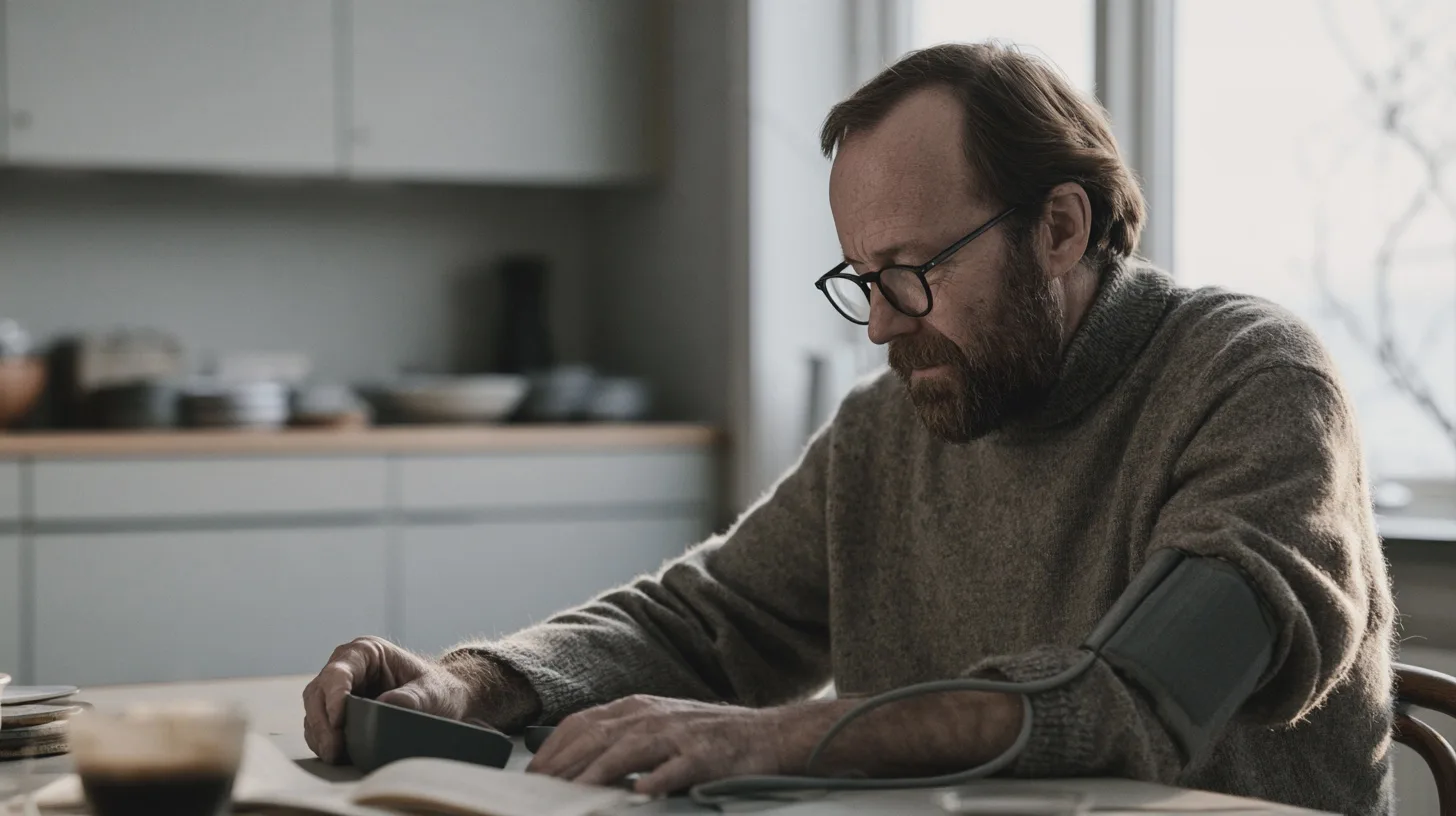
Then do the boring bits properly. Go to the loo first. Sit in a chair with your back supported and your feet flat on the floor, not crossed. Rest your arm on a table at roughly heart level and put the cuff on bare skin, not over a rolled-up sleeve. Sit quietly for five minutes, and don’t talk or look at your phone while it measures.
Don’t rely on one reading. NICE guidance for confirming a diagnosis at home suggests two readings a minute apart, morning and evening, for at least four days and ideally seven. You leave out the first day and average the rest. Write them down or use the monitor’s memory, and take the results to your GP. That’s far more useful than one alarming number from the day your boiler broke.
If a surgery reading is high, NICE recommends confirming it with a 24-hour ambulatory monitor or home readings before diagnosing hypertension. Part of the reason is white-coat hypertension, where your blood pressure goes up because you’re in a clinic. The opposite can happen too: normal in the surgery, high in real life. Home readings help catch both.
Where to get a free check
In England, if you’re aged 40 to 74 and don’t already have certain conditions such as heart disease, you should be invited to a free NHS Health Check every five years. It includes your blood pressure, along with cholesterol and other risk factors. If your invitation hasn’t arrived, ask your GP practice. Many community pharmacies in England also offer free NHS blood pressure checks for adults over 40, with no appointment needed in many cases.
Scotland, Wales and Northern Ireland don’t have the NHS Health Check in the same form. There, ask your GP practice or a local pharmacy about getting your blood pressure checked. Many pharmacies across the UK will do it.
If your readings are very high, or you have chest pain, breathlessness, a severe headache, blurred vision or confusion, don’t wait for a routine appointment. Call NHS 111 for urgent advice, or 999 in an emergency. If you’re already on blood pressure medicine, talk to your GP or pharmacist before changing anything, however good your home numbers look.
In short
Coffee, stress and rushing to your appointment can push up a single reading, but they rarely explain blood pressure that stays high. The things that really matter over time are salt, alcohol, weight, inactivity and poor sleep. Take readings properly at home with a validated upper-arm monitor over several days, and use your free NHS Health Check or a pharmacy check to get a number your GP can work with.
Sources

Midcent Health
Adrian Irving writes about health for men 45 and over who would rather do something than worry. Training, weight loss, sleep, cholesterol and blood tests, heart health, testosterone, the prostate, mental health and your sex life – what the evidence says, what's worth trying, and when it's time to see your GP.
One of Midcent's writers. Spotted something? Write to adrian@midcent.uk.