Most British lawns are looked after the way your dad did it. A bag of feed-and-weed in April, the sprinkler on whenever it looks a bit brown, and a lot of muttering about moss. It is cheap and familiar. It is also mostly guesswork.
The gadget makers would like to replace it with data: probes that report soil moisture to your phone, lab tests that break down your soil’s chemistry, and even DNA kits that list the microbes living under your feet. Some of it is genuinely useful. Some of it is a very expensive way to find out your garden needs a bit of lime.
What is your soil actually telling you?
Before buying anything with Bluetooth in it, you need to know what grass really cares about. There are four things: acidity, nutrients, structure and water.
Acidity is measured as pH, a scale where 7 is neutral, lower is acidic and higher is alkaline. Most lawn grasses are happiest slightly on the acidic side. Get far away from that and the grass struggles to take up nutrients, however much feed you throw at it. That is why so much lawn fertiliser is wasted.
Nutrients means mainly nitrogen, phosphorus and potassium, the N, P and K printed on every bag of feed. Nitrogen drives green leafy growth, phosphorus helps roots and potassium helps the plant cope with stress such as drought and cold. Structure is about whether your soil is heavy clay, free-draining sand or something in between, which decides how fast water vanishes and how quickly the ground compacts.
None of this is new science. What has changed is how easily, and how often, you can measure it.
Are home soil testing kits worth it?
The cheapest option is the chemical kit from a garden centre: shake a sample with water and a reagent, compare the colour to a chart. For pH, these are fine. They will tell you if your soil is acidic, neutral or chalky, which is the single most useful fact about your garden and costs less than a round of drinks.
The nutrient tests in the same kits are rougher. Colour matching in a kitchen is not precise, and the result reflects one spoonful of soil from one spot. If you use one, take small samples from several places across the lawn, mix them together and test the blend.
Avoid the cheap metal-pronged meters that claim to read pH, moisture and light from a single probe. Gardening experts have long been sceptical of their pH readings in particular. As moisture gauges they are just about all right. As chemistry labs they are not.
For a proper answer, send a sample to a laboratory. Agricultural soil labs that serve farmers also test garden samples, and they report pH alongside phosphorus, potassium and magnesium, often with organic matter as an extra. The Royal Horticultural Society publishes clear guidance on how to collect a sample and read the results. Expect to pay tens of pounds rather than a few, and you only need to do it every few years. Soil chemistry does not change quickly unless you change it.
Do smart soil moisture sensors actually save water?
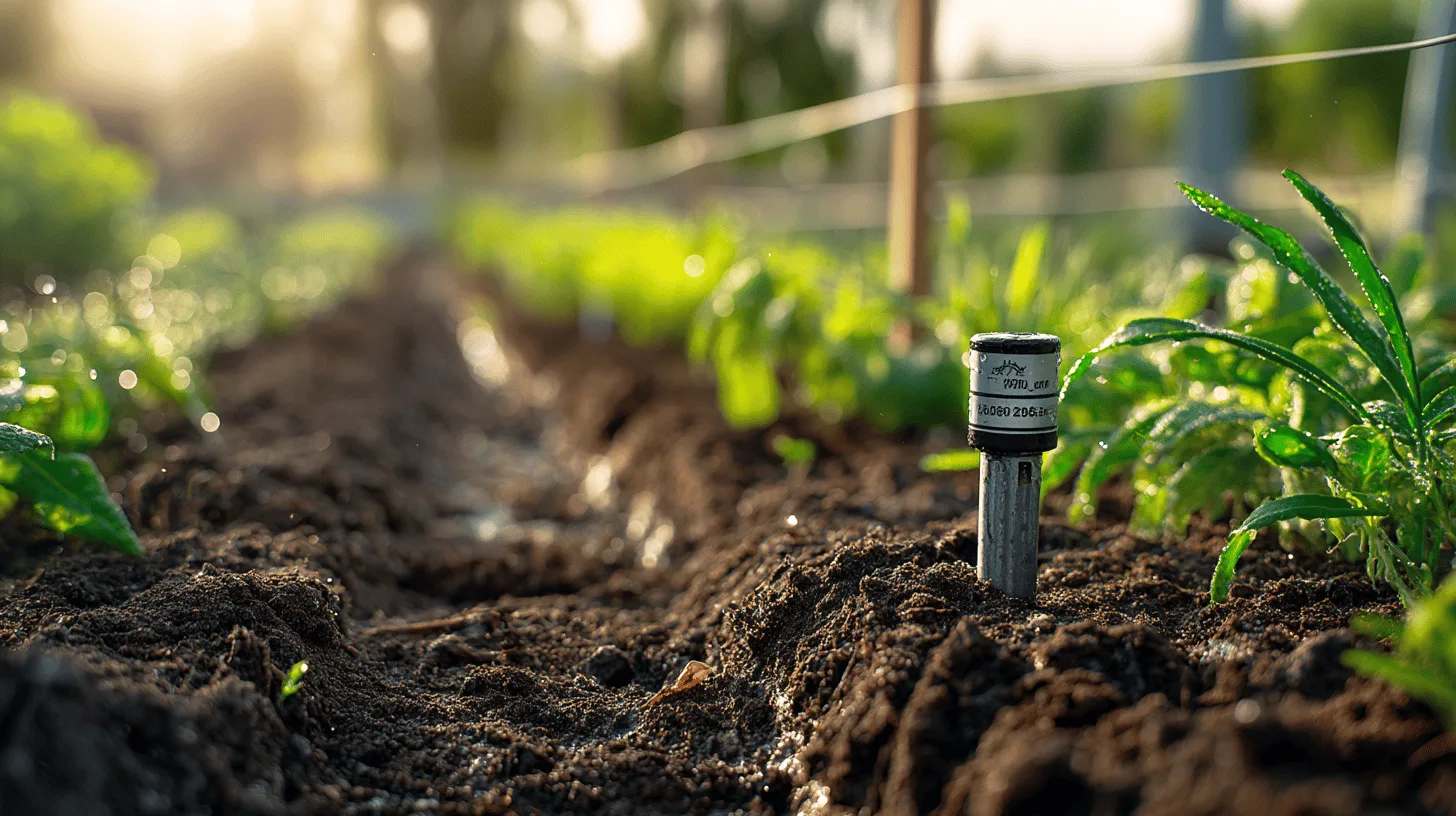
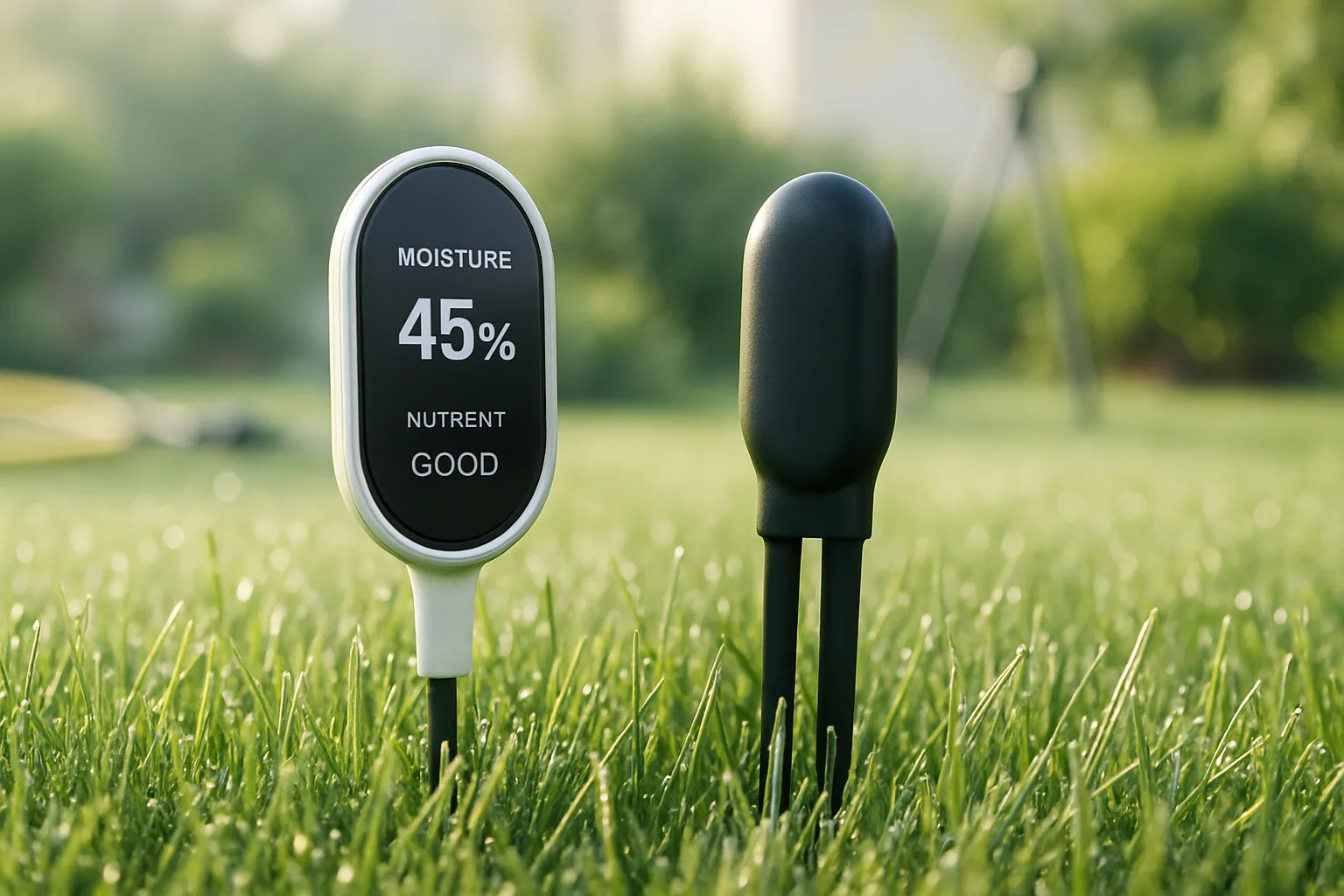
This is where the connected-home crowd comes in. A smart soil sensor is a probe pushed into the ground that measures moisture, usually temperature too, and sends readings over your Wi-Fi or a small hub to an app. Some link to a smart watering controller on your outside tap, which then skips its schedule when the ground is already damp.
Gardena’s smart system, which you will find in UK DIY sheds, works this way, and weather-station makers such as Ecowitt sell cheap add-on moisture probes. The idea is sound. Most of us overwater lawns little and often, which encourages shallow roots that sulk the moment a dry spell arrives. A sensor tells you when the soil below the surface is genuinely dry, not just the top centimetre.
The most valuable thing a soil sensor can tell you is when to leave the sprinkler switched off.
The catch is that a lawn is a big, uneven thing. One probe measures one patch. The bit under the tree dries differently from the bit by the patio. And in a typical British summer, the rain does a lot of the work for free.
There is also the hosepipe ban to consider. Water companies in England and Wales can impose temporary use bans in drought, which stop you watering a garden with a hosepipe or sprinkler. Scotland and Northern Ireland have their own water bodies and rules. A clever automatic irrigation system is no use if you are legally obliged to turn it off in exactly the weeks it would matter, so check your water company’s announcements before investing heavily.
What about DNA tests for your soil?
The newest pitch is soil microbiome testing: lab analysis of the DNA of the bacteria and fungi in a sample. It is a real science, used in research and increasingly in agriculture, because soil life affects how nutrients become available to plants.
For a domestic lawn, it is hard to see what you would do differently with the answer. Whatever the report says, the practical advice tends to land in the same place: stop compacting the soil, add organic matter, ease off the chemicals, leave the clippings on occasionally. You can do all that today without a sequencing machine. Call this one not yet, and probably not for you.
Does a connected lawn need protecting?
Anything in your garden that joins your Wi-Fi is a small computer on your network, and a cheap one may not get security updates for long. The National Cyber Security Centre’s advice for smart devices applies just as well to a soil sensor as to a doorbell: change any default password, turn on updates, and favour brands that say how long they will support the product.
Also look at what the app wants. A moisture sensor needs your network, not your contacts or your precise location around the clock. Under UK GDPR you have the right to know what personal data a company holds about you, and a reputable firm will explain it in plain English.
The other practical worry is longevity. Garden gadgets live outdoors through frost, rain and the occasional mower blade, and app-based products can lose features if the maker shuts down a cloud service. Buy from a company that looks likely to be around in five years.
The sensible lawn upgrade
If you want a better lawn with less effort and less waste, the order of play is simple. Test your pH first, cheaply. If anything looks odd, or you are planning a big renovation, pay for a lab analysis once and feed according to the result rather than the picture on the bag.
Then, if you water a lot or you have expensive borders and a new lawn to establish, a single moisture sensor linked to a timer is a reasonable buy. It will mostly earn its keep by stopping you watering when you don’t need to.
Everything beyond that is a hobby. Nothing wrong with that, just as long as you know it’s a hobby.
In short
Testing your soil makes sense: a cheap pH kit, and once in a while a lab analysis, will stop you wasting money on feed your lawn can’t use. A smart moisture sensor helps if you water often, mostly by telling you when not to, but it can’t help during a hosepipe ban. DNA testing of soil microbes is real science, but for a domestic lawn it won’t change what you actually do.
Sources

Midcent Tech
Alex Innes explains technology for men 45 and over who have seen every gadget since the ZX Spectrum and are not easily impressed. AI and ChatGPT, phones, cars, the smart home, the subscriptions worth keeping and staying safe online – what it does, whether it's worth the money, and whether you need it at all.
One of Midcent's writers. Spotted something? Write to alex@midcent.uk.