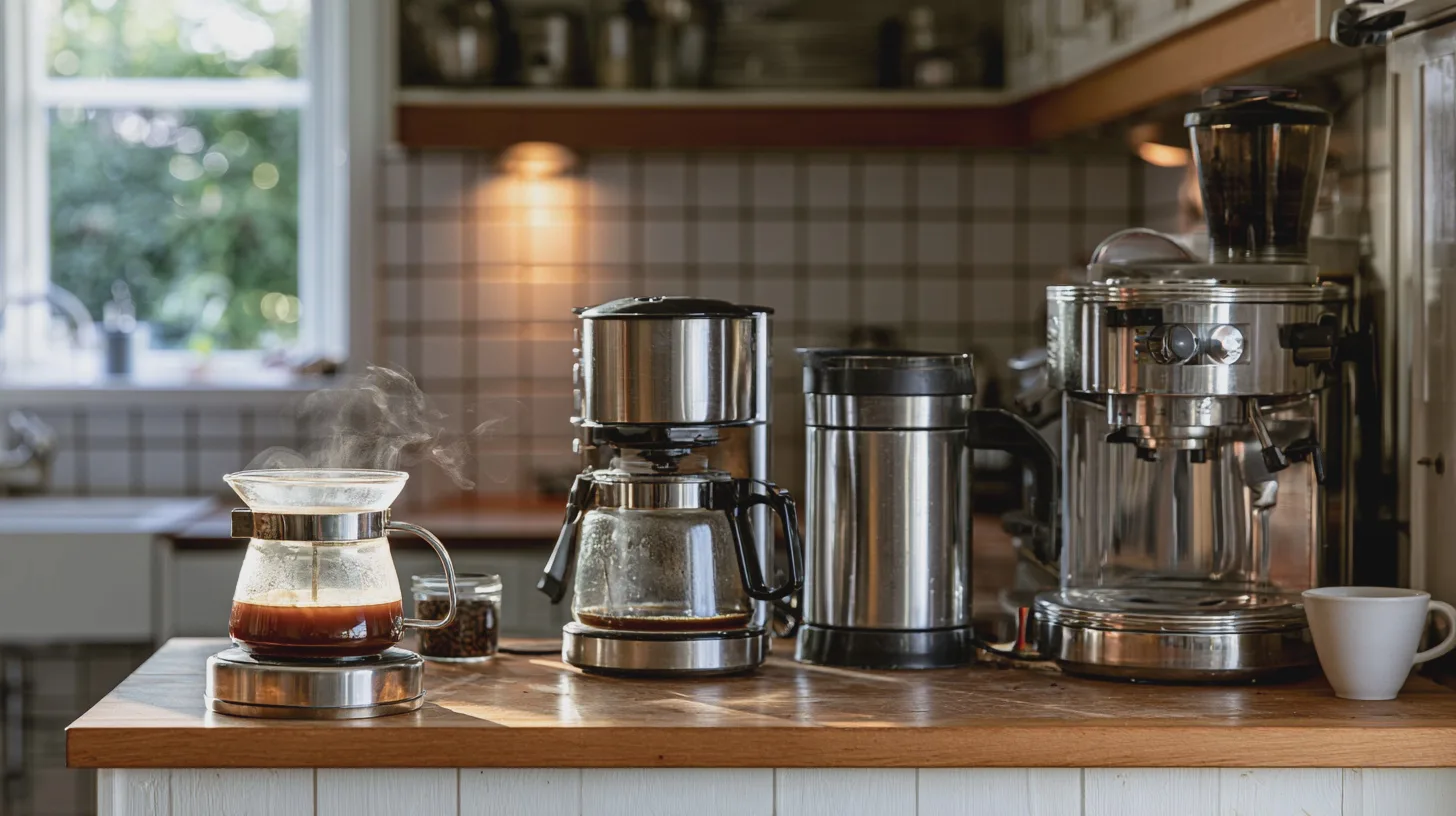
Your coffee maker spends every morning pushing near-boiling water through tubes, tanks and baskets, and a fair bit of that kit is usually plastic. Heat and plastic are a combination that makes chemists wince, and BPA has become shorthand for that worry.
Here’s the useful version: what BPA is, what British regulators say about it, and how to choose a brewer that cuts plastic contact without paying extra for a scary label.
What is BPA, and why does it end up in coffee?
Bisphenol A, or BPA, is an industrial chemical used since the 1950s to make polycarbonate, a hard, clear plastic, and the epoxy resins that line many food and drink cans. It’s tough, cheap and shatterproof, which is why it turned up in old kettle windows, water jugs and coffee machine reservoirs.
The concern is migration, which means small amounts of a chemical moving out of a material and into whatever food or drink touches it. Heat speeds this up, and so do age and wear. A scratched, ten-year-old polycarbonate water tank that’s held hot water thousands of times is a bigger worry than a brand-new one.
BPA interests scientists because it can mimic oestrogen in the body. Studies have looked at possible links to hormone, metabolic and immune effects, although the evidence in humans is still argued over.
Is BPA in coffee makers actually dangerous?
This is where the scare stories usually run ahead of the facts. In 2023 the European Food Safety Authority, Europe’s food safety science body, cut its tolerable daily intake for BPA dramatically, by about 20,000 times compared with its 2015 figure. On that new yardstick, many people’s normal exposure from food and drink would be over the line.
The UK’s Food Standards Agency (FSA) has said it is reviewing that work with its independent expert committee on toxicity, and in Great Britain it hasn’t told the public to change what they eat or drink. BPA is already banned from baby bottles, and there are legal limits on how much can migrate from plastic food-contact materials.
The rules are now splitting within the UK. Northern Ireland follows the EU’s newer and much stricter restrictions on BPA in food-contact materials, which are being phased in, while England, Scotland and Wales have not adopted them so far.
Put simply, your coffee maker is unlikely to be your biggest source of BPA. Most people’s exposure comes from food overall, and canned food has long been a major source. Even so, cutting needless exposure is sensible, especially when the cut is easy and costs little.
The aim isn’t a plastic-free kitchen. It’s keeping hot water away from plastic wherever that’s easy.
Does a BPA-free sticker mean a coffee maker is safe?
Not automatically. When manufacturers dropped BPA, some switched to close chemical cousins such as BPS and BPF. These haven’t been studied as thoroughly, and researchers have raised similar concerns about them. Scientists call this regrettable substitution: you swap a chemical people have heard of for one they haven’t.
Most coffee machines on sale in British shops now use polypropylene or Tritan, a BPA-free copolyester (a type of plastic), for their tanks and baskets. Neither is made from bisphenols, which is reassuring. But a sticker tells you less than the design does. Here’s what to check:
First, the hot path. The cold water tank matters less than the parts that touch boiling water and fresh coffee: the tubes, the filter basket, the jug. Glass, stainless steel and ceramic are the safest bets.
Second, the jug. A glass carafe on a hotplate beats a plastic thermal jug, though a stainless steel vacuum jug is the best of both.
Third, the complexity. Bean-to-cup machines and pod machines are full of plastic pipework and, with pods, plastic capsules. That doesn’t make them dangerous, but they’re the opposite of minimal contact.
Three coffee makers that keep plastic out of the way
Moccamaster KBG Select. The Dutch-made filter machine, sold in the UK by John Lewis among others, is the one coffee nerds own when they’ve stopped arguing. Water is heated by a copper element and drips through a glass carafe setup, and the brand says its machines are BPA-free. It brews a full jug in about six minutes at the temperature coffee experts recommend, and it’s built to be repaired, not binned. The weak point: it costs well over £200, and the water tank and filter basket are still plastic, even if it’s the BPA-free kind. You’re buying lower contact, not zero contact.
Bodum Chambord cafetière. The classic French press, sold by Argos, John Lewis and plenty of others, keeps brewing coffee in borosilicate glass with a stainless steel frame and plunger. There’s no heating element, no pump and no pipework. It’s the cheapest way to cut plastic contact, typically well under £50. The weak point: the glass jug will break eventually, usually on a Monday, and the coffee goes cold quickly. Unfiltered cafetière coffee also contains more cafestol, a natural compound in coffee oils that can raise LDL cholesterol. If your GP is already watching your cholesterol, that matters more than BPA.
Bialetti stovetop pot. The octagonal Moka Express, widely available in UK shops, is aluminium with a plastic handle that never touches the coffee. If aluminium bothers you, Bialetti’s stainless steel models such as the Venus suit induction hobs too. The weak point: it makes a strong, espresso-style brew rather than a mug of filter, and it needs you standing over the hob rather than pressing a button.
What should you do with the machine you already have?
Don’t bin a working machine in a panic. Landfill has its own health problems. Do look at its age and condition. If it’s from before about 2010 and has a clear, rigid, slightly yellowed water tank or jug, that could well be polycarbonate. A recycling symbol with the number 7 is a hint, though not proof.
Some cheap habits help whatever you own. Descale regularly, so scale doesn’t trap residue in worn plastic. Don’t leave coffee stewing in a plastic jug on a hotplate for hours. Replace cracked or cloudy plastic parts. Run one or two cycles of plain water through a new machine before the first brew.
And remember where else the plastic is. A takeaway cup with a plastic lining and a hot lid is far more plastic contact per sip than most home machines.
In short
BPA is a real chemical with real scientific concern behind it, but in Great Britain the Food Standards Agency hasn’t advised people to change their diet, and your coffee maker is unlikely to be your main source. If you want less contact, choose designs where hot water and coffee mostly touch glass or stainless steel, such as a Moccamaster, a Bodum cafetière or a Bialetti stovetop pot, rather than relying on a BPA-free sticker. Replace old, worn polycarbonate parts, but don’t throw out a working machine in a panic.
Sources

Midcent Tech
Alex Innes explains technology for men 45 and over who have seen every gadget since the ZX Spectrum and are not easily impressed. AI and ChatGPT, phones, cars, the smart home, the subscriptions worth keeping and staying safe online – what it does, whether it's worth the money, and whether you need it at all.
One of Midcent's writers. Spotted something? Write to alex@midcent.uk.